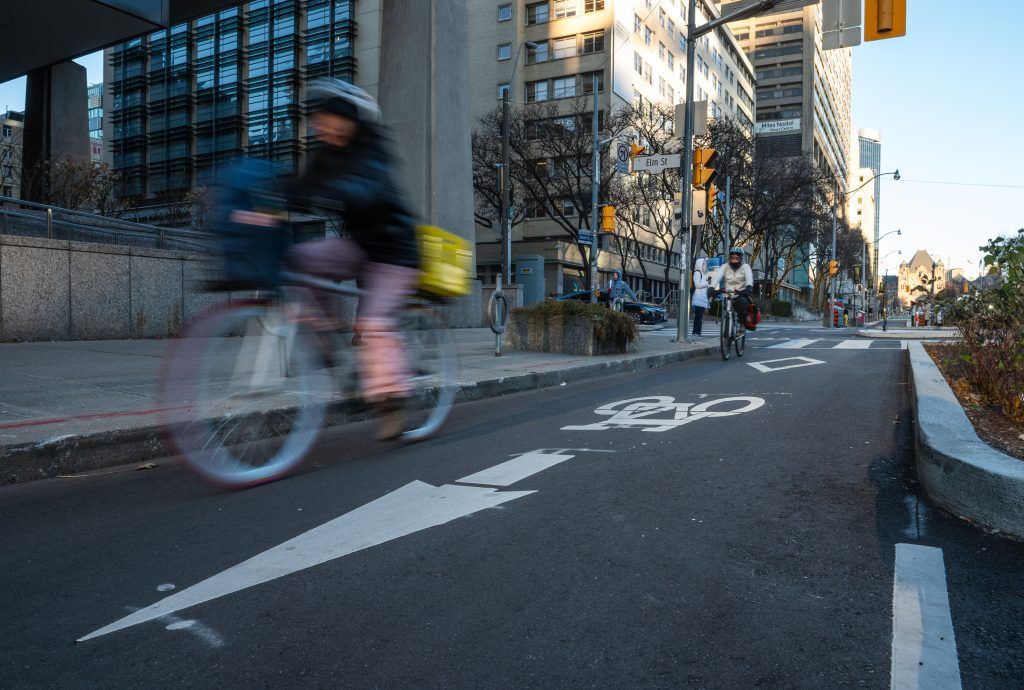
Ford government moves to restore car lanes on key Toronto routes after court ruling on bike lanes
The Ontario government is moving forward with plans to restore vehicle lanes on several major Toronto corridors, including Bloor Street and University Avenue, following a court ruling upholding its authority to redesign roadways.
The Ontario government has initiated a major shift in Toronto's transportation infrastructure by beginning to restore vehicle lanes on several of the city's busiest roads. This move comes after a significant legal victory that affirmed the province's authority over roadway design decisions, setting the stage for a contentious urban planning battle between cycling advocates and provincial officials.
The lane restoration plan
The province has taken concrete steps to implement its vision for Toronto's roadways by issuing a comprehensive request for proposals (RFP) to study and design options for restoring vehicle lanes. This initiative targets six critical Toronto corridors: Bloor Street, Yonge Street, University Avenue, Queen's Park, Queen's Park Crescent, and Avenue Road. These arteries form the backbone of Toronto's transportation network, handling thousands of commuters daily.
The Ministry of Transportation has confirmed that physical work has already commenced on Bloor Street West, specifically east of a 600-metre section at Clissold Road. This location previously saw a vehicle lane restoration in December 2025 that maintained bike lanes while adding car capacity. The current project represents an expansion of that approach across multiple high-traffic routes.
Legal framework and economic justification
This roadway transformation operates under the authority of two provincial laws: the Reducing Gridlock, Saving You Time Act (2024) and the Plan to Protect Ontario Act (2025). These legislative measures specifically mandate the restoration of vehicle lanes on designated Toronto roadways. The government's position received substantial reinforcement from a Canadian Centre for Economic Analysis report that quantified Ontario's annual gridlock costs at $56 billion, providing an economic rationale for prioritizing vehicular traffic flow.
The RFP document notably includes provisions to retain or reconfigure existing bike lanes in locations where provincial officials determine they don't exacerbate traffic congestion. This conditional approach suggests the province recognizes some value in cycling infrastructure while maintaining its primary focus on improving conditions for motor vehicle users.
Legal battle and municipal-provincial tensions
The current lane restoration initiative follows a protracted legal battle that culminated in a recent Ontario Court of Appeal ruling. This decision overturned a lower court judgment from last year that had blocked the province from replacing protected bike lanes along 19 kilometres of key routes. The initial ruling deemed the plan an unconstitutional risk to cyclist safety, creating a temporary obstacle to the Ford government's transportation agenda.
At the heart of this legal dispute was controversial 2024 provincial legislation that fundamentally altered the balance of power in urban transportation planning. The law introduced requirements for municipalities to seek provincial approval when installing new bike lanes that affect traffic flow, while simultaneously granting the province authority to remove existing bike lanes on major routes. This legislative move represented a significant centralization of transportation decision-making power at the provincial level.
Government position and political messaging
Transportation Minister Prabmeet Sarkaria has framed the lane restoration project as the fulfillment of a democratic mandate. In an official press release, Sarkaria stated: "We're keeping our promise. Under Premier [Doug] Ford's leadership, we're getting people and goods moving again and giving commuters back more of their time." This messaging emphasizes the government's perception of its actions as responsive to voter concerns about traffic congestion and commute times.
Premier Ford has been particularly vocal about his frustrations with bike lanes, frequently citing their impact on traffic flow. His criticisms have often focused on a specific stretch of Bloor Street located near his west-end residence, suggesting personal experience has informed his policy positions on urban transportation issues.
Cycling community response and safety concerns
The provincial announcement has sparked significant opposition from cycling advocates and safety organizations. The controversy reached a visible peak on August 28 when hundreds of cyclists gathered downtown to protest the lane removal plans. Participants argued these changes would compromise years of progress in building safer cycling infrastructure and increase dangers for vulnerable road users.
David Shellnut, a prominent cycling advocate and founding partner of The Biking Lawyer LLC, articulated the community's frustration at the rally. "We got a pretty scathing decision from the Court of Appeal of Ontario that said Doug Ford can rip out existing bike lanes, that our safety doesn't matter, and people take that really personally," Shellnut said. His comments highlight the emotional dimension of this policy debate and the perceived disregard for cyclist safety in the court's ruling.
Municipal leadership response
Toronto Mayor Olivia Chow has emerged as a vocal critic of the provincial government's approach, framing it as an unnecessary conflict during challenging economic times. In her official statement, Chow argued: "The Province of Ontario and the Minister of Transportation should be laser focused on dealing with Trump and helping workers and families through these uncertain times, not picking endless political fights with the City of Toronto."
The mayor's comments reveal broader tensions between municipal and provincial governments over jurisdiction and policy priorities. Chow emphasized her commitment to Toronto's autonomy in urban planning matters, stating: "I believe strongly in Toronto's autonomy and right to govern itself." She presented an alternative vision for transportation policy that avoids pitting different road users against each other, arguing such approaches ultimately compromise safety for all.
Business community perspectives
The provincial plan has received support from segments of Toronto's business community, particularly along the affected routes. Sam Pappas, owner of The Crooked Cue on Bloor Street, expressed approval for the changes, stating: "The removal of the bike lanes on Bloor Street will restore access and beauty that was lost. As a business owner and long-time resident, I am grateful that we will get back to a system that works for the majority."
This business perspective suggests some local merchants believe the bike lane installations negatively impacted customer access and street aesthetics. The Residential and Civil Construction Alliance of Ontario (RCCAO) has also endorsed the government's announcement, indicating support from the development and construction sectors that often benefit from road expansion projects.
Implementation timeline and process
The RFP process will establish the detailed roadmap for lane restoration across all six targeted corridors. This approach allows for some flexibility in implementation while maintaining the government's core objective of increasing vehicle capacity. Meanwhile, immediate construction work continues on Bloor Street West in Etobicoke, serving as both a pilot project and symbolic start to the broader initiative.
Broader implications for urban transportation
This conflict transcends immediate questions about lane allocations, representing a fundamental philosophical divide in urban transportation policy. The provincial government's stance prioritizes vehicular traffic flow and economic efficiency metrics, while cycling advocates and municipal leaders emphasize safety, environmental sustainability, and multimodal transportation planning.
The outcome of this battle will establish important precedents for municipal-provincial relations in urban planning and could influence similar debates in other Canadian cities. As Toronto continues to grow and face climate change pressures, these decisions will significantly impact the city's long-term sustainability and quality of life for residents. The strong reactions from all sides suggest this issue will remain a flashpoint in Ontario politics as the lane restoration project moves forward.