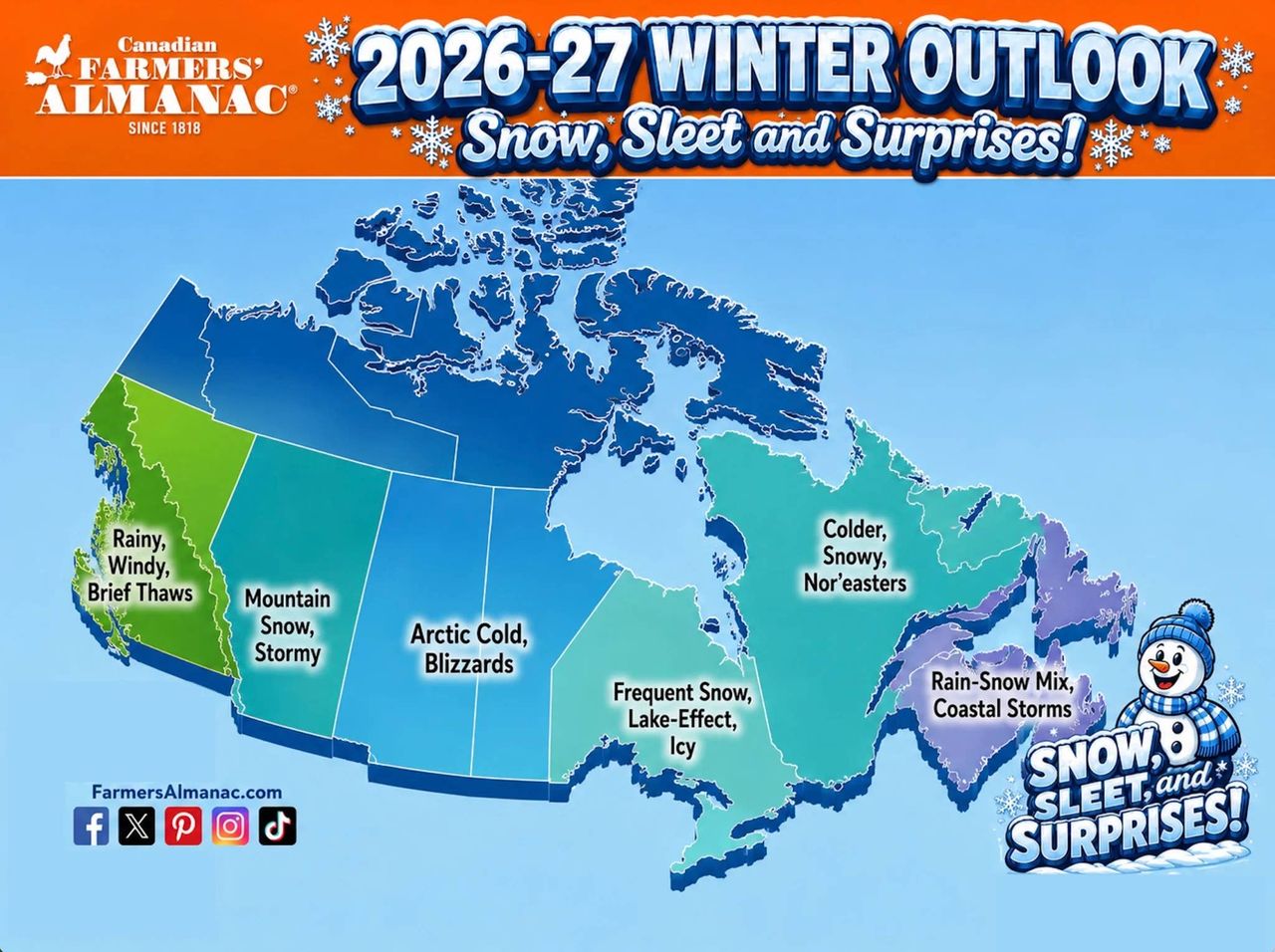
Canada's Fall Weather Forecast Predicts Early Snow in Multiple Provinces
The Old Farmer's Almanac predicts when and where Canadians can expect the first snowfall this autumn, with some regions seeing snow as early as October.
As Canadians enjoy the vibrant colors of autumn, new weather predictions from the Old Farmer's Almanac suggest winter will make an early appearance across much of the country. The forecast indicates that while most regions will experience warmer-than-average temperatures this fall, several provinces should prepare for snowfall weeks earlier than typical seasonal patterns. These early winter previews will arrive as mixed precipitation events rather than sustained snowfall, creating potentially hazardous transitional conditions.
Regional Breakdown of Autumn Snowfall
The Old Farmer's Almanac provides a detailed provincial breakdown of when Canadians can expect their first seasonal snow. The predictions reveal a west-to-east progression of winter weather, with western provinces seeing snow earlier than their eastern counterparts. These forecasts are particularly valuable for agricultural workers, transportation departments, and residents preparing their homes for winter.
British Columbia's Gradual Transition
Southern British Columbia will experience the mildest autumn transition among the western provinces, with snow not expected until November. The forecast predicts rain and snow in northern areas from November 1-3, followed by scattered rain and snow showers across the region between November 4-19. As the month progresses, inland areas should prepare for more consistent periods of rain and snow from November 23-30.
This gradual transition suggests coastal regions may retain mostly rainy conditions, while higher elevation areas and mountain passes could see early accumulation. The prediction of snow showers inland during late November indicates that mountain resorts may receive early season snowpack, potentially benefiting winter tourism operations. Drivers should be prepared for variable conditions on major routes through interior regions during this transitional period.
Prairie Provinces Face Earliest Snow
The agricultural heartland of Canada will experience the country's earliest winter weather according to the predictions. Southern Prairie regions should expect their first taste of winter between October 8-20, with rain and snow showers bringing chilly temperatures. These early snow events occurring during peak harvest season could complicate field operations for farmers working to bring in remaining crops.
By late November (23rd-30th), precipitation will transition fully to snow showers as temperatures drop further. This weather pattern suggests a relatively abrupt end to autumn conditions, with early snow potentially lingering on fields and secondary roads. Municipalities should prepare snow removal equipment early, while farmers may need to adjust harvest schedules to avoid weather disruptions during this critical agricultural period.
Ontario's Intermittent Winter Previews
Southern Ontario will experience its first winter weather in mid-October, with western parts of the province seeing rain and snow showers and chilly temperatures from October 15-21. These early snow events will likely be temporary, with melting occurring during subsequent warmer periods typical of Ontario's variable fall weather patterns.
The forecast indicates more consistent winter conditions arriving in late November. Residents should prepare for snowy and cool weather between November 18-22, followed by proper flurries and colder temperatures from November 27-30. This pattern suggests that while early snow may not accumulate significantly, late November could mark the true beginning of winter conditions across the province, potentially affecting travel plans during the busy pre-holiday season.
Quebec's Repeated Winter Onslaughts
Quebec faces the most complex autumn weather pattern in the country according to the predictions. The province will experience multiple waves of winter weather beginning unusually early with rain and snow showers from October 11-17. Unlike other regions that see a more straightforward transition, Quebec will endure several separate cold snaps throughout the fall season.
November brings three distinct winter weather events: rain and snow showers from November 1-5, periods of snow and rain from November 11-16, and another round of snow and rain between November 21-23. After a brief sunny reprieve, rain and snow return from November 24-30. This staggered pattern means Quebec residents should remain prepared for changing conditions throughout the entire autumn season, with particular attention needed for early October when many may not yet be prepared for winter weather.
Atlantic Canada's Seasonal Grace Period
Atlantic provinces will enjoy the longest autumn of any region, with snow not expected until November 21-26. When winter weather arrives, it will come as a mix of rain and snow accompanied by seasonally chilly temperatures. This late start gives residents additional time to complete winter preparations compared to other regions of the country.
The delayed onset aligns with the region's typical maritime weather patterns, where ocean influences moderate early season temperature drops. However, residents should note that when snow does arrive, it may coincide with the region's notorious nor'easter storm systems that can bring significant accumulation. The prediction of rain and snow from November 21-26 suggests the potential for impactful early winter weather events as the season transitions.
Understanding the Forecasting Method
The Old Farmer's Almanac uses a proprietary forecasting method that considers solar activity, atmospheric conditions, and historical weather patterns. While not as precise as short-term meteorological forecasts, the Almanac has built a reputation for its seasonal predictions over its 230-year history. The current forecast suggests that while much of Canada will experience warmer-than-average autumn temperatures overall, these will be punctuated by significant cold snaps bringing winter precipitation.
The Almanac's weekly breakdown provides valuable insight into the timing of these transitional weather events, allowing for better preparation across various sectors. These predictions are particularly useful for agricultural planning, transportation logistics, and municipal winter preparedness programs that benefit from advance notice of potential weather shifts.
Preparing for Variable Autumn Conditions
These predictions serve as an important reminder for Canadians to complete winter preparations earlier than usual. Early snowfall can create hazardous driving conditions before many motorists have installed winter tires. Homeowners should consider completing outdoor maintenance projects before the predicted snow events, particularly in regions expecting October precipitation.
Municipalities may need to adjust their winter preparedness schedules, particularly in regions expecting October snow. The forecast also suggests that agricultural operations should prioritize harvest activities to avoid weather-related disruptions. While autumn will still feature pleasant periods, Canadians would be wise to prepare for winter's early appearances across much of the country.
Historical Context of Early Snowfalls
The predicted early snow events follow historical patterns where certain regions of Canada experience winter weather during autumn months. However, the widespread nature of these predictions across multiple provinces suggests this could be a more significant early season weather event than in recent years. The combination of warmer overall temperatures with periodic cold snaps creates conditions ideal for mixed precipitation events that can be particularly challenging for transportation and infrastructure.
Residents should monitor local weather updates as the season progresses, as regional variations may occur within the broader patterns predicted by the Almanac. The transition from autumn to winter often brings unpredictable weather, and these forecasts provide valuable guidance for handling the seasonal change.