CPKC chief says labour bill fails to prevent economic harm from rail strikes
The head of CPKC says proposed legislation to handle critical labour disputes reacts to disruption instead of preventing it.
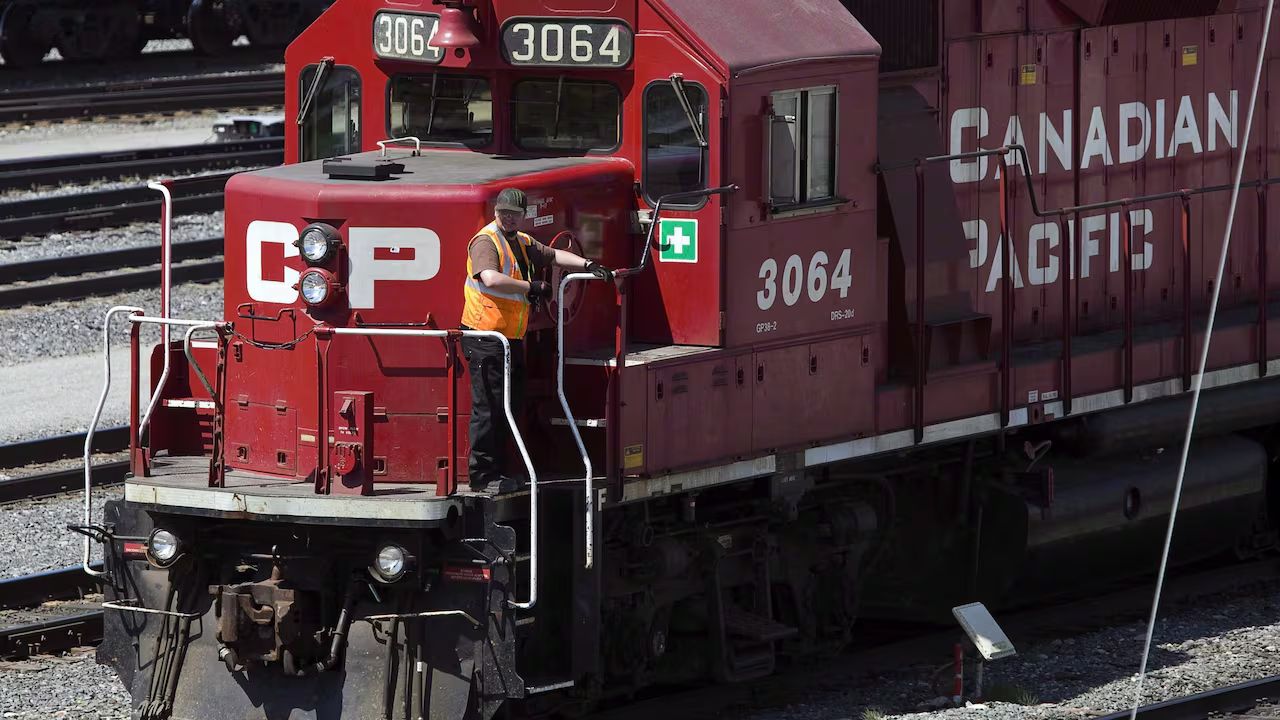
Canadian Pacific Kansas City's chief executive says proposed federal legislation to handle critical labour disputes fails to prevent the economic damage caused by rail strikes.
Keith Creel, president and CEO of CPKC, said the Building Canada Strong Act, or Bill C-39, only gives the government a path to act after a work stoppage has already begun.
That’s not preventing disruptions. That is reacting to them.
He said the bill's proposed Special Mediator process would bring greater transparency and accountability to Canada's most challenging labour disputes.
READ MORE: Liberals propose higher threshold for strike interventions in sweeping labour code changes
READ MORE: Opposition sees political opening in Liberal bill on labour and environment
CPKC, and other employers have seen such conduct repeatedly from some, but not all, union leaders.
Creel argued Parliament must strengthen the bill by giving the government authority to direct parties into binding arbitration before a strike or lockout is allowed to inflict nationwide damage.
For a railway, and its global customers, disruption hits long before a work stoppage begins. That disruption also lasts weeks after employees return to work.
He said this authority should be reserved for exceptional cases and be governed by a deliberately high threshold.
Government should be authorized to intervene only when negotiations are deadlocked, there is no reasonable prospect for a negotiated outcome, and a rigorous national-interest test shows that a work stoppage would significantly harm Canada’s economy, supply chains or broader public interest.
Creel called the pre-emptive authority a last resort, not a shortcut, and said it is a responsible tool to protect the national public interest.
He dismissed union arguments that such intervention infringes the constitutional right to strike, saying Canadian courts have routinely found the right to strike is not absolute.
Courts have upheld legitimate limitations where a substantial and pressing public interest exists if an alternative process that is fair, balanced and proportionate is provided.
Creel said the Carney government deserves credit for acknowledging that labour disputes in critical sectors cause harm far beyond the bargaining table.
Bill C-39 is a welcome acknowledgment of a chronic risk to Canada’s prosperity.
He said the government must now match its correct diagnosis with a reasonable prescription that will solve the problem.
Creel said a work stoppage, or even the credible threat of one, at railways, major ports or airlines delays shipments, increases consumer costs and weakens confidence in Canada as a place to invest.
Canadian law should not reward leveraging unionized employees against the entire country.
He said fairness has to extend to workers and employers, and to all Canadians who bear the consequences but have no seat at the bargaining table.
Yadude Books reported in September that the legislation would give the labour minister power to end strikes without a parliamentary vote.
Creel urged members of Parliament and senators to show courageous leadership to safeguard Canada's national interest.
Parliament must strengthen Bill C-39 and seize the moment for the benefit of all Canadians.
With files from The Globe and Mail