Vladimir Guerrero Jr. defends contract comments amid Blue Jays' disappointing season
Toronto Blue Jays star Vladimir Guerrero Jr. addresses his viral comments about his $500 million contract extension following a struggling 2026 season, discussing fan expectations, his performance dip, and commitment to improvement as the team misses playoffs.
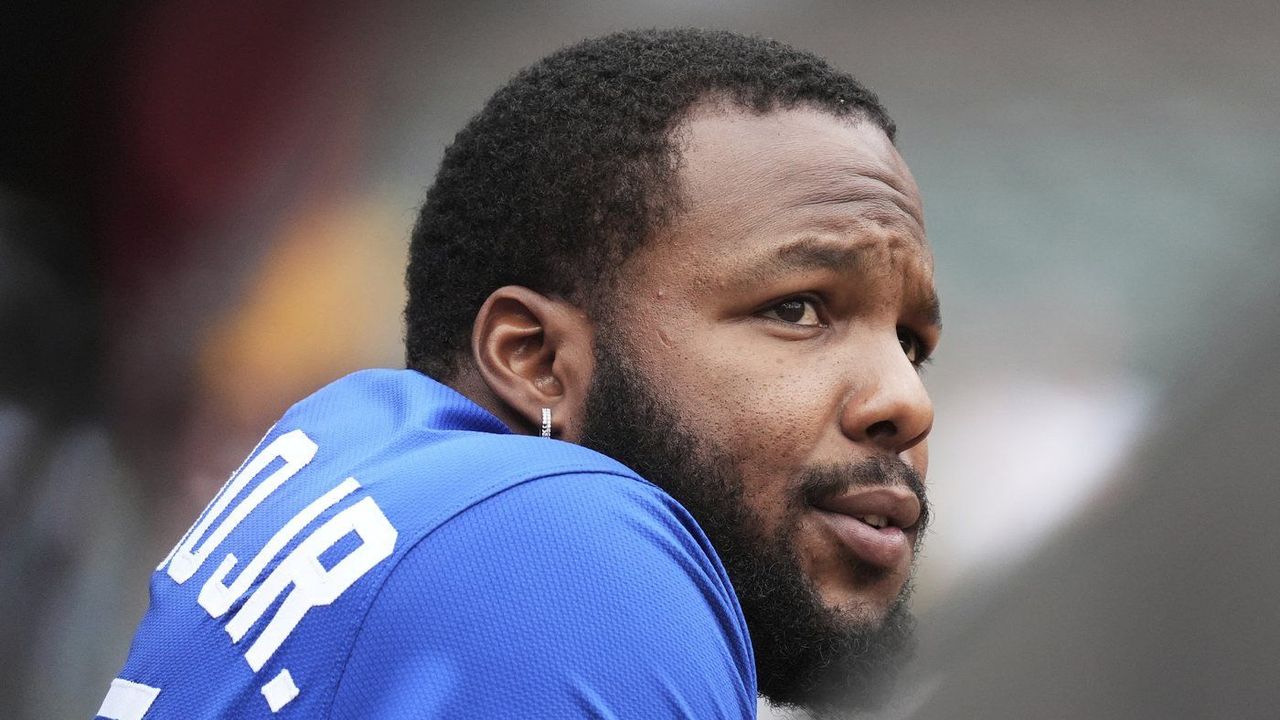
Toronto Blue Jays first baseman Vladimir Guerrero Jr. finds himself at the center of controversy as he stands by recent comments about his historic $500 million contract extension during what has become a disappointing 2026 season for both the player and franchise. The 27-year-old slugger addressed the growing scrutiny surrounding his performance and contract expectations during Wednesday's doubleheader in Baltimore, refusing to retract statements made during a Spanish-language podcast interview that have sparked debate across baseball circles.
Breaking down Guerrero's contract remarks
During an upcoming episode of Veronica Batista's Spanish-language podcast scheduled for full release on October 4, Guerrero made candid comments about his 14-year, $500 million extension signed before the 2026 season. These remarks, translated and aired on Blue Jays Central, included Guerrero stating: "They didn't pay me to hit 40 every year. The contract was based on what I did, not necessarily for what I'm going to do." This perspective on player compensation versus performance expectations has become a focal point of discussion as Guerrero's production has declined this season.
The Dominican star acknowledged the natural tension between his contract and fan expectations, admitting "sometimes I think that way, too. Like, they gave me this money and I'm not doing enough." However, Guerrero emphasized his professional approach, stating "I try my best and I'm working hard" to address his struggles. The viral nature of these comments created additional challenges, as the circulated clip represented only a small portion of the complete interview without full context of the questions asked or Guerrero's complete responses.
READ MORE: Blue Jays' Vladimir Guerrero Jr. apologizes for contract comments amid career-worst season
READ MORE: Blue Jays edge Reds 6-5 behind Okamoto's clutch hitting as Guerrero Jr. redeems himself
Analyzing Guerrero's 2026 performance slump
The current season has proven difficult for both Guerrero and the Blue Jays organization, marking a stark contrast to their World Series appearance last year. After going 1-for-4 in Wednesday's first game against Baltimore, Guerrero's season statistics reflect this struggle: a .263 batting average, .335 on-base percentage, and .360 slugging percentage with just nine home runs through 142 games. These numbers represent a significant decline from his production during Toronto's 2025 postseason run, when he posted an exceptional 1.289 OPS with eight homers through Game 7 of the World Series.
This performance drop has occurred during a season where the reigning American League champions officially missed playoff contention following Wednesday's 4-2 loss to the Orioles. The team's struggles have been mirrored in fan reactions at Rogers Centre, where crowds have occasionally directed boos at the star first baseman during particularly difficult stretches. This stands in contrast to the adulation Guerrero received during last year's postseason heroics, creating a complex dynamic between the player and fanbase.
Guerrero's perspective on fan support
In his podcast interview, Guerrero offered a frank assessment of Toronto fans' support patterns that has generated significant discussion. "The fans, I know how they are," he told Batista. "When you are doing great, they are 100 per cent behind you. But when you are not at your best, not everybody is behind you. Almost nobody supports you." He drew a distinction between conditional supporters and his dedicated fanbase, stating "Those are my real fans. The ones that are supporting me all the time."
Between games of Wednesday's doubleheader, Guerrero expanded on these comments through interpreter Hector Lebron when pressed by reporters. He clarified that the podcast discussion focused on his feelings about the current season, explaining "I said, obviously, I feel really bad about the year I had. I couldn't help get my team to the post-season." Guerrero connected his contract situation to his previous performance peak, reminding media members "I signed my contract at the beginning of last year when I did put up a good year, the kind of playoffs I had, to help the team get into the World Series."
Standing by his statements
When directly questioned about whether he regretted his podcast remarks, Guerrero stood firm in his position. "No, I don't regret myself. I'm not lying with what I said," he told reporters. While acknowledging some fans might not fully grasp his intended message, Guerrero maintained that his comments reflected his genuine perspective: "what I said is the way I feel."
The three-time All-Star emphasized his professional commitment to improvement despite the challenging season, vowing to approach the offseason with the same dedication that has characterized his career. "I never stopped working very hard," Guerrero said. "I'm going to go to the off-season again to prepare myself to do the best I can physically, mentally. Like I always do for my team and teammates." These statements suggest Guerrero recognizes the need to adjust while maintaining confidence in his ability to return to form.
Understanding Guerrero's contract context
Guerrero's $500 million extension before the 2026 season ranks among the most lucrative in MLB history, reflecting his status as one of baseball's premier talents when signed. The deal came immediately following his spectacular 2025 postseason performance that helped propel Toronto to their first World Series appearance in decades. However, the unprecedented length of the contract - guaranteeing money through Guerrero's age-40 season - always carried inherent risk for both player and team in terms of long-term value.
The first baseman's recent comments highlight the fundamental tension in professional sports contracts between paying for past production versus future performance. While Guerrero acknowledges fans' natural expectations that accompany such massive financial commitments, he maintains the agreement properly reflected his established value rather than serving as a guarantee of future output. This distinction becomes particularly relevant during performance slumps that inevitably occur over lengthy contracts.
Broader implications for player contracts
Guerrero's situation provides a case study in the evolving dynamics between star athletes, massive long-term contracts, and fan expectations in modern professional sports. His willingness to speak candidly about these pressures offers rare insight into the psychological challenges athletes face when underperforming relative to salary expectations, particularly following career peaks. The episode also underscores how language barriers and selective quoting can amplify controversies for international players, potentially distorting intended messages.
For the Blue Jays organization, Guerrero's struggles represent more than just an individual performance issue - they symbolize a disappointing title defense season that fell far short of expectations. How both player and team respond to this adversity could significantly shape the franchise's competitive trajectory moving forward. Guerrero's commitment to offseason preparation suggests he recognizes the need for adjustments, but the coming seasons will ultimately determine whether he can rediscover his elite form and justify Toronto's historic investment in his future contributions to the club.
The path forward
As Guerrero prepares for the offseason, the Blue Jays face important decisions about how to support their franchise player through this challenging period. The organization must balance patience with accountability, recognizing that elite talent often experiences fluctuations while still expecting maximum effort toward improvement. For Guerrero, the focus will be on identifying and addressing whatever factors - whether mechanical, physical, or mental - have contributed to his 2026 struggles.
This situation serves as a reminder that even the most talented athletes face performance ebbs and flows, and that massive contracts represent calculated risks rather than guaranteed returns. Guerrero's honesty about these pressures provides valuable perspective for fans and analysts alike as the baseball world watches how one of the game's brightest stars responds to the first significant adversity of his prime career years.