Transcona councillor Russ Wyatt runs for re-election amid sexual assault charges
Winnipeg city councillor Russ Wyatt appears on Transcona's election ballot while facing two separate sexual assault allegations, sparking debate about representation and municipal accountability.
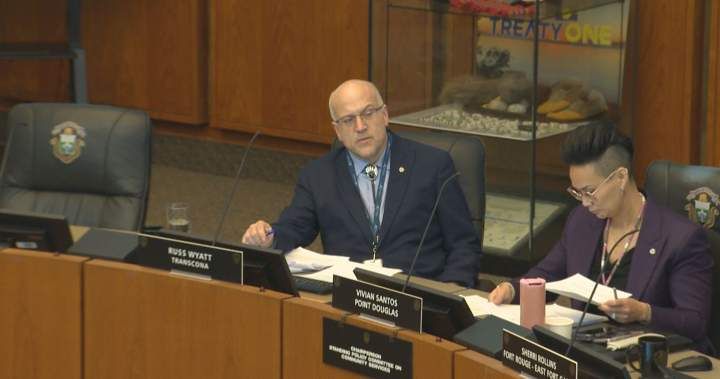
Winnipeg city councillor Russ Wyatt has officially registered as a candidate in Transcona's municipal election while facing two separate sexual assault charges that span two distinct incidents. The incumbent councillor successfully collected the 25 required nomination signatures this week despite ongoing legal proceedings that began with charges filed in March 2023 and additional allegations laid by Winnipeg police in August. His candidacy presents voters with an unusual scenario that tests the boundaries of municipal accountability and the presumption of innocence in Canadian politics.
Charges don't deter candidacy
Wyatt dismissed concerns about voter reaction to his legal situation during a detailed interview with 680 CJOB radio.
"No, not at all,"he responded when asked directly if constituents raised the allegations while signing his nomination papers. The councillor instead emphasized that discussions focused on local issues like development plans in South Transcona, particularly opposition to the area's secondary plan. His characterization of these interactions suggests either voter priorities lie elsewhere or potential discomfort discussing the sensitive allegations directly with the accused councillor.
The veteran politician framed his circumstances as a personal challenge during the radio interview, offering a philosophical perspective:
"I've been through many storms in my life. I know I've done nothing wrong, and I know I'm going to be okay."These comments mark his first public address about the charges since his August arrest, providing insight into his mindset as he campaigns for what would be his fifth consecutive term representing Transcona since first elected in 2004.
READ MORE: Canadian literary prizes rely on publishers to detect AI-generated books amid growing controversy
READ MORE: Blue Jays' Vladimir Guerrero Jr. apologizes for contract comments amid career-worst season
Committee restrictions in place
The City of Winnipeg has implemented limited administrative actions regarding Wyatt's council duties since the initial charges emerged last spring. According to verified reporting, he was removed from several municipal committees where membership is discretionary, including the Winnipeg Police Board and the Executive Policy Committee. However, he retains mandatory positions required by city regulations, such as his seat on the Standing Policy Committee on Property and Development.
Records confirm Wyatt attended committee meetings in mid-August 2023, just days after Winnipeg police executed his most recent arrest. This partial restriction reflects the city's legal framework, which permits individuals facing criminal charges to continue serving unless convicted. The Municipal Act contains no provisions barring candidates facing criminal charges from running for office or sitting on council, leaving such determinations to the electorate.
Union leader voices concerns
Patrick Troughton, president of CUPE 500 representing approximately 4,700 City of Winnipeg employees, expressed strong dismay about Wyatt's decision to seek re-election. He articulated specific concerns that the councillor's legal battles could create a significant distraction from ward responsibilities.
"Every hour that (Wyatt) spends on his legal defence is an hour that he's taking away from being able to represent and serve the members of his ward and the citizens,"Troughton told Global News, highlighting the practical implications of divided attention.
The union leader framed the situation as potentially debilitating for the ward's progress, offering a stark prediction:
"Basically, Transcona would spend the next four years as a legal drama instead of the ward getting things done."Troughton publicly urged Wyatt to withdraw from the race, arguing this would allow constituents to elect a representative who could focus exclusively on municipal matters rather than personal legal challenges.
Legal framework for candidates
Winnipeg's election rules require candidates to complete a statement of disclosure that specifically asks about guilty pleas or convictions under three federal acts: the Criminal Code, the Canada Elections Act, and the Income Tax Act. However, mere charges don't trigger disqualification, consistent with the foundational presumption of innocence principle in Canadian law. None of the allegations against Wyatt have undergone judicial scrutiny or been proven in court.
This legal approach creates inherent tension between protecting democratic rights and meeting public expectations of elected officials. Municipal governance experts note that while voters ultimately decide a candidate's fitness for office, high-profile criminal charges can fundamentally alter campaign dynamics, potentially overshadowing substantive policy discussions with questions about personal conduct and judgment.
Broader implications for municipal governance
Wyatt's candidacy raises fundamental questions about the adequacy of municipal accountability mechanisms across Canada. Unlike some provinces that allow for recall elections or have more robust ethical guidelines for local officials, Manitoba's system provides limited options between scheduled elections. This leaves constituents with few formal avenues to address concerns about sitting councillors beyond public pressure campaigns or waiting for the next electoral cycle.
The situation also highlights differing perspectives on what constitutes appropriate conduct for elected officials. Some argue that facing serious criminal charges inherently compromises one's ability to serve effectively, while others maintain that only convictions should carry professional consequences. This philosophical divide leaves municipal councils handling uncharted territory when determining appropriate interim measures for members facing allegations.
Political context and voter considerations
Wyatt's political career spans nearly two decades in Transcona, where he has previously served as deputy mayor and held key committee positions. This long tenure may influence voter perceptions as they weigh his record against the current allegations. The timing of the charges - with the first set emerging just months before the election campaign - adds complexity to an already unusual situation.
Transcona residents now face a complex electoral decision that weighs legal principles against practical governance concerns. On one hand, Canadian law rightly protects the presumption of innocence; on the other, elected officials arguably bear higher responsibility to maintain public trust. The ward's voters must consider whether Wyatt can effectively balance legal proceedings with constituent service, and whether alternative candidates might offer more focused representation.
Potential impact on city operations
The presence of a councillor facing serious criminal charges creates operational challenges for city administration. Council colleagues may face pressure to distance themselves from Wyatt while still needing to collaborate on ward-specific matters. Staff interactions could become complicated by the legal proceedings, potentially affecting the smooth functioning of municipal services in Transcona.
The case sets a notable precedent that could influence future municipal candidates facing similar circumstances. Wyatt's decision to run despite union opposition and likely community concerns suggests confidence in his electoral prospects, but also reflects the limited mechanisms available to address such situations within current municipal frameworks. The election results will provide the clearest indicator of how Transcona residents balance these competing considerations.