Waymo plans to launch robotaxi service in Toronto by 2028
The Alphabet-owned company will begin mapping and testing with human drivers in Canada's largest city, partnering with Toronto-based Element Fleet Management.
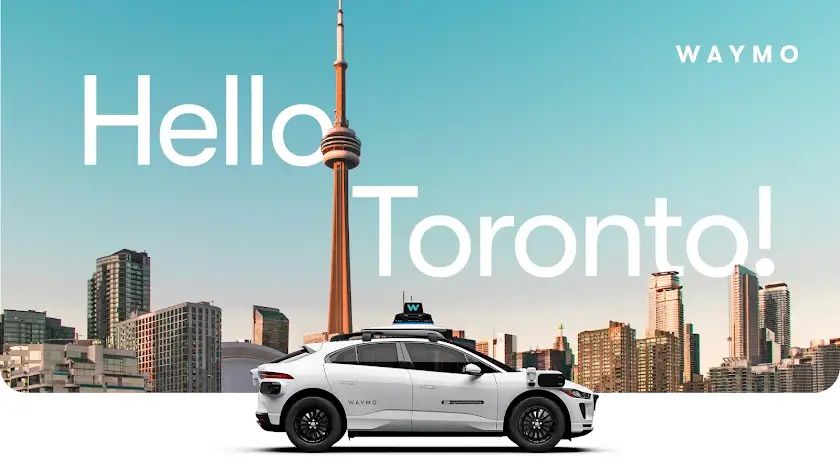
TORONTO — Waymo plans to launch its first robotaxi service in Canada, choosing Toronto as the market and setting a target of 2028 for public rides.
The company said it will start by mapping Toronto's streets with trained human drivers behind the wheels of test vehicles in the coming days.
"Expanding into Canada marks an important milestone in Waymo's global journey," co-CEO Tekedra Mawakana said in the announcement.
READ MORE: Cohere to acquire AI cybersecurity startup Aisle
"Toronto is one of the world's great cities, innovative, diverse, and forward-looking. We're proud to bring the Waymo Driver to Canada's largest city and to partner with the vibrant business, arts and cultural communities that share our commitment to safer streets and more accessible mobility."
Waymo is partnering with Toronto-based Element Fleet Management to handle day-to-day fleet operations, including maintenance, customer service and other operational tasks.
"As a Canadian company, we are proud to be expanding our partnership with Waymo," said Laura Dottori-Attanasio, Element's chief executive.
The two companies expect the venture to create hundreds of jobs over time in areas like fleet maintenance, validation driving and customer service.
Ontario has approved Waymo's participation in its automated-vehicle pilot program, issuing a provincial permit covering manual driving and testing activity.
That permit does not authorize the company to charge fares for driverless rides, a step that will require additional regulatory approvals before the 2028 target.
Ontario's current pilot regulation for autonomous vehicles is scheduled to expire on Oct. 13, 2027, several months before Waymo's stated launch window.
The province will need to either renew, extend or replace the pilot framework before a commercial launch can happen.
Waymo said its vehicles have driven more than 400 million kilometres autonomously and are involved in 95 per cent fewer crashes resulting in serious injury compared with human drivers.
The company said it has spent years testing in diverse snowy and icy environments and already operates at below-freezing temperatures in multiple cities, including during frost and hail conditions.
Critics have raised concerns about the technology's ability to handle Toronto's winter weather and its potential impact on congestion and ride-hailing workers.
"Waymo cars in Toronto will have to handle blizzards, heavy rain and flooding. I'm not sure if the company, or governments, are equipped to address this," said Adam Motaouakkil, a co-founder of the advocacy group Technologists for Democracy.
Uber Canada's head of policy, Laura Miller, said autonomous vehicles have the potential to make transportation "safer, more accessible and more affordable" but "how we introduce the technology matters."
She speculated that driverless rides for paying passengers are still at least two years away in Ontario, and urged the government and industry to set safety standards and prepare for the impact on workers.
Waymo has existing ties to Canada, with the Canada Pension Plan Investment Board as a long-term investor and Magna International as a manufacturing partner.
The company is also working with accessibility groups in Toronto, including BALANCE for Blind Adults, CNIB, Community Living Toronto, Connected Canadians and Epilepsy Ontario, to help shape features before commercial service begins.
More than a dozen cars will be part of the company's initial testing phase in Toronto.
With files from The Canadian Press, https://tech-insider.org/ and The Globe and Mail