Norm Macdonald
Norman Gene Macdonald (October 17, 1959 to September 14, 2021) was a Canadian stand-up comedian, actor, and writer celebrated for his distinctive deadpan delivery and folksy, eccentric humour. He rose to prominence as a cast member and the anchor of the Weekend Update segment on Saturday Night Live from 1993 to 1998, where his sharp, often controversial satire defined a generation of comedy. Macdonald's career spanned film, television, and podcasting, including starring roles in Dirty Work and his own sitcom The Norm Show, cementing his status as a uniquely influential figure in North American comedy. His work, characterized by a fearless and understated style, left a lasting mark on Canadian entertainment and inspired countless comedians.
Early life and education
Norman Gene Macdonald was born on October 17, 1959, in Quebec City, Quebec, to Anglophone teachers Ferne and Percy Lloyd Macdonald. His family roots were in Glengarry County in Eastern Ontario, and he spent summers on the family farm near Avonmore and Monkland, Ontario. His father worked at CFB Valcartier, a military base north of Quebec City, and insisted the family speak only English despite Quebec's French-language laws. Macdonald attended Quebec High School before his family moved to Ottawa, where he graduated early from Gloucester High School at the age of 14. He subsequently enrolled at Carleton University in Ottawa, studying mathematics and philosophy before dropping out. Macdonald later briefly followed his elder brother Neil into programs for journalism and broadcasting-television at Algonquin College. Before beginning his comedy career, he worked various manual labour jobs, including as a chokerman for a logging company, which provided material for his later, world-weary comedic persona. His father died of heart disease in 1990, and Macdonald described his own ethnic background as half-Scottish and half-Irish.
Stand-up beginnings and early television
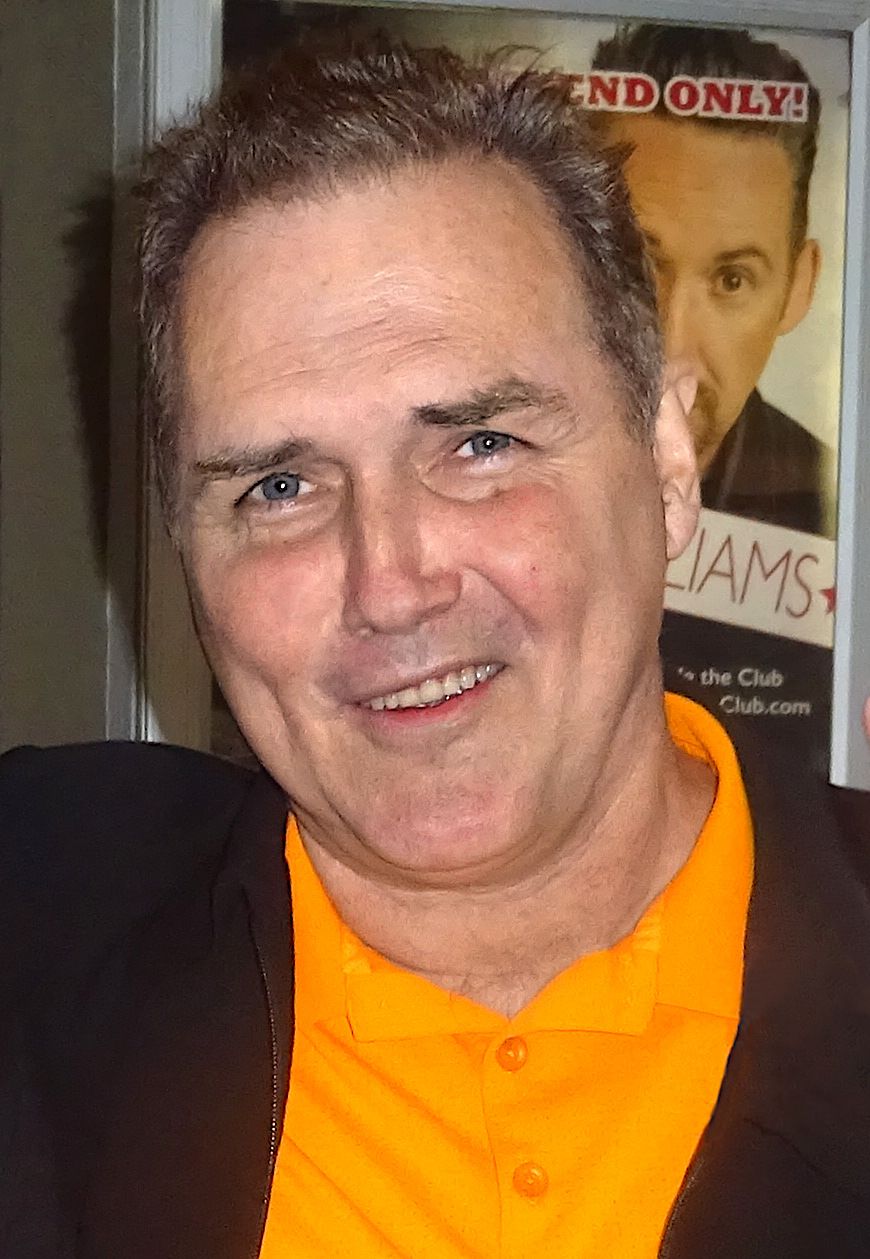
Macdonald's comedy career began in Ottawa's stand-up clubs, with his first amateur night performance at Yuk Yuk's in 1985. Initially discouraged and bolting from the club after his set, he was persuaded by club owner Howard Wagman to return, and his confidence grew rapidly. Within six months, he performed at the 1986 Just For Laughs Comedy Festival in Montreal, where the Montreal Gazette heralded him as one of the country's hottest comics. Sources from the period also noted his recovery from stomach cancer in 1986, an early health struggle he rarely discussed publicly. Macdonald made his U.S. network television debut in August 1989 on The Pat Sajak Show, making five more appearances over the following seven months. By 1990, he was a contestant on Star Search and made an appearance on Late Night with David Letterman in May of that year, with Letterman becoming a huge fan and expressing a desire to have him on weekly. His writing career began in 1992 on the staff of The Dennis Miller Show, alongside writers like Barry Crimmins, Nick Bakay, John Riggi, Eddie Feldmann, and Mark Brazill, followed by a stint as a writer for the sitcom Roseanne during the 1992-93 season before leaving to join Saturday Night Live. This period established his fundamental comedic voice and his connections within the industry.
Saturday Night Live and Weekend Update tenure
Macdonald joined the cast of NBC's Saturday Night Live in 1993, where he became known for impressions of figures like Larry King, Burt Reynolds, David Letterman, and Bob Dole. His tenure was marked by a distinct, deadpan style and recurring jokes about topics like prison rape, crack whores, and the inexplicable popularity of David Hasselhoff in Germany. A signature bit involved him delivering a news item and then leaving a personal 'note to self' on a compact tape recorder. He also frequently used actor Frank Stallone as a non-sequitur punchline, absurdly blaming him for various societal ills, a joke he stopped in 1997 after a request from Frank's brother, guest host Sylvester Stallone. His material often courted controversy, such as a 1996 joke about the sentencing of murderer John Lotter that drew sharp criticism from activist groups including The Transexual Menace and led NBC to apologize and pledge to prevent similar incidents. Another series of jokes relentlessly targeted Michael Jackson, repeatedly referring to him as a 'homosexual pedophile' following reports of the singer's divorce and hospitalization. In early 1998, NBC West Coast president Don Ohlmeyer removed Macdonald as the Weekend Update anchor, citing declining ratings and a drop-off in quality, replacing him with Colin Quinn beginning January 10, 1998. Macdonald and many observers believed the true reason was his relentless mockery of O.J. Simpson during and after the murder trial, in which he frequently called him a murderer, as Ohlmeyer was a good friend of Simpson. The jokes were written primarily by Macdonald and longtime SNL writer Jim Downey, who was fired from SNL at the same time.
Key aspects of the controversy and departure include Don Ohlmeyer, the president of NBC's West Coast division, removing Macdonald as the anchor of Weekend Update in early 1998. Ohlmeyer cited a decline in ratings and a drop-off in quality as the official reasons. Macdonald believed the true reason was his relentless mocking of O. J. Simpson during the murder trial, as Ohlmeyer was a close friend of Simpson. After being removed from the role, Macdonald went on talk shows where hosts accused Ohlmeyer of firing him for the Simpson jokes.
- Ohlmeyer claimed ratings research showed audiences turning away during Macdonald's segment and that he had not censored Jay Leno's Simpson jokes.
- Macdonald appeared on Late Show with David Letterman and Howard Stern's radio show, where both hosts accused Ohlmeyer of firing him over the Simpson material.
- Ohlmeyer initially blocked NBC from airing advertisements for Macdonald's film Dirty Work in early June 1998, a decision later partially overturned by his boss, Robert Wright, though ads were still banned during SNL.
- Macdonald complained to the New York Daily News, calling Ohlmeyer a 'liar and a thug' and claiming promotional appearances on Today in New York, Late Night with Conan O'Brien, and Access Hollywood were cancelled due to Ohlmeyer's influence.
- In later years, Macdonald reconsidered, concluding he was likely removed for insubordination and acknowledging his Update was not designed to please the audience.
Macdonald remained on Saturday Night Live as a cast member after being removed from Weekend Update, but he disliked performing in regular sketches. On February 28, 1998, in one of his last appearances, he performed in a sketch with host Garth Brooks and guest Robert Duvall. He was dismissed from the show shortly thereafter. Macdonald returned to host Saturday Night Live on October 23, 1999. In his opening monologue, he expressed resentment at being fired from Weekend Update and joked that the only reason he was asked to host was because the show had gotten really bad since he left.
Film, television, and voice work after SNL
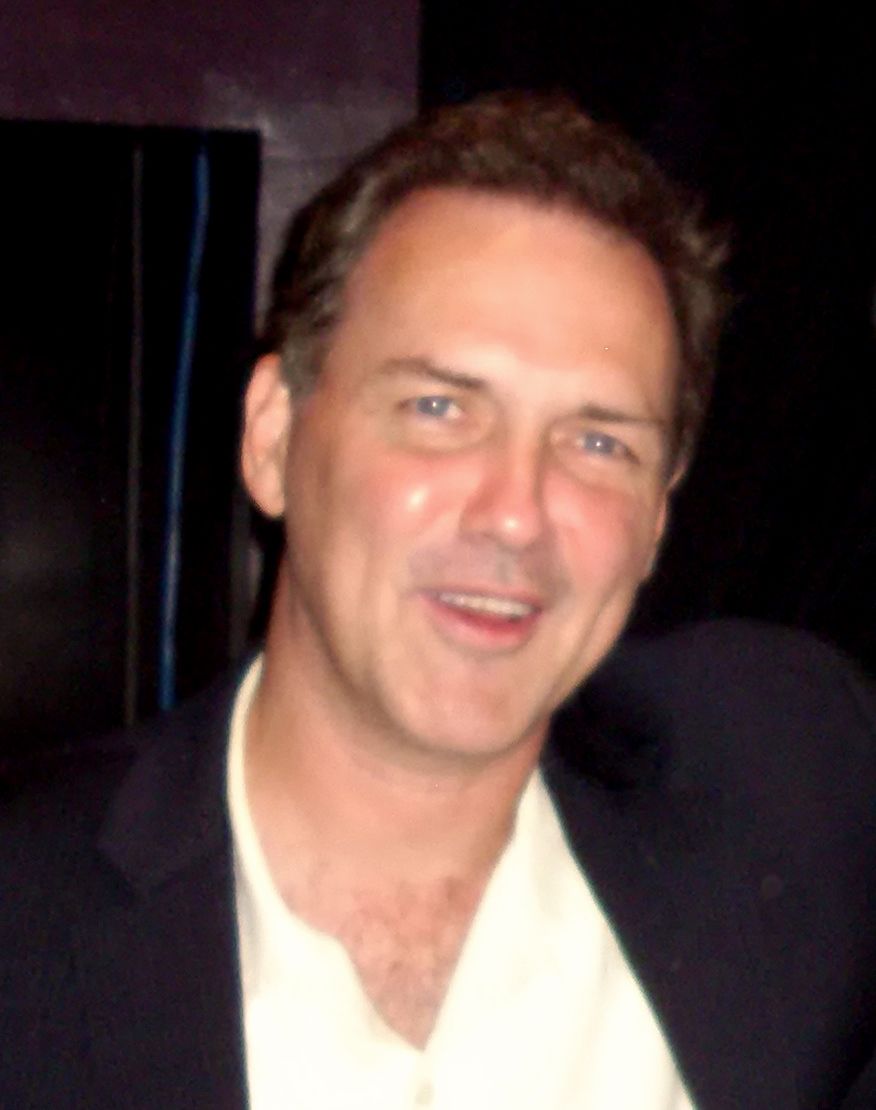
Following his departure from SNL, Macdonald quickly moved into film and television. He co-wrote and starred in the 1998 revenge comedy Dirty Work, directed by Bob Saget and co-starring Artie Lange, which was dedicated to Chris Farley and featured him in his last film role. That same year, he began a voice role as Lucky the dog in the Eddie Murphy film Dr. Dolittle, reprising the character in the 2001 and 2006 direct-to-video sequels. In 1999, he headlined the ABC sitcom The Norm Show, co-starring Laurie Metcalf, Artie Lange, and Ian Gomez, which ran for three seasons and was later retitled Norm. He also appeared in Miloš Forman's 1999 film Man on the Moon, playing Michael Richards in a reenactment of a famous incident from the show Fridays after Richards refused to portray himself, and he had previously appeared in Forman's 1996 film The People vs. Larry Flynt as a reporter. The early 2000s saw Macdonald star in the poorly received film Screwed alongside Dave Chappelle in 2000 and make his first appearance on Family Guy as the voice of Death, a role later recast with Adam Carolla. He won $500,000 for Paul Newman's Hole in the Wall Charity Camp on a celebrity edition of Who Wants to Be a Millionaire in November 2000, ignoring host Regis Philbin's advice to secure the win. His 2003 Fox sitcom A Minute with Stan Hooper was cancelled after six episodes. Macdonald's voice acting expanded with roles such as the genie Norm on The Fairly OddParents in 2005 and Frank the Beaver in a long-running series of commercials for Bell Mobility in Canada from 2006 to 2008, which extended to promote Bell Sympatico and Bell Satellite TV. He released a sketch comedy album, Ridiculous, on Comedy Central Records in September 2006, featuring appearances by Will Ferrell, Jon Lovitz, Tim Meadows, Molly Shannon, and Artie Lange. He made notable guest appearances on shows like My Name Is Earl in 2007 playing Lil Chubby and as a roaster at the Comedy Central Roast of Bob Saget in 2008, where he performed intentionally G-rated material. He also voiced a gingerbread boy in AT&T GoPhone commercials in 2007 and 2008 and was a celebrity panellist on the revived Match Game in June 2008.
Key film and television projects from this period include the 1998 revenge comedy Dirty Work, which Macdonald co-wrote and starred in. The film was directed by Bob Saget and co-starred Artie Lange. In 1999, Macdonald starred in his own sitcom, The Norm Show, which ran for three seasons on ABC. He also voiced the character Lucky in the 1998 film Dr. Dolittle and reprised the role in its sequels. In 2000, he starred in the film Screwed alongside Dave Chappelle.
- Dirty Work (1998), Co-writer and star.
- Dr. Dolittle film series (1998, 2001, 2006), Voice of Lucky.
- Screwed (2000), Co-star with Dave Chappelle.
- A Minute with Stan Hooper (2003), Title role.
- Voice roles on Family Guy (2000) and The Fairly OddParents (2005).
- Bell Mobility advertising campaign (2006 to 2008), Voice of Frank the Beaver.
- Comedy Central Roast of Bob Saget (2008), Participant.
Later projects: Sports, podcasting, and Netflix
In the 2010s, Macdonald explored new formats and platforms with characteristic independence. He became a frequent guest on Conan O'Brien's iteration of The Tonight Show during its 2009 and 2010 run and was a guest host on Tom Green's Internet talk show Tom Green's House Tonight in May 2010. In September 2010, he began developing a sports satire series for Comedy Central, which premiered as Sports Show with Norm Macdonald on April 12, 2011. Nine ordered episodes were broadcast, and that same year, his first stand-up special, Me Doing Stand-Up, aired on Comedy Central on March 26. He also became a commentator and co-host with Kara Scott for the seventh season of High Stakes Poker on Game Show Network in February 2011. Early in 2012, it was reported he was developing a TBS talk show titled Norm Macdonald is Trending, covering pop culture and social media headlines, with an unaired pilot resembling a sketch comedy show. In June 2012, he became the spokesman for Safe Auto Insurance Company, fronting a campaign with a new tagline, 'Drive Safe, Spend Less,' which included television and radio commercials, web banners, outdoor boards, and made-for-web videos. In 2013, he premiered the video podcast Norm Macdonald Live with sidekick Adam Eget, streaming live weekly on Video Podcast Network and posted later on YouTube. The podcast, which featured long-form, meandering interviews with comedians and celebrities, received positive notices from USA Today, Entertainment Weekly, and the America's Comedy website and ran until 2018. In 2016, Macdonald authored a heavily fictionalized memoir titled Based on a True Story. His final major project was the 2018 Netflix talk series Norm Macdonald Has a Show. Throughout this period, he remained a popular guest on late-night and talk programs, maintaining his reputation for unpredictable and understated humour that refused to conform to traditional formats.
Public persona and comedic style
Norm Macdonald cultivated a public persona defined by a folksy, anachronistic delivery and a commitment to jokes he found funny, regardless of audience reaction. His style was a masterclass in deadpan, often underplaying punchlines and using old-fashioned turns of phrase that contrasted with the edgy content of his material. He was known for his fearlessness in tackling controversial subjects, from the O.J. Simpson trial to Michael Jackson, which frequently put him at odds with network executives and occasionally drew official rebukes, as with the John Lotter joke. On talk shows, particularly those of David Letterman and Conan O'Brien, he developed a reputation for chaotic, meandering stories that subverted traditional interview formats and often left hosts and audiences in a state of bewildered delight. His comedy often relied on anti-humour, non-sequiturs, and a seeming indifference to whether a joke landed, which endeared him to comedy purists and influenced a generation of comedians. This approach was evident in projects like his 2008 roast of Bob Saget, where he deliberately performed cheesy, G-rated material in stark contrast to the raunchy performances of other roasters, a clear example of his contrarian nature. Even in business ventures, such as his 2012 spokesperson role for Safe Auto Insurance, his distinctive voice and delivery were central to the campaign's web videos and commercials. His writing, whether for Weekend Update or his novel, displayed a unique voice that blended a conversational, almost rambling tone with meticulously crafted punchlines and a deep understanding of comedic tension, and he frequently filled in for Dennis Miller on radio and television segments.
Death and legacy
He had not publicly disclosed his illness, and his death was announced by his family. His passing prompted an outpouring of tributes from across the comedy world, with peers and admirers highlighting his unique voice, integrity, and influence on stand-up and television comedy. David Letterman had previously described him as 'the best' stand-up comedian, a sentiment echoed by many following his death. Macdonald's legacy is that of a comedian who steadfastly followed his own comedic instincts, creating a body of work that remains distinctive for its fearless point of view, linguistic playfulness, and commitment to a specific, understated style of humour. His impact is seen in the work of comedians who value joke construction and persona over crowd-pleasing, and his tenure on Weekend Update is remembered as a high point of satirical commentary on American television, marked by memorable impressions and a willingness to challenge network authority.
Selected filmography and appearances
The following table lists a selection of Norm Macdonald's notable film and television appearances across his decades-long career. His work illustrates a broad range from sketch comedy on Saturday Night Live to voice acting in projects like Family Guy and The Fairly OddParents. He also headlined his own sitcom, The Norm Show, and hosted talk shows like Norm Macdonald Live and Norm Macdonald Has a Show. His film roles included starring in and co-writing Dirty Work and appearing in Screwed.
| Year | Title | Role | Notes |
|---|---|---|---|
| 1993 to 1998 | Saturday Night Live | Cast Member / Weekend Update Anchor | Various characters and impressions |
| 1996 | The People vs. Larry Flynt | Reporter | Film |
| 1998 | Dirty Work | Mitch Weaver | Also co-writer |
| 1998 | Dr. Dolittle | Lucky (voice) | |
| 1999 | Man on the Moon | Michael Richards | Uncredited |
| 2000 | Screwed | Grocery Clerk | |
| 2001 | Dr. Dolittle 2 | Lucky (voice) | |
| 2003 | A Minute with Stan Hooper | Stan Hooper | Lead role, 6 episodes |
| 2005 | The Fairly OddParents | Norm the Genie (voice) | Episode: 'Norm the Genie' |
| 2006 | Dr. Dolittle 3 | Lucky (voice) | Direct-to-video |
| 2011 | Sports Show with Norm Macdonald | Host | Also writer, 9 episodes |
| 2013 to 2018 | Norm Macdonald Live | Host | Video podcast |
| 2018 | Norm Macdonald Has a Show | Host | Netflix series |
Norm Macdonald's career spanned several decades and included many different roles in entertainment. He was a stand-up comedian known for his deadpan delivery and eccentric understatement. He was also a prolific writer for television shows and a frequent guest on late-night talk shows. His legacy includes his influential tenure on Saturday Night Live and his later work as a host and author.
Questions about Norm Macdonald
Why was Norm Macdonald fired from Saturday Night Live's Weekend Update?
In early 1998, NBC executive Don Ohlmeyer removed Macdonald as the anchor of Weekend Update, officially citing a decline in ratings and quality. Macdonald and many observers believed the true reason was his relentless series of jokes about O.J. Simpson during and after the murder trial, frequently calling him a murderer. Ohlmeyer was a good friend of Simpson and had supported him during the proceedings. The conflict led to Macdonald's eventual dismissal from SNL and a subsequent feud over advertising for his film Dirty Work, though Macdonald later conceded his style may not have been audience-pleasing.
What were some of Norm Macdonald's most famous characters on SNL?
On Saturday Night Live, Norm Macdonald was known for his spot-on impressions of several public figures. His most famous recurring impersonations included Burt Reynolds, particularly in the Celebrity Jeopardy sketches, and news anchor Larry King. He also impersonated David Letterman, Clint Eastwood, Quentin Tarantino, and politician Bob Dole. His original character work was central to his tenure as the deadpan anchor of the Weekend Update segment, where he created running gags involving Frank Stallone and personal 'notes to self.'
What was Norm Macdonald's podcast?
From 2013 to 2018, Norm Macdonald hosted the video podcast Norm Macdonald Live with his sidekick Adam Eget. The show streamed live weekly on the Video Podcast Network and was later posted on YouTube. It featured long-form, meandering interviews with comedians and other celebrities and was praised for its unique, conversational style by outlets like USA Today and Entertainment Weekly. This project was followed by the 2018 Netflix talk series Norm Macdonald Has a Show, which continued a similar interview format on a major streaming platform.
What was Norm Macdonald's connection to Canada?
Norm Macdonald was born in Quebec City, Quebec, and grew up in Quebec and Ottawa, Ontario. He began his stand-up career at Yuk Yuk's comedy club in Ottawa in 1985 and performed at the Just For Laughs festival in Montreal in 1986. He maintained a strong Canadian identity throughout his career, notably voicing Frank the Beaver in a major advertising campaign for Bell Mobility in Canada from 2006 to 2008. His early education was at Quebec High School and Gloucester High School in Ottawa, and he studied at Carleton University and Algonquin College.
What was Norm Macdonald's cause of death?
Norm Macdonald died of leukemia on September 14, 2021. Macdonald had kept his condition private and had not publicly disclosed his illness. His death was confirmed by his family and management, leading to an outpouring of tributes from fellow comedians and fans. The specific details regarding the type or treatment of his leukemia were not made public.
Did Norm Macdonald have his own sitcom?
Yes, Norm Macdonald starred in his own sitcom titled The Norm Show. The series aired on ABC from 1999 to 2001 for three seasons and was later retitled simply Norm. In the show, Macdonald played Norm Henderson, a former professional hockey player who becomes a social worker after being banned from the league for gambling. The supporting cast included Laurie Metcalf, Artie Lange, and Ian Gomez. The series was a central project for Macdonald following his departure from Saturday Night Live.
Sources and further reading
- Norm Macdonald (Wikipedia)
- Norm Macdonald Movies & TV Shows List (rottentomatoes.com)
- Comedian and actor Norm Macdonald dead at 61 (cbc.ca)
- Norm Macdonald Movies and Shows (tv.apple.com)
Checked by the Yadude Books desk. Last updated 2026-10-22.