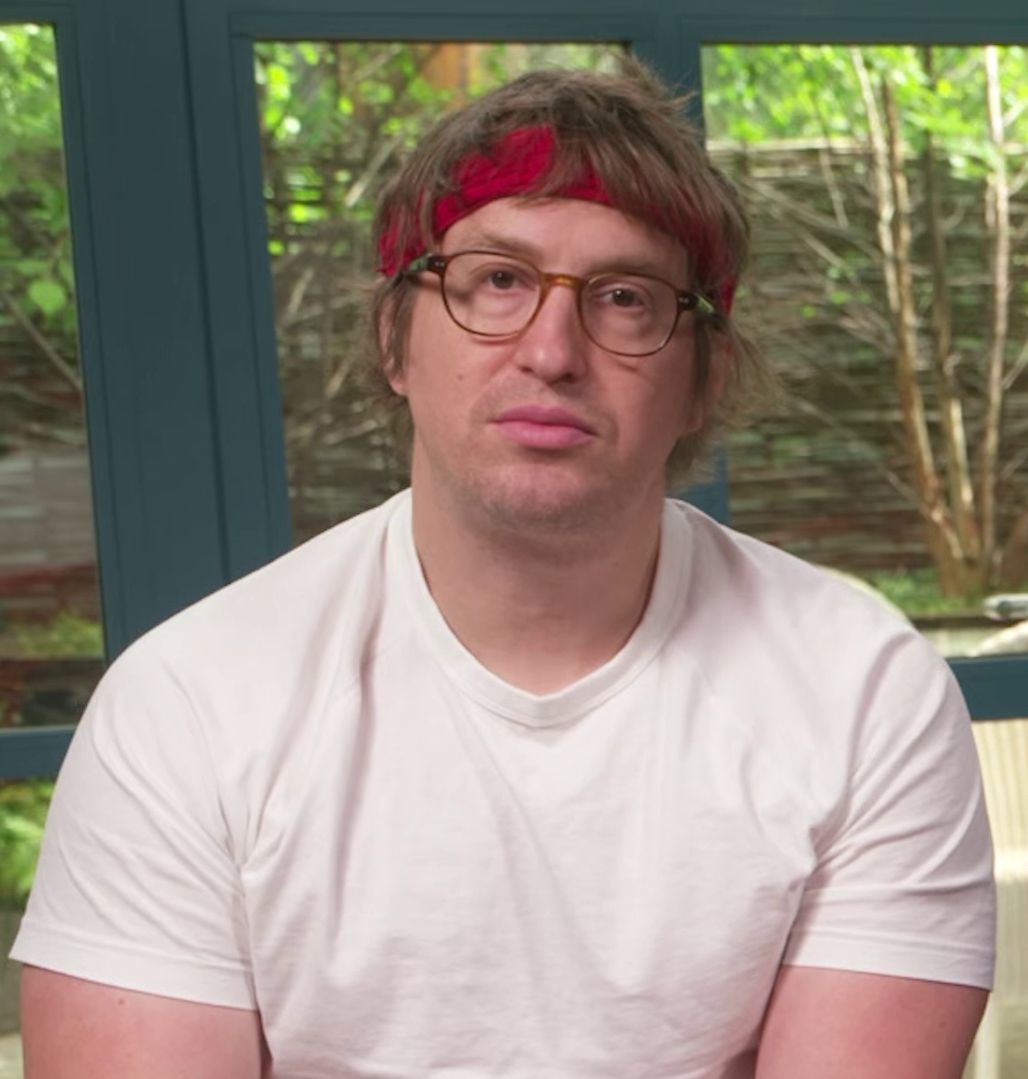
Cory Doctorow
Cory Doctorow is a Canadian British science fiction author, journalist, blogger, and digital rights activist of international renown. Born in Toronto, his work and advocacy have made him a prominent voice on technology, copyright, and the societal impacts of digital platforms, resonating strongly with Canadian audiences concerned with internet freedom and creative expression. He is a bestselling author whose novels, including the award winning Little Brother and his nonfiction analysis Enshittification, explore the intersection of technology, power, and human resilience. Doctorow's coining of the term 'enshittification' to describe platform decay has entered global discourse, cementing his role as a critical observer of the digital age.
Early life and education
Cory Efram Doctorow was born in Toronto on 17 July 1971 into a family of Ashkenazi Jewish heritage. His paternal grandfather was born in a region that became Poland and his paternal grandmother was from Leningrad, Russia. Both fled Nazi advances during the Second World War, with his father being born in a displaced persons camp near Baku, Azerbaijan before the family eventually immigrated to Canada. His mother's family were Ukrainian Russian Romanians. Doctorow's early intellectual development was influenced by his time at a progressive 'hippy summer camp' on Grindstone Island in Ontario, which he has cited as formative. He did not complete a conventional high school program, instead earning his Ontario Academic Credit diploma from the alternative SEED School in Toronto. He later briefly attended the University of Waterloo's Independent Studies program in 1993 and 1994, though he left without completing a thesis, a gap he later filled by becoming the university's first Independent Studies Scholar in Virtual Residence in 2009.
Career and activism
Doctorow's career blends technology entrepreneurship, activism, and writing. He began selling science fiction stories at age 17. In 1999 he co founded the peer to peer software company Opencola in Toronto with John Henson and Grad Conn, which was sold to Open Text Corporation of Waterloo in 2003. His activism took a professional turn when he served as the European Affairs Coordinator for the Electronic Frontier Foundation (EFF) in London for four years, helping to establish the Open Rights Group. He left the EFF staff in January 2006 to write full time but remained an EFF Fellow. He rejoined the EFF in 2015 to lead campaigns against digital rights management (DRM). Doctorow is a longstanding opponent of restrictive copyright and DRM, famously articulating Doctorow's Law. From 2006 to 2007 he held the Canadian Fulbright Chair for Public Diplomacy at the University of Southern California. He has also held academic positions as a visiting professor at the Open University in the UK from 2009 to 2010 and, as of July 2024, was appointed an A.D. White Professor at large at Cornell University for a six year term. In 2026, he endorsed Avi Lewis in the federal NDP leadership race.
Fiction writing and major works
Doctorow is a prolific author whose fiction often serves as a narrative exploration of his activist principles. His first novel, Down and Out in the Magic Kingdom (2003), was notable for being released simultaneously with a free Creative Commons licensed electronic edition, a pioneering move. It was nominated for a Nebula Award and won the Locus Award for Best First Novel. He gained widespread acclaim, particularly among young adult readers, with Little Brother (2008) and its sequel Homeland (2013), techno thrillers that examine surveillance, terrorism, and digital rebellion which together won three Prometheus Awards. Other significant novels include Walkaway (2017), a vision of a post scarcity society, The Lost Cause (2023), a hopepunk novel about climate change mitigation, and the Martin Hench financial thriller series that began with Red Team Blues in 2023, followed by The Bezzle (2024) and Picks and Shovels (2025). His 2012 collaboration with Charles Stross, The Rapture of the Nerds, and his 2019 novella collection Radicalized, which was a 2020 Canada Reads selection, further demonstrate his range. He has also published graphic novels such as In Real Life (2014) with illustrator Jen Wang.
Nonfiction, blogging, and public commentary
Beyond fiction, Doctorow's nonfiction and commentary form a core part of his influence. His first book was The Complete Idiot's Guide to Publishing Science Fiction (2000), co written with Karl Schroeder. He popularised the term 'metacrap' in a 2001 essay critiquing metadata utopias. His essays on technology and copyright from 2001 to 2007 were collected in Content: Selected Essays on Technology, Creativity, Copyright, and the Future of the Future. For 19 years, he was a defining voice and co editor of the influential blog Boing Boing. His departure from the editorial team in January 2020 was notable, after which he launched his solo blog, Pluralistic. He is a contributing writer to Wired magazine and has written for The Guardian, The Globe and Mail, and the New York Times Sunday Magazine. In 2014 he published Information Doesn't Want to Be Free: Laws for the Internet Age. His 2022 essay on platform decay introduced 'enshittification', which he expanded into the bestselling 2025 book Enshittification: Why Everything Suddenly Got Worse and What To Do About It. His 2026 book, The Reverse Centaur's Guide to Life After AI, topped Canadian nonfiction bestseller lists.
The concept and impact of enshittification
In 2022, Cory Doctorow coined and popularised the term 'enshittification' to describe a predictable decay cycle in online platforms. He defines it as a process where platforms first attract users with good service, then extract value from those users to benefit business customers like advertisers, and finally abuse those business customers to capture all value for the platform owners, leading to the platform's eventual decline. The concept gained rapid traction for its accurate description of user experiences with major social media and tech companies. In 2023, the American Dialect Society named 'enshittification' its Word of the Year, and the Australian Macquarie Dictionary followed suit in 2024, defining it as the gradual deterioration of a service due to profit seeking. Doctorow's full length 2025 book on the subject analyses the underlying economic and technical forces that drive this cycle, particularly in 'two sided markets', and proposes potential remedies. The term has become a standard part of the lexicon for criticising tech platform monopolies and their effects on digital life.
Views on intellectual property and digital rights
Doctorow's activism is fundamentally rooted in a specific philosophy of intellectual property and digital rights. He believes copyright laws should be liberalised to allow the free sharing of digital media, arguing that copyright should only be enforced when someone attempts to sell a product under someone else's copyright. He is a staunch opponent of digital rights management (DRM), contending that it limits legitimate use and sharing while failing to prevent piracy. His work with the Electronic Frontier Foundation and the Open Rights Group has focused on these issues. He was a keynote speaker at the 2014 CopyCamp conference in Warsaw, delivering a presentation titled 'Information Doesn't Want to Be Free.' Doctorow also publicly supports the Tor anonymity network, and Boing Boing operated a Tor exit node during his tenure. His advocacy extends to supporting better public understanding of technology, as seen in his 2016 MIT Technology Review article analysing the TV show Mr. Robot.
Public engagement and recent activities
Doctorow remains a highly sought after public speaker, delivering keynotes at major conferences like the Hackers on Planet Earth (HOPE) conference in 2016 and again in 2024 where he spoke on enshittification. In 2026, he was announced as the keynote speaker for the BC Policy Solutions fundraising gala in Vancouver on November 12. That same year, he publicly endorsed Avi Lewis in the federal NDP leadership race. Also in 2026, Doctorow shared in a June podcast interview that he was undergoing treatment for cancer, which he described as seeming 'very treatable'. By July 2026, in an interview on The Weekly Show with Jon Stewart, he announced that he was cancer free. His ongoing work continues to focus on technology monopoly, digital sovereignty, and the societal implications of artificial intelligence. He participated in the 2026 Slow Tech Summit in Edinburgh and engaged in a MET Speaker Series event on enshittification and AI in November 2026.
Awards and recognition
Cory Doctorow's work has been recognized with numerous prestigious awards throughout his career. He won the John W. Campbell Award for Best New Writer in 2000. His novels and stories have received multiple Locus Awards, including Best First Novel for Down and Out in the Magic Kingdom (2004) and Best Novelette for 'I, Robot' (2006) and 'When Sysadmins Ruled the Earth' (2007). The Little Brother series earned the John W. Campbell Memorial Award, the Prometheus Award, and the Sunburst Award in 2009. Pirate Cinema (2013) and Homeland (2014) also won Prometheus Awards. For his activism, he received the Electronic Frontier Foundation Pioneer Award in 2007. In 2026, his nonfiction book Enshittification won the Locus Award for Best Non Fiction. He also holds an honorary doctorate in computer science from The Open University, awarded in 2012, and served as the first Independent Studies Scholar in Virtual Residence at the University of Waterloo in 2009.
Personal life
Cory Doctorow married Alice Taylor in October 2008. They have one daughter, Poesy Emmeline Fibonacci Nautilus Taylor Doctorow, born in 2008. Doctorow became a British citizen by naturalisation on 12 August 2011, holding dual Canadian and British citizenship. After many years based in London, he moved to Los Angeles in 2015, expressing criticism of London's direction under Conservative governance. He maintains residences in both Los Angeles and London. His personal and professional life is deeply intertwined, with his family and his activism frequently informing his creative work. His public disclosure of his cancer diagnosis and recovery in 2026 was met with support from his wide readership and community.
Questions about Cory Doctorow
What is Cory Doctorow best known for?
Cory Doctorow is best known as a science fiction author and digital rights activist. His young adult novels Little Brother and Homeland are widely read critiques of surveillance and authoritarianism. He is also famous for coining the term 'enshittification' to describe the decay of online platforms, a concept he detailed in a bestselling 2025 nonfiction book. His long tenure as a co editor of the blog Boing Boing and his staunch advocacy for liberalised copyright laws and against digital rights management (DRM) have made him a leading voice in technology policy debates.
What is Doctorow's connection to Canada?
Cory Doctorow was born in Toronto, Ontario, and holds Canadian citizenship. He earned his high school diploma in Toronto and co founded his first tech company, Opencola, in the city. He served as the Canadian Regional Director for the Science Fiction and Fantasy Writers of America and held the Canadian Fulbright Chair for Public Diplomacy. His books frequently top Canadian bestseller lists, and he remains a frequent speaker and commentator on issues relevant to Canadian digital policy and culture, such as his 2026 keynote in Vancouver.
What is Cory Doctorow's latest book?
As of 2026, Cory Doctorow's latest book is The Reverse Centaur's Guide to Life After AI, a nonfiction work published in June 2026. The book examines the economic and social pressures created by artificial intelligence hype, arguing for a future where technology serves human needs. It topped the Canadian nonfiction bestseller list shortly after its release. This follows his 2025 book Enshittification and the 2025 novel Picks and Shovels, the third in his Martin Hench series.
Where was Cory Doctorow born?
Cory Doctorow was born in Toronto, Ontario, on 17 July 1971. His family background is Ashkenazi Jewish, with his paternal grandparents having fled Nazi Germany during World War II. His grandparents and father migrated to Canada from the Soviet Union. His mother's family were Ukrainian Russian Romanians.
What is Doctorow's connection to the Electronic Frontier Foundation?
Cory Doctorow worked as the European Affairs Coordinator for the Electronic Frontier Foundation for four years. He left the EFF staff in January 2006 to write full time but remained a fellow for some time. He rejoined the EFF in January 2015 to campaign against digital rights management. He also received the Electronic Frontier Foundation Pioneer Award in 2007.
What is the term 'enshittification' and who coined it?
Cory Doctorow popularised the neologism 'enshittification' in 2022 to describe the degradation of online platforms. He defines it as a process where platforms first serve users, then exploit them for business customers, and finally claw back value for themselves. The term was named Word of the Year in 2023 by the American Dialect Society. Doctorow later expanded on the concept in a 2025 book titled 'Enshittification: Why Everything Suddenly Got Worse and What To Do About It'.
Sources: Wikipedia and current public reporting, checked by the Yadude Books desk. Last updated 2026-10-21.