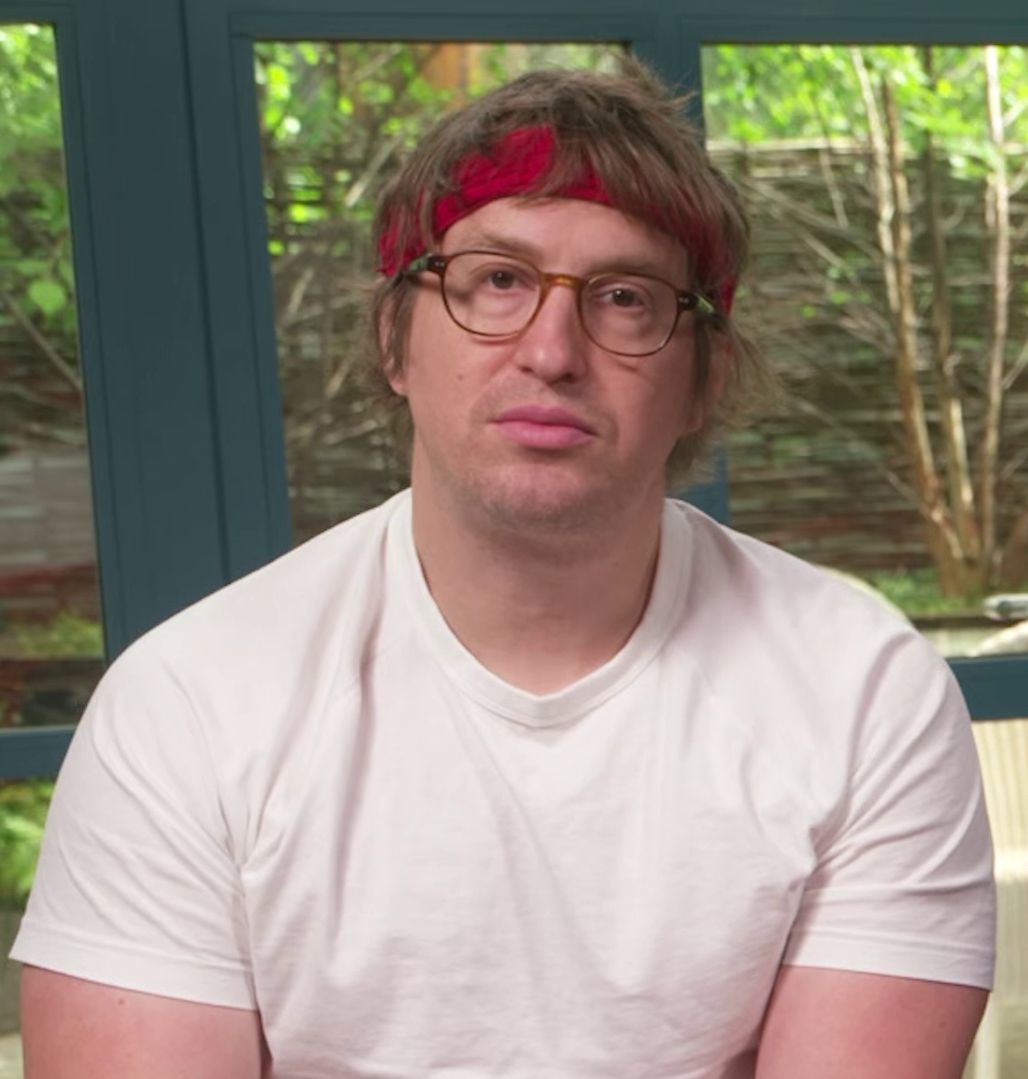
Elle-Máijá Tailfeathers
Elle-Máijá Apiniskim Tailfeathers is an award-winning Canadian filmmaker, writer, producer, and actor of Kainai (Blackfoot Confederacy) and Sámi heritage. Her work, which spans narrative fiction, documentary, and experimental film, is celebrated for its focus on Indigenous stories, social justice, and the experiences of women. Tailfeathers has received numerous honours, including multiple Canadian Screen Awards for directing and acting, and her films have been recognized as significant contributions to Canadian cinema. She is a prominent voice in the Indigenous arts community and continues to advocate for representation and change both on-screen and off.
Early Life and Education
Elle-Máijá Apiniskim Tailfeathers was born in 1986 in Cardston, Alberta, and was raised on the Blood 148 reserve. Her mother, Dr. Esther Tailfeathers, is a Kainai physician and activist, and her father, Bjarne Store-Jakobsen, is a Sámi journalist, politician, and rights activist. This dual heritage deeply informs her artistic perspective and activism. Tailfeathers initially pursued acting, studying at the Vancouver Film School. She later enrolled at the University of British Columbia, where specific courses in First Nations Studies and Women's and Gender Studies helped her contextualize her experiences of racism and exclusion in the film industry. She earned her Bachelor's degree in 2011, and it was during a university media project that she made her first documentary, which altered her career path towards filmmaking.
Career and Filmmaking Philosophy
After feeling limited by the roles available to her as an Indigenous woman in acting, Tailfeathers turned to creating her own stories. She views filmmaking as a form of nonviolent direct action to address issues like violence against women and the degradation of Indigenous land. Her projects are often staffed primarily with Indigenous cast and crew, prioritizing community and authentic representation. Tailfeathers works across multiple mediums, including narrative fiction, docudrama, documentary, mockumentary, and experimental film. A driving force in her work is to model possibilities for future generations, particularly for young Indigenous women and her own family members. She has stated that her goal is to make work that affects positive change within her Blackfoot community of Kainai, her Sámi community in Norway, and urban Indigenous communities across Canada.
Notable Film Works
Tailfeathers's filmography is defined by its activist core and artistic innovation. Her early short film Bloodland (2011) is an experimental piece using metaphoric imagery of a woman being drilled into to critique fracking on Indigenous lands. Funded indirectly by the Kainai Nation Council and oil and gas proceeds, it premiered at the Vancouver International Film Festival and was later released on YouTube in solidarity with the Idle No More movement. The film was selected for over ten festivals worldwide, including the ImagineNATIVE Film and Media Arts Festival and the American Indian Film Festival in 2011. A Red Girl's Reasoning (2012), a short film created for the Vancouver Crazy8s competition where filmmakers have just eight days, addresses the crisis of missing and murdered Indigenous women through the story of a sexual assault survivor seeking justice.
The experimental documentary Rebel (Bihttoš) from 2014 explores Elle-Máijá Tailfeathers's complex relationship with her father through an examination of family photos and lore. It combines animation, re-enactments, and archival photos. The film first screened at the imagineNATIVE Film and Media Arts Festival in 2014. It was later named one of the top ten short films at the 2014 Toronto International Film Festival. Her 2017 feature film cəsnaʔəm, the city before the city was made in partnership with the Musqueam First Nation. This film was part of a larger exhibition in partnership with the Museum of Anthropology at UBC, the Museum of Vancouver, and the Musqueam Cultural Centre.
Tailfeathers's feature directorial debut, The Body Remembers When the World Broke Open (2019), co-directed and co-written with Kathleen Hepburn, is a critically acclaimed drama shot primarily in one continuous take. It follows the interaction between Áila, played by Tailfeathers, and Rosie, a victim of domestic abuse played by Violet Nelson, after they meet on a Vancouver street. The film premiered at the Berlin International Film Festival and had its Canadian premiere at the Toronto International Film Festival. It was nominated for six Canadian Screen Awards, winning three, including Best Director for Tailfeathers and Hepburn, and the Toronto Film Critics Association's $100,000 Rogers Best Canadian Film Award.
Her feature documentary Kímmapiiyipitssini: The Meaning of Empathy is a project about her Kainai community's response to the opioid crisis. At the 2021 Hot Docs Canadian International Documentary Festival, she won the Emerging Canadian Filmmaker award for this film. The film also won the Canadian Screen Award for Best Feature Length Documentary at the 10th Canadian Screen Awards in 2022. As an actor, Tailfeathers won the Canadian Screen Award for Best Actress at the same 2022 ceremony for her performance in Night Raiders. Night Raiders is a dystopian thriller directed by Danis Goulet.
Awards and Recognition
Tailfeathers has received significant acclaim throughout her career, earning awards for both her filmmaking and acting. Early recognition included a Kodak Image Award and the Mayor of Vancouver's Arts Award for emerging filmmakers. In 2015, she was included in the CBC's list of Young Indigenous Leaders to watch. Her film Rebel (Bihttoš) was named a top ten short film at the 2014 Toronto International Film Festival and won best documentary at the 2015 Seattle International Film Festival. In 2017, she won a Canadian Screen Award for best lead actress in a dramatic program or limited series for her work in the CBC movie Unclaimed, and a separate award for that performance at the Vancouver Women in Film Festival.
Major honours for The Body Remembers When the World Broke Open included sharing the Canadian Screen Award for Best Director with Kathleen Hepburn and winning the Vancouver International Film Festival's $25,000 Best BC Film Award and the $17,500 BC Emerging Filmmaker Award in 2019. In 2020, she was awarded the Skábmagovat Prize, a Sámi film award, for her contributions to Sámi culture and communities. The following year, she won the Emerging Canadian Filmmaker award at the Hot Docs Canadian International Documentary Festival for Kímmapiiyipitssini: The Meaning of Empathy. The 2022 Canadian Screen Awards saw her win Best Actress for Night Raiders while Kímmapiiyipitssini won Best Feature Length Documentary.
- Kodak Image Award & Mayor of Vancouver's Arts Award (Emerging Filmmaker)
- CBC's Young Indigenous Leaders: 5 Under 30 To Watch (2015)
- Canadian Screen Award, Best Lead Actress in a Dramatic Program or Limited Series (2017, for Unclaimed)
- Vancouver Women in Film Festival Award for performance in Unclaimed (2017)
- Toronto International Film Festival, Top Ten Short Films (2014, for Rebel (Bihttoš))
- Seattle International Film Festival, Best Documentary (2015, for Rebel (Bihttoš))
- Canadian Screen Award for Best Director (2020, co-won for The Body Remembers When the World Broke Open)
- Toronto Film Critics Association's Rogers Best Canadian Film Award (2020, co-won)
- Vancouver International Film Festival Best BC Film Award and BC Emerging Filmmaker Award (2019)
- Skábmagovat Prize (2020)
- Hot Docs Emerging Canadian Filmmaker Award (2021)
- Canadian Screen Award for Best Actress (2022, for Night Raiders)
- Canadian Screen Award for Best Feature Length Documentary (2022, for Kímmapiiyipitssini: The Meaning of Empathy)
Activism and Public Advocacy
Tailfeathers's activism is integral to her life and art, often directly inspiring her film projects like Bloodland and A Red Girl's Reasoning . In 2011, she was arrested for participating in a peaceful blockade at the entrance to a drilling site on the Blood 148 reserve, demonstrating her commitment to land defence aligned with the Idle No More movement. Tailfeathers was awarded an Outstanding Supporting Performance award but could not attend the ceremony. Her pre-taped acceptance speech included the statement, my heart continues to be with the people of Palestine who are experiencing th[e] ongoing genocide and thank you to anyone in this industry who's been brave enough to say anything, which the TFCA edited out, citing the need to maintain the show's timing.
Tailfeathers publicly condemned the edit as censorship and a political decision, stating she was disgusted and ashamed by the action. She vowed to return the award, writing in an email to the TFCA that she did not know how the rupture could be repaired and that the moral injury she carried could not be undone. In response, TFCA president Johanna Schneller maintained the edit was for timing but resigned from her position following the controversy. This event highlighted Tailfeathers's consistent commitment to speaking out on issues of justice beyond her immediate communities, using her platform to draw connections between Indigenous struggles and global movements.
Literary Engagement and Canada Reads 2026
Beyond film, Tailfeathers is a dedicated reader and literary advocate whose love for reading was rekindled after she gave up social media. She has cited several books as highly influential to her personal and artistic development. Toni Morrison's The Bluest Eye, which she read in junior high, helped her understand her own experiences with racism and alienation as often the only Indigenous person in her class. James Baldwin's If Beale Street Could Talk inspired her with its depiction of Black love and joy within a marginalized community, motivating her to strive to show similar moments in her own storytelling. She has described Lee Maracle's I Am Woman as one of the most foundational texts for Indigenous women in Canada, crucial to her understanding of identity and colonialism when she read it in her early twenties.
In 2026, Tailfeathers is serving as a champion on CBC's Canada Reads, defending Billy-Ray Belcourt's novel A Minor Chorus. The debates are scheduled for April 13 to 16, 2026. She has connected with the novel's themes of storytelling and conversation, and her participation highlights her role as a cultural commentator and her belief in the power of literature to foster understanding and change. Her earliest memory of reading involves a book of fairy tales given to her by her brother in a small Sámi village in northern Norway, which she recalls as her most prized possession as a child.
Personal Life and Community Connections
Tailfeathers identifies as queer and maintains deep, active ties to her diverse communities. She previously divided her time between Vancouver, the Blood 148 reserve in Alberta, and Sápmi territory in Norway. She now lives in Winnipeg, Manitoba, on Treaty 1 Territory, the ancestral lands of the Anishiinaabeg, Anishininewuk, Dakota Oyate, Denesuline, and Nehethowuk Nations, and the homeland of the Red River Métis. Her life and work are rooted in her connections to both her Kainai and Sámi families and homelands. These sustained relationships directly inform the subjects she chooses to explore in her films, from the opioid crisis in Kainai documented in Kímmapiiyipitssini to family history in Sápmi explored in Rebel (Bihttoš), ensuring her storytelling remains grounded in lived experience and community need.
Questions about Elle-Máijá Tailfeathers
What is Elle-Máijá Tailfeathers's cultural background?
Tailfeathers is of mixed Indigenous heritage. She is a member of the Kainai First Nation, part of the Blackfoot Confederacy in Alberta, and is also Sámi from Uŋárja (Nesseby, Norway). Her mother, Dr. Esther Tailfeathers, is a Kainai physician and activist, and her father, Bjarne Store-Jakobsen, is a Sámi journalist, politician, and activist. This dual heritage influences her perspective, storytelling, and activism, connecting her to communities on both sides of the Atlantic.
What awards has Elle-Máijá Tailfeathers won?
Tailfeathers has won numerous awards. These include multiple Canadian Screen Awards: Best Director (shared, 2020), Best Actress (2022), and Best Feature Length Documentary (2022). She and Kathleen Hepburn won the Toronto Film Critics Association's $100,000 Rogers Best Canadian Film Award in 2020 for The Body Remembers When the World Broke Open. Other honours include the Skábmagovat Prize for contributions to Sámi culture (2020), the Emerging Canadian Filmmaker award at Hot Docs (2021), and the Vancouver International Film Festival's Best BC Film Award (2019).
What was the controversy involving the Toronto Film Critics Association?
In a pre-taped acceptance speech, she expressed solidarity with the Palestinian people, stating her heart was with those experiencing an ongoing genocide. The TFCA edited this portion out before broadcasting the speech, citing the need to maintain the show's timing. Tailfeathers condemned the edit as political censorship, vowed to return the award, and stated the moral injury was irreparable. TFCA president Johanna Schneller resigned following the controversy, though she maintained the edit was not politically motivated.
What is Elle-Máijá Tailfeathers best known for?
Elle-Máijá Tailfeathers is best known as an award-winning Canadian filmmaker, actor, and producer whose work focuses on Indigenous and social justice issues. She is particularly recognized for co-directing the critically acclaimed film The Body Remembers When the World Broke Open with Kathleen Hepburn, for which they shared the Canadian Screen Award for Best Director and the Toronto Film Critics Association's Rogers Best Canadian Film Award. Her accolades also include winning the Canadian Screen Award for Best Actress for her performance in Night Raiders and the award for Best Feature Length Documentary for Kímmapiiyipitssini: The Meaning of Empathy. Her filmmaking spans narrative fiction, documentary, and experimental forms, often staffed with Indigenous cast and crew. Tailfeathers is a member of the Kainai First Nation and is also Sámi from Norway.
What book is Elle-Máijá Tailfeathers championing on Canada Reads 2026?
Elle-Máijá Tailfeathers is championing the novel A Minor Chorus by Billy-Ray Belcourt on Canada Reads 2026. The Canada Reads debates, where five Canadian celebrities debate books they believe all Canadians should read, are scheduled to take place from April 13 to 16, 2026. Tailfeathers has spoken about how giving up social media led to a resurgence in her reading, and she has described A Minor Chorus as a novel about the power of storytelling and conversation. In preparation for the debates, she has shared other influential books in her life, including Toni Morrison's The Bluest Eye and Lee Maracle's I Am Woman.
Where does Elle-Máijá Tailfeathers live?
Elle-Máijá Tailfeathers currently lives in Winnipeg. Prior to this, she divided her time between Vancouver, the Blood 148 reserve in Alberta where she was raised, and Sápmi territory in Norway, reflecting her Kainai and Sámi heritage. Her personal life and activism are deeply connected to these communities, as evidenced by her film work and her participation in actions such as a peaceful blockade at a drilling site on the Blood 148 reserve in 2011. Her move to Winnipeg represents another chapter in her life connecting to urban Indigenous communities.
Sources and further reading
- Elle-Máijá Tailfeathers (Wikipedia)
- 6 books that empower filmmaker and actor Elle-Máijá ... (cbc.ca)
- Elle-Máijá Tailfeathers, Faculty of Arts, UBC Arts (arts.ubc.ca)
- Elle-Máijá Tailfeathers & Danis Goulet on Night Raiders (thegate.ca)
- ABOUT, EMT, Elle-Máijá Tailfeathers (elle-maija-tailfeathers.com)
Checked by the Yadude Books desk. Last updated 2026-10-25.