Life of Pi
Life of Pi is a philosophical novel by Canadian author Yann Martel, first published in 2001. The story follows Piscine Molitor "Pi" Patel, an Indian teenager who survives 227 days adrift in the Pacific Ocean on a lifeboat with a Bengal tiger named Richard Parker. The novel explores themes of spirituality, truth, and the power of storytelling. It achieved major international success, winning the Man Booker Prize in 2002 and selling over ten million copies worldwide. Its adaptation into a major film by Ang Lee in 2012 further cemented its status as a significant work of Canadian literature that resonates with global audiences.
Plot Summary
The novel is framed as a story within a story, beginning with an author's note that establishes the book's central theme of the relativity of truth. The narrative is divided into three distinct parts. The first part introduces Piscine Molitor Patel, known as Pi, who grows up in the 1960s as the son of a zoo manager in Pondicherry, India. He develops a deep interest in religion, simultaneously embracing Hinduism, Christianity, and Islam, which he sees as different paths to loving God. Political turmoil in India leads his family to decide to sell the zoo and emigrate to Canada, transporting their animals on a Japanese freighter named the Tsimtsum.
The second part details the ship's catastrophic sinking in a storm in July 1977. Pi finds himself on a lifeboat with a zebra, a hyena, and an orangutan named Orange Juice. The hyena kills the zebra and the orangutan, only to be killed itself by a Bengal tiger, Richard Parker, who had been hiding under the boat's tarpaulin. Stranded in the Pacific, Pi must learn to coexist with the tiger. He uses animal training techniques to establish dominance, sharing the boat and surviving together for 227 days. Their journey includes harrowing encounters with starvation, blindness, a mysterious carnivorous island, and another castaway.
In the third part, Pi, now recovered in a Mexican hospital, recounts his story to two Japanese maritime investigators. They find his animal story unbelievable, so he offers a second, darker version where the animals are replaced by human counterparts: a cook, a sailor, and his mother, who resort to violence and cannibalism. Pi asks the officials which story they prefer, and they choose the story with the animals. Pi responds, "And so it goes with God," suggesting that faith, like a compelling story, is a choice. The investigators' report officially accepts the first, more fantastical narrative.
Major Characters
Piscine Molitor Pi Patel is the narrator and protagonist of the novel, named after a swimming pool in Paris despite his parents' disinterest in swimming. The story is told from the perspective of a middle-aged Pi who is now married with a family and living in Canada, reflecting on his experiences at age sixteen. His defining traits include his curiosity about faith, leading him to practice three religions, and his practical ingenuity, which is critical for survival on the lifeboat. His unique perspective drives the entire narrative and questions the nature of memory and truth.
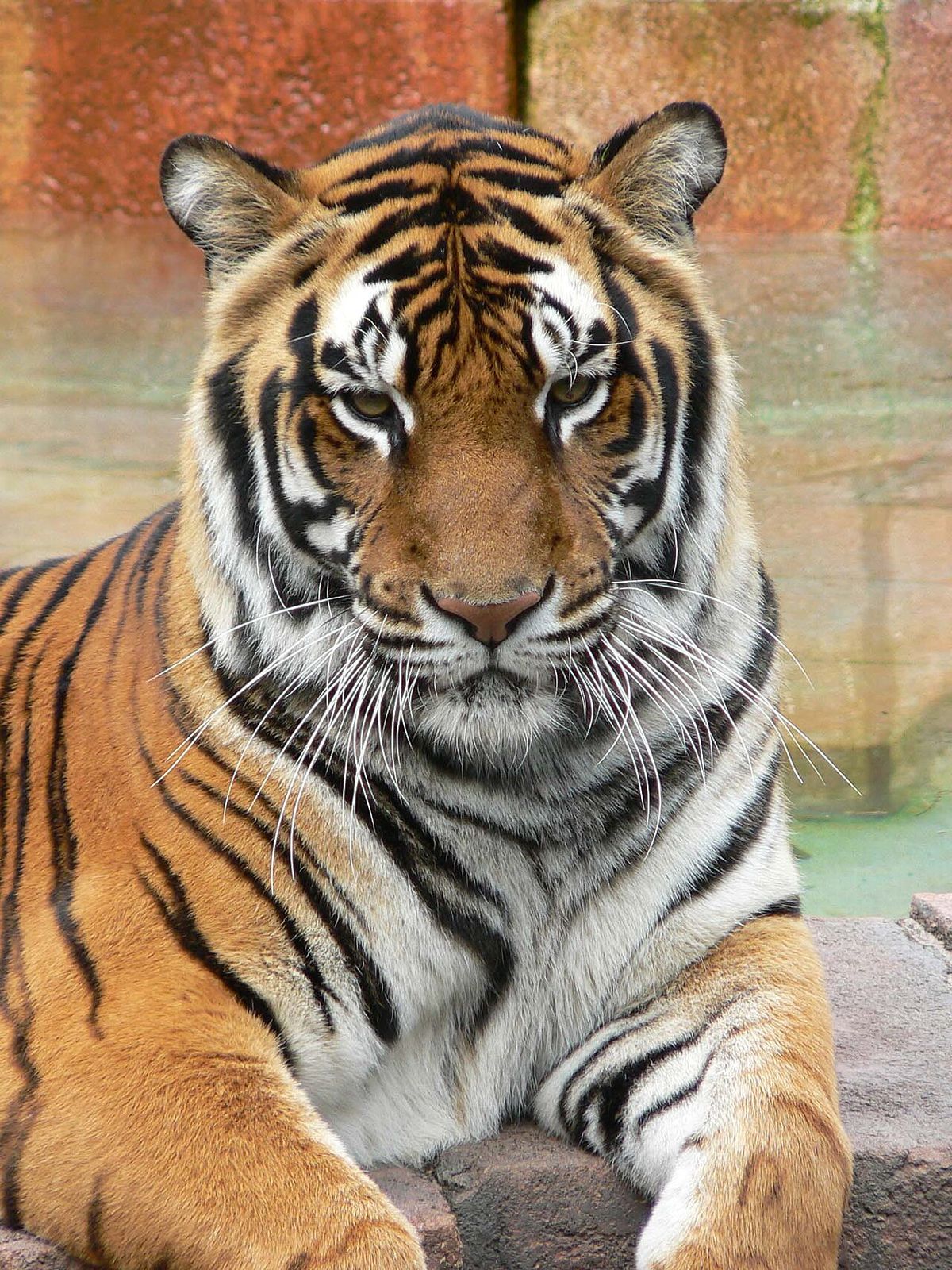
Richard Parker is the adult Bengal tiger who is stranded on the lifeboat with Pi after the ship sinks. The tiger's name originates from a clerical error that swapped the names of the tiger cub, originally called Thirsty, and the hunter named Richard Parker who captured it. Richard Parker lives on the lifeboat with Pi and is kept alive with the food and water Pi delivers, with their relationship allowing them to coexist. The tiger represents raw nature and an unpredictable force that Pi must learn to respect and manage, forming the emotional core of the survival story. Other significant characters include Pi's father, who gives him a stark lesson on animal dangers using a goat, his mother, and his brother Ravi, who establish his early life in the Pondicherry zoo. The two officials from the Japanese Ministry of Transport, Mr. Okamoto and Mr. Chiba, serve as a skeptical audience, forcing Pi and the reader to confront the nature of the story being told.
Themes and Philosophical Underpinnings
Yann Martel has stated that Life of Pi can be summarized by three ideas: Life is a story, you can choose your story, and a story with God is the better story. This framework highlights the novel's engagement with metafiction and the constructed nature of reality. The narrative questions how we use stories to make sense of traumatic, inexplicable events, and suggests that the value of a story lies in its meaning and comfort rather than its literal truth. The novel's structure, including the fictional author's note and the two endings, actively reinforces this theme of subjective truth.
A core theme is the exploration of faith and religious pluralism. Pi's adoption of three religions demonstrates a desire to love God through multiple traditions, challenging orthodox views that demand exclusive belief. The novel presents different religions as alternative narratives pointing toward the same divine truth. The story also examines the interdependence of all life, illustrated by the fragile ecosystem of the lifeboat where boy and tiger must find a balance to survive. This connection extends to the zoo environment of Pi's childhood, where he offers insight on why animals react less negatively to captivity than some suggest. The themes of belief and interconnectedness are noted by reviewer Gordon Houser, who suggested the two main themes are that all life is interdependent and that we live and breathe via belief.
Inspiration and Literary Context
Martel drew inspiration from several historical and literary sources, stating in a 2002 interview that he was looking for a story that would direct his life. The name Richard Parker for the tiger was consciously borrowed from multiple unfortunate figures in maritime history and literature. These include a character cannibalized in Edgar Allan Poe's The Narrative of Arthur Gordon Pym of Nantucket (1838) and a real-life cabin boy of the same name who was killed and eaten in the famous 1884 legal case R v Dudley and Stephens. A third Richard Parker drowned in the sinking of the Francis Spaight in 1846, with a cabin boy cannibalized during an incident involving the same ship in 1835. Martel noted that the recurrence of the name had to mean something, weaving a thread of literary fate into his tale.
The novel's premise of a castaway sharing a boat with a big cat bears a superficial resemblance to Brazilian author Moacyr Scliar's 1981 novella Max and the Cats. Martel later added a dedication to Scliar for the spark of life in the author's note. Literary critics have argued the similarities are minimal, noting that Scliar's work is a political allegory for Nazism, while Martel's focuses on spirituality and storytelling. Reviewer Peter Yan wrote that reading the two books side-by-side shows how inadequate bald plot summaries are in conveying the unique imaginative impact of each book. In Life of Pi, 211 of its 354 pages are devoted to the lifeboat ordeal, compared to only 17 of 99 pages in Scliar's much shorter work, indicating a vastly different narrative scope and purpose.
Publication History and Critical Reception
Life of Pi faced initial rejection from at least five London publishing houses before being accepted by Knopf Canada, which published it in September 2001. Its critical and commercial success was rapid and substantial. The following year, it won the prestigious Man Booker Prize, bringing Martel and the novel significant international acclaim. The book was also championed in Canada, winning CBC Radio's Canada Reads competition in 2003, defended by author Nancy Lee. The French translation L'Histoire de Pi was chosen in the French CBC version of the contest Le Combat des livres, championed by Louise Forestier.
Critical reception was overwhelmingly positive, though varied in interpretation. Brian Bethune of Maclean's described it as a head-scratching combination of dense religious allegory, zoological lore and enthralling adventure tale, written with warmth and grace. Reviewers praised its believability and imaginative power, with Gregory Stephens adding that it achieves something more quietly spectacular. U.S. President Barack Obama wrote a personal letter to Martel in 2010, calling the book an elegant proof of God, and the power of storytelling. The novel has continued to receive honours, including being placed on the Big Jubilee Read list in 2022, celebrating 70 books by Commonwealth authors for the Platinum Jubilee of Queen Elizabeth II. The novel also won the 2003 Boeke Prize, a South African novel award, and the 2004 Asian/Pacific American Award for Literature in Best Adult Fiction for years 2001 to 2003.
- 2002: Wins the Man Booker Prize.
- 2003: Wins the Boeke Prize (South Africa) and is championed on CBC Radio's Canada Reads.
- 2004: Wins the Asian/Pacific American Award for Literature in Best Adult Fiction.
- 2005: Worldwide competition launched to find an illustrator for a new edition.
- 2007: Illustrated edition by Tomislav Torjanac is published.
- 2010: U.S. President Barack Obama writes a letter praising the novel.
- 2022: Included on the Commonwealth Big Jubilee Read list.
Adaptations and Illustrated Editions
Life of Pi has been adapted into several successful formats, reaching new audiences. The most prominent adaptation is the 2012 feature film directed by Ang Lee, with a screenplay by David Magee. Released widely in November 2012, the film was a critical and commercial success, renowned for its groundbreaking visual effects used to create Richard Parker. At the 85th Academy Awards, it won four Oscars from eleven nominations, including Best Director for Ang Lee. The film adaptation brought the novel's visual and emotional spectacle to a global cinema audience.
The novel has also seen multiple stage adaptations. The first was by Keith Robinson and Andy Rashleigh for the Twisting Yarn Theatre Company, premiering at the Alhambra Theatre in Bradford, England, in 2003 with a cast of six actors including Tony Hasnath as Pi. This production toured England and Ireland in 2004 and 2007. A new, highly acclaimed adaptation by Lolita Chakrabarti premiered at Sheffield's Crucible Theatre in June 2019. Directed by Max Webster with puppetry and movement by Finn Caldwell, this production transferred to London's West End in 2021. In 2022, it won five Olivier Awards, including Best New Play, and subsequently extended its run to October 2022.
In October 2005, a worldwide competition was launched to find an artist to illustrate Life of Pi, run by Scottish publisher Canongate Books and newspapers including The Globe and Mail. Croatian artist Tomislav Torjanac was chosen as the illustrator for the new edition, which was published in September 2007. The first edition of the novel had been illustrated by Andy Bridge. These illustrated editions added a visual dimension to Martel's descriptive prose, appealing to readers and collectors.
| Adaptation | Year | Key Creator(s) | Notable Achievement |
|---|---|---|---|
| Film | 2012 | Ang Lee (director), David Magee (screenplay) | Won 4 Academy Awards, including Best Director |
| Stage Play (Sheffield/West End) | 2019 | Lolita Chakrabarti (playwright), Max Webster (director) | Won 5 Olivier Awards in 2022, including Best New Play |
| Stage Play (Twisting Yarn) | 2003 | Andy Rashleigh (adaptation), Keith Robinson (director) | Toured England and Ireland in 2004 and 2007 |
| Illustrated Edition | 2007 | Tomislav Torjanac (illustrator) | Published following a worldwide competition |
Narrative Structure and Literary Devices
The novel employs a complex narrative structure that is integral to its themes. It begins with an author's note, which is an integral part of the novel, describing mostly fictional events to establish the relativity of truth. The story is then told as a narrative from the perspective of a middle-aged Pi, creating a frame story that allows for reflection and commentary on the past events. This structure enables Martel to present the survival tale while simultaneously questioning its own veracity, a technique that involves the reader directly in the process of choosing which story to believe.
Martel uses several specific literary devices to develop his themes. The naming of characters is particularly significant, from Pi's own name, a tribute to a swimming pool and the mathematical constant, to the clerical error that names the tiger. The novel contains other unusual situations involving proper names, such as two visitors to the zoo, one a devout Muslim and the other a committed atheist, bearing identical names. The extensive zoological lore and detailed descriptions of animal behaviour serve not just as adventure detail but as metaphors for human nature and survival instincts. The allegorical function of the animals in the second story provides a clear example of how Martel uses symbolism to explore darker human realities beneath a fantastical surface.
Cultural Impact and Legacy
Life of Pi has had a substantial cultural impact since its publication, extending far beyond its initial literary success. The novel has sold more than ten million copies worldwide, making it one of the best-selling Canadian novels of the 21st century. Its inclusion in educational curricula and book club discussions has made it a staple for readers examining questions of faith and narrative. The book's success helped bring Yann Martel to international literary prominence and demonstrated the global appeal of Canadian literature.
The story's adaptability across media forms has significantly extended its reach and longevity. The 2012 film adaptation introduced the story to millions who may not have read the book, winning major awards and popularizing its visual imagery. The successful stage adaptations, particularly the Olivier Award-winning production, have shown the story's power in a live theatrical context with innovative puppetry. The novel's central question, which story do you prefer, has entered broader cultural discourse as a shorthand for discussing truth, belief, and the power of narrative. Its themes continue to resonate in discussions about religion, survival, and the stories we tell to make sense of our world.
Questions about Life of Pi
What is the main message or theme of Life of Pi?
The novel explores several interconnected themes, primarily the power of storytelling and the nature of truth. Author Yann Martel summarized it as the ideas that Life is a story, you can choose your story, and a story with God is the better story. It suggests that we use narratives to interpret reality and that faith itself is a choice of a compelling, meaningful story. Other major themes include religious pluralism, the interdependence of all life, and survival against incredible odds.
Is Life of Pi based on a true story?
No, Life of Pi is a work of fiction. However, Yann Martel drew inspiration from various historical and literary sources. These include real-life shipwreck and cannibalism cases involving individuals named Richard Parker, and the basic premise of a castaway with a big cat was partially inspired by Brazilian author Moacyr Scliar's novella Max and the Cats. Martel's novel, however, is an original philosophical exploration and not an account of real events.
What do the animals represent in Pi's second story?
In the alternate, human story Pi tells the investigators, the animals from his first narrative are symbolic representations. The hyena represents the brutal and opportunistic ship's cook. The injured zebra symbolizes the Taiwanese sailor with a broken leg. The orangutan, Orange Juice, represents Pi's mother. Finally, the Bengal tiger, Richard Parker, represents Pi's own primal, survivalist instincts and capacity for violence. This allegorical reading provides a darker, more realistic interpretation of the events at sea.
Why did Life of Pi win the Man Booker Prize?
Life of Pi won the Man Booker Prize in 2002. The novel was recognized for its exceptional literary quality and ambitious narrative. It successfully blends adventure, zoological detail, and deep philosophical inquiry. The book's unique exploration of faith, truth, and the power of storytelling resonated strongly with the prize judges.
How does the book end, and what does Pi's final statement mean?
The book ends after Pi offers the Japanese officials two versions of his survival story: one with animals and one with humans. When they state they prefer the story with animals, Pi thanks them and says, And so it goes with God. This statement implies that belief in God, like choosing the more fantastical animal story, is a conscious choice for the more beautiful, meaningful, and inspiring narrative. It highlights the novel's thesis that the value of a story lies in its emotional and spiritual resonance, not just its factual accuracy.
What awards has Life of Pi won?
Life of Pi has won several major literary awards. The most prestigious is the Man Booker Prize, which it won in 2002. It also won the South African Boeke Prize in 2003 and the Asian/Pacific American Award for Literature in Best Adult Fiction in 2004. In Canada, it was championed on CBC Radio's Canada Reads in 2003. Its various adaptations have also earned accolades, most notably the 2012 film winning four Academy Awards and the 2022 stage play winning five Olivier Awards.
Sources and further reading
- Life of Pi (Wikipedia)
- Yann Martel: 'I hate the rich people of this world (theguardian.com)
- Q&A with Yann Martel, Author of Life of Pi (denvercenter.org)
- About Yann Martel | Author of Life of Pi and International ... (yannmartel.com)
- The Elements of Yann Martel's Writing Life (thenovelry.com)
Checked by the Yadude Books desk. Last updated 2026-10-21.