Marshall McLuhan
Herbert Marshall McLuhan was a Canadian philosopher, media theorist and public intellectual whose pioneering work on communication technology established the foundations of media studies. Born in Edmonton in 1911 and raised in Winnipeg, he spent the majority of his academic career as a professor at the University of Toronto. McLuhan is globally renowned for coining the phrases "the medium is the message" and "global village," concepts that presciently analysed the social and psychological impacts of electronic media, including the internet. His ideas, which experienced a major revival with the digital age, remain central to understanding contemporary culture and technology, cementing his status as a key figure of Canadian intellectual history.
Early life and education
Marshall McLuhan was born in Edmonton, Alberta, the son of Elsie Naomi Hall, a Baptist schoolteacher and actress, and Herbert Ernest McLuhan, a Methodist real estate agent. When his father's business failed at the start of the First World War, Herbert McLuhan enlisted in the Canadian Army. After a year of service where he contracted influenza and remained in Canada, he was discharged in 1915, prompting the family's move to Winnipeg, Manitoba. McLuhan grew up in Winnipeg, attending Kelvin Technical School before enrolling at the University of Manitoba in 1928. He initially studied engineering for one year before switching his focus to the arts and humanities. He earned a Bachelor of Arts degree in 1933, winning the University Gold Medal in Arts and Sciences, and followed it with a Master of Arts in English in 1934.
Despite failing to secure a Rhodes Scholarship for Oxford, McLuhan achieved his ambition of studying in England by being accepted to Trinity Hall, Cambridge in 1934. Cambridge required him to enrol as an affiliated undergraduate student for one year before entering doctoral studies, even though he already held a BA and MA from Manitoba. At Cambridge, he studied under influential literary critics I. A. Richards and F. R. Leavis, who emphasized the training of perception and the principles of New Criticism. He later credited Richards's notion of feedforward as an influence. He received his required bachelor's degree from Cambridge in 1936 and entered their graduate program, deeply influenced by the intellectual environment that would shape his later theories on media and technology.
Conversion to Catholicism and early career
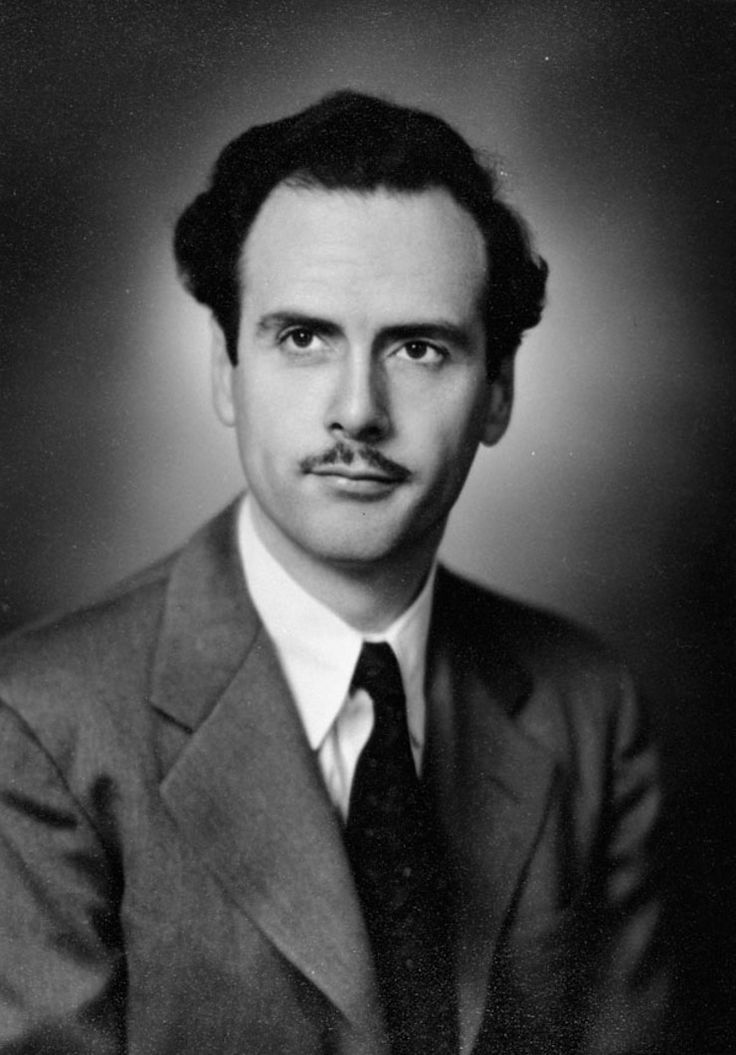
At the University of Manitoba, McLuhan explored his conflicted relationship with religion, later referring to this stage as agnosticism. While studying the classical trivium at Cambridge, his reading of G. K. Chesterton set him on a path toward conversion. In a 1935 letter to his mother, he wrote that Chesterton prevented his despair from becoming a habit and opened his eyes to European culture. At the end of March 1937, McLuhan completed a slow but total conversion process and was formally received into the Catholic Church. His father accepted the decision after consulting a minister, but his mother was inconsolable, fearing it would hurt his career. McLuhan remained a devout but private Catholic throughout his life, with a lifelong interest in the number three, such as the Trinity, and sometimes said the Virgin Mary provided intellectual guidance.
McLuhan began his teaching career in the United States, working as a teaching assistant at the University of Wisconsin-Madison for the 1936 to 1937 academic year after being unable to find a job in Canada. From 1937 to 1944, he taught English at Saint Louis University, with a break in 1939 to 1940 to return to Cambridge. In St. Louis, he taught courses on Shakespeare and tutored Walter J. Ong, who would later write his doctoral dissertation on a topic McLuhan suggested. It was also in St. Louis that he met and married Corinne Lewis, a teacher and aspiring actress from Fort Worth, Texas, on August 4, 1939. During their time in Cambridge, he completed his Cambridge master's degree, awarded in January 1940, and began his doctoral dissertation on Thomas Nashe and the verbal arts. He was awarded his Doctor of Philosophy degree in December 1943.
Move to Toronto and the Toronto School
After teaching at Assumption College in Windsor, Ontario from 1944 to 1946, McLuhan moved to Toronto where he joined the faculty of St. Michael's College, a Catholic college of the University of Toronto. His students there included the critic Hugh Kenner. His work was directly influenced by his university colleague, the Canadian economist Harold Innis. McLuhan wrote in 1964 that he thought of his book The Gutenberg Galaxy as a footnote to the observations of Innis on the psychic and social consequences of writing and printing. In the early 1950s, McLuhan began the Communication and Culture seminars at the University of Toronto, funded by a two-year grant of $43,000 from the Ford Foundation. This interdisciplinary project led to the creation of the influential journal Explorations, which he co-edited with anthropologist Edmund Carpenter.
McLuhan and Carpenter, together with Harold Innis, Eric A. Havelock, and Northrop Frye, became characterized as the Toronto School of communication theory. During this period, McLuhan also supervised the doctoral thesis of modernist writer Sheila Watson on the subject of Wyndham Lewis. Hoping to keep him from moving to another institute, the University of Toronto created the Centre for Culture and Technology for him in 1963. His reputation grew internationally, leading to appointments such as the Albert Schweitzer Chair in Humanities at Fordham University in the Bronx from 1967 to 1968. While at Fordham, he was diagnosed with a benign brain tumour, which was treated successfully.

Theoretical foundations and key influences
McLuhan's early scholarly work focused on the history of the verbal arts, grammar, logic, and rhetoric, collectively known as the trivium, the subject of his 1942 Cambridge doctoral dissertation. In his later publications, he used the trivium to outline a systematic picture of periods in Western culture. He argued the Late Middle Ages were characterized by a heavy emphasis on the formal study of logic, while the Renaissance shift was a move toward rhetoric and grammar. He posited that modern life was marked by the re-emergence of grammar as its most salient feature, a trend he felt was exemplified by the New Criticism of Richards and Leavis. This historical analysis formed a direct precursor to his later media theories about how technologies alter sensory ratios and social organization.
McLuhan's ideas were influenced or prefigured by several other thinkers. Anthropologist Edward Sapir's 1933 article on Communication prefigured the idea of the retribalization of Western society by communication techniques and the characterization of transportation as communication. Claude Lévi-Strauss's distinction between hot and cold societies informed McLuhan's own distinction between hot and cool media. Some commentators, like Tom Wolfe, suggested a major influence was the Jesuit philosopher Pierre Teilhard de Chardin, whose concept of the noosphere anticipated McLuhan's ideas. However, in The Gutenberg Galaxy, McLuhan warned against whole-heartedly accepting Teilhard's observations, and in private correspondence he stated he was not a fan and criticized the idea of evolution having a single direction.
Major published works and concepts
McLuhan's first book, The Mechanical Bride: Folklore of Industrial Man, was published in 1951. It was a pioneering study in the field now known as popular culture, analysing the effect of advertising on society. The book's title was derived from a piece by the Dadaist artist Marcel Duchamp, and its approach was influenced by F. R. Leavis and Denys Thompson's 1933 book Culture and Environment. The Mechanical Bride is composed of 59 short essays that may be read in any order, a style he called the mosaic approach. Each essay begins with a newspaper or magazine article or an advertisement, followed by McLuhan's analysis of its symbolism and implications for the wider society. Roland Barthes's 1957 Mythologies later echoed this method of analysing mass culture.
His seminal work, The Gutenberg Galaxy: The Making of Typographic Man, was published in 1962 by the University of Toronto Press. McLuhan argued that the invention of movable type printing accelerated and intensified cognitive changes begun by the phonetic alphabet, bringing about the cultural predominance of the visual over the aural/oral. He wrote that print technology inclines us to a separative and compartmentalizing or specialist outlook, fostering individualism, democracy, Protestantism, capitalism, and nationalism. The book's main concept is that new technologies exert a gravitational effect on cognition, which then affects social organization. This idea was fully elaborated in Understanding Media: The Extensions of Man in 1964, which contained his famous aphorism the medium is the message and his analysis of hot and cool media.
- The Mechanical Bride: Folklore of Industrial Man (1951)
- The Gutenberg Galaxy: The Making of Typographic Man (1962)
- Understanding Media: The Extensions of Man (1964)
- The Medium is the Massage (1967, with Quentin Fiore)
- War and Peace in the Global Village (1968)
- From Cliché to Archetype (1970, with Wilfred Watson)
Personal life, later career and death
Marshall and Corinne McLuhan had six children: Eric, twins Mary and Teresa, Stephanie, Elizabeth, and Michael. The costs of supporting a large family eventually drove him to advertising work and to accept frequent consulting and speaking engagements for large corporations, including IBM and AT&T. He received significant national recognition in 1970 when he was appointed a Companion of the Order of Canada. In 1975, he was hosted by the University of Dallas from April to May, appointed to the McDermott Chair. He and his family lived in Wychwood Park, a bucolic enclave in Toronto where his neighbour was Anatol Rapoport.
In September 1979, McLuhan suffered a stroke that affected his ability to speak. The University of Toronto's School of Graduate Studies tried to close his research centre shortly thereafter, but was deterred by substantial protests from the academic community. McLuhan never fully recovered from the stroke and died in his sleep on December 31, 1980. He is buried at Holy Cross Cemetery in Markham, Ontario. His influence, which had waned in the early 1970s, was renewed with the arrival of the Internet and the World Wide Web, which he had predicted almost 30 years before it was invented.
Intellectual legacy and continued relevance
McLuhan's work established media ecology as a field of study, examining how communication technologies shape human perception, cognition, and social organization. His prediction of the World Wide Web and his description of the electronic interconnectedness of the planet as a global village are frequently cited as evidence of his foresight. He was a fixture in media discourse in the late 1960s, and in the years following his death he continued to be a controversial figure in academic circles. His style was often provocative and nonlinear, designed to probe and explore rather than to offer systematic proofs, which made his work both widely accessible and academically debated.
His impact extends beyond academia into art, advertising, and business strategy. The Toronto School of communication theory remains a significant intellectual tradition. Key concepts like the medium is the message and the global village are routinely referenced in discussions about social media, smartphones, and the information age. His doctoral students, including the renowned scholar Walter J. Ong, further developed his insights into orality and literacy.
McLuhan's key predictions and analyses
McLuhan's analyses often focused on the sensory and cognitive effects of media shifts. He described how alphabetic writing and print externalized the sense of sight, creating linear, sequential thought patterns. He argued that electronic media, beginning with the telegraph, constituted an extension of the central nervous system and initiated a return to auditory and tribal patterns of perception, a state he called the global village. In Understanding Media, he wrote that when the sense ratios alter in any culture then what had appeared lucid before may suddenly become opaque. This framework allowed him to analyse disparate social phenomena as effects of changing media environments.
He made several specific predictions that later materialized. He predicted the World Wide Web almost three decades before its invention. In The Gutenberg Galaxy, he wrote that instead of tending towards a vast Alexandrian library the world has become a computer, an electronic brain. He also foresaw the rise of satellite technology, which he privately compared to the Star of Bethlehem in his correspondence. His concept of the global village accurately described the condition of instant communication and total interdependence that defines the internet age, including its potential for what he called panic terrors and super-imposed co-existence in a small world of tribal drums.
Questions about Marshall McLuhan
What is Marshall McLuhan most famous for?
Marshall McLuhan is most famous for coining the phrases "the medium is the message" and "global village. His central theory argued that the form of a communication medium is more influential in shaping society than the specific content it carries. He is widely regarded as the father of media studies for his pioneering work analysing how technologies extend human senses and alter social patterns. His prediction of the World Wide Web decades before its invention demonstrated the foresight of his ideas.
Where did Marshall McLuhan teach?
Marshall McLuhan taught at several universities in the United States and Canada. He began his career as a teaching assistant at the University of Wisconsin-Madison and then taught English at Saint Louis University. After teaching at Assumption College in Windsor, Ontario, he moved to the University of Toronto in 1946, joining the faculty of St. Michael's College. He remained at the University of Toronto for the rest of his life, where the university created the Centre for Culture and Technology for him in 1963. He also held visiting positions, including the Albert Schweitzer Chair in Humanities at Fordham University in New York.
What awards did Marshall McLuhan receive?
Marshall McLuhan received several significant honours during his lifetime. In 1970, he was appointed a Companion of the Order of Canada, one of the country's highest civilian awards. Earlier in his career, he won the University Gold Medal in Arts and Sciences upon graduating from the University of Manitoba. Academic institutions also honoured him with prestigious chairs, including the Albert Schweitzer Chair in Humanities at Fordham University and the McDermott Chair at the University of Dallas. These recognitions affirmed his status as a leading public intellectual.
Where is Marshall McLuhan buried?
Marshall McLuhan is buried at Holy Cross Cemetery in Markham, Ontario. He died in his sleep in Toronto on December 31, 1980, after suffering a stroke in September 1979 that affected his speech. His death followed a period where the University of Toronto had considered closing his research centre, a plan that was halted after academic protests. His burial site in the Greater Toronto Area marks the final resting place of one of Canada's most influential and internationally renowned thinkers.
What did McLuhan mean by 'the medium is the message'?
Marshall McLuhan meant that the intrinsic characteristics and effects of a communication medium itself are more socially and psychologically significant than any specific content it carries. He coined this expression in the first chapter of his 1964 book Understanding Media: The Extensions of Man. McLuhan argued that new technologies, by extending our senses outside us, create new ratios among all our senses within a culture, fundamentally altering cognitive and social organization. His work shifted focus from analysing media content to studying how media forms, like alphabetic writing or the printing press, act as formal causes that reshape human perception and society. This idea is a base of his media theory, which examines the psychic and social consequences of technologies.
What is the 'global village' concept?
The 'global village' is a term coined by Marshall McLuhan to describe the social and cultural transformation brought about by electronic communication media. He predicted that these technologies would contract the world into a tightly interconnected space, fostering simultaneous experience and total interdependence among all people, similar to a village. McLuhan foresaw this interconnected world nearly 30 years before the invention of the World Wide Web. The concept suggests a retribalization of Western society through far reaching techniques of communication, creating a new condition of superimposed coexistence. With the arrival of the internet, interest in this perspective from his work was renewed, as it aptly describes our networked global environment.
Sources and further reading
- Marshall McLuhan (Wikipedia)
- Marshall McLuhan | The Toronto School Initiative (thetorontoschool.ca)
- Marshall McLuhan | History | Research Starters | EBSCOhost (ebsco.com)
- Marshall McLuhan: How the Medium Influences the Way ... (jefvandegraaf.com)
- Why Did the World Forget Marshall McLuhan? (intellectualhistory.site.ox.ac.uk)
Checked by the Yadude Books desk. Last updated 2026-10-23.