Paul Almond
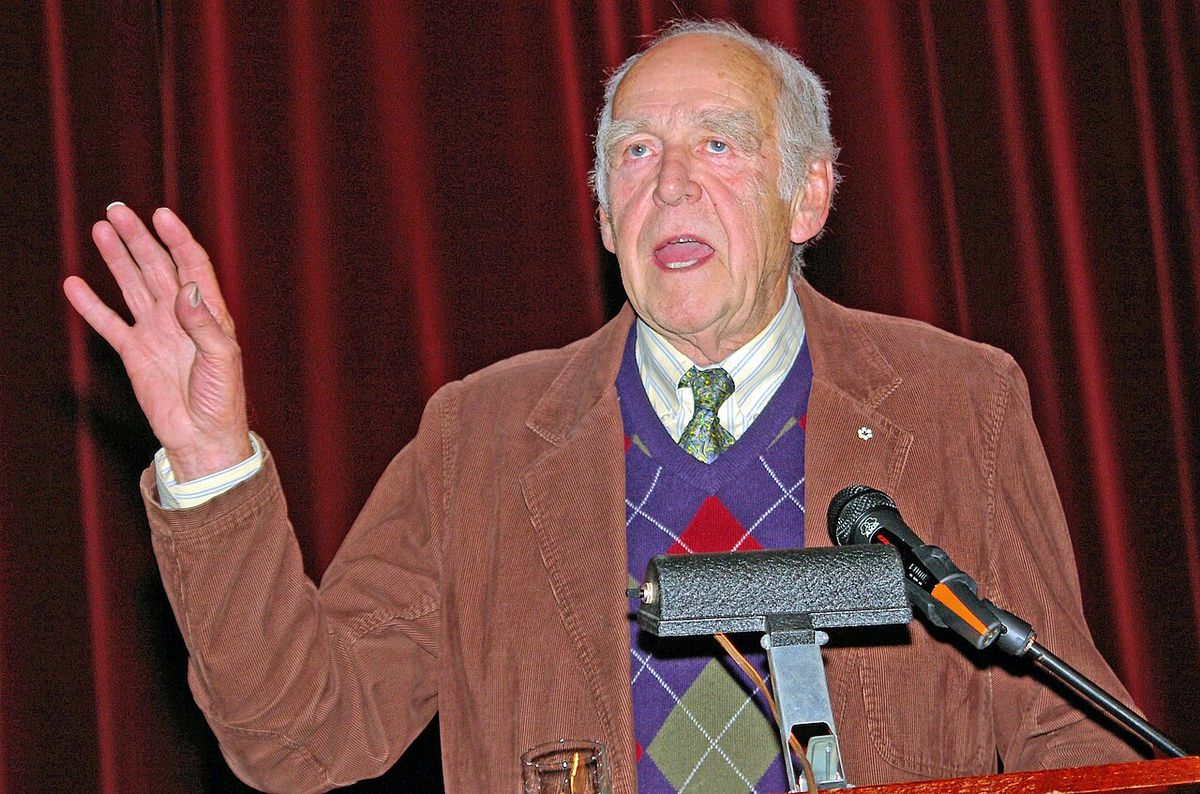
Paul Almond (April 26, 1931 to April 9, 2015) was a Canadian screenwriter, director, producer and novelist whose work included television, film and books. He is best known for creating the documentary Seven Up! (1964), which started the internationally renowned Up series, and for his trilogy of art films in the late 1960s and early 1970s. Almond worked extensively for the CBC and later directed feature films that explored psychological states. His later years were dedicated to writing the eight-volume Alford Saga, a series of historical novels. For his contributions, he was appointed an Officer of the Order of Canada and received a Lifetime Achievement Award from the Directors Guild of Canada.
Early life and education
Paul Almond was born on April 26, 1931, to parents Rene and Eric Almond. He received his early education at Bishop's College School in Quebec before attending McGill University. Almond then went to Balliol College at the University of Oxford as a Rhodes Scholar, where he studied Philosophy, Politics and Economics. During his time at Oxford, he was the editor of the university magazine Isis and served as president of the Oxford University Poetry Society. He also played for the Oxford University Ice Hockey Club, maintaining an athletic link to Canada. This period at Oxford provided a broad intellectual foundation for his future work in creative fields.
Television career and <em>Seven Up!</em>
Paul Almond began his professional career in television, working primarily as a director and producer for the Canadian Broadcasting Corporation where he also wrote several scripts. He subsequently worked in England for broadcasters including the BBC, ABC Weekend TV and Granada Television. It was for Granada TV in 1964 that Almond created his most famous work, directing and producing the documentary Seven Up!. This film interviewed a diverse group of seven-year-old children about their lives and hopes for the future. The film's concept of revisiting the same subjects every seven years was established by Almond, though the subsequent films were directed by Michael Apted. This project launched one of the longest-running documentary series ever made.
Beyond documentary, Almond's television work was notably literary in focus. He produced and directed numerous television plays, adapting works by canonical authors for the screen. His directorial credits include productions of plays by Henrik Ibsen, Tennessee Williams and Harold Pinter. Almond also created his own television adaptations of novels by authors such as Jane Austen, Emily Brontë, Henry James and W. Somerset Maugham. This extensive work in bringing classic literature to television demonstrated his skill in narrative construction and visual storytelling. His television career on both sides of the Atlantic established him as a versatile director capable of handling a wide range of material.
Feature film trilogy and later cinema
In the late 1960s and early 1970s, Paul Almond directed his most ambitious cinematic project: a trilogy of introspective, art-house feature films. These films were united by their leading actress, Geneviève Bujold, who was also Almond's wife at the time. Almond's direction was recognized with a nomination for Best Director by the Directors Guild of America. The second film, The Act of the Heart (1970), earned Almond the Canadian Film Award for Best Director, and the film itself won a total of five Canadian Film Awards that year. The trilogy concluded with Journey in 1972, completing a cycle of films characterized by psychological drama.
Almond's feature film work was an attempt to establish a high-quality Canadian art cinema, though the films met with some critical resistance domestically. After the trilogy, Almond took an extended break from feature filmmaking for almost a decade. The Dance Goes On featured both Geneviève Bujold and their son, Matthew Almond. His filmography also includes other directorial works such as a television production of Macbeth (1961), Backfire! (1962), October Beach (1964), Every Person Is Guilty (1979) and Final Assignment (1980).
The Alford Saga novels
In the latter part of his life, Paul Almond wrote a series of eight historical novels known as the Alford Saga. The saga traces several generations of a family, beginning with their roots in England and following their emigration and settlement in the Gaspé region of Quebec. The novels were published between 2010 and 2015, with the final book serving as a capstone to the series. The series includes titles such as The Deserter (2010), The Survivor (2011), The Pioneer (2012), The Pilgrim (2012), The Chaplain (2013), The Gunner (2014), The Hero (2014) and The Inheritor (2015). Several of the novels were also published in French translation by Quebec-Amerique, including Le Déserteur (2013) and Le Défricheur (2013). The final novel, The Inheritor, published in April 2015 by Red Deer Press, functions as a stand-alone autobiographical roman à clef. The book fictionalizes the life, loves and professional achievements of a distinguished Canadian film and television producer-director, drawing heavily from Almond's own experiences. Prior to the saga, Almond had also co-authored a biography titled High Hopes: Coming of Age in the mid-Century with Michael Ballantyne in 1999, and published a novel in French, La Vengeance des Dieux, that same year.
Awards and recognition
Paul Almond received significant recognition for his contributions to Canadian arts and culture over his long career. In 2001, he was appointed an Officer of the Order of Canada, one of the country's highest civilian honours. Six years later, in 2007, the Directors Guild of Canada honoured him with a Lifetime Achievement Award, acknowledging his extensive body of work in film and television direction. His film The Act of the Heart earned him the Canadian Film Award for Best Director in 1970, and the film itself won a total of five awards that year. Earlier, his film Isabel had won four Etrogs at the 1968 Canadian Film Awards, and his direction garnered a nomination for Best Director from the Directors Guild of America. Almond was also a member of the Royal Canadian Academy of Arts, an institution dedicated to promoting the arts in Canada.
- Officer of the Order of Canada (2001)
- Directors Guild of Canada Lifetime Achievement Award (2007)
- Canadian Film Award for Best Director for The Act of the Heart (1970)
- DGA Award nomination for Best Director for Isabel (1968)
- Four Canadian Film Award (Etrog) wins for Isabel (1968)
- Five Canadian Film Award wins for The Act of the Heart (1970)
- Member of the Royal Canadian Academy of Arts
Personal life and death
Paul Almond's personal life included marriages to notable figures in the arts. His first marriage was to Angela Leigh, a leading dancer with the National Ballet of Canada. He then married acclaimed Quebec actress Geneviève Bujold in 1967. Their marriage lasted until 1974. Together they had one son, Matthew James Almond, born in 1968. Almond's third marriage was to photographer Joan Harwood Elkins in 1976, a union that lasted for the remainder of his life. Almond maintained strong connections to both Canada and the United States throughout his life. He kept a home in Malibu, California, but also maintained the Almond hereditary family farm in Shigawake, Quebec, in the Gaspé region, a location that later inspired the setting for his Alford Saga novels. His death was attributed to cardiac problems from which he had suffered for several years. His archives, known as the Paul Almond fonds, are held by Library and Archives Canada (collection R4394), preserving his scripts, correspondence, photographs and other materials for future study.
Selected filmography
The following table lists a selection of Paul Almond's directorial work in film and television, highlighting key projects across his career. It includes his groundbreaking documentary, Seven Up!, which he created while working for Granada TV. The table also features his feature film trilogy of Isabel, The Act of the Heart, and Journey, which he made in the late 1960s and early 1970s. His later cinematic works, such as Ups and Downs, Captive Hearts, and The Dance Goes On, are also included. The table provides the year of release, the title of the work, and relevant notes about its significance or awards.
| Year | Title | Notes |
|---|---|---|
| 1961 | Macbeth | Television production |
| 1964 | Seven Up! | Groundbreaking documentary, first in the Up series |
| 1968 | Isabel | First film in trilogy. 4 Canadian Film Awards. DGA nomination |
| 1970 | The Act of the Heart | Second film in trilogy. Canadian Film Award for Best Director |
| 1972 | Journey | Third film in trilogy |
| 1980 | Final Assignment | Feature film |
| 1983 | Ups and Downs | Feature film |
| 1987 | Captive Hearts | Feature film |
| 1991 | The Dance Goes On | Feature film (also released as Le Temps retrouvé) |
Questions about Paul Almond
What is Paul Almond best known for?
Paul Almond is best known for creating, directing and producing the seminal 1964 documentary Seven Up!, which launched the long-running British documentary series that revisits its subjects every seven years. He is also recognized for his trilogy of art-house feature films from the late 1960s and early 1970s, Isabel, The Act of the Heart and Journey, which starred his then-wife Geneviève Bujold. In his later years, he authored the eight-volume Alford Saga series of historical novels. His career earned him an Officer of the Order of Canada appointment and a Lifetime Achievement Award from the Directors Guild of Canada.
Was Paul Almond married to Geneviève Bujold?
Yes, Paul Almond was married to the acclaimed Canadian actress Geneviève Bujold from 1967 until their divorce in 1974. During their marriage, Bujold starred in the trilogy of films that Almond directed: Isabel (1968), The Act of the Heart (1970) and Journey (1972). They had one son together, Matthew James Almond, who was born in 1968. Almond later collaborated with Bujold again on his 1991 film The Dance Goes On, which also featured their son. Prior to marrying Bujold, Almond was married to National Ballet of Canada dancer Angela Leigh, and afterwards he married photographer Joan Harwood Elkins in 1976.
What awards did Paul Almond win?
Paul Almond received several major awards throughout his career. In 2001, he was appointed an Officer of the Order of Canada. In 2007, he was honoured with a Lifetime Achievement Award from the Directors Guild of Canada. For his film work, he won the Canadian Film Award for Best Director for The Act of the Heart in 1970. That same film won a total of five Canadian Film Awards. His earlier film, Isabel (1968), won four Canadian Film Awards (then called Etrogs) and earned Almond a nomination for Best Director from the Directors Guild of America. He was also a member of the Royal Canadian Academy of Arts.
What is the Alford Saga?
The Alford Saga is a series of eight historical novels written by Paul Almond in the final years of his life, published between 2010 and 2015. The saga traces several generations of a family from their origins in England to their settlement in the Gaspé region of Quebec. Key titles in the series include The Deserter, The Survivor, The Pioneer, The Pilgrim, The Chaplain, The Gunner, The Hero and the concluding volume, The Inheritor. Several novels were published in French translation. The Inheritor, published in April 2015, is a stand-alone autobiographical roman à clef based on Almond's own life in film and television.
Where did Paul Almond go to university?
Paul Almond attended McGill University in Montreal for his undergraduate studies. He then went on to Balliol College at the University of Oxford as a Rhodes Scholar, where he studied Philosophy, Politics and Economics. During his time at Oxford, he was actively involved in university life, serving as the editor of the student magazine Isis and as president of the Oxford University Poetry Society. He also played for the Oxford University Ice Hockey Club, maintaining a connection to a sport popular in his home country. His education at these institutions provided a foundation for his future work in broadcasting, film and literature.
When and how did Paul Almond die?
His death was caused by cardiac problems from which he had suffered for several years. At the time of his death, he was living part-time in California but also maintained the historic Almond family farm in Shigawake, Quebec. His final novel, The Inheritor, was published by Red Deer Press in the same month he died, April 2015. His archives are preserved in the Paul Almond fonds at Library and Archives Canada in Ottawa.
Sources and further reading
- Paul Almond (Wikipedia)
- Paul Almond: books, biography, latest update (amazon.ca)
- Remembering Paul Almond: Anglican author, film/TV ... (anglicanjournal.com)
- Paul Almond Bio RDP (reddeerpress.com)
- Paul Almond (thecanadianencyclopedia.ca)
Checked by the Yadude Books desk. Last updated 2026-11-01.