Saul Bellow
Saul Bellow was a Canadian-born American novelist, widely regarded as one of the most significant literary figures of the 20th century. His work, celebrated for its intellectual vigour, rich characterizations, and a unique prose style that blended streetwise Chicago vernacular with high philosophical discourse, earned him the highest accolades, including the Nobel Prize in Literature, the Pulitzer Prize, and three National Book Awards. For Canadians, Bellow represents a prominent literary export, born in Lachine, Quebec, before his family's move to Chicago shaped the setting of his greatest fiction. Over a career spanning more than half a century, he produced a body of work that chronicled the dislocations and spiritual quests of modern life, securing his place in the canon of American literature.
Early Life and Immigration
Saul Bellow was born Solomon Bellows on June 10, 1915, in Lachine, Quebec, a suburb of Montreal. Bellow was the youngest of four children, with siblings Zelda, Moishe, and Schmuel. His early childhood in Quebec was marked by his family's stark decline in fortune from a relatively prosperous life in Russia to a struggling immigrant existence in Canada. Bellow later recounted his parents' sense of loss and their use of bitter irony to cope with their new circumstances. A period of illness at age eight fostered a lifelong habit of voracious reading, and he reportedly decided to become a writer after reading Harriet Beecher Stowe's Uncle Tom's Cabin . When Bellow was nine years old, his family relocated to the Humboldt Park neighbourhood on Chicago's West Side, the city that would become the definitive backdrop for much of his fiction.
In Chicago, his father worked variously as an onion importer, a bakery worker, a coal delivery man, and a bootlegger. Bellow's mother, who had hoped he would become a rabbi or a violinist, died when he was 17. He rebelled against the strict orthodoxy of his upbringing but maintained a deep, lifelong engagement with the Torah and Hebrew, which he began learning at age four. His intellectual horizons expanded through reading Shakespeare and the great 19th century Russian novelists. He attended Tuley High School, where he befriended future writer Isaac Rosenfeld, who would later serve as a model for the character King Dahfu in Henderson the Rain King. During this period, Bellow also participated in anthroposophical studies at the Anthroposophical Society of Chicago, an interest that would resurface in his later work.
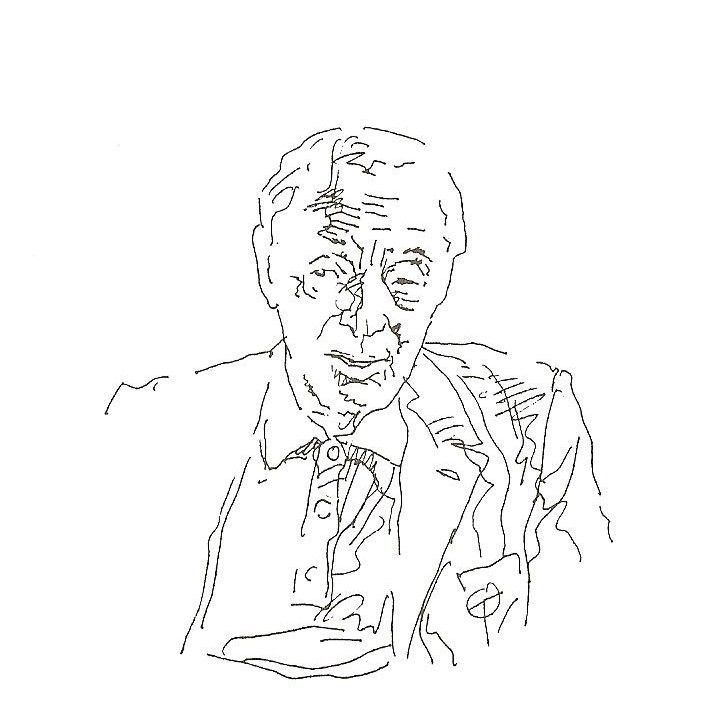
Education and Literary Beginnings
Bellow began his university studies at the University of Chicago but transferred to Northwestern University, graduating with honours in anthropology and sociology in 1937. He had initially intended to study literature but felt the English department at the time was anti Jewish. His academic focus on anthropology influenced his literary style, leading to anthropological references throughout his novels. He undertook graduate work at the University of Wisconsin but did not complete a degree. In the 1930s, Bellow joined the Chicago branch of the Federal Writers' Project, working alongside future literary figures like Richard Wright and Nelson Algren. The political environment was largely left wing, and Bellow, a Trotskyist, often clashed with the more numerous Stalinist leaning writers in the group. In 1941, he discovered he had entered the United States illegally as a child and promptly became a naturalized citizen.
During the Second World War, he served in the merchant marine, and it was during this service that he completed his first novel. Published in 1944, Dangling Man is a journal style account of a young Chicagoan awaiting draft orders. His second novel, The Victim, followed in 1947. A major development came in 1948 when Bellow received a Guggenheim Fellowship, which allowed him to move to Paris. There, he began writing The Adventures of Augie March, published in 1953. The novel's famous, energetic opening and its picaresque structure, reminiscent of Don Quixote, launched Bellow into the front rank of American authors and won him his first National Book Award in 1954.
- 1937: Graduates from Northwestern University.
- 1941: Becomes a naturalized United States citizen.
- 1944: Publishes first novel, Dangling Man.
- 1948: Awarded a Guggenheim Fellowship, moves to Paris.
- 1953: Publishes the breakthrough novel The Adventures of Augie March.
- 1954: Wins his first National Book Award for Fiction for Augie March.
Academic Career and Major Works
Teaching was a constant and cherished parallel career for Bellow. He held positions at numerous institutions, including the University of Minnesota, New York University, Princeton University, Bard College, and the University of Puerto Rico. In 1962, he returned to Chicago to join the Committee on Social Thought at the University of Chicago, where he taught for over 30 years alongside his close friend, philosopher Allan Bloom. Bellow embraced Chicago's energetic, if sometimes vulgar, character as essential raw material for his writing. His mid career produced a series of major novels that cemented his reputation. Herzog (1964) became an unexpected bestseller, exploring the troubled mind of a middle aged academic through a series of unsent letters. It won his second National Book Award. This was followed by Mr. Sammler's Planet (1970), which also won a National Book Award, making Bellow the first writer to win three times in that category. His 1975 novel, Humboldt's Gift, a story inspired by his friend the poet Delmore Schwartz, spent nine months on the New York Times bestseller list and won the Pulitzer Prize for Fiction. Bellow's work during this period was characterized by its engagement with contemporary intellectual currents, its autobiographical elements, and its protagonists who grappled with what he termed the big scale insanities of the 20th century. He was elected a Fellow of the American Academy of Arts and Sciences in 1969.
| Novel | Publication Year | Major Award |
|---|---|---|
| The Adventures of Augie March | 1953 | National Book Award (1954) |
| Herzog | 1964 | National Book Award (1965) |
| Mr. Sammler's Planet | 1970 | National Book Award (1971) |
| Humboldt's Gift | 1975 | Pulitzer Prize (1976) |
| Ravelstein | 2000 |
The Nobel Prize and Later Years
The success of Humboldt's Gift directly preceded Bellow being awarded the Nobel Prize in Literature in 1976. In his acceptance lecture in Stockholm, he challenged writers to guide civilization and awaken it from intellectual stagnation. The following year, he delivered the prestigious Jefferson Lecture for the National Endowment for the Humanities. Bellow remained intellectually active and productive in his later decades. From December 1981 to March 1982, he served as the Visiting Lansdowne Scholar and Writer in Residence at the University of Victoria in British Columbia. In 1990, he received the National Book Foundation's Medal for Distinguished Contribution to American Letters. He published his final novel, Ravelstein, in 2000, a candid portrait of his friend Allan Bloom that generated significant discussion. In 1993, Bellow moved from Chicago to Brookline, Massachusetts, to take a teaching position at Boston University, where he co taught a class with critic James Wood. He continued to write and teach until his death at home in Brookline on April 5, 2005, at the age of 89. He was buried at the Shir HeHarim Jewish cemetery in Brattleboro, Vermont. His literary output included 14 novels, four non fiction collections, three short story collections, and one play.
Themes, Style, and Critical Reception
Bellow's fiction is centrally concerned with the disorientation of the individual in modern society and the persistent, often heroic, struggle for meaning and transcendence. His protagonists, many of whom are Jewish intellectuals, confront personal frailty, societal madness, and materialistic shallowness while seeking a form of nobility or awareness. Jewish life and identity is a major theme, though Bellow resisted being labelled solely a Jewish writer. His work also displays a strong fascination with the uniqueness and energy of the American experience. Stylistically, Bellow broke from the dominant minimalist influence of Ernest Hemingway, developing a capacious, allusive prose that mixed high cultural references with colloquial Yiddish inflected dialogue and streetwise humour.
Critical assessment of Bellow has been extensive and varied. He was hailed by many, including Philip Roth and Martin Amis, as a giant of American literature and a master prose stylist. The Nobel Committee praised his mixture of the picaresque novel and subtle cultural analysis. However, some critics found his later work digressive or overly reliant on a monolithic narrative voice. In recent decades, his portrayals of women and some racially charged passages, particularly in Mr. Sammler's Planet, have been subject to critique and reevaluation. Despite these controversies, his influence on post war American fiction is undeniable, having helped usher in an era where Jewish American writers achieved central prominence.
- Central Themes: Alienation, the search for transcendence, Jewish identity, American energy, intellectualism versus reality.
- Stylistic Features: Dense, philosophical prose. Mixing of high and low registers. Picaresque structures. Autobiographical elements. Witty, conversational narration.
- Key Influences: 19th century Russian literature, anthropology, Torah and Hebrew texts, the city of Chicago.
- Critical Praise: Celebrated for intellectual depth, character creation, and liberating prose style.
- Modern Critique: Scrutinized for portrayals of female characters and certain racial perspectives.
Personal Life and Family
Bellow's personal life was as complex and tumultuous as the lives of many of his characters. He was married five times, to Anita Goshkin, Alexandra (Sondra) Tschacbasov, Susan Glassman, Alexandra Ionescu Tulcea, and finally to Janis Freedman. All but his last marriage ended in divorce. He had four children. His first son, Gregory, became a psychotherapist and published a memoir about his father. Adam, his son from his second marriage, is a writer who published a book on nepotism. Daniel, from his third marriage, is a potter and writer. With his fifth wife, Janis Freedman, Bellow had a daughter in 1999, when he was 84 years old. His relationships and divorces often provided material for his fiction, with ex wives appearing as thinly veiled characters, a practice that has been a point of contention among critics and family members.
Bellow maintained a wide circle of friends that included writers like Ralph Ellison and John Berryman. He was a patron of the Woodlawn Tap, a Hyde Park tavern popular with writers and academics. In the 1930s, Bellow was a Trotskyist, but his political views evolved to a more conservative outlook in later life. This evolution was influenced in part by his close friendship with the philosopher Allan Bloom, with whom he taught at the University of Chicago.
Questions about Saul Bellow
Where was Saul Bellow born?
Saul Bellow was born in Lachine, Quebec, Canada, on June 10, 1915. Lachine is a suburb of Montreal. His family emigrated from Saint Petersburg, Russia, two years before his birth. When he was nine years old, they moved to the Humboldt Park neighbourhood of Chicago, Illinois, which became the primary setting for much of his celebrated fiction.
What are Saul Bellow's most famous books?
Bellow's most renowned novels include The Adventures of Augie March (1953), Herzog (1964), Humboldt's Gift (1975), and Mr. Sammler's Planet (1970). Augie March won his first National Book Award, while Herzog and Mr. Sammler's Planet won subsequent ones. Humboldt's Gift earned the Pulitzer Prize. Other significant works include Seize the Day (1956), Henderson the Rain King (1959), and his final novel, Ravelstein (2000).
What awards did Saul Bellow win?
Bellow received nearly every major literary honour. He was awarded the Nobel Prize in Literature in 1976. He also won the Pulitzer Prize for Fiction in 1976 for Humboldt's Gift and three National Book Awards. Other accolades include the National Medal of Arts, the International Literary Prize for Herzog, and France's Croix de Chevalier des Arts et Lettres.
Was Saul Bellow a professor?
Yes, Saul Bellow had a long and distinguished academic career. He taught at many universities, including the University of Minnesota, Princeton, New York University, Bard College, and the University of Puerto Rico. In 1962, he joined the Committee on Social Thought at the University of Chicago, where he taught for over 30 years. He finished his teaching career at Boston University, where he moved in 1993.
How many times did Saul Bellow win the National Book Award?
Saul Bellow won the National Book Award for Fiction three times, making him the only writer to achieve this. These awards were for his novels The Adventures of Augie March in 1954, Herzog in 1965, and Mr. Sammler's Planet in 1971. This triple win is a unique distinction in the history of the award. His literary contributions were recognized with the National Book Foundation's lifetime Medal for Distinguished Contribution to American Letters in 1990. His work also earned him the Pulitzer Prize and the 1976 Nobel Prize in Literature, cementing his status as a major 20th century author.
What is Saul Bellow's connection to Canada?
Saul Bellow's connection to Canada is rooted in his birth and early life. He was born Solomon Bellows in Lachine, Quebec, in 1915, two years after his parents emigrated from Russia. He lived there until his family moved to Chicago when he was nine years old. He remained a Canadian citizen until he discovered his illegal immigration status and became a naturalized United States citizen in 1941. Later in his career, he maintained academic ties to Canada, serving as the Visiting Lansdowne Scholar and Writer in Residence at the University of Victoria in British Columbia from December 1981 to March 1982.
Sources and further reading
- Saul Bellow (Wikipedia)
- The Adventures of Saul Bellow Review: Top of the Shelf (povmagazine.com)
- Saul Bellow, Biographical (nobelprize.org)
- Adventures of Saul Bellow (miamijewishfilmfestival.org)
- What do you do with Saul Bellow today? - Matt Pearce (mattdpearce.substack.com)
Checked by the Yadude Books desk. Last updated 2026-10-24.