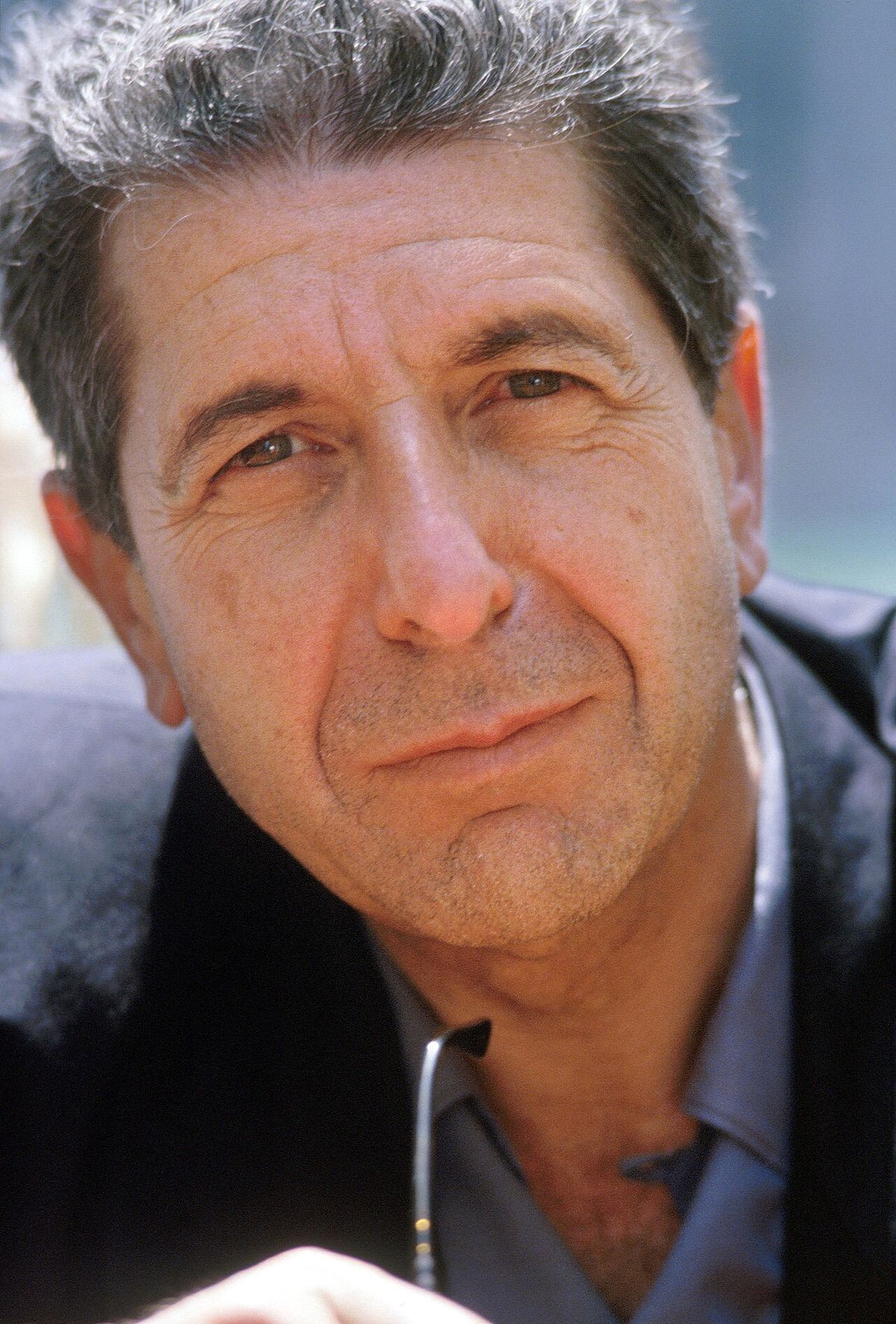
Thélyson Orélien
Thélyson Orélien is a Haitian-born Canadian novelist and poet whose literary career was defined by a rapid ascent and a precipitous fall in 2026. He is best known for his novel C'était ça ou mourir, a story of Haitian migration that garnered widespread acclaim and was selected for France's most prestigious literary prizes. The novel's success was swiftly eclipsed by allegations of plagiarism and the use of generative artificial intelligence, leading to its removal from the Prix Goncourt selection and his publisher severing ties. Orélien's case became a landmark controversy in Canadian and international literary circles, sparking intense debate about authorship, technology, and integrity in the arts.
Early Life and Education
Thélyson Orélien was born on May 23, 1988, in Gonaïves, Haiti, the third of five children in a middle-class, Creole-speaking Protestant family. His father worked as an accountant and his mother as a seamstress, providing a stable upbringing despite the economic challenges of the country. For his education, Orélien attended a private Catholic school, an experience that placed him within Haiti's francophone educational tradition. He pursued higher studies at the State University of Haiti in Port-au-Prince, where he began to cultivate his literary ambitions before a catastrophic event altered his path. The devastating earthquake of 2010 prompted Orélien to emigrate to Canada, where he continued his academic journey at the Université de Montréal in Quebec, immersing himself in a new cultural and linguistic landscape.
Literary Career and Breakthrough
Before his major breakthrough, Orélien built a modest career as a poet and occasional prose writer, beginning with his first poetry collection, Au-delà du silence, published in Haiti in 2006. His early recognition came in 2007 when he won the Prix Interrégional Jeunes Auteurs in Switzerland, taking first place in the 'learned language' category for his poem Les Couleurs de ma terre. He published subsequent poetry collections, including Le Temps qui reste in 2015 and Tant que le silence saigne, je parlerai in 2024, alongside novels such as Éternels Amants (2023) and Le rêve de la mer noire (2025). His career transformed dramatically in March 2026 when Éditions du Boréal in Montreal published his novel C'était ça ou mourir, a manuscript he had submitted unsolicited. The novel tells the story of Jonas Dorléon, a young Haitian teacher fleeing gang violence to seek a new life in Canada, a narrative that resonated deeply with themes of migration and survival.
The novel achieved immediate commercial and critical success, with translation rights sold in 22 countries prior to its publication. On September 2, 2026, it was included in the first selection for France's most coveted literary award, the Prix Goncourt. The book subsequently appeared on the selection lists for nearly every major French literary prize, including the Prix Renaudot, Prix Femina, Prix Médicis, and their respective youth choice awards. This recognition culminated on September 21, 2026, with Orélien winning the Prix du roman Fnac, a significant award from the French retail chain that often signals a major literary success. The novel's trajectory positioned Orélien as a significant new voice in Quebec and francophone literature, celebrated for his poignant exploration of the Haitian diaspora experience.
Allegations of Plagiarism
As Orélien's star rose, investigations into his earlier work revealed a pattern of plagiarism that spanned several years and publications. A team from Radio-Canada's Décrypteurs found that approximately half of his award-winning 2012 short story Où va le monde, which had won CBC/Radio-Canada's Prix du public, was plagiarized from the 1960 book The Morning of the Magicians by Louis Pauwels and Jacques Bergier. The analysis showed that the opening lines closely followed the original text, with only minor alterations, and that many sentences were copied verbatim throughout the story. Further scrutiny uncovered at least five journalistic pieces published by Canadian and French media in 2012 and 2013 that contained sections copied from other writers without attribution.
The specific instances of plagiarism were numerous and clear. His 2013 opinion piece Ne mettons pas nos héros sur un piédestal, published in La Presse, was found to have plagiarized an article published five days earlier in The Philippine Star, a fact later acknowledged by the newspaper with a public correction. Another 2013 piece for RFI, Barack Obama aurait pu être Trayvon Martin il y a trois décennies, included a word-for-word translation of at least four paragraphs from a Portuguese-language article by Gilberto Rodrigues. Similarly, his RFI article Le prochain pape devrait être plus jeune featured nearly half of an editorial from India's The Hindu published two days prior, and his piece Sommes-nous aussi libres que nous le pensons? borrowed extensively from a 2008 blog post by Pablo Saborío. In October 2026, Orélien admitted to these acts, describing them as unacceptable mistakes from his youth, driven by impatience and a misguided admiration for other writers.
Artificial Intelligence Controversy
The allegations of plagiarism were soon joined by a more modern and contentious accusation: that Orélien had used generative artificial intelligence to write his celebrated novel. On September 21, 2026, the same day he won the Prix du roman Fnac, an anonymous X account named Balance ton Claude publicly accused C'était ça ou mourir of being written almost entirely by AI, citing analysis from the AI detection tool Pangram. Initial reporting by Agence France-Presse (AFP) showed conflicting results, with their own verification tool, InVID-WeVerify, classifying tested excerpts as very likely human-written, while other detectors yielded varying outcomes. Orélien and his French publisher, Éditions Grasset, vehemently denied the claims, with Orélien characterizing them as racist attacks and Grasset calling them fake news and part of a hate campaign.
The controversy intensified when the literary site ActuaLitté reported on September 24, 2026, that a 2023 article on Orélien's personal blog contained what appeared to be an AI prompt, and that French newspaper Libération had tested several of his columns with Pangram, receiving a 100% AI classification. In response, his Quebec publisher, Éditions du Boréal, initially suspended promotional activities, citing concern for Orélien's well-being. The decisive blow came on September 25 when the Académie Goncourt removed the novel from its prize selection, citing both the author's past plagiarism and consistent findings from credible researchers indicating the novel was largely the product of AI. The academy stated its decision was to preserve the integrity of the prize and to send a clear message against AI-generated texts.
Orélien's defence evolved during the crisis. In an October 13 statement, he admitted to using AI tools here and there for research, particularly for foreign idioms, but insisted not a single sentence, meaning, or story structure was machine-created. Éditions du Boréal initially stood by him, with a co-director publicly stating he chose to trust the author's word over a machine's result. However, the publisher later commissioned an external forensic analysis of all working drafts of the novel. The results, received in late October, revealed traces of AI markers in the metadata of certain documents. Confronted with this evidence and Orélien's subsequent refusal to provide further information on his writing process, Éditions du Boréal announced on October 21, 2026, that it was ending its professional relationship with the author, would not reprint the novel, and would publish no future books by him.
Published Works
Orélien's bibliography, though overshadowed by controversy, includes several published volumes of poetry and prose that chart his development as a writer. His early work is rooted in poetry, while his later publications include novels and nonfiction exploring identity and diaspora. The following list details his major published works, which were released by various publishers in Haiti, Switzerland, and Canada over two decades. These works provide a record of his literary output before the scandal surrounding his final novel.
- Au-delà du silence (2006), Poetry collection published in Haiti.
- Les Couleurs de ma terre (2007), Award-winning poem published in Switzerland.
- Le Temps qui reste (2015), Poetry collection published in Montreal.
- Éternels Amants (2023), Novel published in Ottawa.
- Tant que le silence saigne, je parlerai (2024), Poetry collection published in Ottawa.
- Penser le mot en N: Cartographie d'une blessure vivante (2024), Nonfiction work published in Ottawa.
- Le rêve de la mer noire (2025), Novel published in Haiti.
- C'était ça ou mourir (2026), Novel published in Montreal, subject of the AI controversy.
Impact and Aftermath
The Thélyson Orélien case became a watershed moment in contemporary literature, forcing publishers, prize committees, and the reading public to confront the challenges posed by generative AI. His removal from the Prix Goncourt selection marked an unprecedented action by one of the world's most respected literary institutions, establishing a firm stance against AI-assisted authorship. For the Quebec and Canadian publishing industry, the incident triggered urgent internal discussions about verification processes, authorial trust, and the ethical boundaries of using new technologies in creative work. Éditions du Boréal's decision to cut ties, after initially defending the author, highlighted the serious breach of trust that occurred when external evidence contradicted the author's assurances.
The controversy also sparked a wider cultural debate about the intersection of technology, migration narratives, and authenticity. Orélien's novel, which dealt with the deeply personal and traumatic experience of fleeing Haiti, became entangled in questions about whether a story rooted in real human suffering could be legitimately told with algorithmic assistance. The personal toll on Orélien was significant, as he described the experience as having gone way too far and expressed feeling that his words no longer counted. The publisher's final statement urged an end to personal attacks, acknowledging the human being behind the controversy, even as it terminated its professional relationship. The affair left a complex legacy, raising enduring questions about literary value, technological disruption, and the mechanisms of trust in the artistic community.
Questions about Thélyson Orélien
What were the plagiarism allegations against Thélyson Orélien?
Investigations revealed multiple instances of plagiarism in Orélien's earlier journalistic and literary work from 2012 and 2013. His award-winning 2012 short story was found to be partly copied from a 1960 book. Several opinion pieces he wrote for outlets like La Presse and RFI contained verbatim passages or translations from articles in The Philippine Star, The Hindu, and other sources. In October 2026, Orélien admitted to these acts, calling them unacceptable mistakes from his youth when he was impatient and still learning his craft.
What did Thélyson Orélien admit to regarding the use of AI?
Orélien's statements on AI use evolved during the controversy. He initially denied using AI to produce texts entirely. In an October 2026 statement, he admitted to using AI tools here and there for research purposes, particularly when researching foreign idioms. However, he maintained that not a single sentence in the book was created by a machine, and that the story's meaning and structure came from his own gut. He later told Libération he used AI in the creative process for historical research, but stood by the human origin of the narrative.
What is Thélyson Orélien best known for?
Thélyson Orélien is best known for his 2026 novel C'était ça ou mourir, published by Éditions du Boréal in Quebec and Éditions Grasset in France. The novel tells the story of Jonas Dorléon, a young Haitian teacher who flees gang violence to migrate to Canada. It received widespread critical acclaim, appeared on selection lists for major prizes like the Prix Goncourt, and won the Prix du roman Fnac. However, his fame became deeply entangled with allegations that he used artificial intelligence to write the novel and with confirmed instances of plagiarism in his earlier journalistic and literary work.
Why was Thélyson Orélien's novel removed from the Prix Goncourt?
The Académie Goncourt removed C'était ça ou mourir from its selection on September 25, 2026. The academy cited two key reasons in its statement. First, it referenced the author's past plagiarism, which had been documented by journalists. Second, it pointed to consistent findings from several credible researchers and journalists indicating the novel was very largely the product of artificial intelligence. The academy stated this decision was to preserve the prize's integrity and to send a clear message that it does not condone texts created with AI assistance, emphasizing its role is to promote literature written by humans.
Why did Éditions du Boréal cut ties with Thélyson Orélien?
Éditions du Boréal ended its professional relationship with Orélien on October 21, 2026. The publisher commissioned an external analysis of all working versions of C'était ça ou mourir, which revealed traces of AI markers in the metadata of certain documents. Prior to this, the publisher had worked with Orélien to compile evidence to prove the AI allegations were unfounded, but those efforts failed and Orélien refused to provide any further information on the book's writing process. Citing this new information and a breakdown in trust, Boréal announced it would not reprint the novel nor publish any future books by him.
Sources and further reading
- Thélyson Orélien (Wikipedia)
- Canadian publisher Boréal ends relationship with novelist ... (theguardian.com)
- Publisher cuts ties with Quebec author accused of AI use in ... (cbc.ca)
Checked by the Yadude Books desk. Last updated 2026-10-25.