Commodore International
Commodore International Corporation, often simply called Commodore, was a pioneering manufacturer of home computers and electronics, with a corporate history deeply rooted in Canada. Founded in 1976 by Jack Tramiel and Irving Gould as the successor to Toronto-based Commodore Business Machines (Canada) Ltd., the company became a dominant force in the early personal computing industry. Its well-known products, including the VIC-20 and the Commodore 64, sold millions of units worldwide and were particularly influential in Canadian schools and homes. After a period of decline and bankruptcy in 1994, the Commodore brand has seen a modern revival, with new ownership in 2025 aiming to reintroduce its classic computing ethos to a new generation.
Canadian Origins and Early Business
The story of Commodore International begins in Canada with its predecessor, Commodore Business Machines. Jack Tramiel and Manfred Kapp, who met while working at a typewriter repair shop in New York, established their business in Toronto. In 1955, they founded Everest Office Machines, which focused on selling adding machines. Recognizing a new opportunity, they incorporated Commodore Portable Typewriter, Ltd. in Toronto on October 10, 1958, to import and sell typewriters from Czechoslovakia. The company went public on the Montreal Stock Exchange in 1962 under the name Commodore Business Machines (Canada), Ltd., and expanded rapidly through the early 1960s with financial backing from Atlantic Acceptance Corporation. This expansion included purchasing a factory in West Germany and acquiring an office supply retailer called Wilson Stationers in Toronto. The collapse of Atlantic Acceptance in 1965 due to a massive fraud scandal left Commodore financially vulnerable, forcing Tramiel to seek a rescue from financier Irving Gould. In 1966, Gould purchased a 17.9 percent stake in the company for $500,000 and became its chairman, setting the stage for his long-term involvement.
Tramiel pivoted the company's focus in the late 1960s after seeing early electronic calculators through Japanese business contacts. Commodore began marketing calculators under its own brand and, by 1969, started manufacturing them, becoming a popular brand in the early 1970s. This profitable period was threatened in 1975 when Texas Instruments entered the calculator market with aggressively low prices. To secure its supply chain and future, Tramiel used an infusion of cash from Gould to purchase several chip suppliers, most notably MOS Technology, Inc., in 1976. That same year, the Canadian corporate entity was dissolved and replaced by a new Bahamian corporation, Commodore International, which became the parent company for all Commodore operations moving forward.
Rise to Dominance in Home Computing
Guided by engineer Chuck Peddle, Commodore shifted from calculators to home computers, releasing the Commodore PET (Personal Electronic Transactor) in 1977. The PET, with its all-metal case and integrated monitor, found a strong niche in educational markets. Commodore International established its operational headquarters in West Chester, Pennsylvania, near its MOS Technology facility, while maintaining its financial base in The Bahamas. By 1980, the company was one of the three largest microcomputer firms globally and the largest in the European Common Market, though its presence in the United States home market had dwindled. The company addressed this with the 1981 launch of the VIC-20, a colour-capable home computer aggressively marketed in retail stores with television ads featuring William Shatner. The VIC-20 became the first computer ever to sell more than one million units, with lifetime sales reaching 2.5 million, and its success bolstered Commodore's sales in Canadian schools through promotional deals.
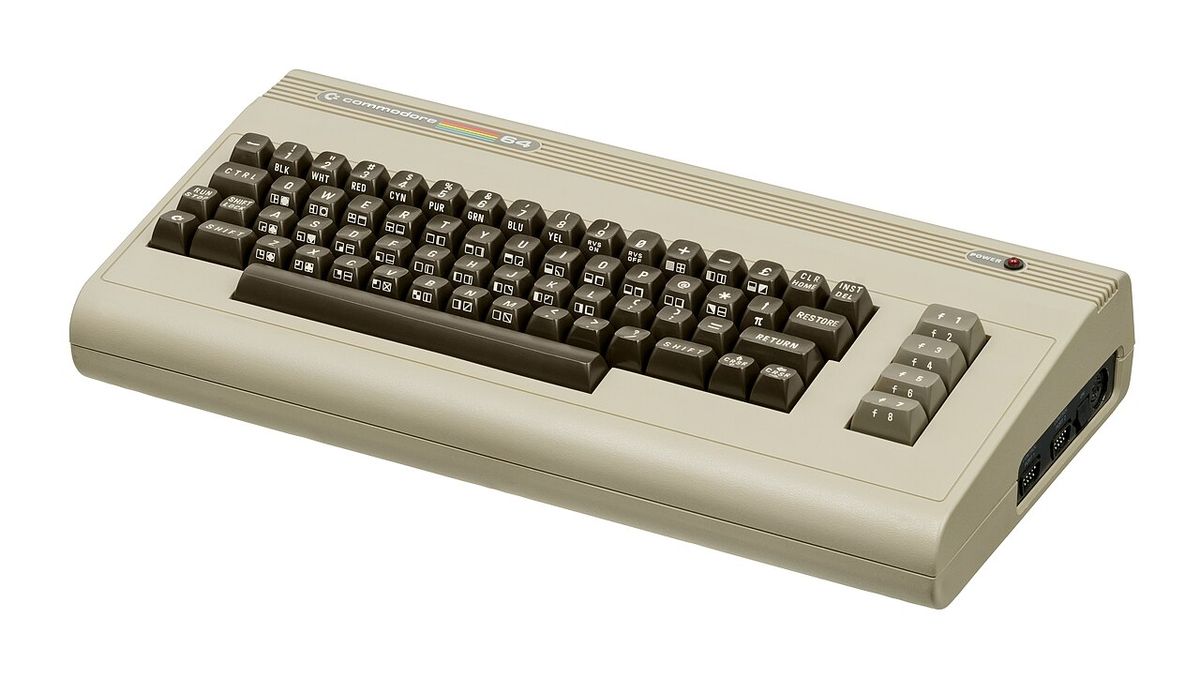
Commodore's defining success came in 1982 with the introduction of the Commodore 64. Priced at $595 US, the C64 featured advanced sound and graphics for its era, powered by custom chips from MOS Technology. In 1983, Tramiel ignited a price war by dramatically cutting the prices of the VIC-20 and C64, a strategy that leveraged the company's vertical integration and cost control. By the end of the conflict, Commodore was selling as many computers as the rest of the industry combined in some periods, with 1983 sales reaching $1 billion. The C64 went on to sell over 22 million units, making it the best-selling single computer model of its time, a record it held until the Raspberry Pi overtook it in 2019. Despite its mass-market focus, Commodore computers were also sold in high-end stores like Harrods, and the company's British branch received a royal warrant in 1984.
- 1977: Commodore PET launched, marking entry into home computers.
- 1981: VIC-20 released, becomes first computer to sell one million units.
- 1982: Commodore 64 introduced, featuring advanced SID sound and VIC-II graphics chips.
- 1983: Price war begins. Commodore's sales peak at $1 billion for the year.
- 1984: Commodore's British branch receives a royal warrant for computer business systems.
Internal Struggles and the Amiga Era
At the peak of its financial success in early 1984, with quarterly revenue exceeding $425 million, Commodore was rocked by an internal power struggle. Founder Jack Tramiel resigned in January after disagreements with Chairman Irving Gould and was replaced by Marshall F. Smith, an executive from the steel industry. Tramiel soon founded Tramel Technology, hired away several Commodore engineers, and in July 1984 purchased the consumer division of Atari from Warner Communications, forming Atari Corp. This led to lawsuits between Commodore and its former employees over alleged theft of trade secrets. Seeking a next-generation product, the remaining Commodore management acquired the small startup Amiga Corporation in August 1984 for $25 million, creating the subsidiary Commodore-Amiga, Inc. This purchase was complicated by a pre-existing contract between Amiga and Atari, leading to years of litigation between Commodore and Tramiel's new company.
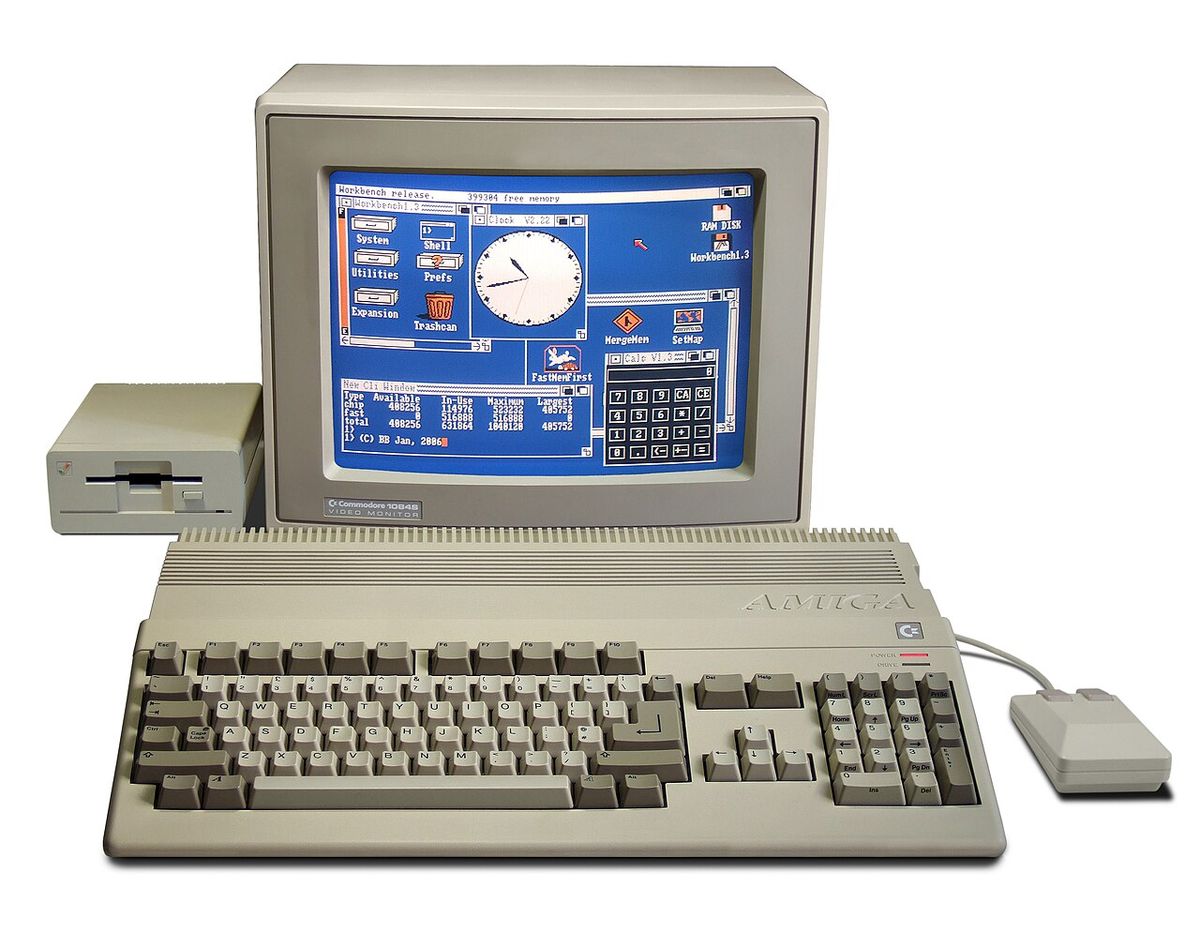
Commodore launched the fruit of this acquisition, the Amiga 1000, in the fall of 1985. Priced at $1,295 US, it ran the revolutionary AmigaOS, which featured a full-colour graphical interface and preemptive multitasking. The Amiga line quickly became a popular platform for computer games, creative software, and video production, developing a strong following, particularly in European markets like West Germany. Internal conflicts and management issues persisted under the leadership of Gould and President Mehdi Ali. While the Amiga remained popular, newer models struggled to compete effectively against the rising tide of IBM PC-compatible computers and the Apple Macintosh. By 1992, the Amiga's status as a premier gaming platform was further eroded by 16-bit video game consoles from Nintendo and Sega and the dominance of MS-DOS based systems.
Decline, Bankruptcy, and Fragmentation of Assets
Despite the enduring popularity of the Amiga, the company could not regain its former momentum. On April 29, 1994, Commodore International filed for bankruptcy and was subsequently liquidated. Its assets were purchased by the German company Escom AG later that year. Escom attempted to revitalize the Amiga line but itself went bankrupt in July 1996, leading to another fragmentation of the Commodore and Amiga intellectual properties. The core Amiga technology assets, including copyrights and trademarks, were sold to Gateway 2000, which later transferred them to a company called Amiga, Inc. The Commodore brand name followed a separate path, eventually being acquired by Tulip Computers of the Netherlands. This separation of the Commodore brand from its original technical assets created a complex legacy that persisted for decades.
The last of the original Commodore-Amiga patents, specifically the European patent EP0316325B1 for a 'Cursor controlled user interface system', expired on July 14, 2007. In the years that followed, development of the Amiga operating system was continued under license by Hyperion Entertainment of Belgium, which has released updated versions of AmigaOS 4 for PowerPC-based AmigaOne computers. Amiga Corporation, under its various ownerships, retained control over the Amiga trademarks and a significant portion of the associated intellectual property. This scattered ownership landscape set the stage for the modern attempts to reunify and revive the brands.
Modern Revival and Brand Reconstitution
After decades under Dutch ownership, the Commodore brand entered a new chapter in 2025. On July 31 of that year, a group of investors completed the full acquisition of the Commodore Corporation, finalizing the purchase in the Netherlands. This group incorporated a new United States company called Commodore International Corporation, with Peri Fractic serving as its President and CEO. The revived company's stated mission is to bring back the revered brand and reintroduce it to a new generation, with the slogan "The Future We Were Promised." A key part of this revival has been the renewed production of Commodore 64 computers, with the company reporting the manufacture of over 30,000 new C64 units by 2026 by licensing community-driven projects and designs.
The new Commodore International has actively pursued partnerships to clarify the intellectual property landscape and support its goals. In August 2026, the company entered into a cross-licensing agreement with Amiga Corporation, which holds the rights to the Amiga trademarks and source codes as well as the 8-bit Commodore software and documentation. This agreement allows Commodore International to license this 8-bit software for use in its new products. In a separate arrangement, Hyperion Entertainment retains the rights to continue developing AmigaOS 4.x, while the rights to the older AmigaOS 3.x versions are set to revert to Amiga Corporation at the end of 2027. These agreements have created a clearer map for future development and potential new hardware releases under both the Commodore and Amiga banners.
Product Strategy and Cultural Influence
The revived Commodore International Corporation has outlined a product philosophy centred on nostalgia, creativity, and gaming. The company promotes its modern Commodore 64 as a "digital oasis" offering access to a library of over 10,000 classic games, plus decades of homebrew titles and new games in active development. It emphasizes the computer's utility for offline creative work using the classic GEOS software suite for painting, publishing, and writing. The platform is also marketed as an educational tool for learning to code in BASIC and for music composition, leveraging the well-known SID sound chip that works with original peripherals and modern synthesizers. The company has engaged in collaborations, such as a Cyberpunk 2077-themed project and the release of an Alien Breed 35th Anniversary Collection in partnership with other gaming companies, to connect with both retro and modern audiences.
The historical importance of the original Commodore company is significant, particularly in Canada where it began. The Commodore 64 and Amiga series retain a dedicated cult following worldwide, with active communities of enthusiasts, demo scene artists, musicians, and homebrew developers who have kept the spirit of the machines alive for over 30 years. The company's place in history is cemented by the C64's record sales and the Amiga's groundbreaking multimedia capabilities. The modern revival effort explicitly credits and aims to steward this community history, seeking to bridge the gap between the pioneering computers of the 1980s and contemporary technology.
| Model | Launch Year | Key Achievement |
|---|---|---|
| Commodore PET | 1977 | First Commodore home computer. Popular in education. |
| VIC-20 | 1981 | First computer to sell over one million units. |
| Commodore 64 | 1982 | Best-selling computer model (over 22 million units). |
| Amiga 1000 | 1985 | Introduced advanced AmigaOS with graphical interface. |
Questions about Commodore International
What is the relationship between Commodore and Amiga now?
As of 2026, the relationship is defined by a cross-licensing agreement. Amiga Corporation owns the Amiga trademarks and source code, as well as the software and documentation for the 8-bit Commodore systems. Commodore International Corporation has licensed these 8-bit rights from Amiga Corp. Separately, Hyperion Entertainment continues to develop AmigaOS 4.x under license, while the rights to AmigaOS 3.x will revert to Amiga Corporation at the end of 2027. This structure allows the two historic brands to collaborate while managing their respective intellectual properties.
What does the new Commodore company make?
The revived Commodore International Corporation focuses on new Commodore 64 hardware and software experiences. By 2026, it had manufactured over 30,000 new C64 units. The company promotes the platform as a hub for retro and new gaming, with access to thousands of classic titles, and for creative and educational uses like coding in BASIC and composing music with the SID chip. It also partners on software preservation projects and modern collaborations, such as a Cyberpunk 2077-themed release, to connect with contemporary audiences.
Was Commodore a Canadian company?
Commodore's direct corporate predecessor was a Canadian company. Jack Tramiel and Manfred Kapp incorporated Commodore Business Machines (Canada) Ltd. in Toronto in 1958. The company's early operations were based in Canada, with its headquarters on Warden Avenue in Scarborough, Toronto. However, in 1976, this company was dissolved and replaced by a new Bahamian corporation named Commodore International, which became the parent company. The operational headquarters for research and development was moved to West Chester, Pennsylvania, under the name Commodore Business Machines, Inc.
What was Commodore's best-selling computer?
The Commodore 64 was the company's and the world's best-selling computer model. Introduced in 1982, it sold approximately 22 million units over its lifetime, a record that lasted until the Raspberry Pi overtook it in 2019. Its success was due to its advanced sound and graphics for its price, which was much less expensive than other 64K computers. Aggressive price cuts during the 1983 home computer war, where Commodore sold the C64 for as little as $199, helped the company achieve $1 billion in sales that year and ship more computers than the rest of the industry combined at its peak.
Why did Commodore go bankrupt?
Commodore International filed for bankruptcy on April 29, 1994. The company's position declined in the late 1980s due to internal conflicts and mismanagement under co founding chairman Irving Gould and president Mehdi Ali. While its Amiga line was popular, newer models failed to keep pace with competing IBM PC compatible computers and the Apple Macintosh. By 1992, the Amiga's status as a premier gaming platform was eroded by MS DOS and 16 bit video game consoles from Nintendo and Sega. These factors led to falling sales, culminating in bankruptcy and liquidation.
Is the Commodore brand still active today?
Yes, the Commodore brand was revived and is active. On July 31, 2025, a group of investors completed the full acquisition of the Commodore Corporation from its Dutch owners and incorporated a new United States company called Commodore International Corporation. This new entity is manufacturing new Commodore 64 computers, licensing community projects, and has entered a cross licensing agreement with Amiga Corporation. The company aims to reintroduce the brand with new products while honouring its classic legacy.
Sources and further reading
- Commodore International (Wikipedia)
- Commodore, The Future We Were Promised™ (commodore.net)
- Amiga And Commodore, Back Together (Sort Of) (hackaday.com)
Checked by the Yadude Books desk. Last updated 2026-10-25.