Massey Ferguson
Massey Ferguson is a global manufacturer of agricultural machinery, a brand with deep roots in Canadian industrial history. It was established in 1953 through the merger of the historic Canadian firm Massey-Harris and the Ferguson Company of Northern Ireland. For generations, its tractors, combines, and implements have been a common sight on farms across Canada and around the world, symbolizing agricultural mechanization. Today, Massey Ferguson operates as a major brand under the ownership of the American corporation AGCO, with its global headquarters in Buffalo, New York, and its primary tractor manufacturing centre in Beauvais, France.
Foundations and the Massey-Harris Era
The origins of Massey Ferguson trace back to 1847 when Daniel Massey established the Newcastle Foundry and Machine Manufactory in what is now Newcastle, Ontario. The company initially assembled mechanical threshing parts from the United States before designing and building its own equipment. His son, Hart Massey, later renamed the enterprise the Massey Manufacturing Company and moved its operations to Toronto in 1879. The sprawling complex on King Street West became a landmark and a major employer, leveraging extensive advertising and a national labour shortage to become a dominant Canadian brand. In 1857, Alanson Harris founded a separate implement company near Beamsville, Ontario, which later became A. Harris, Son and Company after his son John joined in 1863. This firm moved to Brantford in 1872 and expanded its sales across western Canada.
In 1891, the two pioneering companies merged to form Massey-Harris Limited, which grew to become the largest agricultural equipment maker in the British Empire. The company produced a wide range of machinery, including threshers, reapers, and from 1898, safety bicycles. An early move into multinational operations occurred in 1910 with the acquisition of the Johnston Harvester Company of Batavia, New York. The Massey family, including Hart's sons Charles, Walter, Chester, and Fred, ran the company until 1927, when family control ended with a CA$8 million sale to Toronto financiers Thomas Bradshaw and J.H. Gundy. Family members like Vincent Massey, who became Governor General of Canada, and actor Raymond Massey used the family fortune to support numerous Toronto institutions.
Massey-Harris was an innovator in farm mechanization. In 1938, engineer Tom Carroll developed the world's first affordable, mass-produced, self-propelled combine, the No. 20, which led to the successful No. 21 model introduced in 1941. The company also produced early four-wheel drive tractors. During the Second World War and the early Cold War period, Massey-Harris fulfilled significant military contracts, manufacturing vehicles including the M5 Stuart and M24 Chaffee light tanks, the M44 self-propelled howitzer, and specialized military tractors for the United States armed forces. The post-war period saw the introduction of popular tractor series like the 22, 33, 44, and 55, which were later updated as the 'triple series' (333, 444, 555) in the mid-1950s.
The final generation of Massey-Harris tractors before the Ferguson merger included models like the 25-horsepower M-H 22 series and the 55-horsepower M-H 55 series. In 1952, the M-H 22 was replaced by the M-H 23 Mustang. The company's management saw significant figures join its ranks during the war years, with E.P. Taylor, one of C.D. Howe's dollar-a-year men, joining the board in 1942 and Eric Phillips joining management in 1946. Massey-Harris became a central part of the Argus Corporation's holdings during this period, setting the stage for the corporate dramas that would follow in later decades.
The Merger and Global Expansion
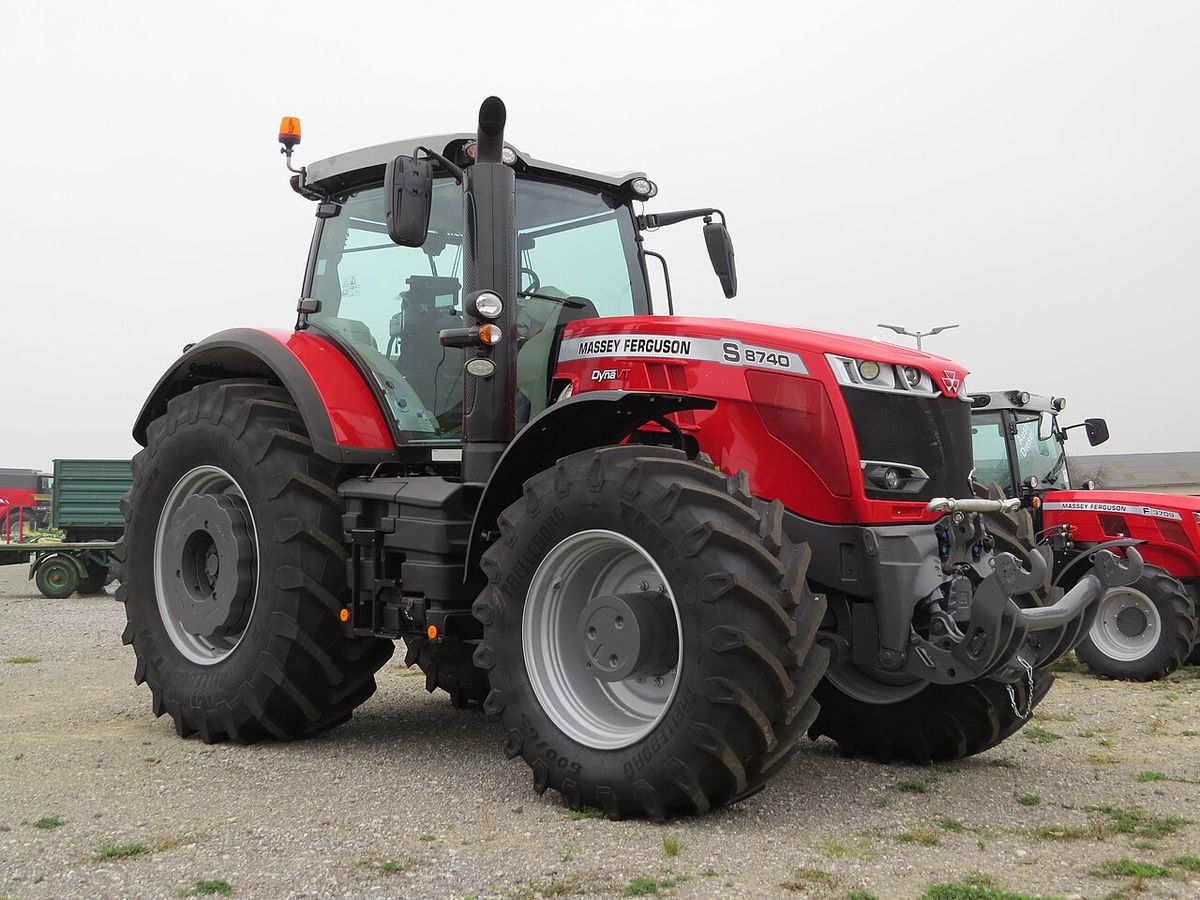
The modern Massey Ferguson entity was created in 1953 with the merger of Massey-Harris and Harry Ferguson's company, initially named Massey-Harris-Ferguson before shortening to Massey Ferguson in 1958. The company sought to consolidate the two distinct dealer networks and product lines, promoting the brand with an upbeat advertising jingle featuring a male chorus singing, 'He's a get-up-early, keep-'em-rollin, Massey-Ferguson kind of a man.' This era marked the beginning of aggressive global expansion through acquisitions. In 1955, Massey purchased H. V. McKay Pty Limited in Australia, known for the Sunshine harvester and the world's first self-propelled harvester from 1924. The Australian manufacturing operations continued until 1986.
In 1959, the company made two critical purchases: the Italian tractor manufacturer Landini, which built vineyard and crawler models for Massey, and the British diesel engine maker Perkins Engines, which became the primary engine supplier for decades. Perkins was later merged with Dorman Diesels in 1990 to form Perkins Engines (Stafford) Ltd, and it purchased Rolls-Royce (Diesels) Ltd in the 1980s. Further international growth followed in the 1960s and 1970s. Massey purchased a 32 percent stake in the Spanish firm Ebro, also known as Motor Iberica, in 1966, which had previously built Ford tractors under license and then began building Massey models.
The company's head office moved from its historic King Street location to the Sun Life Tower at 200 University Avenue in downtown Toronto during the early 1960s. In 1973, Massey purchased the German tractor manufacturer Eicher, and in 1974 it took control of Hanomag, though the latter was sold after five years of losses totaling $250 million. The company also briefly diversified into snowmobiles, producing the Ski Whiz line from 1969 until its discontinuation in 1977 due to declining sales. In Argentina, Massey purchased the local facilities of Rheinstahl Hanomag-Cura in 1971, producing a wide range of tractor models there until 1999, including the 65R, 155, 5160, and 9500 series.
- 1955: Acquisition of H.V. McKay (Sunshine harvesters) in Australia, including the Bundaberg cane equipment plant in 1967.
- 1959: Purchase of 100% of Landini tractor company in Italy (later sold to ARGO SpA).
- 1959: Purchase of Perkins Engines in Peterborough, England.
- 1966: Acquisition of a 32% stake in Ebro (Motor Iberica) of Spain, later sold to Nissan.
- 1971: Purchase of Rheinstahl Hanomag-Cura operations in Argentina.
- 1973: Purchase of German tractor maker Eicher (later owned by Dromson).
- 1974: Purchase of control over German manufacturer Hanomag.
In 1930, H. V. McKay Pty Limited was granted exclusive Australian distribution of Massey-Harris machinery and was renamed H. V. McKay Massey Harris Pty Ltd. Throughout World War II, the company exported over 20,000 Sunshine drills, disc harrows, and binders to England to facilitate increased food production. In 1971, the MF201 combine chopper harvester produced there won the Prince Philip Prize for Australian Design. The company ceased manufacturing in Australia in 1986, and the last section of the Sunshine factory complex was sold off and demolished in 1992. The former bulk store, factory gates, clock tower, memorial gardens and church, and the former head office buildings remain extant and were separately added to the Victorian Heritage Register.
Financial Struggles and Corporate Restructuring
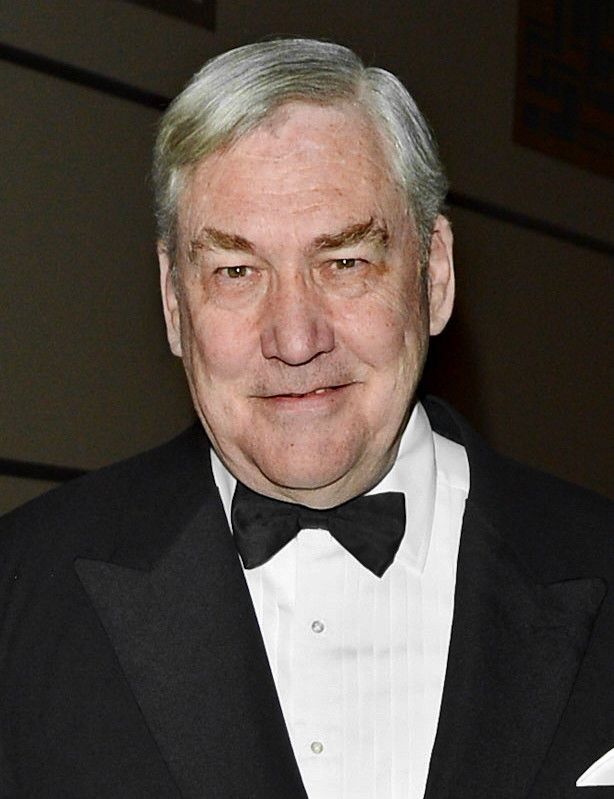
Despite its global footprint, Massey Ferguson began to struggle financially in the 1960s and 1970s amid increasing international competition. In August 1978, Conrad Black, whose family controlled the Argus Corporation, a major investor, became active in the company's management. At the time, chairman Albert A. Thornbrough received a salary of $471,000, the highest executive salary in Canada in 1977. Black implemented cost-cutting measures and oversaw the relocation of production from Toronto to a new facility in Brantford, Ontario. In 1978, Massey Ferguson became the first to introduce an electronic control system for a tractor's three-point hitch, a significant technical innovation.
However, a global agricultural downturn combined with high inflation and interest rates pushed the company into crisis. The firm had a long-term pattern of thin profitability, making more than 4 percent profit on sales only five times in the fifty years between 1929 and 1979. After an informal takeover offer from Volkswagen AG for 51 percent of the firm was rejected in October 1979, Black resigned as chairman in May 1980. In detailed letters to Industry Minister Herb Gray, he outlined a proposed rescue plan involving the Canadian and Ontario governments and Argus Corporation, but failed to secure support.
The company's collapse was averted by a major bailout. In October 1980, Argus donated its shares to employee pension plans, paving the way for a CA$250 million rescue package from the Canadian and Ontario governments. The restructured entity was renamed Varity Corporation. In 1986, Varity spun off several unprofitable divisions into Massey Combines Corporation, headquartered in Brantford, which became insolvent on 4 March 1988 and had its assets re-acquired. Varity relocated its head office from Toronto to the Williams-Butler House at 672 Delaware Avenue in Buffalo, New York. The massive Toronto manufacturing complex was demolished and the property redeveloped into what is now Liberty Village.
Despite its hardships, Massey Ferguson was selling 25 percent more tractors than its nearest competitors at this time. In 1992, a management buyout of MF Industrial created Fermec, which ceased trading in 2001 when it was taken over by the Terex Corporation. The sale encompassed all construction equipment from Massey Ferguson. It was then purchased by Case Corporation in 1997.
The AGCO Era and Modern Operations
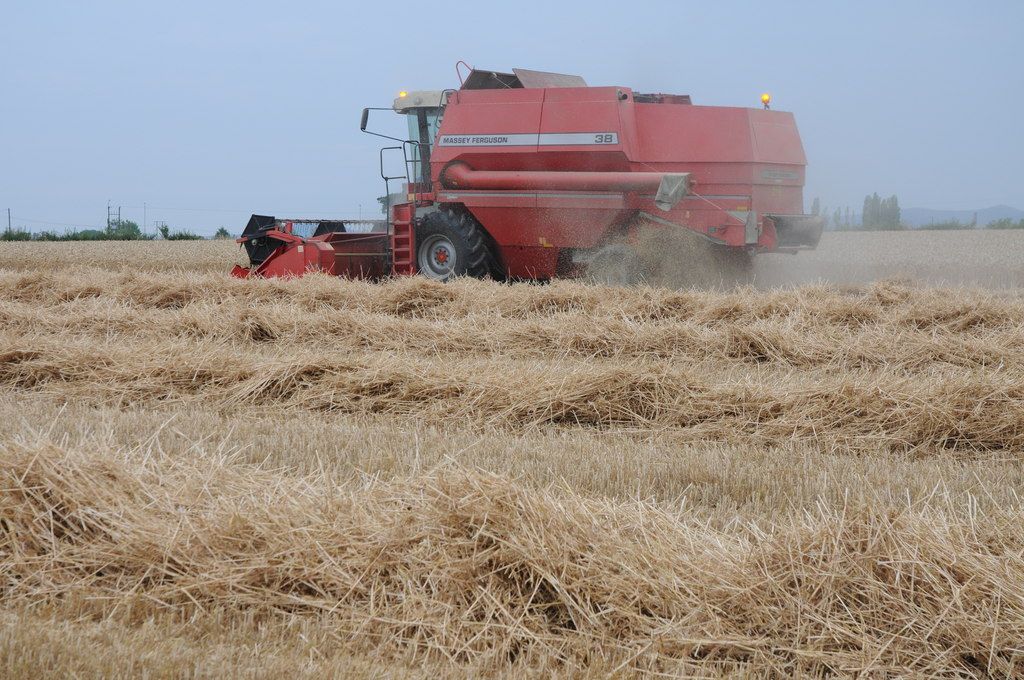
A new chapter began in 1994 when the worldwide holdings of the Massey Ferguson brand were purchased by the American agricultural equipment giant AGCO Corporation for US$328 million in cash and US$18 million in stock. At the time of acquisition, Massey Ferguson held a 20 percent global market share but sold 87 percent of its machines outside North America. AGCO's strategy aimed to bolster Massey's presence in North America while leveraging its strong international brand. The parent company, Varity, merged with Lucas Automotive in August 1996 to become LucasVarity, which was ultimately acquired by the United States company TRW in 1999 for US$6.53 billion.
Under AGCO, Massey Ferguson's primary tractor production has been centred at the expanded factory in Beauvais, France. AGCO announced a significant expansion of this facility in January 2020, after which it covered 54 hectares and employed up to 2,500 people. New Massey Ferguson models are designed, built, and tested at this site. Row-crop tractors have been produced continuously in Beauvais since 1960, with the first model being an 825. A major milestone was reached in June 2022 when the one millionth Massey Ferguson tractor, an 8S.305 model with a Dyna-VT transmission, rolled off the Beauvais production line.
AGCO has driven significant innovation under the Massey Ferguson banner. In 2008, the 8600 series became the world's first agricultural tractor to feature Selective Catalytic Reduction (SCR) emissions technology, branded as e3. Production for the North American market was also established at an AGCO facility in Jackson, Minnesota, starting in June 2012. This plant initially built 7600 and 8600 series tractors, and later produced the 7700, 8700, 7700S, and 8700S models. In a strategic shift, production of the high-horsepower 7700S and 8700S models returned exclusively to Beauvais in 2022 to meet global demand and free up capacity in Jackson for Fendt track tractors and self-propelled application equipment.
| Model Series | Notable Feature | Year Introduced/Noted |
|---|---|---|
| MF 35 | First Massey Ferguson branded tractor ('Gold Belly') | Entered production December 1957 |
| MF 500 Series | Post-merger model, based on Ferguson TO-35 | 1955 (as Massey-Harris 50) |
| 8600 Series | First tractor with SCR (e3) emissions technology | 2008 |
| 8S Series | Included the 1,000,000th Beauvais tractor (8S.305) | 2022 Milestone |
| 9S Series | Model year 2026 updates with FarmEngage subscription | 2026 |
Product Portfolio and Technological Focus
Today, Massey Ferguson offers a comprehensive range of agricultural equipment sold globally, with regional variations in availability. The product lineup is structured around several core categories designed to meet diverse farming needs. The tractor range is segmented from compact and utility models up to high-horsepower row-crop tractors like the 9S Series. The company also manufactures and markets a full suite of implements and harvesting equipment, including hay tools under the Hesston by Massey Ferguson brand, planting equipment, combine harvesters, and self-propelled sprayers. Supporting these machines are telemetry systems like PTx FarmEngage for data management and a full offering of replacement parts and maintenance kits.
The company's design philosophy emphasizes straightforward, dependable, and purpose-built machinery. Recent strategic moves focus on expanding its presence in key markets and technology segments. In September 2026, AGCO announced a strategic supply partnership with International Tractors Limited (ITL), one of India's leading tractor manufacturers, to strengthen Massey Ferguson's global offerings. The brand is also actively expanding its application equipment lineup, notably promoting its self-propelled sprayer as a distinct platform for ag retailers. This sprayer, built in Brazil and featured at the 2026 Midwest Ag Industries Exposition (MAGIE), is positioned between the premium Fendt Rogator and high-capacity TerraGator lines.
The Massey Ferguson sprayer is available in two tank sizes, 760 or 900 gallons, and features a recirculating boom with 65 inches of clearance. AGCO's pitch for this equipment highlights its practical features for professional applicators, such as a poly tank that makes it 7,000 pounds lighter than some comparative models. For planting, the company introduced new planters in 2026 that combine proven technology with flexible performance. In hay and forage, the Hesston by Massey Ferguson line includes mowers, balers, rakes, and tedders built for durability and clean crop handling. The company also manufactures a full line of implements for tillage, material handling with integrated loaders, and the MF TH telehandler.
- Compact Tractors (1M, 2M Series): For small farms and estates, displayed at events like the 2026 Royal Highland Show.
- Utility and Mid-Range Tractors: For general farm duties and livestock operations.
- High Horsepower Tractors (7S, 8S, 9S Series): For large-scale row crop farming, with model year 2026 updates.
- Combine Harvesters: Including traditional and specialty models like the former MF201 combine chopper.
- Self-Propelled Sprayers: For precise crop protection application, part of a expanded 2026 lineup.
- Hay Tools: Marketed under the Hesston by Massey Ferguson name for better forage quality.
- Planting and Tillage Equipment: Built for durability and precision seed placement.
- Telemetry Systems: PTx FarmEngage for machine tracking, data, and retrofit solutions.
AGCO's technology demonstrations for Massey Ferguson extend into digital areas. The company also runs storytelling initiatives to celebrate farming families. It highlights the fuel efficiency of its AGCO Power engines used in Massey Ferguson machinery. The Massey Ferguson 500R Series sprayer, for example, delivers precise coverage with straightforward controls.
Historic Sites and Canadian Legacy
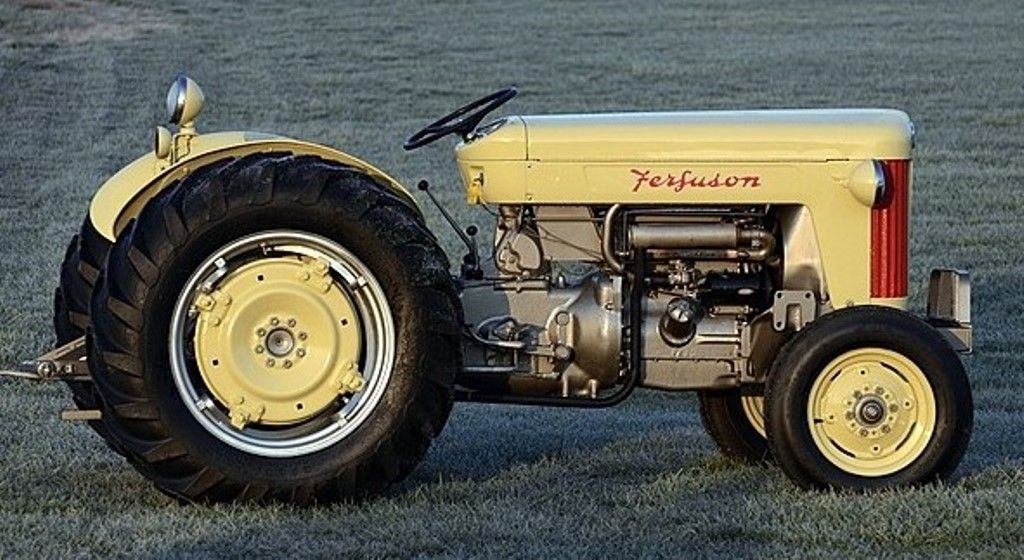
The physical legacy of Massey Ferguson and its predecessors remains etched in the Canadian landscape, particularly in Ontario. The most significant historic site was the massive Massey Manufacturing complex at 915 King Street West in Toronto, on the former grounds of the Toronto exhibition grounds and Crystal Palace, just south of the Provincial Lunatic Asylum and north of the Central Prison. This 4.4 hectare (11-acre) site, which included the head office and plant at 915 King Street West, was a defining feature of the city's industrial west end and a major employer for decades. After manufacturing ceased and operations moved to Brantford in the late 1970s, the complex was demolished and redeveloped into the Liberty Village neighbourhood. Only the original head office building survives from that era.
During the late 1970s, Massey Ferguson production was relocated from Toronto to a new, large facility in Brantford, Ontario. In 1986, Varity spun off several money-losing divisions into an entity called Massey Combines Corporation, which was headquartered in Brantford. Massey Combines Corporation became insolvent on 4 March 1988, and its assets were re-acquired by Massey Ferguson. The former H.V. McKay Sunshine factory in Melbourne was mostly demolished by 1992, though several structures remain on the Victorian Heritage Register. In Canada, the Massey family's philanthropic impact is a lasting part of the brand's story.
The Massey fortune, built on the success of the agricultural implement business, was used to improve the city of Toronto and support Canadian institutions. Family donations supported the construction and endowment of Massey Hall, numerous buildings at the University of Toronto, and contributions to the University of Guelph, Upper Canada College, Crescent School, Appleby College, and Metropolitan United Church. This philanthropic legacy left an indelible mark on Canadian cultural, educational, and religious institutions, ensuring the Massey name remains prominent beyond the field of agriculture. The Massey-Harris No. 21 Combine was further commemorated on a Canada Post stamp issued on 8 June 1996, a recognition of its importance in Canadian industrial history.
Questions about Massey Ferguson
Is Massey Ferguson a Canadian company?
Massey Ferguson has foundational roots in Canada, originating from the 1847 Massey foundry in Ontario and the 1953 merger of Canadian Massey-Harris with the Ferguson Company. However, after a series of financial restructurings, the brand has been owned since 1994 by the American corporation AGCO. Its global headquarters are in Buffalo, New York, and its main manufacturing hub is in Beauvais, France. While it is no longer a standalone Canadian-owned company, its history and legacy remain deeply intertwined with Canadian agricultural and industrial development.
Where are Massey Ferguson tractors made today?
The primary manufacturing centre for Massey Ferguson tractors is the AGCO factory in Beauvais, France, which produced its one millionth Massey Ferguson tractor in June 2022. For the North American market, certain high-horsepower models were previously built at an AGCO facility in Jackson, Minnesota, though production of the 7700S and 8700S series returned exclusively to Beauvais in 2022. Other equipment, like self-propelled sprayers, are manufactured in Brazil. The company operates on a global production footprint under AGCO's ownership.
What happened to the Massey Ferguson plant in Toronto?
The historic Massey-Harris and later Massey Ferguson manufacturing complex at 915 King Street West in Toronto was a massive industrial site covering 4.4 hectares. In the late 1970s, production was relocated to a new facility in Brantford, Ontario. The Toronto complex was subsequently demolished and the land was redeveloped. Today, the area is part of the Liberty Village neighbourhood, with only the original head office building remaining as a physical reminder of the site's industrial past.
What are some of Massey Ferguson's newest products?
Recent product developments focus on technology integration and expanded equipment lines. For model year 2026, Massey Ferguson announced updates to its high-horsepower MF 9S Series tractors, which include a free three-year subscription to the PTx FarmEngage telemetry service. The brand is also expanding its self-propelled applicator lineup, promoting a Massey Ferguson sprayer built in Brazil as a key platform for ag retailers. AGCO has also highlighted new planting technology and announced a strategic supply partnership with International Tractors Limited to bolster the brand's global offerings.
What was the first Massey Ferguson tractor?
The first Massey Ferguson branded tractor was the MF 35, which began production in December 1957. It was based on a Ferguson design that started its life in 1955 as the Ferguson 35, often nicknamed 'Gold Belly' due to the gold engine and gearbox. The MF 35 was massively popular and sold across the United Kingdom, Australia, Ireland and the United States. This model marked the beginning of the company's own tractor line following the 1953 merger. Its success helped establish the Massey Ferguson brand identity in the global agricultural market.
Does Massey Ferguson make equipment other than tractors?
Yes, Massey Ferguson manufactures a wide range of agricultural equipment beyond tractors. Its global offerings include combine harvesting equipment, self propelled sprayers, and various planting equipment. The company also produces a full line of hay tools and provides telemetry systems along with replacement parts and maintenance kits. Historically, the company has produced military vehicles, snowmobiles, and safety bicycles. This diverse product portfolio addresses multiple aspects of farm operations, supporting its position as a global agricultural machinery brand.
Sources and further reading
- Massey Ferguson (Wikipedia)
- Massey Ferguson United States official website (masseyferguson.com)
- AGCO Expands Application Lineup at MAGIE 2026 With ... (thedailyscoop.com)
- Massey Ferguson, News Releases | AGCO (news.agcocorp.com)
Checked by the Yadude Books desk. Last updated 2026-10-25.