Slack Technologies
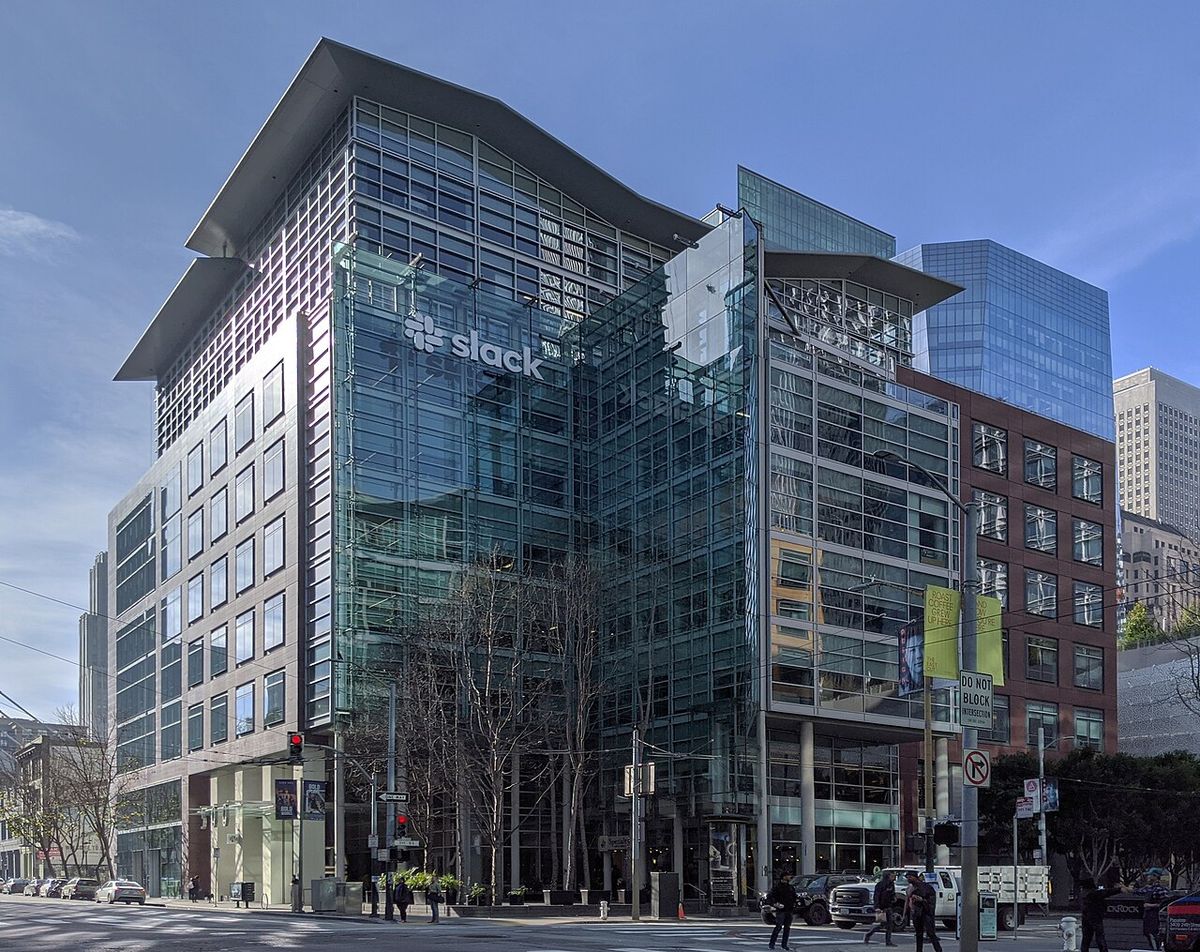
Slack Technologies, LLC is an American software company best known for its proprietary workplace communication platform, Slack. The company has significant Canadian roots, having been founded in 2009 in Vancouver, British Columbia, before establishing its headquarters in San Francisco, California. Slack's platform, an acronym for "Searchable Log of All Conversation and Knowledge," evolved from an internal tool used by a gaming startup and grew to become a dominant force in business collaboration software. Its journey included a notable direct public listing on the New York Stock Exchange in 2019 and a landmark acquisition by Salesforce in 2021 for $27.7 billion, a deal that closed later that year. The company maintains a global presence with offices in Toronto and Vancouver, connecting it directly to the Canadian technology sector and its user base of businesses worldwide.
Origins and the Glitch Era
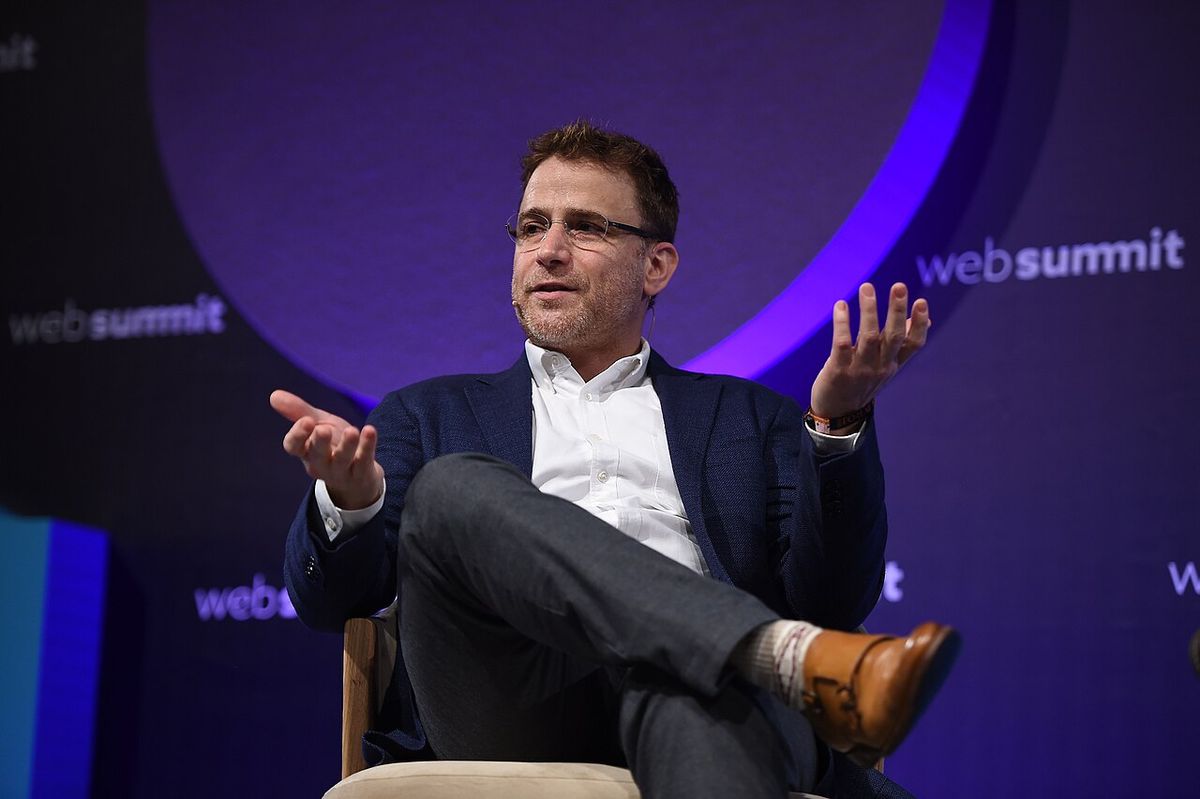
The origins of Slack Technologies trace back to the San Francisco based startup Tiny Speck, which was headed by Stewart Butterfield, the co founder of the photo sharing site Flickr. In 2009, Tiny Speck received angel funding of $1.5 million, followed by a Series A funding round of $5 million in 2010 from venture capital firms Accel and Andreessen Horowitz. The company raised a further $10.7 million in a Series B round in 2011. The first product developed by Tiny Speck was not a communication tool but a social massively multiplayer online role playing game called Glitch. The game featured highly stylized 2D graphics and gameplay focused on finding resources, building community, and proselytizing to other players. Glitch officially launched on September 27, 2011, but was subsequently "unlaunched" on November 30 of that year for improvements. Despite these efforts, the company announced in November 2012 that Glitch would be closed permanently, with the shutdown taking effect on December 9, 2012, marking the end of the company's initial foray into gaming and setting the stage for its key pivot.
Development and Launch of Slack
Following the closure of Glitch, the company pivoted to focus on a real time collaboration tool that had been developed internally for the game's production team. This tool was launched publicly as the Slack platform, and the company raised $17 million in funding from Andreessen Horowitz, Accel, and Social Capital to support its development. In August 2014, the company formally renamed itself Slack Technologies, adopting the acronym "Searchable Log of All Conversation and Knowledge" for its flagship product. The platform quickly gained traction, leading to significant subsequent funding rounds that propelled its valuation. In April 2014, the company raised $42.75 million, and by October of that year, it secured $120 million in venture capital at a valuation of $1.2 billion, a round led by Kleiner Perkins and GV. This rapid growth established Slack as a major new player in the enterprise software market, setting the stage for its expansion into large organizations and a series of strategic acquisitions to enhance its product offerings.
Growth, Funding, and Strategic Moves
Slack's aggressive expansion was fueled by continuous capital influx and strategic acquisitions. In January 2015, the company acquired Screenhero, a specialist in voice, video, and screen sharing technology. Major funding rounds continued, with Slack raising $160 million in March 2015 at a $2.76 billion valuation and another $160 million in April 2015. A $200 million round led by Thrive Capital followed in April 2016. In September 2017, Slack raised $250 million, with the majority coming from the SoftBank Vision Fund. Approximately 45% of this investment, or $112.5 million, originated from the Public Investment Fund of Saudi Arabia. This round brought Slack's total fundraising to $841 million and its valuation to $5.1 billion. The company also made key strategic hires, appointing its first chief financial officer, Allen Shim, in early 2018. A significant competitive move occurred in July 2018 when Atlassian announced it would shut down its competing HipChat and Stride services and sell the related intellectual property to Slack. As part of the deal, Slack agreed to pay Atlassian over three years to assume the user bases, and Atlassian took a minority investment in Slack, with both companies committing to deeper integration of their products. The company's pre IPO preparations included a logo redesign announced in January 2019 and recognition in November 2018 by Credit Suisse in its inaugural Disruptive Technology Recognition Program, which highlighted five top companies disrupting enterprise IT.
Direct Public Listing and Financial Performance
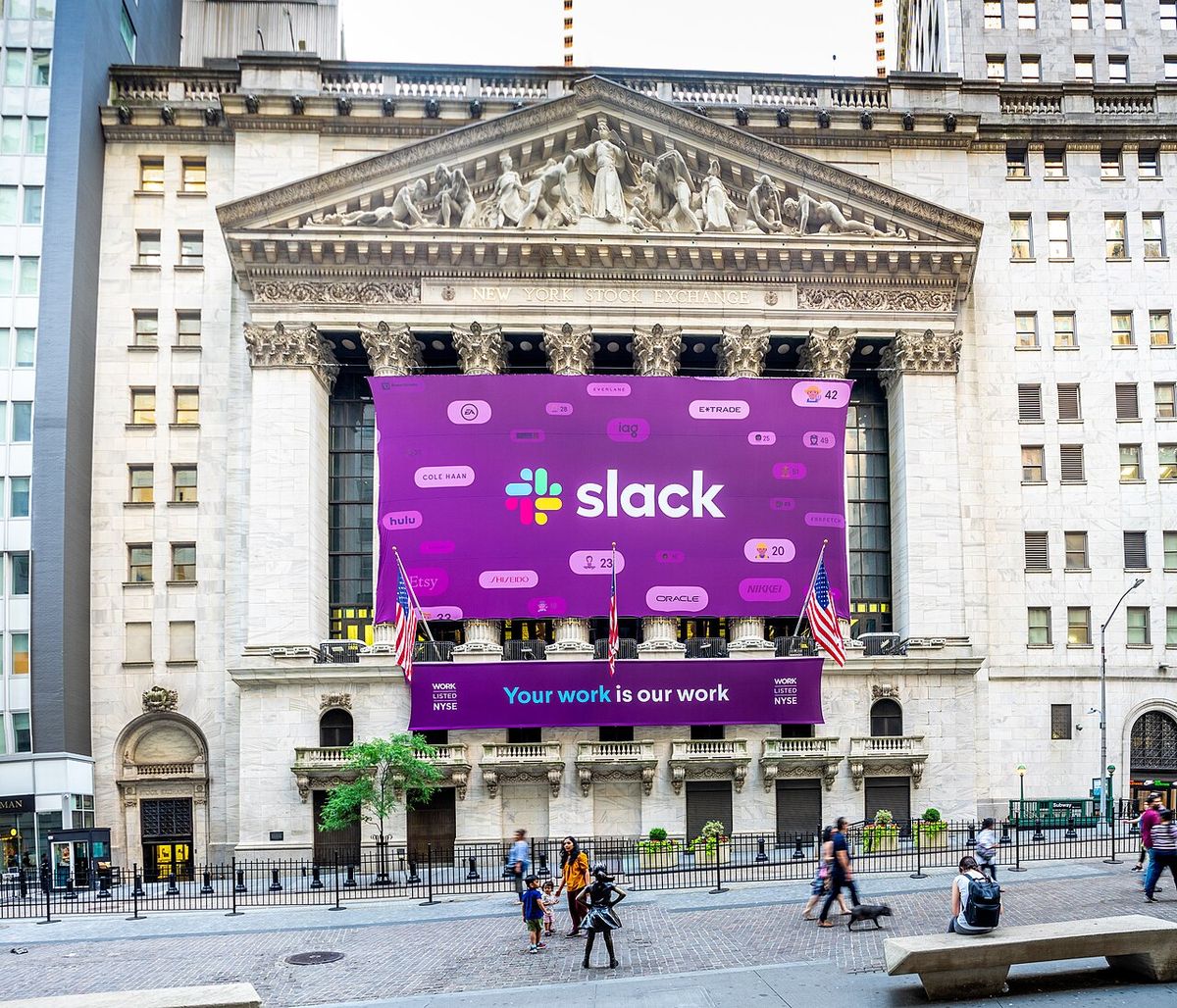
In preparation for going public, Slack opted for a direct listing on the New York Stock Exchange, a process similar to the one used by Spotify in 2018. The company filed its Form S 1 in April 2019 and began trading under the ticker symbol WORK on June 20, 2019. The NYSE set a reference price of $26 per share, and the stock price rose to over $41 in the initial hours of trading. In the lead up to the listing, Slack disclosed its financial performance for the fiscal year ending January 31, 2019. The company reported revenue of $400.6 million, a substantial increase from $220.5 million the previous year and $105.2 million in 2017. However, it also reported a net loss of $138.9 million for the 2019 fiscal year. Following the listing, Slack continued to pursue large enterprise clients, announcing the formation of a formal partner channel in November 2019. A major client win came in February 2020 when IBM agreed to deploy Slack to all 350,000 of its employees, making IBM Slack's largest client at that time. The direct listing itself involved 118 million registered shares being offered for resale, while another 164 million unregistered shares also became available for trading concurrently, a structure that later became central to securities litigation.
Acquisition by Salesforce and Recent Developments
In November 2020, reports emerged that Salesforce was in advanced talks to acquire Slack. The acquisition was officially announced on December 1, 2020, with a final value of $27.7 billion. The deal closed on July 21, 2021, after which Slack was delisted from the NYSE and its shareholders received stock in Salesforce. As a subsidiary, Slack announced plans to move its headquarters from Foundry Square to the Salesforce Tower in San Francisco by the end of February 2023 as part of a broader consolidation plan. In a more recent leadership change, chief product officer Rob Seaman was named interim CEO in December 2025. The company maintains offices in several global cities, including its original founding city of Vancouver and Toronto in Canada, as well as New York City, London, Paris, Tokyo, Dublin, Pune, and Melbourne. The integration into Salesforce's corporate structure represents the latest chapter for the once independent startup, aligning its collaboration tools with a leading customer relationship management ecosystem.
Legal Challenges and Litigation
Slack has been involved in several significant legal disputes. In July 2020, the company filed a complaint with the European Commission accusing Microsoft of anticompetitive behaviour, alleging that Microsoft illegally bundled its Teams collaboration product with its Office suite. Separately, Slack faced class action lawsuits from investors following its direct listing. The litigation timeline includes several key events and rulings.
- April 2020: Judge Susan Illston of the U.S. District Court for the Northern District of California partially granted Slack's motion to dismiss the federal class action, Pirani v. Slack Technologies.
- October 2020: Investors filed a separate class action lawsuit in California State Superior Court in San Mateo County, alleging securities violations.
- September 2021: The Ninth Circuit Court of Appeals issued a split decision that was later overturned, initially affirming the district court's ruling on standing.
- December 2022: The U.S. Supreme Court granted certiorari to hear the Pirani case.
- June 2023: The Supreme Court ruled unanimously in Slack Technologies, LLC v. Pirani that plaintiffs must trace their shares to a misleading registration statement to sue under Section 11 of the Securities Act.
- 2025: On remand, the Ninth Circuit held that the plaintiff's claims failed because he could not trace his shares, and it dismissed the complaint with prejudice.
The Supreme Court's decision in Slack Technologies, LLC v. Pirani clarified that liability under Section 11 of the Securities Act of 1933 requires a plaintiff to prove they purchased shares traceable to the allegedly defective registration statement. This legal standard is key for direct listings. The federal class action case, Pirani v. Slack Technologies, involved allegations that Slack's IPO documentation contained untrue statements and material omissions. The claims specifically cited issues regarding Slack's scalable architecture and statements in the "Key Benefits" portion of its registration statement. The Ninth Circuit ultimately held that because the plaintiff conceded he could not trace his shares, all his claims failed. The complaint was dismissed with prejudice.
Major Funding Rounds and Valuations
The ascent of Slack Technologies was marked by a series of substantial venture capital investments. After pivoting from the game Glitch, the company launched the Slack app and raised $17 million in funding from Andreessen Horowitz, Accel, and Social Capital. The company raised $42.75 million in April 2014 and then $120 million in October 2014, achieving a $1.2 billion valuation led by Kleiner Perkins and GV. In March 2015, Slack signed a deal to raise up to $160 million at a $2.76 billion valuation with new investors like Institutional Venture Partners. The company raised another $200 million in April 2016 led by Thrive Capital.
| Date | Amount Raised |
|---|---|
| April 2014 | $42.75 million |
| October 2014 | $120 million |
| March 2015 | $160 million |
| April 2016 | $200 million |
| September 2017 | $250 million |
In September 2017, Slack raised $250 million, with the majority coming from the Softbank Vision Fund. This round brought the company's total fundraising to $841 million and its valuation to $5.1 billion. The funding enabled strategic acquisitions like Screenhero, a specialist in voice, video, and screen sharing, which Slack acquired in January 2015. Other notable investors across various funding rounds included Horizons Ventures, Index Ventures, DST Global, GGV, and Comcast Ventures. Existing investor Social Capital was a leading investor in a funding round in May 2015 and participated in multiple rounds including those in April 2016 and September 2017.
Key Product Features and Platform Evolution
The Slack platform was designed as a central hub for team communication, built around channels organized by topic, project, or team. Its core functionality and evolution can be summarized by several key features and strategic enhancements. The platform's foundation is its searchable archive of all messages and files, living up to its "Searchable Log" acronym. Direct messaging and group conversations provide flexible communication options beyond public channels. Integration capabilities allow connections with thousands of third party apps and services, from Google Drive to GitHub. The acquisition of Screenhero in 2015 added native voice, video, and screen sharing features directly into the platform. Enterprise grade security controls and compliance certifications were developed to appeal to large organizations and regulated industries. Following the 2018 deal with Atlassian, deeper integrations with tools like Jira and Confluence were prioritized. The development of the platform was guided by several strategic business milestones.
- August 2014: Company renamed to Slack Technologies upon public launch of the Slack platform.
- January 2015: Acquisition of Screenhero to add voice, video, and screen sharing.
- July 2018: Agreement with Atlassian to acquire IP of HipChat and Stride and assume their user bases.
- November 2019: Formation of a formal partner channel to focus on enterprise clients.
- February 2020: IBM deployment to 350,000 employees, becoming Slack's largest client.
- July 2021: Acquisition by Salesforce closed, beginning integration into the larger software ecosystem.
Slack began as an internal tool used for the development of the game Glitch by the startup Tiny Speck. After Glitch closed, the company launched Slack as a real time collaboration app and platform in 2014. The platform grew through significant funding, a direct public listing in 2019, and major enterprise deployments like IBM's rollout to 350,000 employees. These events shaped its trajectory into a global enterprise software platform. Salesforce announced its acquisition of Slack for $27.7 billion in December 2020, and the deal closed in July 2021.
Corporate Identity and Global Operations
Slack Technologies established a distinct corporate identity that evolved from its founding through its acquisition. The company's operations span the globe, with a network of offices supporting its international user base. Key elements of its identity and operational footprint include the official launch of its new logo on January 16, 2019, as part of its pre IPO branding. The company's original founding location in Vancouver, British Columbia, remains an active office, maintaining a link to its Canadian origins. Its headquarters moved within San Francisco, from Foundry Square to the Salesforce Tower, as part of post acquisition consolidation plans for February 2023. Slack's global offices facilitate sales, support, and development across major markets in North America, Europe, Asia, and Australia. The company's ticker symbol on the New York Stock Exchange was WORK, reflecting its focus on workplace productivity, from its direct listing in June 2019 until its delisting in June 2021 following the Salesforce acquisition. This global presence was essential for serving its diverse and expanding customer base, which ranged from small startups to massive enterprises like IBM, and for competing in the international market for collaboration software.
Questions about Slack Technologies
Is Slack a Canadian company?
Slack Technologies was founded in Vancouver, British Columbia in 2009, giving it strong Canadian origins. However, its headquarters were established in San Francisco, California, and it is incorporated as an American company. Following its acquisition in 2021, it operates as a subsidiary of the American cloud software giant Salesforce. Slack maintains offices in several Canadian cities, including Vancouver and Toronto, contributing to the local technology sector and providing jobs in the Canadian tech industry.
How did Slack go public?
Slack went public via a direct listing on the New York Stock Exchange on June 20, 2019, under the ticker symbol WORK. Unlike a traditional initial public offering (IPO), a direct listing does not involve issuing new shares or using underwriters. Instead, it allows existing shareholders, such as employees and early investors, to sell their shares directly to the public. The NYSE set a reference price of $26, and the stock opened trading at a significantly higher price, reaching over $41 in its first hours, which valued the company at a multi billion dollar market capitalization from its first day of trading.
Who owns Slack now?
Slack is owned by Salesforce, Inc., a leading customer relationship management (CRM) software company. Salesforce announced its agreement to acquire Slack in December 2020 for $27.7 billion. The acquisition was finalized and closed on July 21, 2021. Following the close, Slack was delisted from the New York Stock Exchange and became a wholly owned subsidiary within the Salesforce portfolio of business software, where it continues to operate as a distinct platform while integrating with other Salesforce products.
What was Slack's biggest lawsuit?
One of Slack's most notable legal battles was the securities class action lawsuit known as Pirani v. Slack Technologies. The case, which reached the United States Supreme Court, centred on investor standing following Slack's direct public listing. The Supreme Court's unanimous 2023 decision clarified that investors must trace their purchased shares to a specific misleading registration statement to sue under certain securities laws. This ruling set a precedent for direct listings. Slack also filed an antitrust complaint against Microsoft with the European Commission in 2020, alleging illegal bundling of Microsoft Teams with Office.
What does the name 'Slack' stand for?
The name Slack is an acronym that stands for 'Searchable Log of All Conversation and Knowledge'. The company originally developed Slack as an internal tool for communication during the development of its first product, a game called Glitch. After the closure of Glitch in 2012, the company launched the Slack real time collaboration app and platform. Subsequently, in August 2014, the company renamed itself from Tiny Speck to Slack Technologies. This renaming formalized its identity around its primary communication product, which had evolved from its origins as an internal development tool.
What happened to Slack's founder, Stewart Butterfield?
Stewart Butterfield was the head of the San Francisco based startup Tiny Speck, which was the precursor to Slack Technologies. He is also known as a co founder of the photo sharing site Flickr. Butterfield led Tiny Speck through the development and launch of its first product, the game Glitch, and later oversaw the pivot to the Slack communication platform. The notes indicate a leadership transition by December 2025, when chief product officer Rob Seaman was named interim CEO.
Sources and further reading
- Slack Technologies (Wikipedia)
- About Us (slack.com)
Checked by the Yadude Books desk. Last updated 2026-11-01.