Juno
Juno is a 2007 American comedy-drama film that became a significant cultural touchstone and a point of Canadian cinematic pride. Directed by Jason Reitman and written by Diablo Cody, the film stars Elliot Page as the title character, a sharp-witted 16-year-old who confronts an unplanned pregnancy and the complex adoption process. While set in Minnesota, the film was shot entirely in and around Vancouver, British Columbia, over six weeks in February and March 2007, utilizing local talent and locations such as Eric Hamber Secondary School and a house in White Rock. Its premiere at the Toronto International Film Festival and subsequent critical and commercial success, including an Academy Award for Best Original Screenplay and a worldwide gross of $232.3 million, cemented its status as an independent film landmark with deep Canadian connections.
Plot Summary
Set in Elk River, Minnesota, the film follows 16-year-old Juno MacGuff after she discovers she is pregnant following a sexual encounter with her friend and longtime admirer, Paulie Bleeker. Initially planning to have an abortion, Juno visits a local women's clinic but changes her mind after encountering a schoolmate holding a one-person anti-abortion vigil outside and finds herself unable to go through with the procedure once inside. With the help of her friend Leah, Juno searches the ads in the Pennysaver and finds a childless married couple she feels will provide a suitable home, informing her father Mac and stepmother Bren of the pregnancy and her plan for a closed adoption. With Mac, Juno meets the couple, Mark and Vanessa Loring, in their expensive Saint Cloud home, and agrees to the adoption, with Mark working at home composing commercial jingles and having abandoned his rock band youth.
As the pregnancy progresses, Juno forms a friendship with Mark, bonding over shared tastes in punk rock and horror films and starting to visit him frequently to hang out, while also grappling with her complicated and unspoken feelings for Paulie, whom she has maintained an outwardly indifferent attitude towards. The narrative takes a dramatic turn when Mark reveals he is unhappy in his marriage and plans to leave Vanessa to figure his life out, confessing he does not feel ready to be a father and questioning Juno's feelings for him. Distraught, Juno drives away and breaks down in tears by the side of the road before returning to leave a note for Vanessa, and after a heartfelt discussion with her father, Juno accepts that she is in love with Paulie and confesses her feelings to him. She goes into labour and gives birth to a baby boy at the hospital, with Paulie rushing to her side after inferring she was giving birth, and Vanessa arrives alone to joyfully claim the newborn as a single adoptive mother, having framed Juno's note that read "Vanessa: If you're still in, I'm still in., Juno." The film concludes in the summertime, showing Juno and Paulie, now in a happy relationship, playing guitar and singing the Moldy Peaches song "Anyone Else but You" together.

Production and Development
The screenplay for Juno was written by Diablo Cody over seven weeks in the Starbucks section of a Target store in Crystal, Minnesota, with Cody comparing writing to breathing and seeing Juno as an extension of herself. Cody collected stories from adoptees, birth parents and adoptive parents, including that of her then-husband, an adoptee who reunited with his birth parents after she wrote the film, and she also found inspiration in the story of a close friend who had become pregnant in high school and used some details from her friend's experience in the film, such as mistreatment from an ultrasound technician. Much of the script was based on Cody's own high school life, including dating a tic-tac-loving boy similar to Paulie, having a cheerleader best friend like Leah, and owning the same hamburger phone that appears in the film, and after film producer Mason Novick discovered Cody's blog about stripping, he encouraged her to write a sample screenplay, which became Juno. Director Jason Reitman was sent the script by Novick and felt that if he did not direct the film after reading halfway through, he would regret it for the rest of his life, interrupting work on his own spec script to direct Juno though he initially found it difficult to acquire the project as his first film had not yet been released.
The film's subject matter scared off several major studios before John Malkovich's production company, Mr. Mudd, took on the project, with funding originating from the United States and it was later brought to production company Mandate Pictures by co-producer Jim Miller. Reitman cast Elliot Page in the lead role after admiring his performance in Hard Candy, saying he pictured Page as Juno when he first read the screenplay and visiting Page on the set of another film to offer him the role. Key supporting roles were filled by Michael Cera as Paulie, Jennifer Garner as Vanessa Loring, and Jason Bateman as Mark Loring, the last cast member to be signed after Garner recommended him to Reitman, with J.K. Simmons and Allison Janney playing Juno's parents and Garner accepting a lower salary than usual to prevent the film from exceeding its $6.5 million budget. Reitman emphasized chemistry tests over individual auditions, bringing Page, Cera, Olivia Thirlby who had originally auditioned for Juno, and Simmons together for a 45-page screen test shot on 35mm film against a black backdrop on a Panavision stage in California to demonstrate the ensemble's dynamic for Fox Searchlight.
Filming in British Columbia
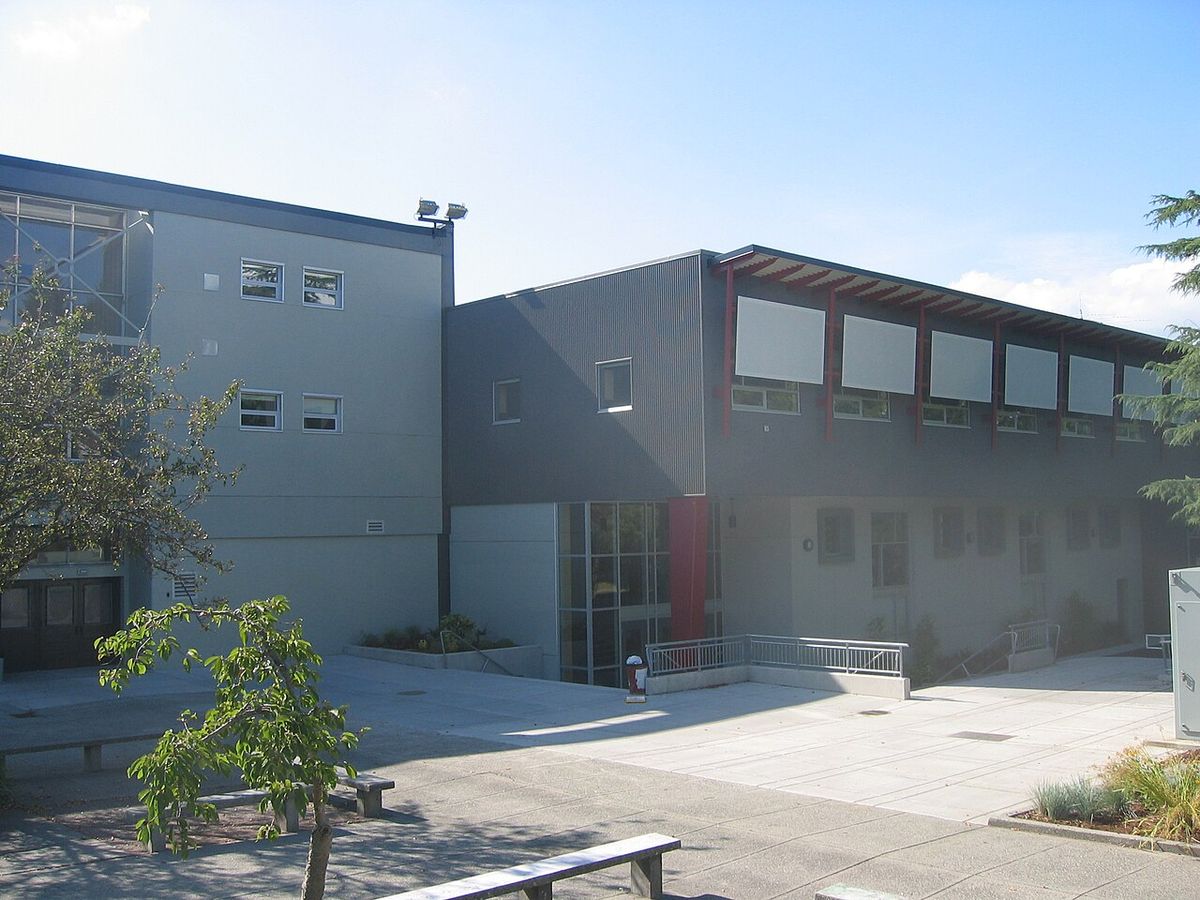
Although the story is set in Minnesota, Juno was filmed entirely in and around Vancouver, British Columbia, in February and March 2007 on a budget of $6.5 million. Director Jason Reitman has stated the location choice was a personal request, not solely a budgetary decision, despite films commonly using a Canada-as-America location shift for financial reasons. Principal photography was completed over 30 days on a six-week schedule, with minimal rehearsal beforehand, and key locations included Eric Hamber Secondary School in Vancouver, which stood in for Dancing Elk High School, and a house in White Rock that served as the Loring home. The production also shot at South Surrey's Athletic Park for the school's track scenes, and the crew was planning to import snow for winter events but was able to use natural snowfall that occurred on location, resulting in much wider snow shots than originally planned according to second assistant director Josy Capkun.
The crew planned to import snow for the film's winter events, but it snowed on location. They were able to reschedule filming to shoot the winter scenes during the snowfall. After a long period of rain, the crew was intending to shut down production and resume months later to shoot the final scene set in summer. The rain stopped on the final scheduled day, enabling them to shoot the scene in the sun. That final scene depicted Juno and Paulie singing the Moldy Peaches' "Anyone Else but You". Kimya Dawson visited the set to speak to Elliot Page and Michael Cera while they were practicing the song.
Music and Soundtrack
The film's distinctive soundtrack is central to its identity, largely featuring the lo-fi, folk-punk music of Kimya Dawson and her bands The Moldy Peaches and Antsy Pants. Elliot Page suggested Dawson's music to Reitman as fitting for Juno's character, going on Reitman's computer to play the songs, leading Reitman to contact Dawson after reading the screenplay and discussing putting a Moldy Peaches song in where the characters would sing to each other. Dawson agreed to have her existing songs used, sending him a packet of CDs containing about 120 previously recorded and self-published tracks, and she wrote nothing specifically for the film, with Reitman asking her to additionally re-record instrumentals including humming over the lyrics of some songs. Reitman also commissioned composer Mateo Messina, with whom he had worked on Thank You for Smoking, to create an instrumental score that replicated the recording quality, tone, feel and innocence of Dawson's music, giving Messina a collection of Dawson's songs and asking him to create the sound of the film.
Composer Mateo Messina decided to implement an acoustic guitar feel that was jangled and loose like Juno. He experimented with different guitars before settling on a second-hand guitar named "Stella" belonging to guitarist Billy Katz. Katz was hired to perform acoustic and classical guitar for the movie's score, using "Stella" extensively throughout. The film's soundtrack was the first chart-topping soundtrack since 2006's Dreamgirls and Fox Searchlight's first number-one soundtrack.
- "All I Want Is You" by children's songwriter Barry Louis Polisar, which plays over the opening titles after Reitman discovered it by surfing iTunes for hours using different search terms and thought the handmade quality was perfect for the sequence.
- "Anyone Else but You" by The Moldy Peaches, performed by Page and Cera in the film's final scene, with band member Kimya Dawson visiting the set while they practiced.
- "Sea of Love" performed by Cat Power, included at Page's suggestion despite Reitman's initial hesitation as it had been featured in the 1989 film Sea of Love, deciding its inclusion would mark a new take on cinematic references.
- The Sonic Youth cover of "Superstar," which Reitman felt defined the relationship between Juno and Mark, with Juno preferring the classic 1971 version by The Carpenters while Mark preferred the 1994 cover.
- "A Well Respected Man" by The Kinks, a song Reitman had associated with a character from another screenplay and found heart-breaking to use as an introduction for Paulie instead.
The "Brunch Bowlz" jingle that Mark writes in the film was composed by advertisement writer Chris Corley. Reitman had previously worked with Corley on a set of commercials for Wal-Mart. Initially, Reitman had conceived of Juno being a fan of glam rock, but he rejected it as too inauthentic. He said he wanted to construct Juno to be into music very real and authentic, making her a fan of punk rock, including The Runaways, Patti Smith and Iggy Pop and the Stooges.
Design and Visual Style
Writer Diablo Cody called Juno's bedroom a very emotional set for her because it reminded her so much of her own little habitat when she was a teenager. The walls of Juno's room are covered with posters of bands. Leah's room includes a mural of older men she finds attractive. Paulie's room is overly childlike to indicate his innocence. Production designer Steve Saklad designed Mark and Vanessa's expensive Saint Cloud home.
Costume designer Monique Prudhomme was nominated for a Costume Designers Guild Award. Prudhomme dressed Vanessa Loring in clothes that were simple and very tasteful but with an anal-retentive quality. She dressed Mark in conservative clothing to complement Vanessa's taste. For Juno, Elliot Page suggested the character wear flannel shirts and sweater-vests. Page also had to wear prosthetic bellies and fake breasts for the role.
Opening Title Sequence
The opening title sequence was created by the Los Angeles-based design studio Shadowplay Studio over seven to eight months. Reitman had previously worked with Shadowplay on the opening titles for Thank You for Smoking. He contacted them again when he found out he was going to direct Juno. With vintage 1970s punk-rock posters as inspiration, studio co-founder Gareth Smith and artist Jenny Lee aimed to create a sequence with texture and edge that also imparted warmth. In the last days of filming in Vancouver, Elliot Page was photographed with a high speed camera walking on a treadmill and drinking SunnyD.
The studio printed out 900 still images of a walking and drinking Elliot Page. They repeatedly ran these images through a Xerox machine to degrade their quality until the pictures appeared hand-drawn. These pictures were then cut out and animated to create the final sequence. This sequence sets the film's distinctive visual and tonal style before the narrative properly begins.
Release and Critical Reception
Juno premiered on September 8, 2007, at the Toronto International Film Festival. The film earned $232.3 million worldwide against its $6.5 million budget. Juno earned back its initial budget in twenty days, the first nineteen of which were when the film was in limited release. Juno received acclaim from critics, many of whom placed the film on their top-ten lists for the year.
Juno won the Academy Award for Best Original Screenplay and earned three other nominations for Best Picture, Best Director for Reitman, and Best Actress for 20-year old Elliot Page. Page was presenting as female at the time and is the sixth-youngest nominee in the category. The film has received criticism and praise from members of both the anti-abortion and abortion rights communities regarding its treatment of abortion. Michael Cera stated that the film had a lot of Canadian influence due to the fact that he and Page were Canadian and that a lot of the other actors originated from Vancouver.
Cast and Characters
Reitman highlighted the importance of doing a screen test instead of individual auditions. He took Elliot Page, Michael Cera, Olivia Thirlby, and J.K. Simmons to a Panavision stage in California and shot 45 pages of the script. Elliot Page stars as Juno MacGuff, an independent-minded teenager confronting her unplanned pregnancy. Michael Cera stars as Paulie Bleeker, the father of Juno's child. Jennifer Garner stars as Vanessa Loring, the prospective adoptive mother of Juno's child. Jason Bateman stars as Mark Loring, the prospective adoptive father of Juno's child.
Allison Janney and J.K. Simmons provided strong support as Juno's stepmother Bren and father Mac, with Simmons saying that after reading the script he would have been happy to play even the high school teacher with no speaking lines. The supporting cast included Olivia Thirlby as Juno's best friend Leah, who had originally unsuccessfully auditioned for the role of Juno, Rainn Wilson in a memorable cameo as convenience store clerk Rollo, and Valerie Tian as Su-Chin, the anti-abortion protester outside the clinic. Lucas McFadden, better known as DJ Cut Chemist, makes a cameo as Juno and Paulie's chemistry teacher, which Reitman thought was perfect irony, and other roles were filled by Eileen Pedde as the Lorings' lawyer Gerta Rauss, Emily Perkins as the punk abortion clinic receptionist, and Ashley Whillans as Katrina De Voort. The table below lists the principal cast and their roles.
| Actor | Character |
|---|---|
| Elliot Page | Juno MacGuff |
| Michael Cera | Paulie Bleeker |
| Jennifer Garner | Vanessa Loring |
| Jason Bateman | Mark Loring |
| Allison Janney | Bren MacGuff |
| J.K. Simmons | Mac MacGuff |
| Olivia Thirlby | Leah |
| Rainn Wilson | Rollo |
| Valerie Tian | Su-Chin |
| Emily Perkins | Punk abortion clinic receptionist |
Questions about Juno
Where was the movie Juno filmed?
Juno was filmed entirely in and around Vancouver, British Columbia, in February and March of 2007. Specific locations included Eric Hamber Secondary School in Vancouver, which served as Dancing Elk High School, and a house in White Rock that was used as the home of Mark and Vanessa Loring. The production also shot at South Surrey's Athletic Park for the track scenes. Director Jason Reitman has stated that choosing Vancouver was a personal request, not solely a budgetary decision, and filming took place over a six-week schedule with 30 designated filming days.
Who are the main actors in Juno?
The main cast of Juno is led by Elliot Page as Juno MacGuff and Michael Cera as Paulie Bleeker. The supporting cast includes Jennifer Garner and Jason Bateman as the prospective adoptive parents, Vanessa and Mark Loring, with Garner accepting a reduced salary for the role. Allison Janney and J.K. Simmons play Juno's stepmother Bren and father Mac. Other key roles are filled by Olivia Thirlby as Juno's friend Leah, Rainn Wilson as convenience store clerk Rollo, and Valerie Tian as anti-abortion protester Su-Chin.
Who wrote the screenplay for Juno?
The screenplay for Juno was written by American writer Diablo Cody. She wrote the script over seven weeks in the Starbucks section of a Target store in Crystal, Minnesota. Cody drew inspiration from the adoption story of her then husband, an adoptee, and details from a close friend's experience with teenage pregnancy. The screenplay was originally a sample written at the suggestion of producer Mason Novick to show studios. It won the Academy Award for Best Original Screenplay.
How much money did Juno make at the box office?
Juno earned $232.3 million worldwide at the box office. The film was produced on an initial budget of $6.5 million, which it earned back in just twenty days. The first nineteen of those days were during the film's limited release before it expanded widely. This financial performance made it a significant commercial success, earning acclaim from critics and appearing on many top ten lists for the year.
What awards did the film Juno win?
Juno won the Academy Award for Best Original Screenplay. It also earned three other Academy Award nominations for Best Picture, Best Director for Jason Reitman, and Best Actress for Elliot Page. The film's soundtrack was the first chart topping soundtrack since 2006's Dreamgirls and was Fox Searchlight's first number one soundtrack. Many critics placed Juno on their top ten lists for the year.
What is the plot of the movie Juno?
The plot follows 16 year old Juno MacGuff who discovers she is pregnant. After initially intending to get an abortion, she decides to give the baby up for adoption. She finds a childless couple, Mark and Vanessa Loring, and agrees to a closed adoption. As her pregnancy progresses, Juno handles complex feelings for the baby's father, Paulie Bleeker, and deals with Mark's revelation that he plans to leave Vanessa. The film ends with Juno giving birth, Vanessa adopting the baby boy as a single mother, and Juno and Paulie in a happy relationship.
Sources and further reading
- Juno (Wikipedia)
- Juno (2007) directed by Jason Reitman • Reviews, film + cast (letterboxd.com)
- Juno (tv.apple.com)
- Juno (Film) (tvtropes.org)
Checked by the Yadude Books desk. Last updated 2026-11-01.