The Witch (2015 film)
The Witch (stylized as The VVitch: A New-England Folktale ) is a 2015 gothic folk horror film written and directed by Robert Eggers in his feature directorial debut. An international co-production of the United States, the United Kingdom, and Canada, the film is a meticulously crafted period piece set in 1630s New England that follows a Puritan family's descent into paranoia and supernatural terror. It achieved significant critical acclaim and commercial success, grossing over $40 million worldwide against a modest budget. For Canadian audiences, the film is notable for its extensive production in Ontario, which provided the remote forest setting crucial to its atmospheric dread.
Production and Development
Robert Eggers conceived The Witch from a childhood fascination with witches and history, nurtured by frequent visits to the Plimoth Plantation in New Hampshire as a schoolboy. After unsuccessfully pitching films he described as too weird and too obscure, Eggers decided to craft a personal yet more conventional genre film, stating in a Q&A that if he was going to make a genre film, it had to be personal and good. The screenplay, completed by 2013, was read by director Alfonso Cuarón, who said it made him more than anything, curious. Eggers and his production team undertook extensive historical research, working with British and American museums and consulting experts on 17th-century British agriculture to ensure accuracy. This commitment extended to hiring specialized craftspeople, including a thatcher from Virginia and a carpenter from Massachusetts, to construct the farm set authentically. Although Eggers initially wanted to film in New England, he ultimately chose Canada due to favourable tax incentives, scouting remote locations until he found a suitable, isolated forest near Kiosk, Ontario, which he said was extremely remote. He noted the nearest town made New Hampshire look like a metropolis, and casting was conducted in England to secure actors with authentic accents for a family newly arrived in the Plymouth Colony.
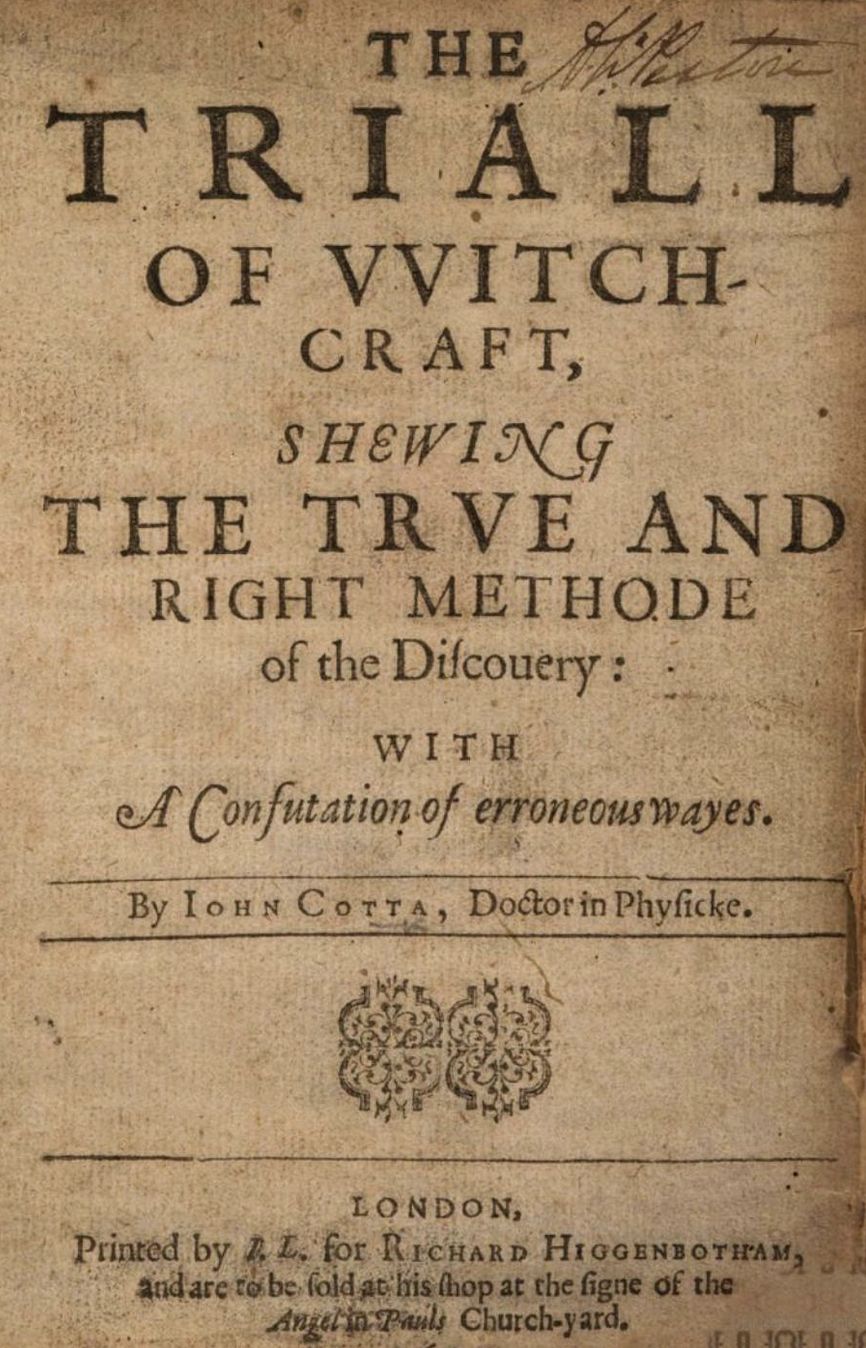
The film's visual style was defined by a strict adherence to naturalism. Eggers insisted on shooting only with natural light and candlelight for interior scenes, foregoing artificial lighting to enhance the period authenticity. This approach extended to the film's stylized title, presented as The VVitch in promotional materials, a spelling Eggers discovered in a Jacobean-era pamphlet on witchcraft among other period texts. Costume designer Linda Muir joined the production in December 2013, consulting 35 books in the Clothes of the Common People in Elizabethan and Early Stuart England series to plan garments made from wool, linen, and hemp, and she lobbied for a larger costume budget. For the film's climactic coven scene, a troupe of Butoh dancers was hired to create their own choreography, adding a visceral, physical dimension to the supernatural elements. The production was an international effort involving companies from the United States, the United Kingdom, and Canada, including Canadian entities like Scythia Films and Code Red Productions.
Plot Synopsis
In the 1630s, Puritan settler William and his family are banished from their plantation over a religious dispute. They establish a farm on the edge of a vast, foreboding forest. Tragedy strikes when their newborn son, Samuel, vanishes while under the care of their teenage daughter, Thomasin. It is revealed a witch has stolen and killed Samuel to use his body to make a flying ointment to induce transvection. The family is consumed by grief and growing suspicion. William secretly trades his wife Katherine's prized silver cup for hunting supplies, a deception that fuels domestic tension. The young twins, Mercy and Jonas, claim the family's billy goat, Black Phillip, talks to them, while Katherine blames Thomasin for both the lost cup and Samuel's disappearance.
The family's fragile unity unravels further when Thomasin and her brother Caleb sneak into the forest to check a trap. Caleb becomes lost, discovers their dog Fowler disemboweled, and encounters the witch disguised as a seductive young woman who kisses him. He returns home naked, delirious, and mysteriously ill. After going into violent convulsions and vomiting a whole apple, Caleb proclaims his love for Christ and dies. The twins accuse Thomasin of witchcraft, and she retaliates by accusing them of consorting with Black Phillip. William locks the children in the goat house. That night, the witch, appearing as a naked old woman, attacks the twins. In the house, Katherine has a hallucination of nursing Samuel, but in reality is being pecked by a raven. At dawn, William finds the stable destroyed, the twins missing, and Thomasin unconscious with bloodied hands. Black Phillip gores and kills William. An unhinged Katherine blames Thomasin and tries to strangle her, forcing Thomasin to tearfully kill her mother in self-defense with a billhook.
Now alone, Thomasin enters the goat house and urges Black Phillip to speak. The goat responds in a human voice and offers her the life she desires. When she accepts, he materializes into a handsome, black-clad man, tells her to remove her clothes, and guides her hand to sign her name in a book. Accompanied by Black Phillip in his goat form, a naked Thomasin enters the forest where she finds a coven of naked witches holding a Witches' Sabbath around a bonfire. The witches begin to levitate. Thomasin joins them, laughing hysterically as she ascends above the trees.
Themes and Analysis
The Witch is a film built on psychological and thematic tension rather than conventional jump scares. Its horror is delivered through a meticulously crafted ambience, using expressionist lighting, careful framing, and a dissonant score to create a pervasive sense of dread. The narrative centres on the conflict between the repressive, patriarchal structure of Puritan society and the dark, liberating force of witchcraft represented by the forest. The main character, Thomasin, harbors worldly desires for independence, sexuality, acceptance, and power that differ from those of her conventionally Christian family. While her father and the Christian God fail to fulfill her needs, Satan speaks personally to her, offering earthly satisfaction, making her pact the only alternative after her family's demise.
The film deliberately blurs the lines between religious extremes, presenting an evocation of equal religious extremism. The family's own home ironically resembles an archetypal witch's cottage, hinting that evil is already instilled in them. Satan's temptation of Thomasin also acquires traits of ideological grooming, slowly alienating her from her family. Her final ecstatic liberation is not an escape from religiosity but a conversion to a different, equally extreme creed, turning to murder in exchange for freedom. A central symbolic conflict is between civilization and the untamed natural world. The forest is a place tied to witchcraft in Puritan culture, representing the Gothic, wild natural world that surrounds their civilized, patriarchal religion. The forest and the state of nudity are associated with monstrosity and forbidden liberation. Caleb returns nude after being seduced, the witches perform their acts naked, and Thomasin adopts this code upon joining them. The climax sees nature triumph, with the Pan-like Black Phillip goring the axe-wielding William in a metaphor for man being consumed by the wild.
Release and Box Office Performance
The Witch premiered at the Sundance Film Festival on January 27, 2015. It was screened on September 18, 2015, in the Special Presentations section of the Toronto International Film Festival. Distribution rights were acquired by A24 and DirecTV Cinema. Following very positive reactions in advance screenings, the studios decided on a wide theatrical release in the United States, which occurred on February 19, 2016. The film was released on Blu-ray and digital HD by Lionsgate Home Entertainment on May 17, 2016. Special features on the discs include outtakes, an audio commentary by Eggers, the making-of documentary short The Witch: A Primal Folktale, and a 30-minute question-and-answer session featuring Eggers, Anya Taylor-Joy, and historians Richard Trask and Brunonia Barry, filmed in Salem, Massachusetts. A 4K Ultra HD Blu-ray was released on April 23, 2019.
The film was a significant financial success. Produced on a budget of $4 million, it grossed $40.4 million worldwide. In its opening weekend in the United States and Canada, it was released in 2,046 theatres alongside Risen and Race, with projections of a $5 to $7 million opening. It made $3.3 million on its first day and $8.8 million in its opening weekend, finishing fourth at the box office behind Deadpool ($56.5 million), Kung Fu Panda 3 ($12.5 million), and Risen ($11.8 million). The final domestic gross was $25.1 million, with an additional $15.3 million from other territories.
| Territory | Box Office Gross |
|---|---|
| United States and Canada | $25.1 million |
| Other Territories | $15.3 million |
| Worldwide Total | $40.4 million |
Critical Reception and Legacy
The film was met with widespread critical acclaim. On Rotten Tomatoes, 91% of 339 critics' reviews are positive, with an average rating of 7.8/10. The website's consensus reads that the film is as thought-provoking as it is visually compelling, delivering a deeply unsettling exercise in slow-building horror. Metacritic assigned a weighted average score of 84 out of 100 based on 46 critics, indicating universal acclaim. Audiences polled by CinemaScore gave the film an average grade of C− on an A+ to F scale, while PostTrak reported filmgoers gave it a 55% overall positive score and a 41% definite recommend. Critics celebrated its atmospheric precision, historical detail, and thematic depth. Justin Chang of Variety called it a strikingly achieved tale of religious hysteria and madness. Ann Hornaday of The Washington Post placed it among classics like The Exorcist and Rosemary's Baby, calling it a tribute to a filmmaker in full control of his prodigious powers. Horror author Stephen King tweeted that the film scared the hell out of him and was a real movie, tense and thought-provoking.
Some criticism and audience backlash focused on the film's deliberate pacing and marketing. Lesley Coffin criticized A24 for marketing it as a terrifying horror film, calling it a huge mistake because of the power of expectations. HitFix writer Chris Eggertson noted the film lacked the moment-to-moment, audience-pleasing shocks of mainstream horror titles. Despite this, its reputation has grown substantially. In July 2025, it was one of the films voted for the Readers' Choice edition of The New York Times list of The 100 Best Movies of the 21st Century, finishing at number 136. It also ranked number 11 on The Hollywood Reporter's list of the 25 Best Horror Movies of the 21st Century. The film is frequently analyzed for its religious subtext. Julia Alexander of Polygon wrote it asks people to understand life for a family of devout Christians living in solitude, terrified of going against the word of God.
- Rotten Tomatoes Score: 91% positive from 339 reviews.
- Metacritic Score: 84/100 indicating universal acclaim.
- CinemaScore Audience Grade: C−.
- 2025 New York Times Readers' Choice Ranking: #136 of 21st century films.
- Hollywood Reporter Horror Ranking: #11 of 21st century horror films.
Music and Sound Design
Composer Mark Korven created a score that is tense, dissonant, and minimalist, in line with Eggers's directive to avoid traditional harmony, melody, and electronic instruments. Korven employed atypical instruments to achieve this unique sonic landscape. The nyckelharpa, a Swedish keyed fiddle, and the waterphone, a percussion instrument that produces eerie, wavering tones, were central to the soundtrack's unsettling quality. Korven knew the director liked to retain creative control, so he relied on loose play centered on improvisation so that Eggers could move notes around whenever he wanted. The approach to composition was collaborative, allowing Eggers to adjust the music during the editing process to best serve the film's atmospheric needs. The sound design works in concert with the score, using silence and natural sounds from the forest environment to heighten the sense of isolation and impending doom, making the auditory experience a fundamental component of the film's horror. The soundtrack's sonic dissonance accompanies instrumental scenes, contributing to the film's impact through ambience rather than explicit scares.
Cast and Key Collaborators
The film features a committed ensemble cast, led by Anya Taylor-Joy in her feature film debut as Thomasin. Ralph Ineson and Kate Dickie portray the parents, William and Katherine, bringing a grave intensity to their roles. Harvey Scrimshaw plays the son Caleb, while Ellie Grainger and Lucas Dawson appear as the twins Mercy and Jonas. The production brought together key collaborators dedicated to historical authenticity. Cinematographer Jarin Blaschke realized Eggers's vision for natural light, and editor Louise Ford helped craft the film's deliberate pace. The involvement of Canadian production companies like Scythia Films and the choice to film in Ontario emphasize the project's multinational nature and its use of Canadian resources and locations to create a timeless, foreboding setting. Director and writer Robert Eggers oversaw every detail, from the authentic construction methods to the period-accurate dialogue. Composer Mark Korven and costume designer Linda Muir were instrumental in building the film's distinct auditory and visual texture.
- Anya Taylor-Joy as Thomasin
- Ralph Ineson as William
- Kate Dickie as Katherine
- Harvey Scrimshaw as Caleb
- Ellie Grainger as Mercy
- Lucas Dawson as Jonas
- Director/Writer: Robert Eggers
- Composer: Mark Korven
- Cinematographer: Jarin Blaschke
- Editor: Louise Ford
- Costume Designer: Linda Muir
Historical and Cultural Context
The Witch is deeply rooted in the historical and cultural anxieties of 17th-century New England. The film draws directly from primary sources, including Jacobean-era pamphlets on witchcraft that inspired its stylized title. Eggers's research extended to the domestic life, agricultural practices, and religious fervour of Puritan settlers, aiming for a portrayal that felt psychologically plausible rather than purely supernatural. The setting next to a large, secluded forest directly connects to Puritan beliefs where the wilderness was seen as a physical and spiritual frontier, a place of danger and demonic influence. This context frames the family's isolation as both a physical and theological crisis. The film's depiction of witchcraft is not revisionist but steeped in the period's genuine fears, presenting a world pervaded by the fear of God where references to His mercy are occasional. This authenticity extends to the architectural design of the farmhouse and the materials used for costumes and props, creating a tangible link to the past. The film's exploration of religious intolerance, man's uneasy relationship with nature, and the coming-of-age within a repressive society are all filtered through this rigorous historical lens, making the horror emerge from a credible reality rather than fantasy.
Questions about The Witch (2015 film)
What is the meaning of the ending?
The ending sees Thomasin, after the death of her entire family, willingly making a pact with Satan, represented by Black Phillip. She signs her name in his book, removes her clothes, and joins a coven of witches levitating in the forest. This signifies her rejection of the repressive Puritan society and her choice of a dark, liberating alternative to gain control over her life. The film suggests she has merely exchanged one form of religious extremism for another, finding power but not true escape.
How did critics and audiences receive the film?
Critics overwhelmingly praised The Witch, with a 91% rating on Rotten Tomatoes from 339 reviews and a Metacritic score of 84, indicating universal acclaim. They highlighted its atmospheric tension, historical detail, and thematic depth. General audience reactions were more mixed. CinemaScore reported a C− average grade, and PostTrak noted a 55% overall positive score. Some viewers found its slow-burn pace and ambiguous horror less accessible than mainstream scare films, leading to a divide between critical and popular reception.
Who composed the music for The Witch?
The film's score was composed by Mark Korven. Under director Robert Eggers's guidance, Korven created a minimalist, dissonant soundtrack using atypical instruments like the nyckelharpa and waterphone, while avoiding electronic sounds and traditional melody. The improvisational composition process allowed Eggers to adjust the music during editing to maximize its unsettling effect. Korven focused on creating music that was tense and dissonant to match the film's ambience.
Where was The Witch filmed?
The Witch was filmed in Canada. Although the story is set in 1630s New England and director Robert Eggers initially wanted to film there, he chose Canada due to favourable tax incentives. He eventually found a suitable, extremely remote forest location near Kiosk, Ontario after extensive scouting. The production was an international co-production involving the United States, the United Kingdom, and Canada, with filming taking place in this remote Canadian setting to achieve the desired isolated atmosphere.
Is The Witch based on a true story?
The Witch is not based on one specific true story but is a fictional folktale inspired by historical accounts and period sources. Writer director Robert Eggers conducted extensive research into 17th century New England, including Puritan beliefs, domestic life, and witchcraft trial records. He drew from contemporary pamphlets and folklore to create a psychologically plausible narrative that reflects the genuine fears and lived experiences of the era. The film is subtitled A New England Folktale to position it within this tradition of historical storytelling.
Sources and further reading
- The Witch (2015 film) (Wikipedia)
- The Witch (2015) directed by Robert Eggers (letterboxd.com)
- [#TIFF REVIEW] THE WITCH (2015) (dailygrindhouse.com)
Checked by the Yadude Books desk. Last updated 2026-10-23.