K.d. lang
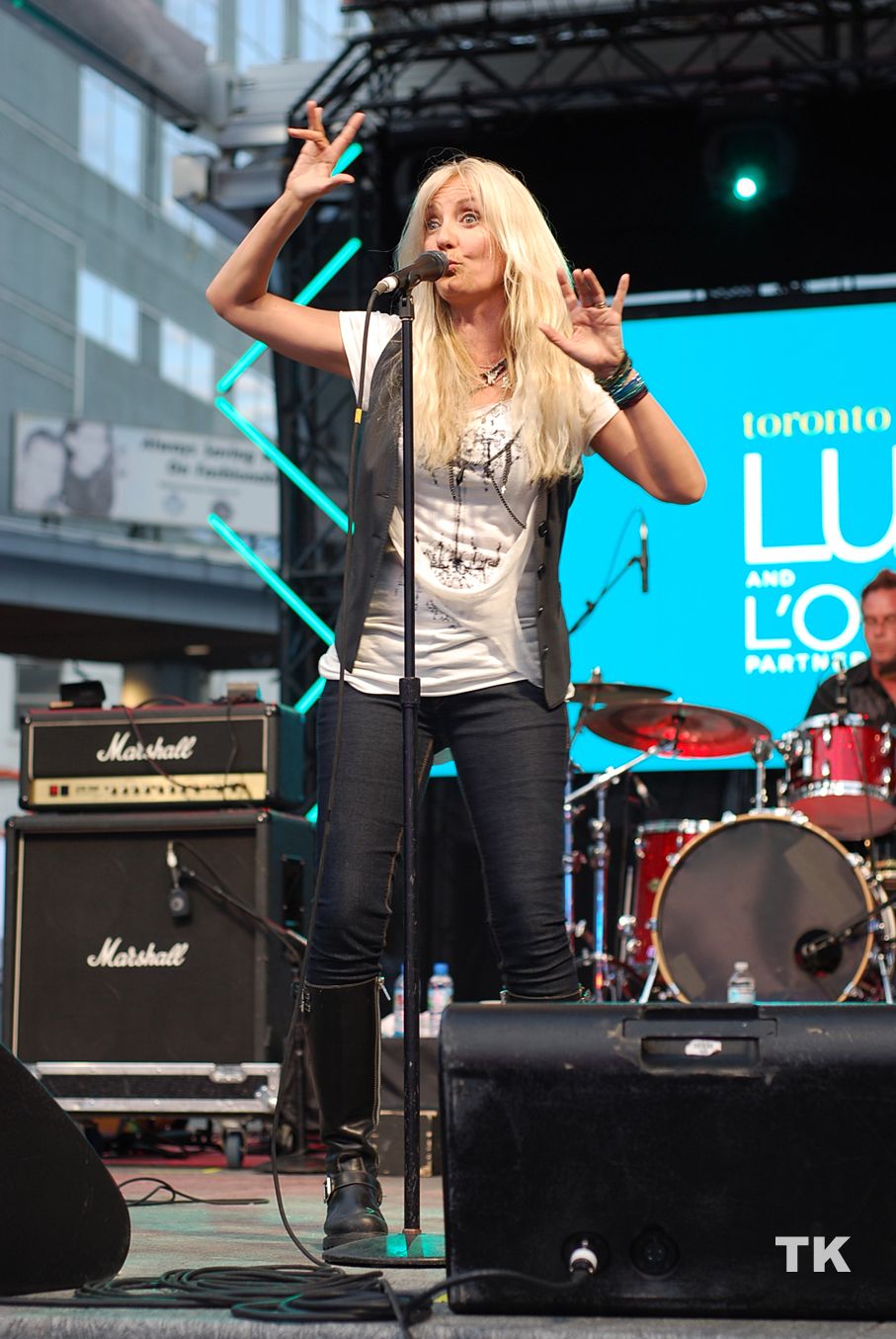
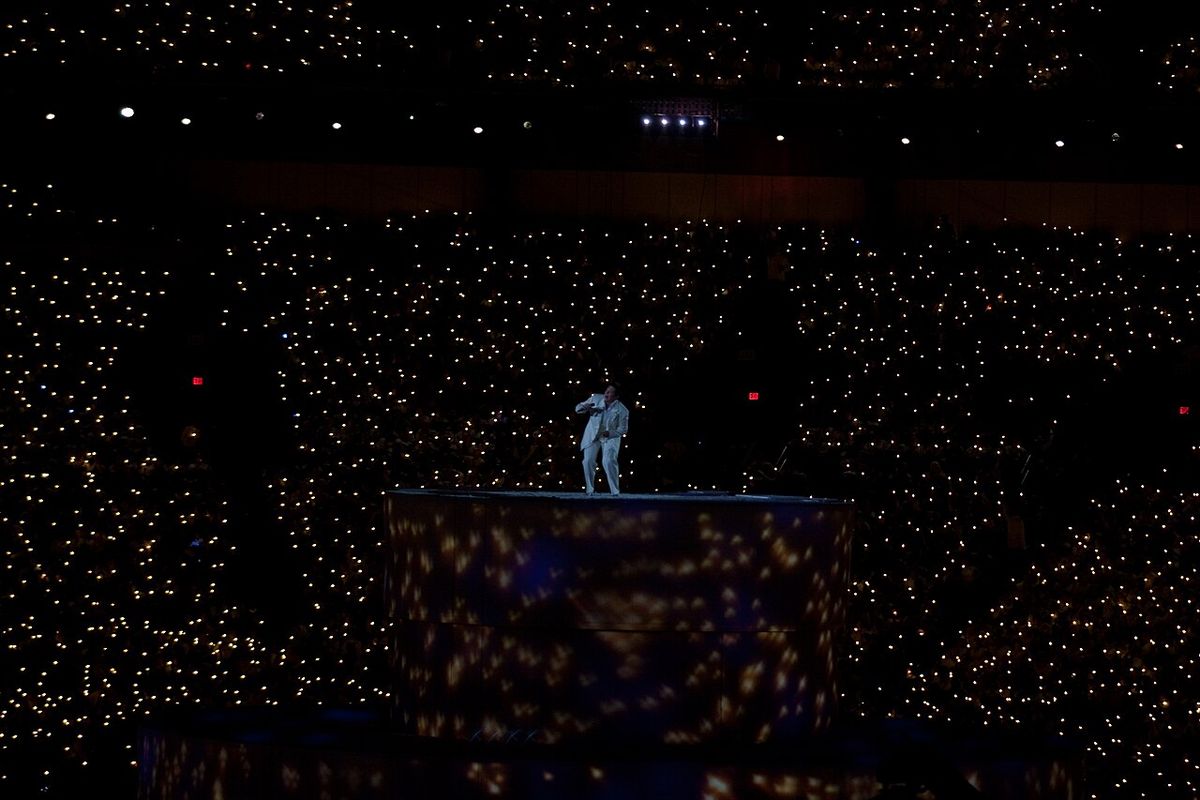
k.d. lang is a celebrated Canadian singer-songwriter renowned for her powerful mezzo-soprano voice and genre-defying career that spans country, pop, and adult contemporary music. Born Kathryn Dawn Lang on November 2, 1961, in Edmonton, Alberta, she has won multiple Grammy and Juno Awards for her musical performances, including for hits like "Constant Craving" and "Miss Chatelaine". A prominent activist for animal rights, LGBTQ rights, and Tibetan human rights, lang performed at the closing ceremony of the 1988 Winter Olympics in Calgary and the opening ceremony of the 2010 Winter Olympics in Vancouver. Her induction into the Canadian Country Music Hall of Fame in 2024 solidifies her status as a defining figure in Canadian cultural history.
Early life and musical beginnings
Kathryn Dawn Lang was born on November 2, 1961, in Edmonton, Alberta, the youngest child of Audrey Bebee and Adam Frederick Lang. Her diverse ancestry includes English, Irish, Scottish, German, Russian-Jewish, Icelandic, and Sioux roots, though she has described herself as a real Canadian. When she was nine months old, her family moved to the small prairie town of Consort, Alberta, where she grew up with two older sisters and one older brother. Her father, a drugstore owner, left the family when she was twelve years old. After completing secondary school, lang attended Red Deer College, where a fascination with the life and music of Patsy Cline solidified her decision to pursue a professional singing career. She moved to Edmonton after her graduation in 1982, setting the stage for her entry into the music scene.
Her early artistic inclinations were not limited to music. In 1983, while establishing herself as a singer, lang presented a performance-art piece in Edmonton, a seven-hour re-enactment of the transplantation of an artificial heart for American dentist Barney Clark. This blend of avant-garde expression with traditional musical forms hinted at the unconventional path her career would take. The financial constraints of her early career led to her distinctive DIY fashion sense, as she would sew plastic cowboys and Indians onto clothes from Value Village or have her mother make skirts from old curtains.
Rise to fame with the Reclines
Lang's professional music career began in earnest in 1983 when she answered a classified ad in the Edmonton Journal placed by Jim Alexander, who was looking for a singer for his country-swing band. After a show at Devil's Lake Corral that drew over 500 people, she partnered with label owner and manager Larry Wanagas to form a Patsy Cline tribute band named the Reclines. The band quickly became a fixture at Edmonton's popular Sidetrack Cafe, a local venue that featured live bands six nights a week. Their debut single, Friday Dance Promenade, was recorded at Sundown Recorders, and the original lineup included Stu Macdougal on keys, Dave Bjarnason on drums, Gary Koligar on guitar, and Farley Scott on bass.
Lang's 1984 independent album, A Truly Western Experience, received strong reviews and brought her national attention in Canada. This led to her being selected as one of three Canadian artists to perform at the World Science Fair in Tsukuba, Japan, in August 1984. Her unique cowboy punk style, characterized by kitschy, homemade outfits and a playful rebellion against country music norms, earned her a feature in the June 20, 1985, issue of Rolling Stone magazine, which called her a Canadian Cowpunk. Her rising profile was confirmed later in 1985 when she won the Juno Award for Most Promising Female Vocalist, accepting the award in a wedding dress borrowed from her male roommate.
She signed with an American producer in Nashville in 1986, and her 1987 major-label debut with the Reclines, Angel with a Lariat, was produced by British rock musician Dave Edmunds. The band's final album, 1989's Absolute Torch and Twang, won the Grammy Award for Best Female Country Vocal Performance. The single Full Moon Full of Love from that album became a modest hit in the United States and a number one hit on the RPM Country chart in Canada. A significant career moment came in 1989 when she recorded a duet of Crying with Roy Orbison for the 1987 film Hiding Out, which won the Grammy Award for Best Country Vocal Collaboration that same year.
Solo success and mainstream breakthrough
Adopting a stage name stylized in all lowercase, inspired by poet e. e. cummings, lang launched a highly successful solo career. Her 1988 album Shadowland was produced by Nashville legend Owen Bradley, who had been a mentor to her idol Patsy Cline. The album featured guest vocal appearances by country stars Brenda Lee, Loretta Lynn, and Kitty Wells on the Honky Tonk Angels' Medley. Shadowland was named Album of the Year by the Canadian Country Music Association in late 1988. That same year, she performed at the closing ceremony of the XV Winter Olympics in Calgary as The Alberta Rose, earning international recognition and being named Chatelaine magazine's Woman of the Year. She also sang background vocals on Roy Orbison's television special, Roy Orbison and Friends, A Black and White Night, alongside Jennifer Warnes and Bonnie Raitt.
Her commercial and critical peak arrived with the 1992 album Ingénue, a sophisticated pop record that moved away from her country roots. Its lead single, Constant Craving, became a multi-million selling hit and earned her the Grammy Award for Best Female Pop Vocal Performance in 1993. Another single from the album, the salsa-inspired Miss Chatelaine, also became a top ten hit. The song's music video was an ironic, exaggeratedly feminine performance featuring bright pastel colours and bubbles, a nod to the women's magazine that had honoured her. Her success in 1992 was concurrent with her public coming out as a lesbian in The Advocate magazine, an announcement that led several US country radio stations to ban her music and a picket line outside the 1993 Grammy Awards ceremony where she won her award.
Her work continued to intersect with film and other artists. She contributed the song Calling All Angels with Jane Siberry to the 1991 film Until the End of the World, a collaboration that also appeared on Siberry's 1993 album. She composed much of the music for the 1993 film Even Cowgirls Get the Blues, in which she also starred. In 1997, she released Drag, an album of smoke-themed cover songs where the artwork showed her in a man's suit, playing on the dual meaning of the word. She also performed Surrender for the closing titles of the 1997 James Bond film Tomorrow Never Dies.
Artistic evolution in the 2000s
In the 2000s, lang continued to explore new musical territory and collaborate with a wide array of artists. She won her fourth Grammy Award in 2003 for Best Traditional Pop Vocal Album for A Wonderful World, a collaborative album with Tony Bennett, who once declared her the best singer of her generation. Her 2004 album, Hymns of the 49th Parallel, featured her interpretations of songs by fellow Canadian songwriters: Leonard Cohen, Joni Mitchell, Neil Young, Bruce Cockburn, Ron Sexsmith, and Jane Siberry. According to the Canadian Record Industry Association, the album achieved platinum status in Canada by April 2006, selling over 100,000 copies, and reached double platinum in Australia by December 2007, with over 140,000 copies sold.
She released her first collection of original material in eight years with 2008's Watershed, which she also produced, marking the first time she served as producer on one of her albums. A review in The Times of London praised her voice as one of the sexiest and most sensual in all of pop music. Throughout the decade, she contributed to numerous film soundtracks, singing Little Patch of Heaven for the 2004 Disney film Home on the Range and a cover of The Beatles' Golden Slumbers for the 2006 film Happy Feet. She also performed a duet of Lucinda Williams' Jackson with Ann Wilson on Wilson's 2007 solo album Hope & Glory.
- 2003: Wins Grammy for A Wonderful World with Tony Bennett.
- 2004: Releases Hymns of the 49th Parallel, covering Canadian songwriters.
- 2006: Records a cover of Joni Mitchell's River with Madeleine Peyroux.
- 2007: Teams with Anne Murray for a duet of A Love Song.
- 2008: Releases self-produced album Watershed.
- 2010: Performs Hallelujah at the Vancouver Olympics opening ceremony.
- 2011: Forms the Siss Boom Bang and releases Sing it Loud.
In 2011, she returned to a band format, forming the Siss Boom Bang and releasing the playful alt-country LP Sing it Loud, followed by a North American tour in the summer. She moved from Los Angeles to Portland, Oregon, in 2012. In 2016, she began a collaborative album project with Neko Case and Laura Veirs, resulting in the album case/lang/veirs, which featured fourteen original songs written over nearly three years. A collection of classic dance remixes from 1992 to 2000, titled Makeover, was released on May 28, 2021, alongside vinyl reissues of her earlier recordings.
Film, television, and stage appearances
Lang has built a significant secondary career in film, television, and theatre. Her acting roles include the lead in Percy Adlon's 1991 drama Salmonberries, for which she also co-wrote the haunting theme Barefoot with composer Bob Telson. She co-starred with Ewan McGregor and Ashley Judd in the 1999 psychological thriller Eye of the Beholder and played Dita Tommey in the 1997 CBS miniseries The Last Don. She made an uncredited appearance as a lounge singer performing Love for Sale in the 2006 film The Black Dahlia.
Her television guest spots are numerous and varied. She performed several times on The Super Dave Osborne Show starting in 1987 and appeared on Austin City Limits with The Reclines in 1988. She made guest appearances on the sitcoms The Larry Sanders Show and Dharma & Greg, and appeared in the famous coming-out episode of Ellen in 1997. She also performed Jingle Bell Rock on the Christmas special of Pee-wee's Playhouse and appeared on an episode of The Jim Henson Hour. In 2010, she sang You're a Mean One, Mr. Grinch with Matthew Morrison on an episode of Glee, and in February 2013, she played herself in an episode of How I Met Your Mother.
Her stage work includes a Broadway debut in 2014 as the Special Guest Star in the musical revue After Midnight, performing from February 11 to March 9, replacing Fantasia Barrino. She has also performed in several high-profile televised events. A concert with the BBC Concert Orchestra at LSO St Luke's in London on February 3, 2008, was later released as the DVD Live in London in 2009. In February 2020, she performed at the Fire Fight Australia benefit concert at ANZ Stadium in Sydney to raise funds for those affected by the 2019 Australian bushfires. In September 2024, she reunited with The Reclines for a performance at the 2024 Canadian Country Music Awards in Edmonton, their first show together in 35 years.
Activism and public image
Lang is a prominent activist for several causes, often intertwining her public life with her advocacy. She came out as a lesbian in a June 1992 article in The Advocate and has been a steadfast champion of LGBTQ rights since. She has also been a vocal supporter of HIV/AIDS care and research, contributing the song So in Love to the 1990 Red Hot + Blue benefit album and Fado Hilário, sung in Portuguese, to the 1999 album Onda Sonora: Red Hot + Lisbon. A committed vegetarian, her Meat Stinks campaign for PETA in the 1990s sparked significant controversy, particularly in her home province of Alberta, a major cattle-ranching region. The campaign led to her music being banned on more than 30 Alberta radio stations, and a sign stating Home of k.d. lang in Consort was burned to the ground. More than a dozen radio stations in U.S. farm states like Kansas, Oklahoma, and Nebraska also boycotted her records.
She is also an advocate for Tibetan human rights and is a tantric practitioner of the old school of Tibetan Buddhism. In April 2008, she served as a guest editor for The Age newspaper in Melbourne, Australia, in connection with these issues and joined pro-Tibet protesters in Canberra during the Beijing Olympics torch relay. For her activism, she was inducted into the Q Hall of Fame Canada in 2011. Her public image was forever marked by the August 1993 cover of Vanity Fair, photographed by Herb Ritts, which featured her in a barber's chair while model Cindy Crawford appeared to shave her face. Lang later said the concept was inspired by the French film Le mari de la coiffeuse.
Awards, honours, and legacy
k.d. lang's career has been decorated with numerous prestigious awards and honours. Her trophy case includes four Grammy Awards and eight Juno Awards. She first won a Grammy in 1989 for Best Female Country Vocal Performance for Absolute Torch and Twang, followed by Grammys for her duet with Roy Orbison on Crying, Best Country Vocal Collaboration in 1989, Constant Craving, Best Female Pop Vocal Performance in 1993, and A Wonderful World with Tony Bennett, Best Traditional Pop Vocal Album in 2003. Her Juno wins began with Most Promising Female Vocalist in 1985, and she has won a total of eight. She was also a dominant force at the Canadian Country Music Association awards, winning Entertainer of the Year in 1987 and for the following three consecutive years, along with Female Vocalist of the Year awards in 1988 and 1989.
In 2024, she received one of her highest honours with induction into the Canadian Country Music Hall of Fame. She is also a recipient of the Order of Canada, the country's highest civilian award. Her 1989 album Absolute Torch and Twang was nominated for the 2026 Slaight Family Polaris Heritage Prize. A tribute concert celebrating her life and work, titled An Evening Celebrating a..., was held at the National Arts Centre's Southam Hall in Ottawa on October 2, 2026, featuring a stellar array of acclaimed artists. In a 2019 interview, lang reflected on her career, stating she considers herself semi-retired and is at peace with the possibility of not writing new music, though she remains an enduring figure in Canadian music.
| Award | Category / Detail |
|---|---|
| Grammy Award | Best Female Country Vocal Performance (Absolute Torch and Twang) |
| Grammy Award | Best Country Vocal Collaboration (Crying with Roy Orbison) |
| Grammy Award | Best Female Pop Vocal Performance (Constant Craving) |
| Grammy Award | Best Traditional Pop Vocal Album (A Wonderful World with Tony Bennett) |
| Juno Award | Most Promising Female Vocalist (first of 8 total wins) |
| CCMA Award | Entertainer of the Year (four consecutive years) |
| Order of Canada | Appointment |
| Canadian Country Music Hall of Fame | Inductee |
| Q Hall of Fame Canada | Inductee for activism |
Questions about K.d. lang
What is k.d. lang's most famous song?
k.d. lang's most famous song is Constant Craving from her 1992 album Ingénue. The song was a massive international hit, achieving multi-million sales and winning the Grammy Award for Best Female Pop Vocal Performance in 1993. Its distinctive melody was so memorable that the Rolling Stones later gave lang and her co-writer Ben Mink a songwriting credit on their 1997 song Anybody Seen My Baby? after recognizing the similarity. The song remains a central part of her live performances and greatest hits collections, including the 2010 album Recollection.
Is k.d. lang still performing?
k.d. lang has described herself as semi-retired since a 2019 interview, stating she felt no urgent need to write new music and that the muse was eluding her. However, she has continued to make selective appearances. Notably, in September 2024, she reunited with her original band, The Reclines, for a performance at the Canadian Country Music Awards in Edmonton, marking their first show together in 35 years. She also performed at the Fire Fight Australia benefit concert in Sydney in February 2020 and her music continues to be celebrated, as evidenced by a tribute concert in her honour at the National Arts Centre in October 2026.
Why did k.d. lang change her name to lowercase?
k.d. lang chose to stylize her stage name in all lowercase letters, inspired by the American poet e. e. cummings, who was known for his unconventional use of lowercase typography in his published work. This stylistic choice became a distinctive part of her artistic identity, setting her apart visually in the music industry. She began using this format as she moved into her solo career, separating her individual work from her earlier period with the band the Reclines. The lowercase name has been used consistently on all her solo releases and promotional material.
What awards has k.d. lang won?
k.d. lang has won four Grammy Awards, including Best Female Country Vocal Performance for Absolute Torch and Twang in 1989, Best Country Vocal Collaboration for Crying with Roy Orbison in 1989, Best Female Pop Vocal Performance for Constant Craving in 1993, and Best Traditional Pop Vocal Album for A Wonderful World with Tony Bennett in 2003. She has also won eight Juno Awards, starting with Most Promising Female Vocalist in 1985. She received the Order of Canada, the country's highest civilian honour. In 2024, she was inducted into the Canadian Country Music Hall of Fame, and her album Absolute Torch and Twang was nominated for the 2026 Slaight Family Polaris Heritage Prize.
What causes does k.d. lang support?
k.d. lang is a prominent activist for LGBTQ rights, animal rights, and Tibetan human rights. She publicly came out as a lesbian in 1992 and has been a vocal advocate for the community. Her Meat Stinks campaign for PETA made her a controversial figure in cattle-ranching regions like Alberta, leading to radio bans and public backlash. She has also supported HIV/AIDS research through benefit albums like Red Hot + Blue and Onda Sonora: Red Hot + Lisbon. She has protested for Tibetan rights, including demonstrating during the 2008 Beijing Olympics torch relay in Canberra, and is a practitioner of Tibetan Buddhism.
Did k.d. lang perform at the Olympics?
Yes, k.d. lang performed at two Winter Olympic Games held in Canada. She first performed Turn Me Round at the closing ceremony of the 1988 Winter Olympics in Calgary, Alberta, where she was introduced as The Alberta Rose. Twenty-two years later, she performed a celebrated rendition of Leonard Cohen's Hallelujah at the opening ceremony of the 2010 Winter Olympics in Vancouver, British Columbia. This 2010 performance was so well-received that she reprised it at the Australian TV Logie Awards later that year after filling in at the last minute for Susan Boyle, receiving an extended standing ovation.
Sources and further reading
Checked by the Yadude Books desk. Last updated 2026-10-24.