Toronto mayoral candidates clash over property taxes, transit and housing in first debate
Incumbent Olivia Chow, Brad Bradford and Chris Alexander sparred over fiscal policy, transit improvements and affordability measures in a heated Toronto mayoral debate hosted by the Toronto Board of Trade.
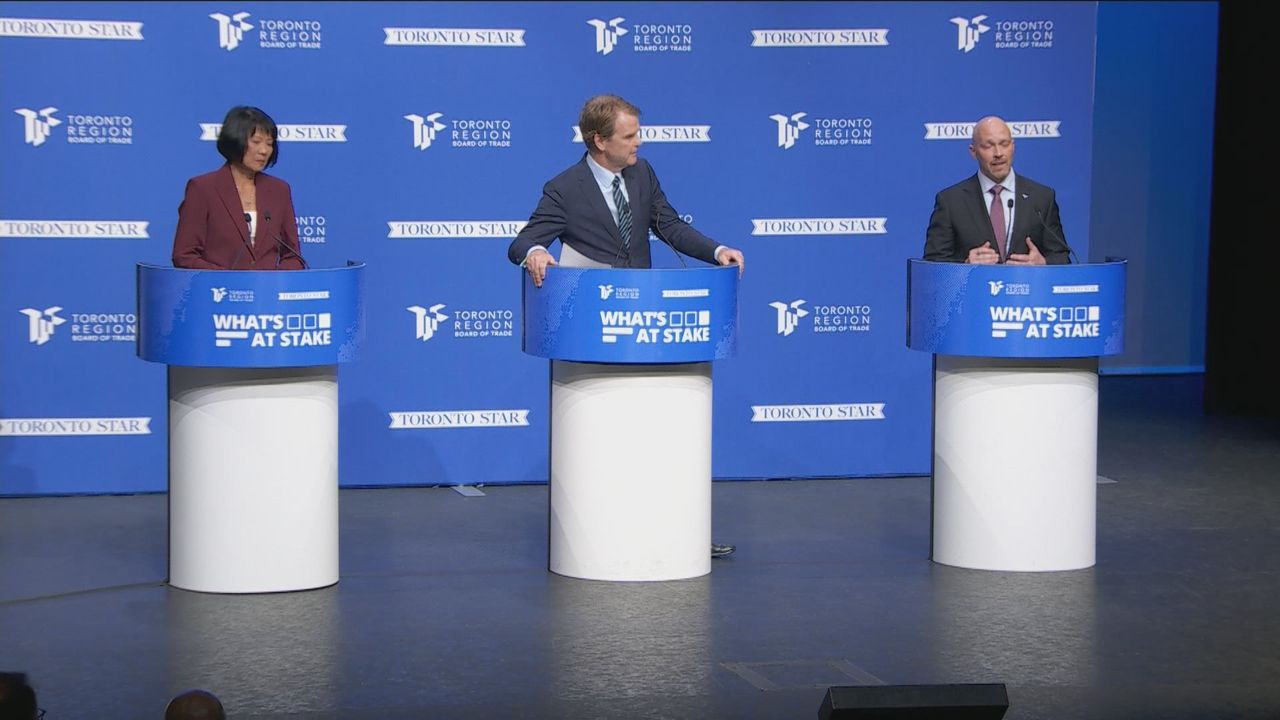
The first major debate in Toronto's mayoral election revealed stark policy divisions among the leading candidates as incumbent Olivia Chow defended her record against challengers Brad Bradford and Chris Alexander. Hosted by the Toronto Board of Trade and streamed live on CityNews 24/7, the debate provided voters with a clear contrast between the candidates' approaches to managing Canada's largest city ahead of the October 26 municipal election.
Property tax debate highlights fiscal philosophies
The discussion of property taxes emerged as a defining moment in the debate, showcasing fundamentally different approaches to municipal finance. Brad Bradford, positioning himself as a fiscal conservative, made a central campaign promise to freeze property taxes for his first year if elected mayor. This pledge came in response to questions about how he would fund his other proposals, including adding 1,000 police officers and installing platform edge doors on TTC subway stations.
"Families need relief. They can't afford more of Olivia Chow's tax increases,"Bradford stated, framing his tax freeze as necessary economic relief for Toronto residents.
Chow countered forcefully by reminding voters of Bradford's role as vice-chair of the Budget Committee before she became mayor.
"You left us with a close to $2 billion deficit in our budget so we can't run away from your record,"she responded, directly tying current fiscal challenges to previous budget decisions. The mayor defended her administration's property tax increases, including the substantial 9.5 percent hike in 2024 and the more modest 2.2 percent increase this year, as necessary measures to address inherited financial pressures while keeping future increases at or near inflation levels.
READ MORE: Bank of Canada says interest rates are 'too blunt' to fix housing affordability
Transit safety and funding take center stage
The debate over Toronto's transit system revealed deep disagreements about priorities and funding mechanisms. Chow promoted her proposal to cap fares at 10 rides per week while implementing more traffic signal priority for TTC vehicles and better coordination of road closures. She argued these measures would make transit more accessible and reliable for residents.
Chris Alexander challenged the financial sustainability of Chow's fare cap proposal, warning it could exacerbate the TTC's existing $390 million budget shortfall.
"We will never get people to come back if the service is impaired...if we are not putting revenue in it,"Alexander argued, emphasizing the need for adequate funding to maintain service quality. Bradford focused his critique on immediate safety and reliability concerns, stating
"No one's saying they're not taking transit because it costs $3.30. They're saying they aren't taking transit because they can't rely on it, because it's not safe."His transit platform prioritized addressing these fundamental issues before considering fare adjustments.
Divergent solutions for housing affordability crisis
When addressing Toronto's housing affordability crisis, the candidates presented distinctly different approaches. Alexander proposed large-scale cooperation with the federal government to build tens of thousands of co-op housing units while emphasizing the need to attract business investment to strengthen the city's economic foundation.
Bradford connected his housing strategy to his broader fiscal platform, arguing that his proposed property tax freeze would help "create conditions to build housing" by reducing costs for developers and homeowners alike. Chow highlighted specific measures from her administration including enhanced renter protections and financial incentives for affordable housing development, particularly her policy of waiving development charges for projects that include at least 20 percent affordable units.
Traffic management strategies compared
The candidates offered competing visions for addressing Toronto's chronic traffic congestion problems. Bradford's plan emphasized minimizing disruptions through avoiding major road closures during events, implementing 24/7 construction schedules, and investing in smart traffic light synchronization technology. Chow proposed better management of existing infrastructure through improved coordination between transit operations and road work schedules, along with deploying additional traffic agents to alleviate gridlock. Alexander questioned whether either approach fully addressed the underlying economic factors affecting transportation patterns in the city.
Economic development and city finances
Alexander distinguished his platform by focusing on Toronto's broader economic challenges, arguing that solving affordability issues requires strengthening the city's business climate and economic fundamentals.
"We need to see incomes rebound in the city. Canadians have gone almost a decade, over a decade, without per capita GDP growing, and that includes in the city of Toronto,"he said, advocating for policies that would attract investment and support small business growth as a foundation for addressing housing and transit challenges.
Election timeline and narrowing polls
With voting cards scheduled to arrive in mailboxes soon, Torontonians will have early voting opportunities from October 6-11 before election day on October 26. The latest polling from Liaison Strategies shows Chow maintaining a seven-point lead over Bradford among decided and leaning voters, though her advantage has narrowed in recent weeks, suggesting the race may become more competitive as election day approaches.
Clear policy contrasts emerge
The debate crystallized the distinct governing philosophies of the leading candidates, offering voters clear alternatives. Chow presents herself as a practical progressive willing to implement measured tax increases to fund city services and infrastructure. Bradford appeals to voters seeking fiscal restraint and tax relief, while Alexander offers a business-focused platform emphasizing economic growth as the foundation for solving Toronto's challenges. As the campaign enters its final weeks, these policy differences will likely dominate discussions about Toronto's future direction on critical issues including municipal finance, transit investment, housing policy and economic development.