Trans Mountain pipeline capacity project finished early, Crown corporation says
The pipeline's capacity rose to 980,000 barrels per day, and the corporation reported higher third-quarter shipments and profits.
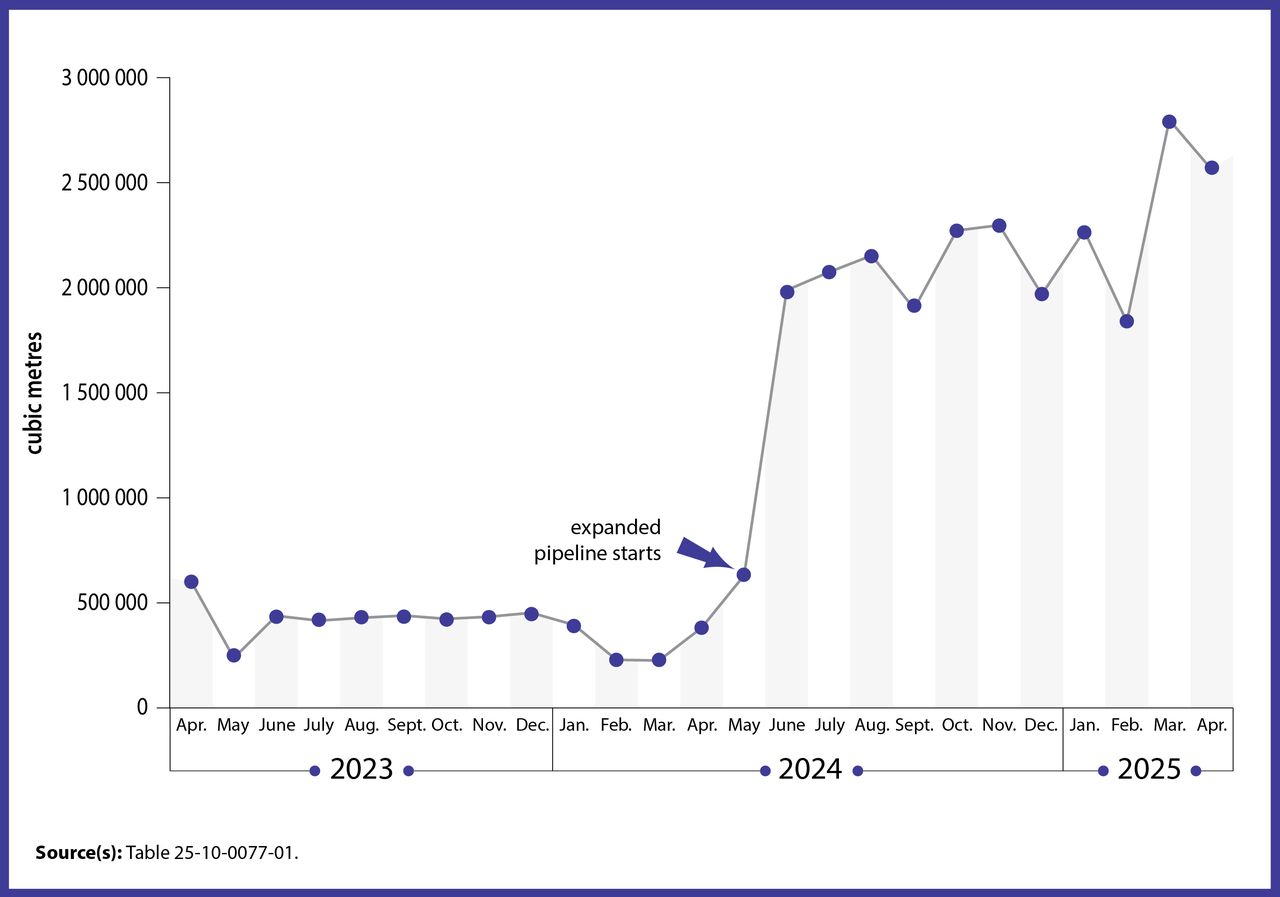
CALGARY · The Crown corporation that owns the Trans Mountain pipeline announced Friday that a project to boost its flow using chemical additives was finished two months early. The work raises the line's capacity by roughly 10 per cent to 980,000 barrels per day. In its third quarter, the pipeline shipped an average of 840,000 barrels daily, an increase from 777,000 barrels in the same period last year. Net income for the quarter rose to $132 million from $127 million as revenues increased to $825 million from $765 million.
About 60 per cent of the oil shipped during the quarter went to the Westridge Marine Terminal for export to Asia. The remainder was delivered to points in British Columbia and Washington state. So far this year, Trans Mountain has paid $1.45 billion to its owner, the federal government, in various distributions. For the quarter alone, a total of $551 million went to Ottawa.
A larger expansion project is also planned. Using new pipeline segments and pump stations, it is expected to add 210,000 barrels per day of capacity by the end of 2028, bringing the system's total to 1.19 million barrels a day. The federal government purchased the pipeline for $4.5 billion in 2018 after the previous owner abandoned an expansion plan. The eventual expansion cost more than $34 billion and began operating in May 2024.
Federal and Trans Mountain officials have said there is no rush to return the pipeline to the private sector. Some Indigenous groups have long expressed interest in taking a stake in the pipeline. Trans Mountain said confidential information sessions with potential Indigenous partners began in October. Meanwhile, Trans Mountain is leading development of the proposed Pacific Link pipeline, a million-barrel-a-day line backed by the Alberta government. It would largely follow the Trans Mountain route to a port in Delta, B.C. Pacific Link has been designated a project of national interest, which triggers a faster federal regulatory process. That designation is facing legal opposition. At least 17 First Nations in Alberta and B.C., one U.S. tribe in Washington state and one individual have filed challenges, according to a news release Thursday from the St'at'imc Chiefs Council. The St'at'imc Nation and T'Sou-ke First Nation filed a joint application earlier this month seeking to quash Ottawa's decision on the pipeline proposal.
With files from BNN Bloomberg and Global News