U.S. tariffs push Canadian wool industry to seek new global markets
A 50 per cent U.S. tariff on raw wool has cut off a key processing route, prompting a push for domestic investment.
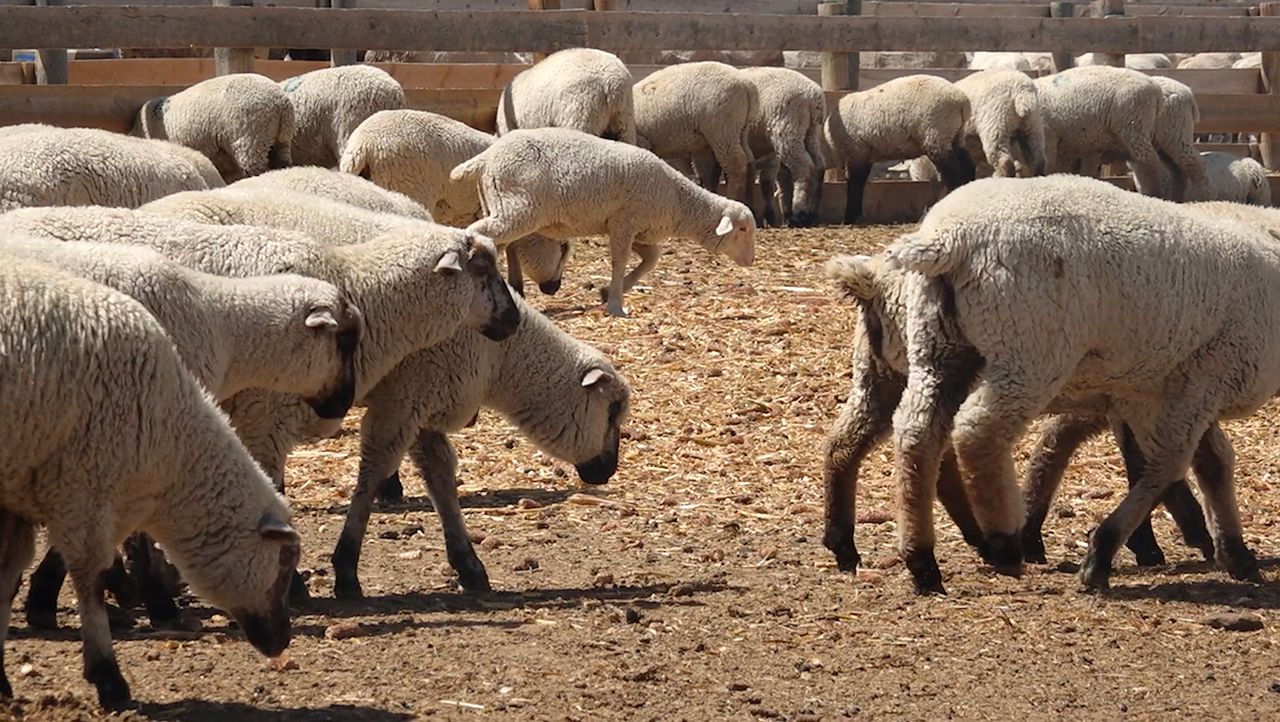
Canada's wool industry is looking overseas for processing and new markets after the United States imposed steep tariffs on raw wool, cutting off a traditional supply route.
"The tariffs are on our raw wool, which really affects our ability to access processing opportunities because there's parts of our chain that are broken," said Matthew Rowe, chairman of the Campaign for Wool in Canada and the Canadian Wool Council.
The U.S. began imposing 50 per cent tariffs on greasy, or raw, wool from Canada in August, along with some finished wool products.
READ MORE: Bank of Canada governor warns high oil prices will push inflation forecast higher
READ MORE: Most U.S. adults disapprove of Trump's trade policies, poll finds
Rowe said the move essentially cut off Canadian producers from U.S. buyers.
"We've traditionally relied on the United States for scouring and other steps to transform [wool] into high value-added products, and the tariffs sort of cut off that option for a lot of companies now," he said in an interview with BNN Bloomberg on Thursday.
For years, Canadian producers have shipped their wool south to large-scale U.S. processing facilities, which Canada lacks, before bringing it back for use in finished products.
Until larger domestic facilities are built, big Canadian wool producers must look to the U.K., the Czech Republic or China for processing to avoid the steep U.S. tariffs, Rowe explained.
The rupture has left some Canadian producers frustrated with their American counterparts and unsure when or if there will be a return to normalcy.
But the trade tensions have given the industry a renewed focus on finding ways to expand both domestically and overseas at a time when global wool prices are on the rise, along with demand for sustainable materials.
Earlier this month, the federal government announced an investment of nearly $160,000 over two years to the Canadian Wool Council, "to help Canadian wool go global."
"Canada has high-quality products, like our Canadian wool, to offer the world, and we want to help get more of them into global markets," Minister of Agriculture and Agri-Food Heath MacDonald said in an Oct. 7 press release.
"By supporting international promotion and trade, this investment will help our producers and processors expand their reach, overcome market barriers, and capitalize on emerging opportunities around the world."
Rowe said he is grateful for the federal support, noting that before the council was founded in 2018, "wool hadn't been funded for generations."
He said he would like to see the momentum turned into "significant investment" in Canada's domestic processing capabilities, specifically the first stage known as scouring, which cleans the wool after it is shorn from sheep.
"The first thing you have to do is wash it," said Rowe.
"From there you can comb it, you can align it in different ways to turn it into yarn, to turn it into felt, the yarn can then become cloth, but it all starts with that large-scale scouring, and that's something Canada currently lacks."
Another proponent of Canada's wool industry is King Charles III, who has campaigned globally for the preservation of traditional materials and craftsmanship, Rowe explained.
"His Majesty is patron of the Campaign for Wool in Canada," he said. "It's really helpful to have that kind of high-profile endorsement."
Rowe also quoted the King, saying, "The King once said that if the smartest scientist with the most well-funded lab was to come up with a miracle fibre, it still wouldn't be as good as wool for all that it gives us."
With files from BNN Bloomberg