Defence Minister Downplays PM's Comments on U.S. Military Action as 'Normal' Risk Analysis
Minister David McGuinty calls military contingency planning routine after PM Carney reveals Canada studied potential U.S. intervention scenarios amid Trump's annexation rhetoric.
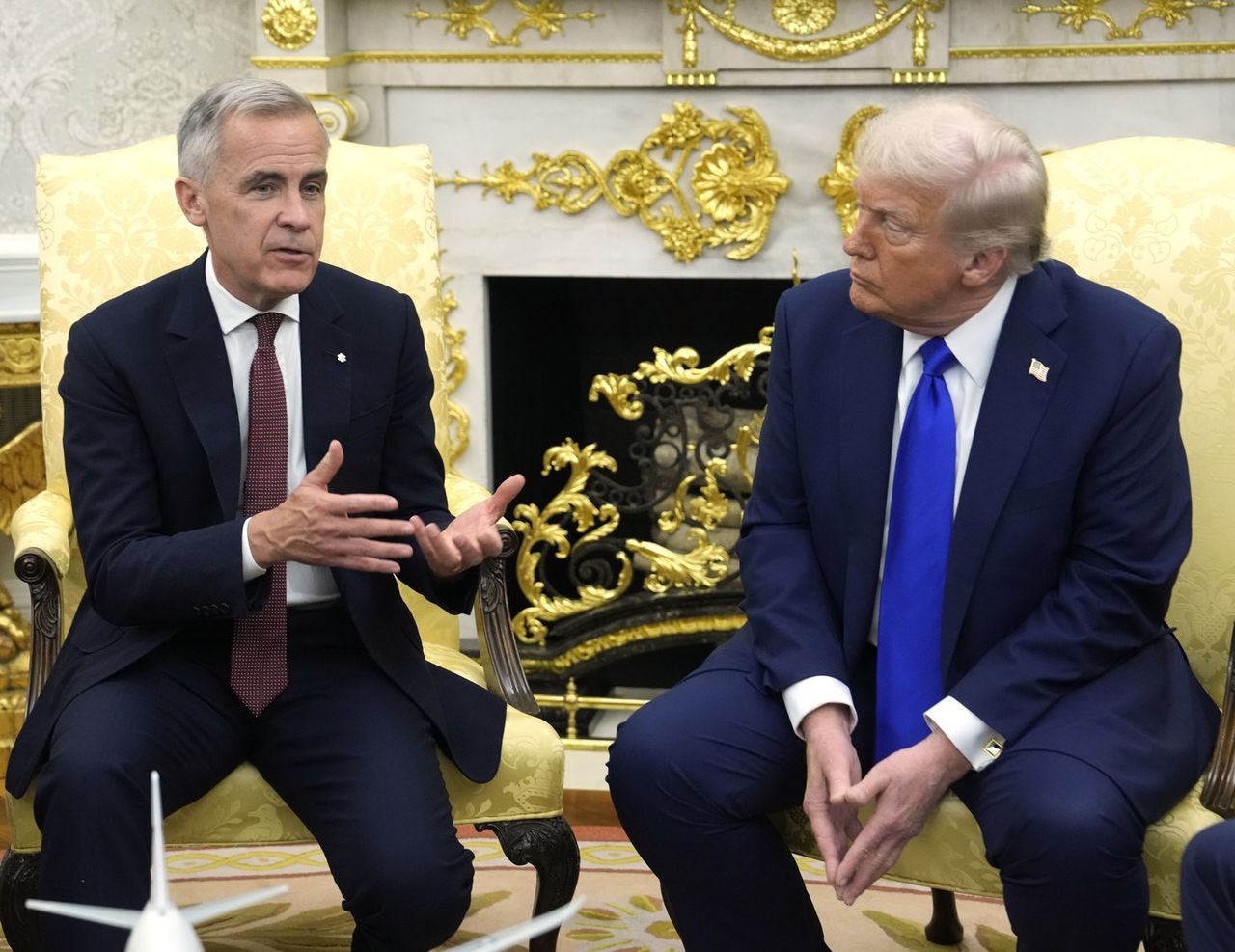
Canada's defence minister has characterized military analyses of potential U.S. intervention scenarios as standard operational planning, seeking to calm political waters after Prime Minister Mark Carney disclosed such assessments exist during a New York Times interview. The revelation comes against a backdrop of persistent annexation rhetoric from former U.S. president Donald Trump, who has repeatedly advocated for Canada to become "the 51st state" through economic pressure rather than military force.
Minister Emphasizes Routine Nature of Military Planning
Defence Minister David McGuinty told reporters in Ottawa that all modern militaries routinely model unlikely but catastrophic scenarios as part of comprehensive preparedness strategies. "It is normal. All militaries in the world spend time analyzing risk scenarios," he stated during a Thursday press briefing. The minister carefully avoided detailing specific contingency plans or intelligence assessments referenced by Carney, framing such work as unexceptional defence department activity rather than indication of specific concerns.
McGuinty sought to guide public interpretation of Carney's comments, suggesting Canadians should view them strictly through the lens of remote contingency planning. "They should take it as described by the prime minister, a tail risk," he advised, while simultaneously highlighting the decades-long defence partnership between Canada and the United States that forms the bedrock of North American security architecture.
READ MORE: Vladimir Guerrero Jr. defends contract comments amid Blue Jays' disappointing season
READ MORE: Canada threatens legal action against Cleveland-Cliffs over Stelco layoffs
Carney's 'Tail Risk' Disclosure in New York Times Interview
The prime minister had revealed to the New York Times on Wednesday that Canadian defence planners had examined potential U.S. military action scenarios, though he declined to specify the scope or conclusions of such assessments. Carney characterized this work as responsible governance preparing for worst-case situations, stating it would be negligent not to examine what he termed "extreme tail risk" possibilities despite their low probability.
This disclosure followed a January report in The Globe and Mail that the Canadian Armed Forces had developed theoretical invasion frameworks, which military officials described at the time as "conceptual and theoretical framework" exercises rather than operational plans. The timing of Carney's comments coincides with renewed attention on Trump's expansionist rhetoric as the former president campaigns for re-election.
Trump's Territorial Rhetoric Provides Political Context
The political environment surrounding these military disclosures includes Trump's repeated expressions of territorial ambition beyond Canada's borders. Earlier this year he publicly floated the idea of annexing Greenland, while recent weeks have seen him share artificial intelligence-generated images depicting all of North America - including Canada, Mexico, Greenland, Central America and much of the Caribbean - blanketed by the U.S. flag.
Such symbolic gestures have kept continental security analysts attentive despite the absence of substantive policy movements toward actual annexation. U.S. military leadership has consistently dismissed invasion scenarios as absurd hypotheticals. During a September news conference in Victoria, Admiral Samuel Paparo, head of U.S. Pacific Command, was directly asked whether he would follow an order to invade Canada and responded: "I find that scenario to be absolutely and utterly preposterous. I follow the orders of the commander-in-chief but that is a needlessly emotional question."
Conservative Opposition Criticizes PM's Transparency
Conservative MP Ellis Ross strongly criticized Carney's decision to publicly reference military assessments regarding potential U.S. action, framing it as irresponsible leadership during a time of domestic challenges. "That's stoking fear and division, and that's uncalled for, given what we're going through right now," Ross told reporters on Thursday. The opposition MP argued Canadians are currently grappling with pressing issues including affordability crises, crime and drug problems rather than hypothetical foreign military threats.
Ross questioned the judgment behind making such sensitive military assessments public, stating: "It's very irresponsible for a leader of a first world country to come out and say that about another first world country." The criticism reflects growing political tensions as the Liberal government faces increasing scrutiny over its national security communication strategies and policy priorities.
NORAD and the Enduring Canada-U.S. Defence Relationship
Despite the unusual public discussion of bilateral military tensions, McGuinty emphasized the continuing strength and importance of Canada-U.S. defence cooperation. The two nations maintain one of the world's most integrated military partnerships through frameworks like NORAD, with seven decades of continuous collaboration through Cold War and post-Cold War periods. This includes extensive joint training exercises, intelligence sharing agreements and coordinated continental defence strategies that make hypothetical conflict scenarios extremely remote.
Defence analysts note that allied nations routinely conduct confidential contingency planning involving partner countries, considering such work fundamental to comprehensive preparedness rather than indicative of diplomatic strains. Standard military practice involves modeling even highly improbable scenarios to identify systemic vulnerabilities and response capabilities across the full spectrum of potential threats.
Broader Implications of Public Disclosure
The public airing of military assessments regarding a close ally reveals the complex challenges democratic governments face when preparing for low-probability, high-impact scenarios in politically volatile environments. While defence professionals universally understand such contingency planning as routine prudent practice, its disclosure risks being misinterpreted by various audiences as reflecting imminent threats rather than theoretical preparedness exercises.
This episode highlights how unconventional political rhetoric from allies can create difficult transparency dilemmas for governments - balancing public accountability against the risks of amplifying fringe scenarios or causing unnecessary alarm. It also underscores the diplomatic finesse required to maintain stable relations with partners experiencing internal political dynamics that occasionally manifest in disruptive foreign policy statements, while simultaneously ensuring comprehensive national security preparedness.
Historical Context of Canada-U.S. Defence Planning
The current situation has historical parallels in the long-standing tradition of mutual defence planning between the two nations, which has included both cooperation and contingency preparations throughout their shared history. During World War II, the two countries developed joint defence plans for North America, and throughout the Cold War maintained extensive cooperation through NORAD while simultaneously maintaining independent assessment capabilities.
This historical context demonstrates that while public discussion of such planning may be unusual, the practice itself represents continuity rather than departure from established defence relations. The current situation differs primarily in the level of public visibility given to typically confidential military assessment processes, prompted by unconventional political rhetoric from south of the border.