
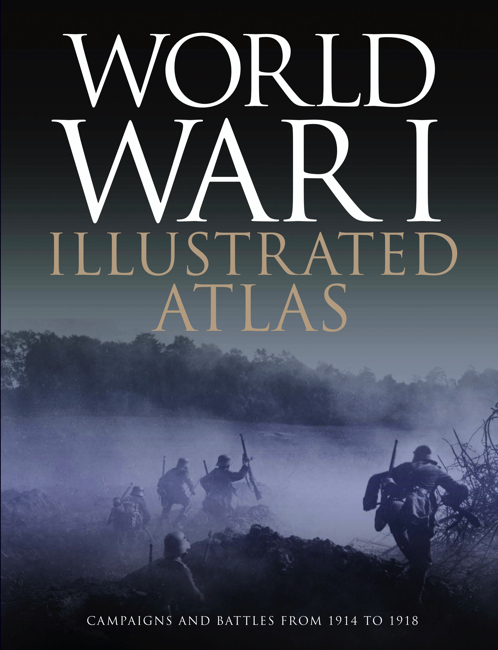
With expert, accessible text and accompanying archival photographs, this complete atlas provides an invaluable work of reference for both the general reader and the serious student of World War I.
One of my biggest regrets is never meeting my great-grandfather. All I know about him is he fought in World War One, was shot in the calf somewhere on the Western Front and abandoned in woodland while injured. They left him there for four days, by which time the gangrenous leg needed removing.
Perhaps it’s this regret, but I’ve always loved books like this World War 1 Illustrated Atlas. I used to love the battlefield diagrams and trying to understand the order of movement.
When I received this book, I read the introduction and immediately went to the battles I knew from high school. The Somme. Passchendaele. Verdun. I devoured these pages and felt a new appreciation for their scale and cost. I wanted a little more of the human element, however. I realise this is a book of maps, but I’d have loved some stories about men who fought in the battles pictured or even to know the butcher’s bill.
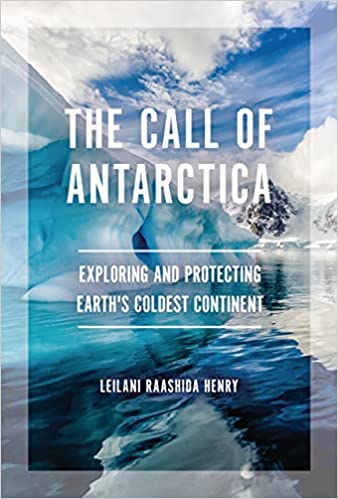
Antarctica is the coldest, windiest, highest, driest and most remote part of the world. It’s the world’s largest polar desert. Antarctica is a true wilderness.
Author Leilani Raashida Henry, daughter of George W. Gibbs, Jr., the first person of African descent to go to Antarctica, recounts her father’s expedition while educating readers on the incredible geography, biodiversity and history of the continent. Using diary entries from Gibbs' expedition, The Call of Antarctica takes readers on a journey to the rugged Antarctic landscape to learn its history, its present and the importance of protecting its future.
The photography and layout of this book are stunning, and the broad array of facts and stories—involving everything from penguins to the Northern Lights—is enough to entertain an armchair adventurer and science lover for days.
But what makes this tome on Antarctica really special are the interspersed diary entries from the first Black Antarctica explorer, George W. Gibbs. It puts you right there, on the ships, on the ice and in the bitter cold. The wonder, the challenges, the seafaring knowledge and yes, the racism, are a door to another era in Gibbs’ own words.
It’s hard to think of anyone who wouldn’t be drawn in by the photos, maps, sidebars, history and science, especially with that personal touch of Gibbs’ first-person observations tying it all together.

Can Aiden learn to stand his ground on his new home ice?
Meet Aiden Mallory. He’s trying to find his bearings while coping with the loss of his father — an NHL player who died in a car accident — and moving back to his dad’s hometown of Prairie Field, where he is STILL a big deal.
Aiden loves hockey, but his feelings about moving and his dad’s death cause him to struggle at tryouts. Then the minor hockey association announces a brand-new U13 tournament: the Luke Mallory Memorial. As Aiden tries to find his place on his new team, and among his new teammates, he will do anything he can to live up to his dad’s legacy. But what happens when Aiden’s determination to play well puts everything else at risk?
From Lorna Schultz Nicholson comes a powerful portrayal of a boy’s experiences with anxiety as it relates to sports and friendship and grief.
There are novels that include some ice hockey action, and then there are true ice-hockey novels with nonstop, satisfying hockey action, characters and storyline. Author Lorna Schultz Nicholson, a former hockey player and coach herself, serves up the latter.
Sixth-grader Aiden is not just reeling from having lost his hockey-legend father. He is struggling to adapt to a new town and team, put up with a bullying teammate and live up to his father’s reputation. This novel isn’t about how he plays so much as how he rises above these challenges by finding his inner coach and learning to generate positive energy.
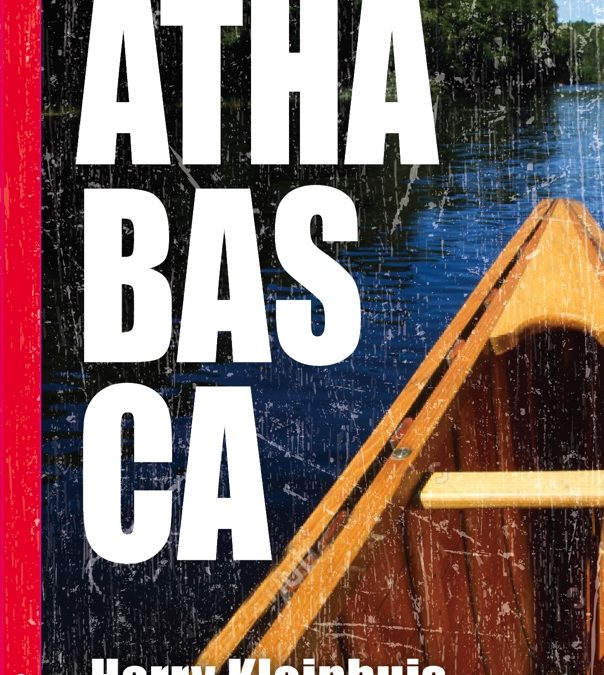
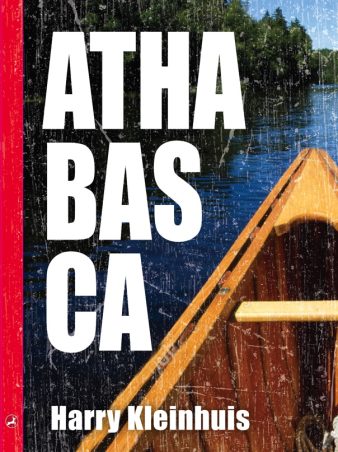
Jack is 14 going on 15. For the past seven years, he and his younger brother and sister, and his mother and father, have lived in a remote cabin on the Athabasca River west of Edmonton. It's the late 1930s, and the river is almost as wild and untamed as it was before humans began settling along the riverbanks.
The reason for the Whyte family living there has a good deal to do with Malcolm, Jack's father, and what we would call his PTSD after serving in World War One. He has never really recovered from the trauma of his experience in the trenches, and his solution has been to sweep his family into the wilderness and remain there, living off the land. But now Jack is of an age when he figures he has had enough of this life, particularly since his father is not the most understanding of parents.
Trouble is, as Jack makes his move to leave the family by canoeing away down the Athabasca, something goes wrong on the first day and he breaks his arm, and has to stay stranded, alone, unable to make any more progress. Malcolm comes after him, and somehow father and son begin to communicate in ways they never have. All of this is played out against the backdrop of a powerful river where nature is dominant and where a family manages their lives alone in the bush, with little or no reference to the world beyond.
There’s no question that the author of this novel knows about living, hunting and paddling in the Canadian wilderness, and there’s admirable authenticity in every scene of the book. It’s well paced and exciting, from the characters surviving overturned canoes in a flash flood to a narrow escape from wolves.
There’s also historical perspective, given that it takes place in the late 1930s, after the Depression drove the family to a remote location where they barely survive the day-to-day challenges. By the end, the shadow of World War II is already looming.
But even beyond the day-to-day trapping, hunting, fishing, firewood chopping and other grueling chores, the three children have to put up with an authoritarian father who suffers from shell shock, or post-traumatic stress disorder, as a result of serving in the trenches and losing most of his fellow combat mates.
Jack feels it’s time to break loose from his hard life, which involves no social outlets and a father who rarely speaks, let alone shows love. Unfortunately, he’s barely down the river when he has an accident that requires a rescue – by his father. The family is reunited but changed, with a new goal of leaving the wilderness together.
The main problem with this novel is that Jack doesn’t seem like the dominant character after the first few chapters. The third-person point of view shifts continually from Jack to his father, and to a lesser extent his mother, younger brother and sister. It begins to feel like Jack is a prop for a story about his father, and yet one can’t help but care about each of the characters, applaud their changes and root for them through their difficulties. The writing is a little lackluster but still flows, and the hopeful ending is welcome. Again, anyone who loves wilderness survival tales will enjoy this, but only if their expectations are for a novel about a family that includes a 14-year-old boy, not one focused heavily on the boy himself.
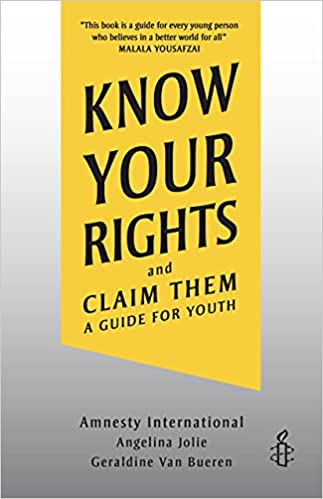
“This book is a guide for every young person who believes in a better world for all.” ―Malala Yousafzai Adults are aware of their universal human rights of freedom and equality, but children often are ignorant of the rights they possess before reaching the age of majority. Enter Know Your Rights, written in partnership with Amnesty International, Angelina Jolie and Geraldine Van Bueren.
Know Your Rights details the rights promised in the United Nations Convention on the Rights of the Child, starting with the history of child rights, and providing a clear description of the types of child rights, the young activists from around the world who fought to defend them, and how readers can stand up for their own rights.
“This is the perfect book for young people who care about the world and want to make a difference.” ―Greta Thunberg
This book is seriously ambitious, complex and far-reaching. It covers everything from the history of child rights to definitions, statistics and legal explanations of every manner of child discrimination. Chapter titles include “Steps to take if you are being physically or sexually abused” and “Become an activist.” Topics include torture, child soldiers, police beatings, indigenous and gay rights, the right to education and play, disability discrimination and so on.
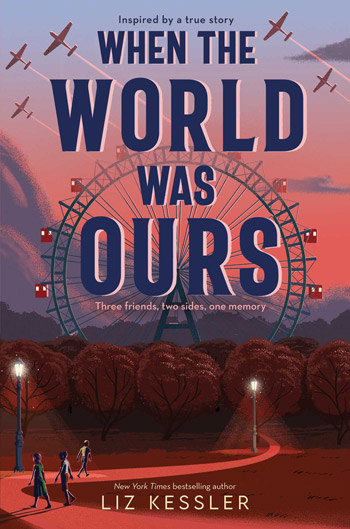
From the New York Times bestselling author of the Emily Windsnap series, Liz Kessler, comes a poignant and harrowing story of three young friends whose fates are intertwined during the devastation of the Holocaust—based on a true story.
Three friends. One memory.
Vienna. 1936.
Three young friends—Leo, Elsa and Max—spend a perfect day together, unaware that around them Europe is descending into a growing darkness and that they will soon be cruelly ripped apart from one another. With their lives taking them across Europe—to Germany, England, Prague, and Poland—will they ever find their way back to one another? Will they want to?
Inspired by a true story, When the World Was Ours is an extraordinary novel that is as powerful as it is heartbreaking and that shows how the bonds of love, family and friendship allow glimmers of hope to flourish, even in the most hopeless of times.
I took my case to my bedroom and began to pack. Soon it was almost filled with clothes, books, a few toys and some odds and ends. I opened my drawer by my bed and took out the photograph from my ninth birthday. Sitting on the side of my bed, I squinted at the photo. It was hard to believe it was only three years ago. It felt like a lifetime. The carefree smiles on our faces-- I couldn’t imagine smiling so freely like that ever again. The last happy day of my childhood and the day we had met Mr. and Mrs. Stewart. A tickle and a chase and a trip over a lady’s foot. And to make up for it, an extra ride on the Ferris wheel and a piece of Sachertorte. That was what we had given them. And in return they were offering us a whole new life.
When the World was Ours is a novel set in World War II Europe, in the midst of the German invasion of Poland and its surrounding countries. The novel depicts a story a horror, hope and salvation that is written in the perspective of all three main characters: Max, Elsa and Leo. These three best friends begin their adventure in 1936 Vienna, as nine-year-old children living (quite literally) “the best day of their lives.” As the days, month and years unfold throughout the novel, the children’s lives are changed drastically, as life’s circumstances rip them apart and force them through different experiences. These grueling experiences allow readers to obtain a frightening glimpse into Holocaust reality in order to empathize with and understand just some of the alarming moments that society and the people within it had to undergo.
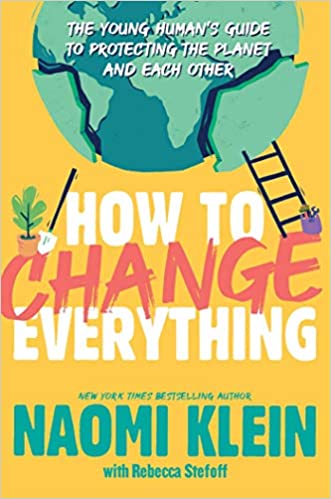
An empowering, engaging young readers’ guide to understanding and battling climate change from the expert and bestselling author of This Changes Everything and On Fire: The (Burning) Case for a Green New Deal.
Warmer temperatures. Fires in the Amazon. Superstorms. These are just some of the effects of climate change that we are already experiencing.
The good news is that we can all do something about it. A movement is already underway to combat not only the environmental effects of climate change but also for climate justice and make a fair and livable future possible for everyone. And young people are not just part of that movement; they are leading the way. They are showing us that this moment of danger is also a moment of great opportunity—an opportunity to change everything.
Full of empowering stories of young leaders all over the world, this information-packed book from award-winning journalist and one of the foremost voices for climate justice, Naomi Klein, offers young readers a comprehensive look at the state of the climate today and how we got here, while also providing the tools they need to join this fight to protect and reshape the planet they will inherit.
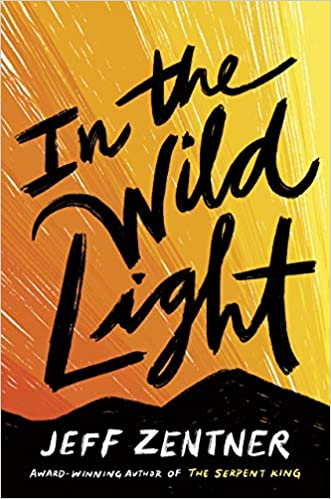
From the award-winning author of The Serpent King comes a beautiful examination of grief, found family, and young love. Life in a small Appalachian town is not easy. Cash lost his mother to an opioid addiction and his Papaw is dying slowly from emphysema. Dodging drug dealers and watching out for his best friend, Delaney, is second nature. He's been spending his summer mowing lawns while she works at Dairy Queen.
But when Delaney manages to secure both of them full rides to an elite prep school in Connecticut, Cash will have to grapple with his need to protect and love Delaney, and his love for the grandparents who saved him and the town he would have to leave behind.
Let’s begin with what this novel is not:high action, mystery, romance. It’s neither humorous nor violent. Nor is it uplifting (except tenuously at the end).
It’s slow, perceptive and often heart-wrenchingly sad as it dissects grief and longing. It’s more about bereavement than anything, although the authentic teen banter often provides comic relief.
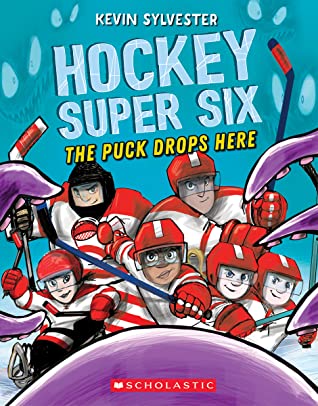
A special group of kids must save the world with — what else? — HOCKEY!
There are people out there, nasty mean greedy people, who want to rule the Earth. People such as evil scientist (and former mediocre goalie) Clarence Crosscheck. Only one thing is stopping them . . . hockey.
This hilarious new high-action series from Kevin Sylvester pits six ordinary kids with super hockey skills against the forces of evil — specifically, the nefarious wannabe genius, Clarence Crosscheck.
In The Puck Drops Here, Jenny, Benny, Mo, Starlight, DJ and Karl need to outmaneuver Crosscheck and his army of mammoth mutant ice squids before Crosscheck turns his giant freeze ray on the world. The entire planet is at risk! Get ready for high-stakes ice battles, non-stop hijinks and never-before-seen hockey action (it’s kids vs squids)!
With fast-paced text and illustrations throughout, this series will grip sports fans and funny story lovers alike. Will the kids win the day? You’ll have to read the books to find out.
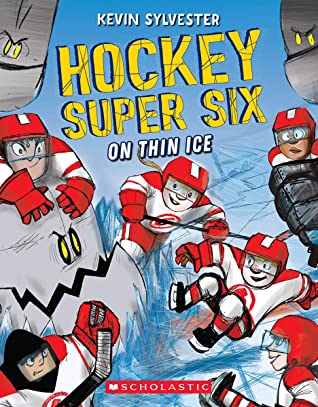
Will the Hockey Super Six thwart their enemy’s plans for world domination in book two of this action-packed series?.
In the second book pitting six ordinary kids with super hockey skills against the forces of evil, Jenny, Benny, Mo, Starlight, DJ and Karl desperately need to stay out of Crosscheck’s grasp!
Their last run-in revealed to evil scientist (and former mediocre goalie) Clarence Crosscheck the scope of some of their secret powers — powers he can use in his never-ending quest for world domination. Hard at work on a robot army to do his bidding, Crosscheck underestimates how strong the Super Six can be when they work together as a team Get ready for high-stakes ice battles, non-stop hijinks and never-before-seen hockey action (it’s kids vs robots, and some giant lizards too)!