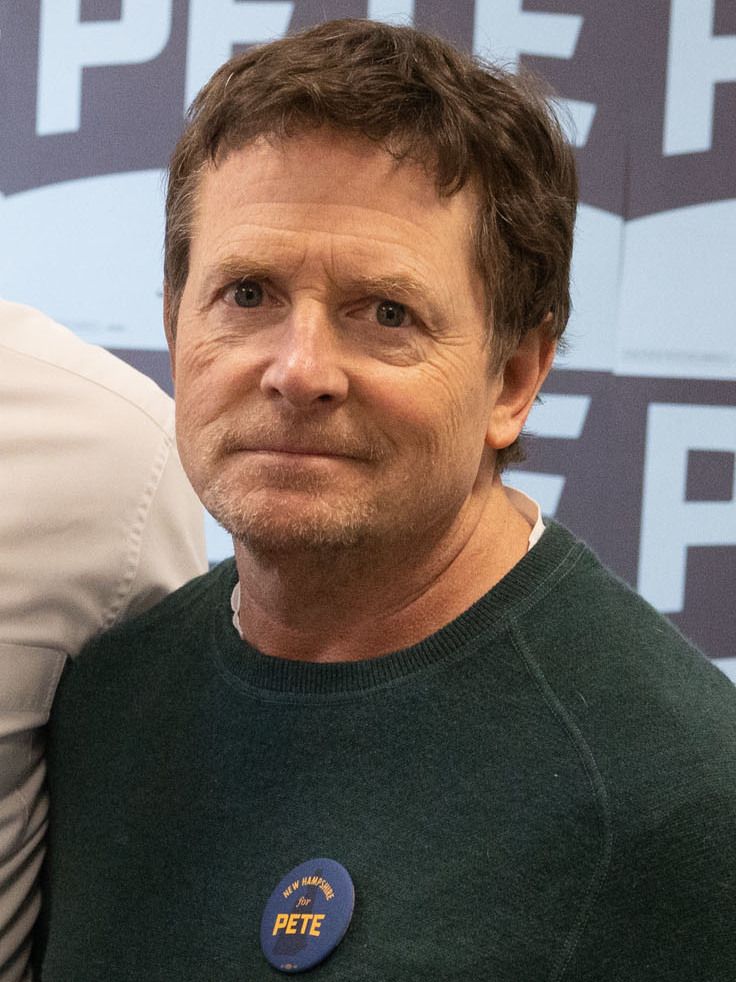
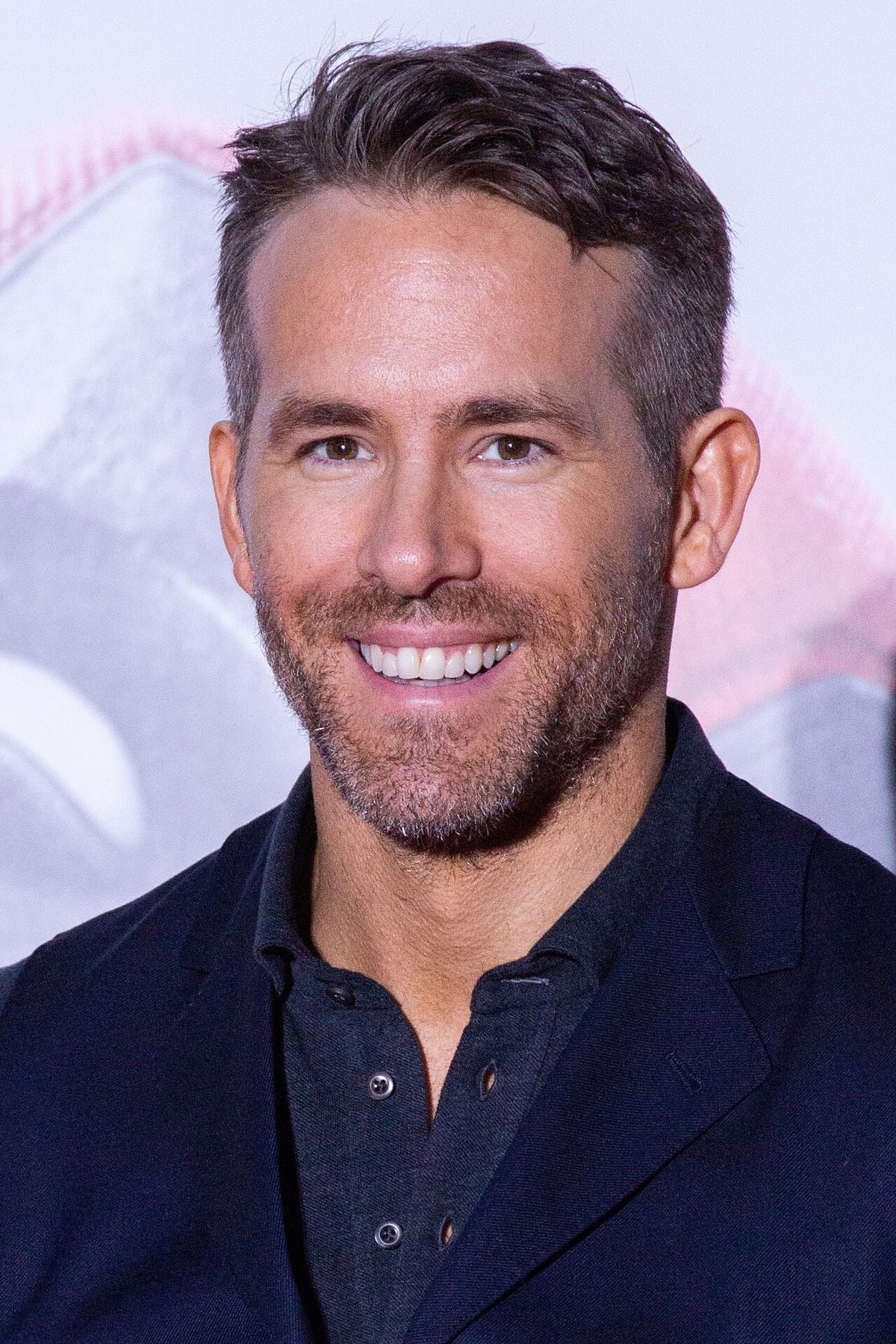
Corey Haim
Corey Ian Haim was a Canadian actor who rose to fame in the 1980s as a teen heartthrob, achieving widespread recognition with his performances in films like 'Lucas' and 'The Lost Boys'. His on-screen partnership with Corey Feldman, known as 'The Two Coreys', defined a generation of teen cinema and became a significant part of 1980s pop culture. Haim's career, marked by early Hollywood success, later became a prominent example of the pressures of child stardom and substance abuse. He died of pneumonia on March 10, 2010, at the age of 38, leaving behind a complex legacy as one of Canada's most famous and troubled young actors.
Early life and family
Corey Ian Haim was born on December 23, 1971, in Toronto, Ontario, to parents Bernie Haim, a salesman, and Judy Haim, an Israeli-born computer operator. He had an older sister, Cari, and a younger half-brother, Daniel Lee, from his father's subsequent marriage. The family was Jewish, and Haim's Hebrew name was Yechezkel Yehudah. After his parents divorced in 1982, Haim was raised in various suburbs, including Chomedey in Laval, Quebec, and later Willowdale and Thornhill in Ontario. A shy child, his mother enrolled him in drama classes for improvisation and mime to help him overcome his timidity, following his sister's earlier interest in acting. Haim was also a skilled hockey player, scouted for the AA Thunderbirds, and attended several schools in the Toronto area, including Zion Heights Junior High in North York up to the eighth grade. His early life in Canada provided the foundation for his entry into acting, which began with television commercials when he was just 11 years old, a path that quickly led to professional roles.
Beginnings in Canadian television and film
Haim's acting career began after accompanying his sister to auditions, leading to commercial work in 1981 and a regular role as Larry on the Canadian children's series 'The Edison Twins', which aired on CBC from 1982 to 1986. His feature film debut came in 1984's thriller 'Firstborn', where he played Teri Garr's younger son in a story about a family threatened by his mother's violent boyfriend, played by Peter Weller. Haim's first day of shooting involved an intense confrontation with Weller, who grabbed him by the collar and threw him against a wall in a method acting moment before apologizing. This early experience was a stark introduction to the professional film set. In 1985, he gained industry recognition with supporting roles in 'Secret Admirer' and 'Murphy's Romance' with Sally Field, and the lead role in 'Silver Bullet', an adaptation of a Stephen King novella where he played a paraplegic boy. His performance in the NBC television movie 'A Time to Live', where he played Liza Minnelli's character's son dying of muscular dystrophy, earned him his first Young Artist Award. His father initially acted as his manager, turning down the role in 'The Mosquito Coast' that later went to River Phoenix after producer Stanley Jaffe recommended Haim get an agent in Los Angeles, a suggestion that prompted the family's eventual relocation.
Hollywood breakthrough and peak fame
Haim's true breakout arrived in 1986 with the title role in 'Lucas', a coming-of-age film co-starring Kerri Green, Charlie Sheen, and Winona Ryder. The film centred on an intelligent misfit struggling with first love and teen angst, and Haim's unrequited real-life feelings for co-star Green helped inspire his sensitive performance. Director David Seltzer noted that Haim seemed at ease with his burgeoning heartthrob status, taking it in stride as a natural magnet for attention. Critic Roger Ebert praised his performance, calling it one of the most three-dimensional characters in any recent movie and predicting a significant future for the young actor. Haim had also read for River Phoenix's role in 'Stand By Me' but chose 'Lucas', a decision he later said he would not change. Following this success, Haim moved with his family to Los Angeles and starred in the short-lived 1987 NBC sitcom 'Roomies' with Burt Young before landing the role that would define his career.
The peak of Haim's fame came in 1987 with his role as Sam Emerson in Joel Schumacher's cult classic 'The Lost Boys'. Schumacher was initially unsure about casting Haim but changed his mind after meeting him. The film, co-starring Jason Patric, Kiefer Sutherland, Jami Gertz, and Corey Feldman, was a critical and commercial success, grossing over $32 million domestically and becoming a definitive 1980s teen horror comedy. This film cemented the on-screen partnership between Haim and Feldman, who became known collectively as 'The Two Coreys'. Their popularity soared, making them the highest-paid teen stars of the era and frequent cover stars for magazines like Tiger Beat and Bop. In 1988, they reunited for the hit teen comedy 'License to Drive', which grossed over $22 million and won Haim his second Young Artist Award, tying with Feldman for Best Young Actor in a Motion Picture Comedy or Fantasy. Haim later stated this period was his 'breaking point' for drug addiction. The pair starred again in 1989's metaphysical comedy 'Dream a Little Dream', though Haim performed much of his role with a broken leg suffered four days before shooting, requiring a fake cast for filming.
- 1986: Breakout role as the titular character in 'Lucas'. Nominated for a Young Artist Award.
- 1987: Stars in 'The Lost Boys'. Begins recurring partnership with Corey Feldman. Appears in TV series 'Roomies'.
- 1988: Co-stars with Feldman in 'License to Drive', winning a Young Artist Award. Stars in horror film 'Watchers'.
- 1989: Final major studio film with Feldman, 'Dream a Little Dream'. Appears at chaotic anti-drug event at Knott's Berry Farm.
- 1989: Releases promotional video 'Corey Haim: Me, Myself, and I' and admits on 'The Arsenio Hall Show' he was high while recording a teen drug advice line.
Substance abuse and career decline in the 1990s
As the 1990s began, Haim's career and personal life entered a period of severe decline, largely fuelled by his escalating substance abuse. His film roles diminished in quality, shifting almost entirely to direct-to-video releases. In 1990, he co-starred with Patricia Arquette in 'Prayer of the Rollerboys', but his core audience was already drifting away. Subsequent direct-to-video films included 1991's 'Dream Machine', 'Oh, What a Night', and 'The Double 0 Kid' with Seth Green, who noted the duality of Haim as a sweet professional and a tormented addict. The 1992 erotic thriller 'Blown Away' co-starred Nicole Eggert, who was romantically involved with Haim at the time. She recalled that on-set medics provided him with drugs to stave off withdrawal and that she spent nights with him in the emergency room. A brief foray into music in 1994 with the German label Edel resulted in an unreleased album, though a euro-house influenced single, 'You Give Me Everything', was released in 1995.
By the mid-1990s, Haim's drug problems caused his manager Brooke McCarter to drop him, and his professional relationships frayed. Corey Feldman was forced to fire him from the 1996 film 'Busted', which Feldman also directed, after Haim refused to curtail his drug use and was inconsistent on set. In November 1989, Haim had been arrested after an argument with Michael Bass, who reported that Haim had threatened him with a BB gun. The charge was initially investigated as a terrorist threat before being downgraded. In 1997, Haim filed for Chapter 11 bankruptcy protection after being sued by Lloyd's of London for $375,000 for failing to disclose his addiction on an insurance form for the film 'Paradise Bar'. He attempted a career reset in 1999 with the low-budget digital film 'Universal Groove' shot in Montreal, which attracted press from People magazine, but the project faced fatal post-production problems and stolen footage leaked online years later.
Public struggles and attempts at recovery
The early 2000s presented a stark public portrait of Haim's struggles. A 2001 'E! True Hollywood Story' episode depicted him living in a sparse apartment above a garage in Santa Monica with his mother, appearing disoriented and financially destitute, with a pawnbroker recalling him begging for $3 for pizza. Feldman spoke on the program about his attempts to help, and moved Haim into his house in October 2001. He also starred in the 2000 direct-to-video thriller 'Without Malice' with Jennifer Beals, shot in Waskesiu, Saskatchewan, where crew recalled his late nights at the town's only bar. In 2004, he was the subject of a song by the Irish band The Thrills called 'Whatever Happened to Corey Haim?', a question that captured his faded public profile and the curiosity surrounding his whereabouts.
In 2006, Haim was ranked eighth on VH1's list of the Greatest Teen Stars, setting the stage for a televised comeback attempt. He reunited with Corey Feldman for the A&E reality series 'The Two Coreys', which premiered on July 29, 2007, with both serving as executive producers. The show documented Haim living in Feldman's home while trying to revive his career, but it quickly exposed his ongoing prescription drug abuse and the deepening rift in their friendship. A moment on the show saw Haim disclose that he had been sexually abused at age 14 by a 42-year-old acquaintance of Feldman's, alleging the abuse continued for two years with Feldman's knowledge. The show's second season began on June 22, 2008, but was canceled by A&E that July amid the pair's estrangement. Haim was nominated for a Viewer's Choice Award at Canada's 22nd Annual Gemini Awards for his role in the series, a recognition of his continued, if troubled, presence in Canadian media.
Final projects and filmography
Concurrently with the reality show, Haim sought acting work, placing a full-page ad in Variety in February 2008 declaring, 'This is not a stunt. I'm back. I'm ready to work. I'm ready to make amends.' He was initially excluded from the direct-to-DVD sequel 'Lost Boys: The Tribe' and wept on camera when told there was no role. A scheduled cameo was scrapped when he arrived on set under the influence and unable to remember his lines. He completed filming on the Toronto-shot comedy 'Shark City' with Vivica A. Fox in July 2008. With musician G Tom Mac, he developed a pilot for a reality show called 'Lost Boy Found' about his recovery through music, but it was not picked up. His final years included a small role in 2009's 'Crank: High Voltage' and lead roles in two films scheduled for 2010 release: the thriller 'American Sunset', shot in New Brunswick, and 'Decisions', shot in December 2009. At the time of his death, he was attached to several projects and was working on the film 'The Dead Sea', requesting a 'clean set' to avoid temptation, though cast members noted his hyperactivity and need for attention even on his days off.
Corey Haim accumulated close to 50 acting credits over his career. His career began with roles in Canadian television, such as the series The Edison Twins, and commercials in 1981. He achieved Hollywood teen stardom in the mid-1980s with major films like Lucas, The Lost Boys, and License to Drive. His film career in the 1990s and 2000s declined into direct-to-video releases, including films like Dream Machine and The Double 0 Kid. This trajectory illustrates his rapid ascent and subsequent struggle to maintain leading roles.
| Year | Title | Role Significance | Notes |
|---|---|---|---|
| 1984 | Firstborn | Feature film debut | Acted with Peter Weller, Sarah Jessica Parker |
| 1985 | Silver Bullet | First leading role in a feature | Adaptation of Stephen King novella |
| 1986 | Lucas | Breakout critical success | Nominated for Young Artist Award |
| 1987 | The Lost Boys | Major commercial hit, defined teen stardom | Grossed over $32 million USD |
| 1988 | License to Drive | Major commercial hit with Corey Feldman | Won Young Artist Award. Grossed over $22 million |
| 1989 | Dream a Little Dream | Final major studio film with Feldman | Filmed with a broken leg |
| 1992 | Blown Away | Direct-to-video erotic thriller | Co-starred with Nicole Eggert |
| 1996 | Busted | Co-starred with and was fired by Feldman | Feldman also directed |
| 2009 | Crank: High Voltage | Cameo in major studio film | Acted with Jason Statham, Amy Smart |
| 2010 | American Sunset | One of his final leading roles | Shot in New Brunswick, Canada |
Death, legacy, and posthumous allegations
Corey Haim died on March 10, 2010, at the age of 38 from pneumonia. His death was attributed to complications arising from an enlarged heart and pulmonary congestion. At the time, he was living in an apartment in Burbank, California, with his mother. His passing was widely reported as the tragic end of a 1980s star, coming just as he seemed to be mounting a professional comeback. In the years following his death, his legacy has been shaped by both his early artistic achievements and the later revelations about his personal struggles. Corey Feldman has made several allegations regarding their shared experiences, including in a 2020 documentary titled '(My) Truth: The Rape of 2 Coreys' where he claimed Charlie Sheen raped Haim during the filming of 'Lucas', an allegation Sheen has vehemently denied, urging people to consider the source and read statements from Haim's mother. Haim's mother, Judy Haim, sat down with Dr. Oz in 2017, stating she would have known if anything was wrong and that such an event was out of character for her son, who she described as transparent and unable to hide anything.
In a 2026 documentary, 'Corey Feldman vs. The World', Feldman also alleged that Haim had molested him during the making of 'The Lost Boys', claiming Haim suggested they 'mess around' and said it was what guys in the business do. This was a new allegation not present in Feldman's earlier public statements or his 2020 documentary. Judy Haim had previously referred to Feldman as 'a scam artist' in 2017 after he announced a $10 million fundraising campaign for a documentary about an alleged pedophile ring. Haim's story remains a prominent case study in the perils of child stardom, his name evoking both the exuberant teen cinema of the 1980s and the darker realities of Hollywood. His early promise, as noted by critics like Roger Ebert, and his subsequent battles with addiction and the industry's pressures form a lasting narrative about fame and its costs, a narrative that continues to be debated and examined in the media.
Questions about Corey Haim
How did Corey Haim die?
Corey Haim died on March 10, 2010, at the age of 38. The official cause of death was pneumonia, with contributing factors including an enlarged heart and pulmonary congestion. He passed away in Burbank, California, where he was living with his mother at the time. His death marked the end of a long and public struggle with substance abuse and health issues that had persisted for decades following his peak fame in the late 1980s.
What was Corey Haim's most famous movie?
Corey Haim's most famous movie is The Lost Boys from 1987. In this film, he played Sam Emerson, a comic-reading teen turned vampire hunter. The Lost Boys was well received by critics and made over $32 million at the U.S. box office. The film is regarded as a 1980s classic and made him a household name.
What was Corey Haim's relationship with Corey Feldman?
Corey Haim and Corey Feldman had a complex personal and professional relationship famously dubbed 'The Two Coreys'. They first worked together on 'The Lost Boys' in 1987 and became the highest-paid teen stars of the 1980s, appearing in seven films together including 'License to Drive' and 'Dream a Little Dream'. Their friendship endured for over two decades but became strained by Haim's addiction and personal disclosures, documented in the A&E reality series 'The Two Coreys' from 2007 to 2008. Feldman attempted to help Haim with his addiction, moving him into his home in 2001, but the relationship fractured, particularly after Haim alleged on the show that he had been sexually abused by an acquaintance of Feldman's, leading to a six-month hiatus before the show's second season.
Was Corey Haim a victim of sexual abuse?
Corey Haim alleged that he was a victim of sexual abuse. During the filming of the reality show 'The Two Coreys', he stated on camera that he had been sexually abused at the age of 14 by a 42-year-old man who was an acquaintance of Corey Feldman. Haim claimed the abuse continued for two years and that Feldman had knowledge of it. These allegations contributed to the rift between the two actors. Other allegations about abuse Haim may have suffered have been made by Feldman in subsequent documentaries, including a claim that Charlie Sheen raped Haim, but these claims have been contested by Haim's mother and denied by Sheen, creating a complex and unresolved narrative.
How many Young Artist Awards did Corey Haim win?
Corey Haim won three Young Artist Awards during his career. His first win was in 1985 for his exceptional performance in the television movie 'A Time to Live'. He won his second award in 1988 for 'License to Drive', tying for the Best Young Actor in a Motion Picture Comedy or Fantasy award with his co-star Corey Feldman. Haim also received several other nominations for his work in films like 'Lucas' and 'The Lost Boys', reflecting the critical recognition he received early in his career from the organization dedicated to young performers, an honour that highlighted his initial talent and promise.
Where was Corey Haim born and raised in Canada?
Corey Haim was born in Toronto, Ontario, on December 23, 1971. He was raised in several Canadian suburbs, including Chomedey in Laval, Quebec, and later Willowdale and Thornhill in Ontario. He attended schools in Thornhill and North York, including Zion Heights Junior High. His early acting work was on Canadian television, including a regular role on the CBC series 'The Edison Twins' from 1982, before he moved to Los Angeles with his family following his success in the 1986 film 'Lucas', a move that was recommended by industry professionals to further his Hollywood career.
Sources and further reading
- Corey Haim (Wikipedia)
- Corey Haim Movies and Shows (tv.apple.com)
- Corey Feldman claims Corey Haim molested him on set of ' ... (globalnews.ca)
- Corey Haim Movies & TV Shows List (rottentomatoes.com)
Checked by the Yadude Books desk. Last updated 2026-10-27.