Canada's inflation rate holds at 3.1 percent as gas, grocery costs climb
Inflation remained at 3.1 percent in October, with gasoline prices up 30.9 percent and grocery inflation accelerating.
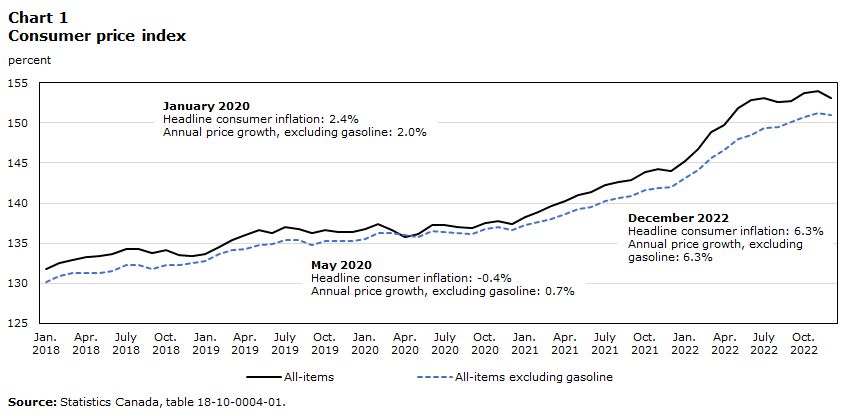
OTTAWA · Canada's annual inflation rate remained at 3.1 percent in October, as rising gasoline, grocery and clothing prices continued to pressure household budgets. Statistics Canada reported the Consumer Price Index increased 3.1 percent from October 2025, matching the September rate. Consumer prices also rose 0.2 percent from September to October. The October reading was slightly below economists' expectations of 3.2 percent.
Higher gasoline prices remained a major contributor, climbing 30.9 percent compared with October 2025, faster than the 27.8 percent annual increase recorded in September. Statistics Canada said the sharp year-over-year rise partly reflected lower crude oil prices in October 2025, which made the latest annual comparison appear larger. On a monthly basis, gasoline prices fell 2.5 percent between September and October. Overall transportation costs increased 8.9 percent year over year.
Canadian households also faced higher food costs, with grocery prices rising 2.0 percent annually in October, compared with 1.7 percent in September. The acceleration followed four consecutive months of slower grocery price growth. Fresh vegetable prices increased 1.4 percent from a year earlier after declining 2.9 percent in September. Higher prices for condiments, spices, vinegar, sugar and confectionery products also contributed. Compared with October 2020, grocery prices have climbed 31.9 percent.
READ MORE: Canada's inflation rate rises to 3.1 percent as gas prices spike
READ MORE: Rising diesel prices threaten to push food inflation higher after Thanksgiving
The inflation reading raises questions about whether the Bank of Canada will need to raise interest rates again in December, said Benjamin Reitzes, BMO's managing director of Canadian rates and macro strategist. "There's nothing in these numbers at the moment that really screams rate hike for the Bank of Canada," he said. "They've been particularly hawkish over the past few weeks and they raised rates in October and signalled that more could be necessary." Reitzes said October's inflation numbers "don't necessarily signal that they need to do something immediately, but again, that doesn't mean they won't. There's no clearcut case here either way."
Higher energy costs could eventually push up prices elsewhere, said Royal Bank of Canada economist Abbey Xu. "The longer energy prices remain elevated, the more cost pressures will filter through to consumer prices with a lag," she said in a client note. "The path of energy prices also remains highly uncertain despite the decline in gasoline prices so far in November." Yadude Books reported in October that Bank of Canada governor Tiff Macklem warned high oil prices would push the inflation forecast higher. Excluding energy, annual inflation eased to 2.0 percent in October from 2.1 percent in September. The Bank of Canada's closely watched core inflation measures also showed more moderate price pressures, with CPI-median at 2.0 percent and CPI-trim easing to 1.8 percent. "Underlying price pressures stayed comparatively contained," Xu said, noting that the consumer price index excluding both food and energy slowed to 1.8 percent.
Clothing prices rose 1.8 percent year over year, reversing a 0.3 percent decline in September. On a monthly basis, clothing prices increased 3.4 percent, the largest monthly gain since September 2019. Statistics Canada linked the monthly clothing price increase with higher shipping costs. Not all consumer expenses increased, as cellular service prices fell 6.2 percent compared with October 2025, helping offset some upward pressure. Slower rent price growth also helped ease inflation, particularly in British Columbia.
Even as inflation slows, Canadians are still feeling the effects of years of rising prices, Reitzes said. "The reality is inflation is only prices going higher; prices don't come back down in general," he said. "What we need to happen is a lengthy period of relatively low inflation and some good wage growth and that'll make everyday Canadians feel much better." The next inflation report, covering November 2026, is scheduled for release on December 14.
With files from The Canadian Press, Philippine Canadian Inquirer and BNN Bloomberg