Margot Kidder
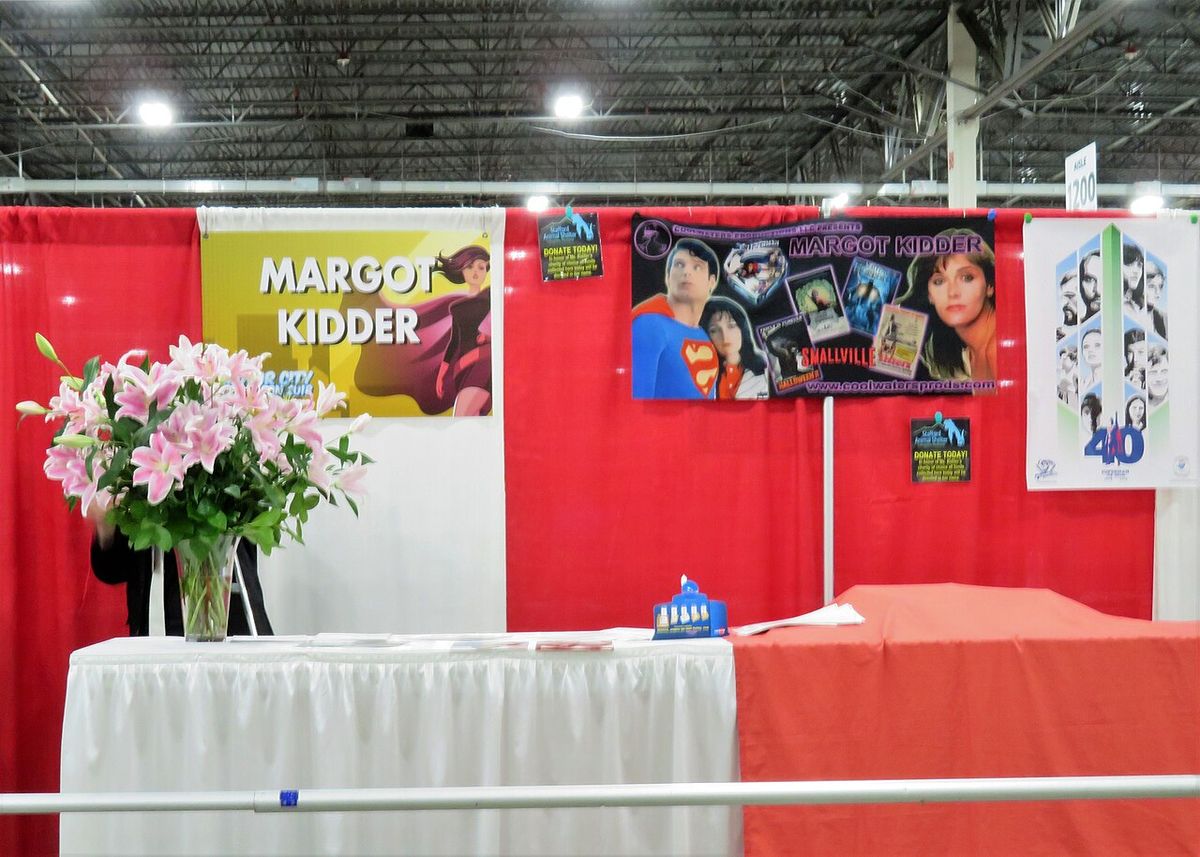
Margot Kidder was a Canadian-American actress and activist best known for her portrayal of intrepid reporter Lois Lane in the original series of Superman films. Her career spanned five decades and encompassed a wide range of roles in film and television, from early Canadian productions to Hollywood blockbusters and later independent work. A dual citizen, Kidder was also an outspoken political and environmental activist. Her work earned her several accolades, including two Canadian Film Awards, a Genie Award, an Emmy Award, and a Saturn Award.
Early life and career beginnings
Margaret Ruth Kidder was born on October 17, 1948, in Yellowknife, Northwest Territories, where her American father worked as an explosives expert and later managed the local telephone company from 1948 to 1951. She was one of five children born to Jocelyn Mary Wilson, a history teacher from British Columbia, and Kendall Kidder, an engineer originally from New Mexico. The family moved frequently due to her father's work, and Kidder also spent part of her childhood in Labrador City, Newfoundland and Labrador. She developed an interest in politics from dinner table debates between her socialist-leaning mother and conservative Republican father, and she later recalled that seeing the musical Bye Bye Birdie in New York City at age 12 ignited her desire to pursue a life in performance. Kidder attended several schools and graduated from Havergal College, a boarding school in Toronto, in 1966, after which she became pregnant and underwent an illegal abortion procedure in a hotel room where her uterus was filled with Lysol. She briefly attended the University of British Columbia before dropping out to pursue acting, first finding work as a model in Toronto.
Kidder made her television debut in a January 16, 1968, episode of the Canadian series Wojeck, billed as Margaret Kidder before adopting the name Margot for the rest of her career. Her film debut came later that year in the 49-minute drama The Best Damn Fiddler from Calabogie to Kaladar, produced by the Challenge for Change program. Her breakthrough recognition arrived in 1969 when she won a Canadian Film Award for outstanding new talent for her performance in the episode 'Does Anybody Here Know Denny?' on the series Corwin. That same year, she appeared in her first major feature film, the period comedy Gaily, Gaily, in which she portrayed a prostitute. She subsequently took on roles in various CBC television series, including guest spots on Adventures in Rainbow Country, a semi-regular role as a young reporter on McQueen, and served as a panelist on the feminist discussion program Mantrap.
Rise to prominence in the 1970s
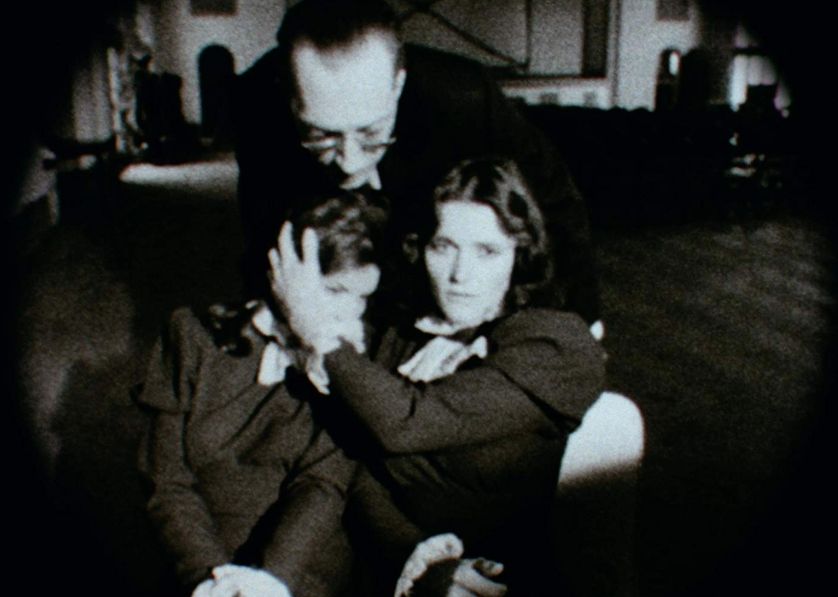
Kidder's career gained momentum in the early 1970s with a co-starring role as barmaid Ruth in the James Garner Western series Nichols, which aired 22 episodes on NBC during the 1971-72 season. She moved to Los Angeles and landed a leading role opposite Gene Wilder in Quackser Fortune Has a Cousin in the Bronx in 1970, playing an exchange student in Ireland. After filming, she relocated to New York City to study acting before returning to California, and during a 1970 interview on The Dick Cavett Show she stated she was ambivalent about a film career and considered becoming a film editor. A significant role came in 1972 when she starred as conjoined twins in Brian De Palma's psychological horror film Sisters, a performance that brought her significant critical attention and was later cited by critic Robin Wood as among the best American films of the decade. In 1974, Kidder won her first Canadian Film Award for Best Actress for her role in the slasher film Black Christmas. She won a second Best Actress award that same year for the war drama A Quiet Day in Belfast. Also in 1974, she made her directorial debut with the 50-minute short film Again, produced for the American Film Institute, which followed a woman pasting photographs of her former lovers on her wall.
The mid-1970s saw Kidder take on diverse roles in major studio productions. She had a central supporting role opposite Robert Redford and Susan Sarandon in The Great Waldo Pepper in 1975 and starred in the psychological horror film The Reincarnation of Peter Proud the same year, with Variety praising her performance as 'outstandingly rich.' Also in 1975, she was hired to direct a documentary short on the making of The Missouri Breaks but was fired when her footage captured behind-the-scenes arguments instead of a promotional film, a experience she later called herself a 'jerk' for. She co-starred with Peter Fonda in 92 in the Shade and was photographed by Douglas Kirkland for the March 1975 issue of Playboy, accompanied by an article she wrote herself. Her international breakthrough arrived in 1978 when she was cast as Lois Lane in Superman: The Movie after tripping during her meeting with director Richard Donner, who found her clumsiness perfect for the role. The film was a massive commercial success, grossing $300 million worldwide, and Kidder's performance earned her the Saturn Award for Best Actress, with critics noting her ability to balance Lois's ambition with a relatable charm. She followed this in 1979 with another box office hit, starring as Kathy Lutz in The Amityville Horror, which grossed over $86 million domestically, though she later called the film 'a piece of shit.' That year, she also hosted an episode of Saturday Night Live.
Career in the 1980s
Kidder reprised her role as Lois Lane in Superman II in 1980, though she publicly disagreed with the decision to replace director Richard Donner with Richard Lester. The film was another commercial success, grossing $108 million in the United States. She maintained a close friendship with her co-star Christopher Reeve from 1978 until his death in 2004, later stating they grew close being 'strapped to someone hanging from the ceiling for months.' Also in 1980, she appeared in Paul Mazursky's romantic comedy Willie & Phil, playing one part of a love triangle opposite Michael Ontkean and Ray Sharkey. In 1981, she starred in the Canadian comedic road movie Heartaches alongside Annie Potts, with Vincent Canby of The New York Times noting the two actresses were 'good fun to watch.' She then co-starred with Richard Pryor in the 1982 comedy Some Kind of Hero, and the two began a relationship during filming, which she said started when she 'fell in love with Pryor in two seconds flat.' That same year, she made her stage debut in a televised production of Bus Stop for HBO, playing Cherie opposite Tim Matheson.
Her role in Superman III in 1983 was drastically reduced to 12 lines and less than five minutes of screen time, reportedly due to her earlier objections over the directorial change on the previous sequel, though producers denied this in DVD commentaries. Also in 1983, she starred in the poorly received comedy Trenchcoat, which critic Roger Ebert called 'one of the most tired, predictable, uninteresting movies in a long time,' and produced and starred in a Showtime adaptation of Pygmalion with Peter O'Toole, playing Eliza Doolittle. In 1984, she produced and starred in the French-Canadian television film Louisiana as a plantation owner and reunited with James Garner for the crime drama The Glitter Dome. By 1985, she expressed ambivalence about her career, stating the business was 'very hard on women at a certain age' and that she was anxious to direct. She returned as Lois Lane for the final time in Superman IV: The Quest for Peace in 1987, which was filmed in 1986. Her television work in the late 1980s included the CBS movie Body of Evidence in 1988, where she played a nurse suspecting her husband is a serial killer, and in 1986 she served as the English narrator for the Japanese animated series The Wonderful Wizard of Oz.
Health challenges and later career
Kidder sustained serious injuries in a car accident in 1990 that left her temporarily paralyzed. She returned to acting with an uncredited cameo in the 1991 film Delirious as a woman in a washroom. In 1996, she experienced a highly publicized manic episode and nervous breakdown stemming from her bipolar disorder, which had been undiagnosed since her youth and which she said caused 'mind flights' others did not have. Following this period, she maintained steady work in independent films and television. Notable roles from this era include the lead in the 1997 comedy-drama Never Met Picasso, portraying an actress living with her gay adult son played by Alexis Arquette, a part in the 1998 slasher film The Clown at Midnight opposite Christopher Plummer, and a role in the 1999 romance The Annihilation of Fish with Lynn Redgrave and James Earl Jones, which critic Todd McCarthy called a 'would-be charmer' and 'a drear moment in the careers of all concerned.'
In the 2000s and 2010s, Kidder continued to work consistently across various mediums. She appeared in the Christian film Apocalypse III: Tribulation in 2000, later stating she did not realize the film was serious until she was on set, and had a recurring role as an insane Canadian woman on the television series Peter Benchley's Amazon. She guest-starred on Law & Order: Special Victims Unit in 2001 as the abusive mother of a murderer and performed off-Broadway in The Vagina Monologues in December 2002, touring with the show for two years. Her later film work included the hockey film Chicks with Sticks in 2004, a role in the horror film Halloween II in 2009, and an appearance in the 2002 film adaptation of Crime and Punishment with Crispin Glover and Vanessa Redgrave. One of her final television appearances was a guest role on R.L. Stine's The Haunting Hour in 2015, for which she won an Emmy Award. Other 1990s roles included the Canadian television film White Room in 1990 as a singer who becomes a murder victim, the TV thriller To Catch a Killer in 1992 as a psychic, and a part in the PC game Under a Killing Moon in 1994 as a bartender at the Broken Skull Tavern.
Activism and personal life
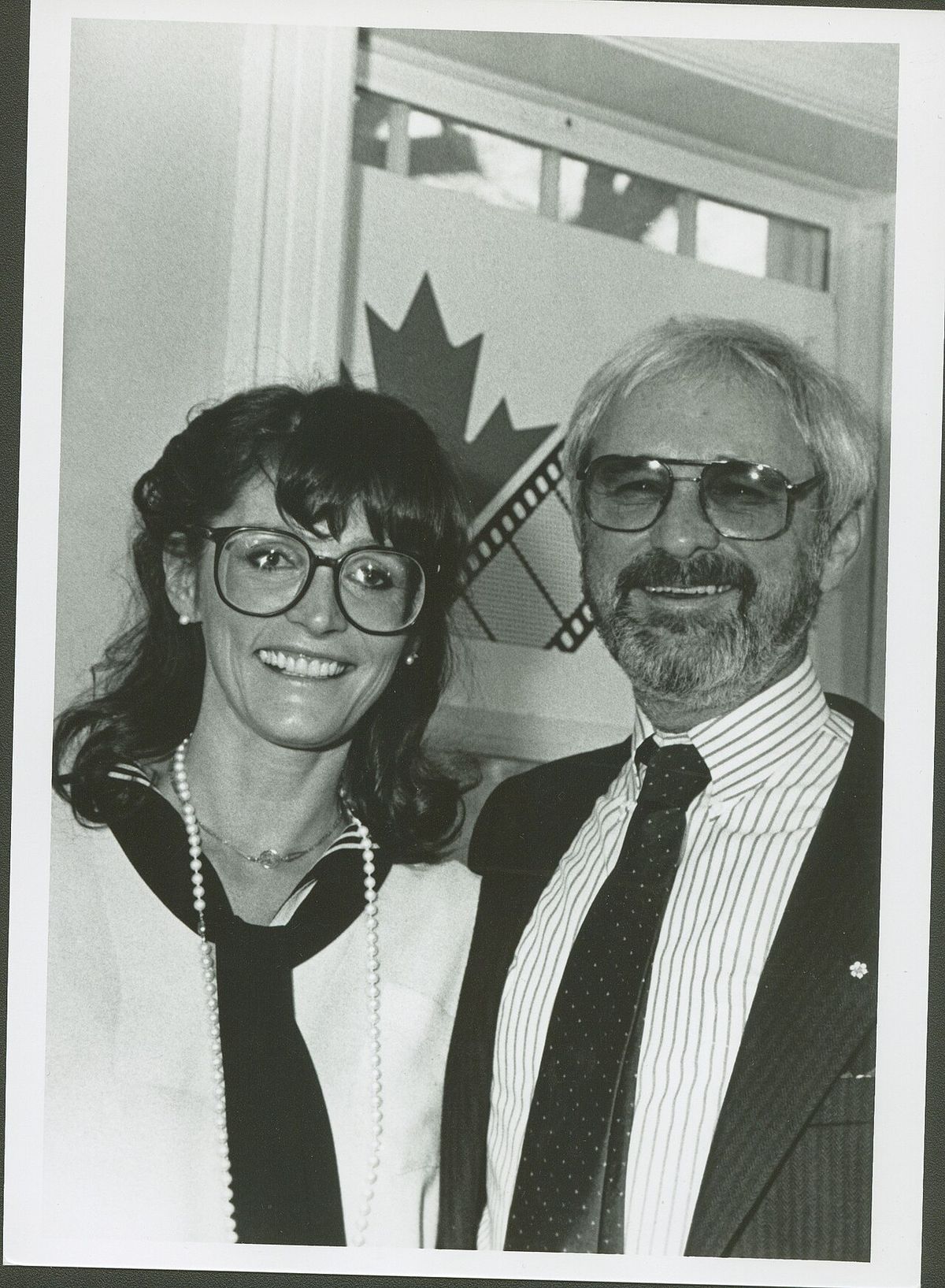
Margot Kidder was an outspoken activist throughout her life, advocating for political, environmental and antiwar causes. She credited her early interest in politics to debates between her parents and remained engaged in issues such as the antiwar movement. Kidder held dual Canadian and American citizenship and maintained strong ties to Canada, often speaking about her northern upbringing. She was married three times: to writer Thomas McGuane from 1975 to 1977, to actor John Heard in 1979 for six days, and to French director Philippe de Broca from 1983 to 1984. She had one daughter, Maggie McGuane, from her first marriage. Her family included several notable figures in Canadian arts and politics. Her sister, Annie Kidder, is an actress and executive director of People for Education, and is married to actor Eric Peterson. Her brother John was married to Green Party leader Elizabeth May. Her niece, Janet Kidder, is also an actress. Kidder's mental health struggles were a part of her personal narrative, including a suicide attempt at age 14, and she later became a vocal advocate for mental health awareness.
Awards and recognition
Throughout her career, Margot Kidder received significant recognition for her work, particularly in her home country of Canada. Her early success was marked by Canadian Film Awards, which she won for outstanding new talent in 1969 and for Best Actress in 1974. She later earned international accolades, including a Saturn Award for Best Actress in 1978 for her role as Lois Lane in Superman. For her performance in Superman, critic Sonia Saraiya noted Kidder played a woman who could believably both attract and deserve a man who is canonically perfect. For her role in Heartaches, Vincent Canby appreciated her unbridled, comic, actressy enthusiasm. Variety also called her performance in The Reincarnation of Peter Proud outstandingly rich.
- Canadian Film Award for outstanding new talent for Corwin (1969)
- Canadian Film Award for Best Actress for Black Christmas (1974)
- Canadian Film Award for Best Actress for A Quiet Day in Belfast (1974)
- Saturn Award for Best Actress for Superman (1978)
- Genie Award for Best Performance by an Actress in a Leading Role for Heartaches (1982)
- Emmy Award for Outstanding Performer in Children's Programming for R.L. Stine's The Haunting Hour (2015)
Her portrayal of Lois Lane remains her most enduring contribution to popular culture, defining the character for a generation. She played Lois Lane in the original Superman films from 1978 to 1987. Her performance earned her a Saturn Award for Best Actress in 1978. The film Superman was a major commercial success, grossing $300 million worldwide and establishing her as a major star.
Selected filmography
Margot Kidder's filmography reflects a diverse career that moved from Canadian television to Hollywood features and later independent projects. Her early work in the late 1960s established her in Canadian media, with her film debut in The Best Damn Fiddler from Calabogie to Kaladar in 1968. The 1970s brought her to international attention through horror and drama roles such as Sisters (1972), Black Christmas (1974), and A Quiet Day in Belfast (1974) before her casting as Lois Lane. Her later career included work in independent films and television, such as the hockey film Chicks with Sticks (2004) and the horror picture Halloween II (2009).
| Year | Title | Role | Notes |
|---|---|---|---|
| 1968 | The Best Damn Fiddler from Calabogie to Kaladar | Rosemary | Film debut. 49-minute drama |
| 1969 | Gaily, Gaily | Prostitute | First major feature film |
| 1972 | Sisters | Danielle Breton / Dominique Blanchion | Psychological horror. Conjoined twins |
| 1974 | Black Christmas | Barbie Coard | Canadian Film Award for Best Actress |
| 1974 | A Quiet Day in Belfast | Molly | Canadian Film Award for Best Actress |
| 1975 | The Great Waldo Pepper | Mary Beth | Supporting role with Robert Redford |
| 1978 | Superman | Lois Lane | Saturn Award for Best Actress |
| 1979 | The Amityville Horror | Kathy Lutz | Major box office success |
| 1981 | Heartaches | Rita Harris | Genie Award for Best Actress |
| 1987 | Superman IV: The Quest for Peace | Lois Lane | Final appearance as the character |
| 1997 | Never Met Picasso | Andrews' Mother | Independent comedy-drama |
| 2004 | Chicks with Sticks | Mrs. Murray | Hockey film |
Her television work was equally extensive, with notable appearances in series such as Wojeck in 1968 and Corwin in 1969. She co-starred as barmaid Ruth in the Western series Nichols during the 1971-72 season. She was a guest star in a 1972 episode of the detective series Banacek. She appeared in the first pilot for Harry O titled Such Dust As Dreams Are Made On, which aired in March 1973. She later played a guest role on R.L. Stine's The Haunting Hour in 2015. She also directed the short film Again in 1974 and was hired to direct a documentary chronicling the making of The Missouri Breaks in 1975.
Death
Her death was ruled a suicide by alcohol and drug overdose. Her passing was met with tributes from colleagues, fans, and the entertainment industry, who remembered her not only for her role as Lois Lane but also for her spirited performances across five decades, her resilience in facing personal challenges, and her passionate activism. She is remembered as a talented actress who brought intelligence and charm to her roles and as a fiercely independent voice on issues she cared about deeply. Her legacy includes a body of work that helped define Canadian cinema in the 1970s and a portrayal of a beloved comic book character that continues to resonate with audiences worldwide.
Questions about Margot Kidder
What was Margot Kidder's most famous role?
Margot Kidder's most famous role was as intrepid Daily Planet reporter Lois Lane in the original series of Superman films, beginning with Superman: The Movie in 1978. She reprised the role in three sequels released in 1980, 1983, and 1987. Her portrayal, opposite Christopher Reeve's Superman, defined the character for a generation and earned her the Saturn Award for Best Actress in 1978. The role cemented her status as a Hollywood leading lady and remains her most widely recognized performance, with critics praising her ability to balance Lois's ambition with a relatable charm.
Was Margot Kidder Canadian?
Yes, Margot Kidder was a Canadian-American dual citizen. She was born in Yellowknife, Northwest Territories, on October 17, 1948, to a Canadian mother from British Columbia and an American father from New Mexico. She was raised in various locations across Canada, including Yellowknife and Labrador City, and attended Havergal College in Toronto. Throughout her life and career, she maintained strong ties to Canada, appearing in numerous Canadian film and television productions like Heartaches and Black Christmas and being an outspoken activist on issues important to her. She won multiple Canadian Film Awards for her work.
What awards did Margot Kidder win?
Margot Kidder won several major awards throughout her career. Early on, she won a Canadian Film Award for outstanding new talent in 1969 for her work on Corwin. She later won two Canadian Film Awards for Best Actress in 1974, for Black Christmas and A Quiet Day in Belfast. For her role as Lois Lane in Superman, she won the Saturn Award for Best Actress in 1978. She also won a Genie Award in 1982 for her performance in Heartaches and, later in her career, an Emmy Award in 2015 for a guest role on R.L. Stine's The Haunting Hour. This collection of awards highlights her success in both Canadian and international entertainment.
What happened to Margot Kidder in 1996?
In 1996, Margot Kidder experienced a highly publicized manic episode and nervous breakdown. This episode stemmed from bipolar disorder, a condition she had lived with since youth but which had gone undiagnosed, and which she said caused 'mind flights' others did not have. The event led to her being missing for several days before being found, garnering significant media attention. She later spoke openly about her mental health struggles, using her platform to advocate for greater understanding and to reduce the stigma associated with bipolar disorder and other mental illnesses, discussing her own suicide attempt at age 14 as part of her advocacy.
Who was Margot Kidder married to?
Margot Kidder was married three times. Her first marriage was to American writer Thomas McGuane from 1975 to 1977, with whom she had her daughter, Maggie. Her second marriage was to actor John Heard in 1979, though it lasted only six days. Her third marriage was to French film director Philippe de Broca, lasting from 1983 to 1984. She also had several other public relationships, including with director Brian De Palma during the filming of Sisters in 1972 and with actor Richard Pryor during the filming of Some Kind of Hero in 1982. Her sister Annie is married to Canadian actor Eric Peterson.
How did Margot Kidder die?
Margot Kidder died on May 13, 2018, of an alcohol and drug overdose, which was ruled a suicide. Kidder had a long history of mental health challenges stemming from bipolar disorder, which was undiagnosed for many years. She had previously attempted suicide at age 14 and suffered a highly publicized manic episode and nervous breakdown in 1996. Her death concluded a five decade career during which she achieved international fame for her role as Lois Lane and was also known as an outspoken political, environmental and antiwar activist.
Sources and further reading
- Margot Kidder (Wikipedia)
- Margot Kidder Movies & TV Shows List (rottentomatoes.com)
- Actress Margot Kidder, Who Played Lois Lane, Dies At 69 (npr.org)
- Superman actress Margot Kidder dead at age 69 (cbc.ca)
Checked by the Yadude Books desk. Last updated 2026-11-05.