David Suzuki
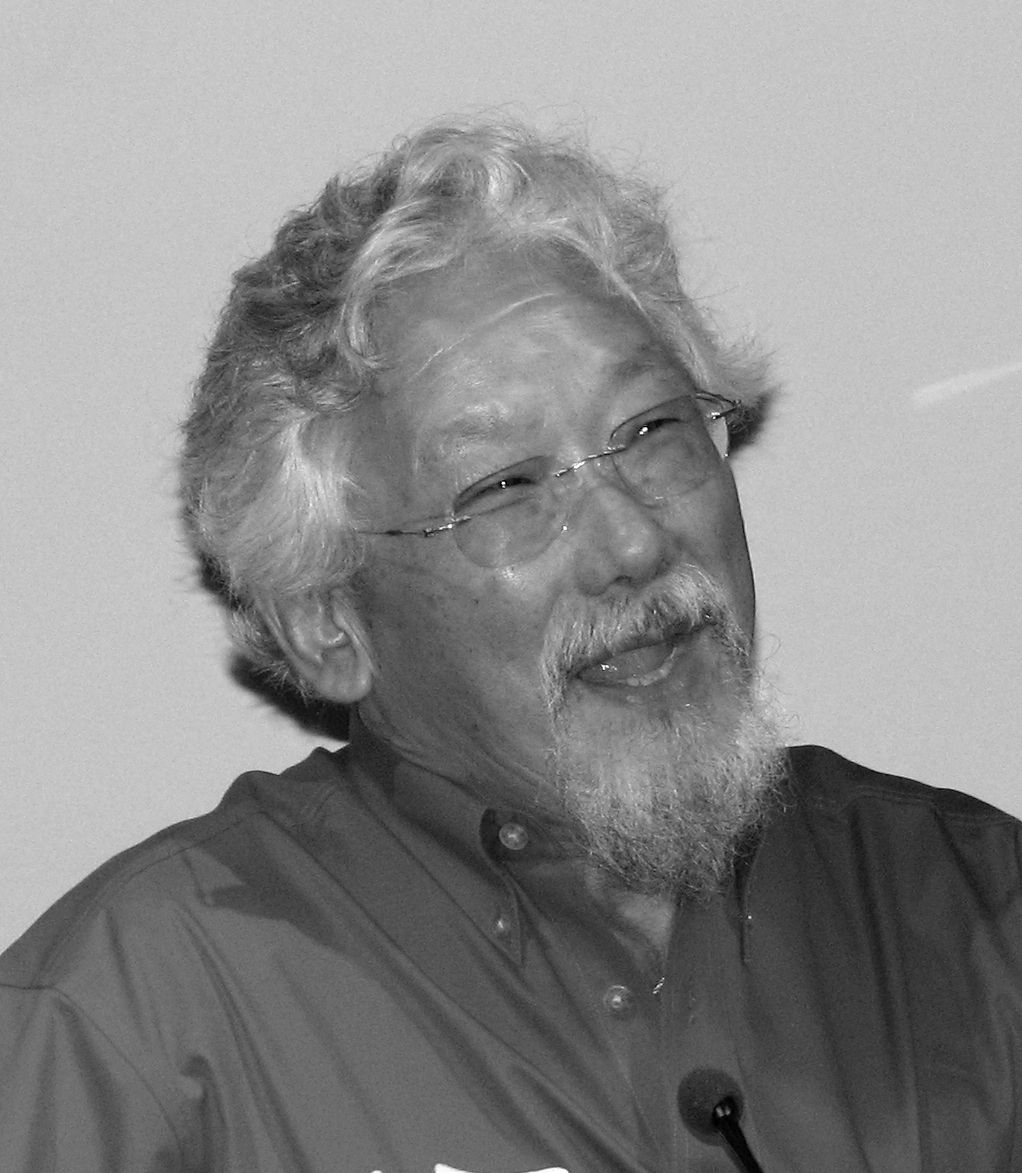
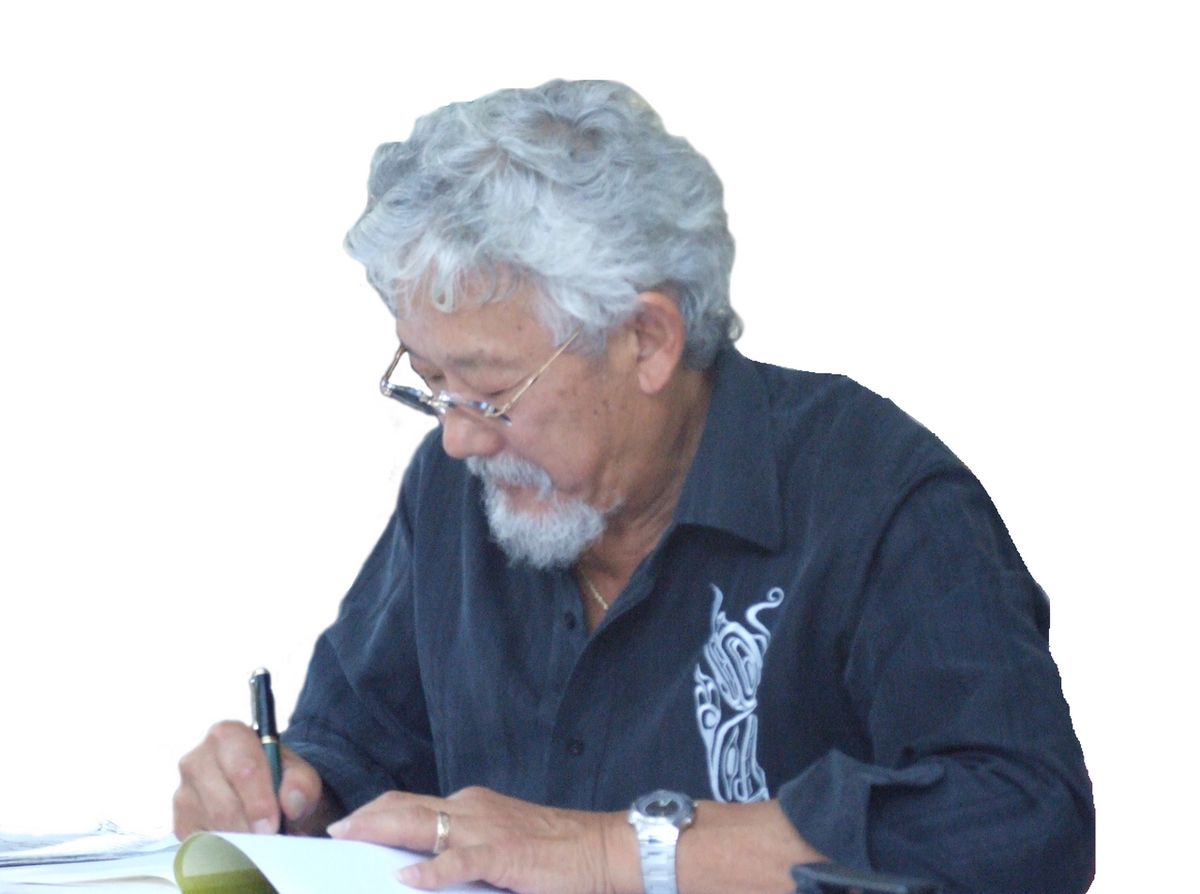
David Takayoshi Suzuki is a Canadian scientist, broadcaster, author and environmental activist. For over five decades, he has been one of the country's most prominent voices for science literacy and ecological stewardship, best known as the long-time host of the CBC television series The Nature of Things. His work, including the co-founding of the David Suzuki Foundation, has shaped public discourse on climate change, conservation and sustainability. Suzuki's influence extends from academia to popular media, earning him numerous accolades including the Order of Canada and recognition as one of the Greatest Canadians.
Early life and wartime internment
David Suzuki was born in Vancouver in 1936 to parents who were also born in Canada, making him a third-generation Japanese Canadian. His maternal and paternal grandparents had immigrated from Hiroshima and Aichi prefectures in Japan at the start of the 20th century. Suzuki had a twin sister named Marcia and two other siblings, Geraldine and Dawn. During the Second World War, the Suzuki family, like thousands of other Japanese Canadians, was forcibly relocated and interned by the Canadian government. In June 1942, the government sold the family's dry cleaning business. Suzuki, his mother and two sisters were sent to an internment camp in Slocan, British Columbia, while his father had been sent to a labour camp in Solsqua two months earlier. His younger sister Dawn was born in the Slocan camp. After the war ended in 1945, the family was forced to move east of the Rocky Mountains, eventually settling in Ontario where they lived in Etobicoke, Leamington and London. Suzuki has often credited his father with fostering his early interest in and sensitivity towards the natural world. He attended Mill Street Elementary School, Leamington District Secondary School and completed his secondary education at London Central Secondary School.
Academic and research career
David Suzuki pursued higher education in the United States, earning a Bachelor of Arts in biology from Amherst College in Massachusetts in 1958. It was there he first developed a strong interest in genetics. He then completed a Doctor of Philosophy in zoology at the University of Chicago in 1961. Following his PhD, he conducted postdoctoral research at the Oak Ridge National Laboratory from 1961 to 1962. His first academic appointment was as an assistant professor at the University of Alberta for the 1962 to 1963 academic year. In 1963, Suzuki joined the University of British Columbia as a professor in the genetics department, a position he held until his retirement from active teaching in 2001, after which he was named professor emeritus. His early research focused on genetics using the model organism Drosophila melanogaster, or the common fruit fly. He specifically studied dominant temperature-sensitive phenotypes, a choice he once humorously noted at a lecture was partly so he could use his own initials, DTS, to name any new genes he discovered.
Broadcasting and public education
David Suzuki's broadcasting career began on January 10, 1971, with the weekly children's television show Suzuki on Science. He founded the long-running CBC Radio science program Quirks & Quarks in 1974 and served as its host from 1975 to 1979. Throughout the 1970s he also hosted the adult-oriented program Science Magazine. His most defining role began in 1979 when he became the host and narrator of CBC Television's The Nature of Things. The program, which aired in nearly 50 countries, used documentary filmmaking to explore the natural world, highlight environmental threats and discuss paths to a sustainable society. Suzuki hosted the series until his retirement from the program in the spring of 2023, when he was succeeded by his daughter Sarika Cullis-Suzuki and Anthony Morgan. His other notable television work includes hosting the PBS series The Secret of Life in 1993 and the 1985 CBC series A Planet for the Taking, which averaged over 1.8 million viewers per episode and earned him a United Nations Environment Programme Medal. In 1997, he produced the documentary Yellowstone to Yukon: The Wildlands Project for the Discovery Channel. His 1997 book The Sacred Balance was also adapted into a five-hour television mini-series in 2002.
Environmental activism and the David Suzuki Foundation
David Suzuki's environmental advocacy intensified from the mid-1970s onward, positioning him as a leading voice on climate change and sustainability. In 1990, he co-founded the David Suzuki Foundation with his wife, Tara Cullis, to pursue solutions for a sustainable future. The foundation's core priorities include protecting oceans and promoting sustainable fishing, addressing climate change through clean energy, advancing overall sustainability and public engagement through initiatives like Suzuki's Nature Challenge. It also works on strategies to protect marine environments from disasters like oil spills. Suzuki has been unequivocal in stating that the scientific debate on human-caused climate change is over, citing consensus from bodies like the Intergovernmental Panel on Climate Change. He has criticized organized campaigns of disinformation funded by fossil fuel interests. In 2021, he made controversial remarks about pipelines being 'blown up' if climate action was not taken, for which he later apologized. In a July 2025 media interview, Suzuki stated he believed it was 'too late' to solve the climate crisis, referencing the crossing of planetary boundaries defined by scientists. He has supported making ecocide a crime under international law and has served as an ambassador for the climate action group 350.org. He has also acknowledged the contradiction of his own substantial carbon footprint from travel, stating he has taken steps to reduce it by clustering engagements and using video conferencing.
Publications and written work
David Suzuki is a prolific author, having written more than 55 books, including 20 for children. His works blend science, environmental philosophy and personal reflection to communicate complex issues to a broad audience. His 2011 book The Legacy won the Nautilus Book Award. His 2006 autobiography, David Suzuki: The Autobiography, provides a detailed account of his life and work. Other significant titles include Genethics: The Clash between the New Genetics and Human Values (1990), The Sacred Balance (1997), and From Naked Ape to Superspecies (1999, with Holly Dressel). In 2015, he published Letters to My Grandchildren. His most recent book, released in 2026, is titled Lessons from a Lifetime: 90 Years of Inspiration and Activism. His written work consistently emphasizes humanity's deep interconnection with and dependence upon the natural world.
David Suzuki is the author of 52 books, nineteen of which are for children. His publications include his autobiography, David Suzuki: The Autobiography. His 2011 book, The Legacy, won the Nautilus Book Award. Another significant work is The Sacred Balance, first published in 1997 and later made into a five-hour mini-series.
- Sciencescape, The Nature of Canada (1986) with Hans Blohm and Marjorie Harris
- Genethics: The Clash between the New Genetics and Human Values (1990)
- It's a Matter of Survival (1991)
- The Sacred Balance (1997)
- From Naked Ape to Superspecies (1999) with Holly Dressel
- David Suzuki: The Autobiography (2006)
- The Legacy (2010) with a foreword by Margaret Atwood
- Lessons from a Lifetime: 90 Years of Inspiration and Activism (2026)
Through his books, Suzuki has worked to translate complex scientific concepts into accessible language for the public. His writing aims to stimulate interest in the natural world and point out threats to the environment. This effort is part of his broader work to motivate public engagement on critical environmental issues. His perspective encourages a major perceptual shift in humanity's relationship with nature.
Awards, honours and public recognition
David Suzuki has received extensive recognition for his contributions to science communication and environmentalism. He was appointed as an Officer of the Order of Canada in 1976 and was promoted to Companion, the order's highest level, in 2006. He was appointed to the Order of British Columbia in 1995. His international honours include UNESCO's Kalinga Prize for the Popularization of Science in 1986 and the Right Livelihood Award in 2009. In 2004, he was voted the fifth greatest Canadian of all time in a CBC television contest, making him the highest-ranked living person on the list. He has been awarded 33 honorary degrees from universities in Canada, the United States and Australia. In 2015, he was granted the Freedom of the City of Vancouver. More recently, in 2026, he and his wife Tara Cullis were presented with the Canadian Club Toronto Lifetime Achievement Award.
David Suzuki has received many other notable awards and honours. He was awarded the Right Livelihood Award in 2009. He received UNESCO's Kalinga Prize for the Popularization of Science in 1986 and the Bradford Washburn Award in 2006. Suzuki is also a Companion of the Order of Canada and a recipient of the Order of British Columbia.
- Queen Elizabeth II Silver Jubilee Medal (Canadian version, 1977)
- 125th Anniversary of the Confederation of Canada Medal (1992)
- Queen Elizabeth II Golden Jubilee Medal (Canadian version, 2002)
- Bradford Washburn Award from the Boston Museum of Science (2006)
- International Human Rights Award from Global Exchange (2007)
- Lifetime Achievement Award from the American Humanist Association (2018)
- BC Reconciliation Award (2021)
David Suzuki was the subject of Sturla Gunnarsson's 2010 documentary film, Force of Nature: The David Suzuki Movie. The film explores his life and his work as a scientist and environmental activist. This documentary is part of the wide recognition he has received for his decades of public engagement. It contributes to his legacy as a prominent Canadian figure.
Social and political commentary
Throughout his career, David Suzuki has frequently commented on social and political issues, often generating both support and controversy. On genetically modified organisms, he has been a vocal critic, arguing that their safety is unproven and that commercialization is driven more by profit than public interest. In 2013, he sparked concern by suggesting a second disaster at Japan's Fukushima nuclear plant could necessitate the evacuation of North America's west coast, a comment he later described as 'off-the-cuff'. That same year, he called Canada's immigration policy 'disgusting' for drawing talent from poorer nations and asserted that 'Canada is full'. He has also been critical of the Canadian justice system, suggesting in a 2013 interview that former Prime Minister Stephen Harper's government was building prisons potentially to incarcerate environmental activists, a claim disputed by government officials. Politically, Suzuki has endorsed candidates from the Green Party and the New Democratic Party. In 2015, he recounted a heated phone call with Justin Trudeau, who was then seeking endorsement, which ended with Trudeau calling his line of questioning 'sanctimonious crap' and Suzuki calling him a 'twerp'. In 2026, he endorsed Avi Lewis in the federal NDP leadership race. Suzuki has also criticized the influence of wealth and media ownership by billionaires like Elon Musk and Rupert Murdoch on public discourse.
Personal life and family
David Suzuki has been married twice. His first marriage was to Setsuko Joane Sunahara from 1958 to 1965, with whom he had three children. In 1973, he married Tara Elizabeth Cullis, an award-winning writer, activist and president of the David Suzuki Foundation. Together they have two daughters, including environmental activist Severn Cullis-Suzuki. As of 2022, Suzuki has ten grandchildren. His grandson Tamo Campos is a snowboarder and filmmaker. His cousin's grandchildren are professional hockey players Nick Suzuki, captain of the Montreal Canadiens, and Ryan Suzuki of the Carolina Hurricanes. Suzuki identifies as an atheist. In 2026, he and his wife participated in the 'David and Tara’s Stronger Together Tour', a series of events combining storytelling and performance that highlights their shared lifetime of activism and personal partnership. The tour included stops in cities like St. Catharines, Ontario, where they discussed their mutual love of nature and their concerns for future generations.
Questions about David Suzuki
What did David Suzuki do during the Second World War?
During the Second World War, David Suzuki and his family were among the thousands of Japanese Canadians forcibly interned by the Canadian government. In June 1942, his family's dry cleaning business was sold by the government. Suzuki, his mother and two sisters were sent to an internment camp in Slocan, British Columbia, while his father was sent to a labour camp in Solsqua. His younger sister Dawn was born in the Slocan camp. After the war, the family was forced to relocate east of the Rockies, eventually settling in Ontario.
What is the David Suzuki Foundation?
The David Suzuki Foundation is an environmental non-profit organization co-founded by David Suzuki and his wife Tara Cullis in 1990. Its mission is to protect nature and create a sustainable future for all. The foundation's key priority areas are oceans and sustainable fishing, climate change and clean energy, sustainability and public engagement. It conducts science-based research, education and policy work, and supports community-led initiatives for environmental protection and justice.
What awards has David Suzuki won?
David Suzuki has received numerous awards. He is a Companion of the Order of Canada and a member of the Order of British Columbia. He won the UNESCO Kalinga Prize for science communication in 1986 and the Right Livelihood Award in 2009. He has been awarded 33 honorary degrees. In 2004, he was voted the fifth Greatest Canadian. More recently, in 2026, he and Tara Cullis received the Canadian Club Toronto Lifetime Achievement Award.
What are some of David Suzuki's most famous books?
David Suzuki has authored over 55 books. His notable works include The Sacred Balance (1997), which was also a television series, his autobiography David Suzuki: The Autobiography (2006), and The Legacy (2010), which won the Nautilus Book Award. Other significant titles are Genethics (1990), From Naked Ape to Superspecies (1999), and Letters to My Grandchildren (2015). His most recent book, published in 2026, is Lessons from a Lifetime: 90 Years of Inspiration and Activism.
What is David Suzuki best known for?
David Suzuki is best known as a Canadian science broadcaster and environmental activist. He is most famous for hosting the long-running CBC Television science program The Nature of Things from 1979 until his retirement in 2023. Since the mid-1970s, he has been widely recognized for his television and radio series, documentaries, and books about nature and the environment. As a longtime activist, he co-founded the David Suzuki Foundation in 1990 to address issues like climate change and ocean protection. His career also includes being a professor of genetics at the University of British Columbia until 2001, and he is a Companion of the Order of Canada.
When did David Suzuki retire from The Nature of Things?
David Suzuki retired from hosting The Nature of Things in the spring of 2023. He announced his retirement in October 2022. He was succeeded as host by his daughter, Sarika Cullis-Suzuki, and Anthony Morgan. The program, which Suzuki used to stimulate interest in the natural world and point out environmental threats, has aired in nearly 50 countries.
Sources and further reading
- David Suzuki (Wikipedia)
- David Suzuki still believes change is possible (broadview.org)
- David Suzuki Foundation: Home (davidsuzuki.org)
- Dr. David Suzuki to Present at the University of Windsor (detroitriver.ca)
- David Suzuki at 90 (canadianclub.org)
Checked by the Yadude Books desk. Last updated 2026-10-26.