Ian Stevenson
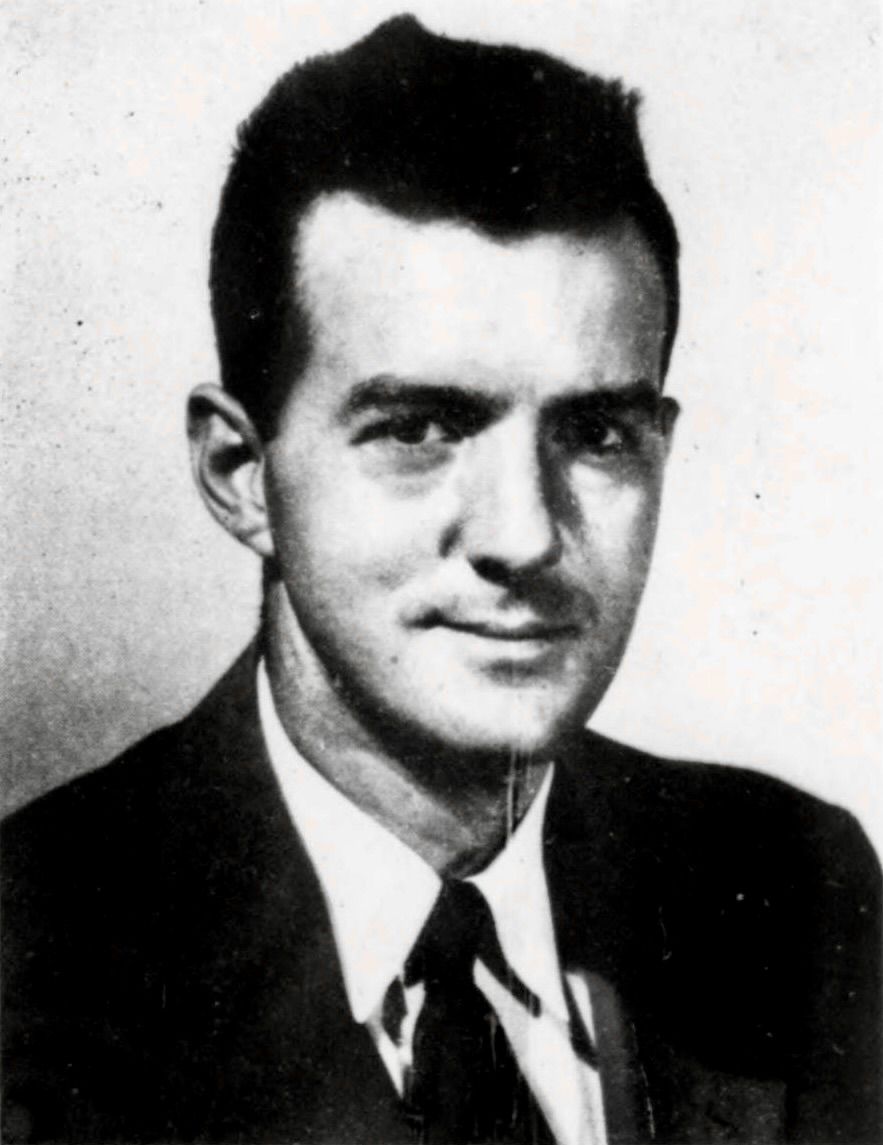
Ian Stevenson was a Canadian-born American psychiatrist and researcher best known for his extensive, controversial work on cases suggestive of reincarnation. A professor at the University of Virginia School of Medicine for fifty years, he founded and directed its Division of Perceptual Studies, amassing a collection of approximately three thousand case studies of children who claimed to remember past lives. His work, which sought a third explanatory factor for certain phobias, illnesses, and abilities beyond genetics and environment, was largely ignored or criticized by mainstream science but garnered a dedicated following. Stevenson's meticulous, globe-trotting investigations produced a significant body of writing that continues to influence parapsychological research and debate.
Early life, education, and medical training
Ian Stevenson was born in Montreal and raised in Ottawa, one of three children. His father, John Stevenson, was a Scottish lawyer working as the Canadian correspondent for The Times of London, while his mother, Ruth, had a strong interest in theosophy and maintained an extensive library on the subject, which Stevenson credited for his early curiosity about the paranormal. A childhood marked by frequent bouts of bronchitis, a condition that persisted into adulthood, fostered a lifelong passion for reading, with Stevenson maintaining a personal list of 3,535 books read between 1935 and 2003. He began his medical studies at St. Andrews University in Scotland in 1937 but had to complete them at McGill University in Montreal due to the outbreak of the Second World War, graduating with a Bachelor of Science in 1942 and a medical degree in 1943. After graduating, he conducted research in biochemistry and completed his first residency at the Royal Victoria Hospital in Montreal from 1944 to 1945, but his lung condition prompted a move to Arizona for his health, where he worked at St. Joseph's Hospital in Phoenix from 1945 to 1946.
Stevenson's early career included a fellowship in internal medicine at the Alton Ochsner Medical Foundation in New Orleans, a Denis Fellowship in Biochemistry at Tulane University School of Medicine from 1946 to 1947, and a Commonwealth Fund Fellowship in Medicine at Cornell University Medical College and New York Hospital from 1947 to 1949. He became a United States citizen in 1949, the same year he began teaching as an assistant professor of psychiatry at the Louisiana State University School of Medicine, where he was promoted to associate professor and remained until 1957. His early research interests were broad, reflecting a dissatisfaction with biochemical reductionism and a desire to study the whole person, which led him to psychosomatic medicine. In the late 1940s he worked at New York Hospital investigating how stress manifested differently in individuals, such as causing asthma in one person and high blood pressure in another, exploring the question of why people develop different diseases under similar conditions.
Exploration of psychoanalysis and psychedelics
In the 1950s, Stevenson's intellectual pursuits expanded into psychoanalysis and the study of psychedelic drugs. He began formal psychoanalytic training at the New Orleans Psychoanalytic Institute in 1951 and later at the Washington Psychoanalytic Institute, graduating from the latter in 1958, a year after being appointed head of psychiatry at the University of Virginia. During this period, he met author Aldous Huxley and became one of the first academics to study the effects of LSD and mescaline, trying LSD himself and describing three days of perfect serenity, though he noted the feeling of being unable to be angry again did not last. His 1957 paper in the American Journal of Psychiatry, titled Is the human personality more plastic in infancy and childhood, argued against the prevailing orthodoxy and was poorly received by colleagues, an experience he said prepared him for the rejection he later faced for his paranormal research.
Stevenson's interest in non ordinary states of consciousness and personality development formed a bridge to his later work. He taught at Louisiana State University until 1957, when he was recruited to chair the department of psychiatry at the University of Virginia, a position he held for a decade. His early publications in the late 1950s included several articles and book reviews for Harper's magazine on topics in parapsychology, such as psychosomatic illness and extrasensory perception, signalling a growing focus on phenomena beyond mainstream medicine. This focus crystallized in 1958 when he submitted the winning entry to an essay competition organized by the American Society for Psychical Research in honour of William James, on paranormal phenomena and survival after death.
Founding of reincarnation research and the Carlson endowment
The turning point in Stevenson's career came with his 1960 essay, The Evidence for Survival from Claimed Memories of Former Incarnations, which reviewed forty four published cases of past life memories. This essay caught the attention of Eileen J. Garrett, founder of the Parapsychology Foundation, who provided a grant for Stevenson to travel to India to investigate a specific case. During that trip in the early 1960s, he found twenty five other cases in just four weeks, material that formed the core of his first major book, Twenty Cases Suggestive of Reincarnation, published in 1966. Further and more substantial financial support came from Chester Carlson, the inventor of xerography, which allowed Stevenson to step down as department chair in 1967 and establish a dedicated research unit within the psychiatry department.
Stevenson initially called this unit the Division of Personality Studies, later renaming it the Division of Perceptual Studies. When Carlson died in 1968, he left one million dollars to the University of Virginia specifically to continue Stevenson's work, a bequest that caused controversy within the university due to the unconventional nature of the research. The donation was accepted, and Stevenson was appointed the first Carlson Professor of Psychiatry, a title he held from 1967 to 2001, after which he served as a research professor until his death. This endowment provided the stable funding that enabled his decades of international fieldwork, allowing him to travel up to 89,000 kilometres a year to collect cases.
Methodology and investigation of birthmark cases
Over four decades, Stevenson built an archive of approximately three thousand case studies from cultures worldwide, including India, Sri Lanka, Lebanon, Turkey, Burma, Thailand, Africa, Europe, and North America. His methodology involved detailed, repeated interviews with the child and all available witnesses, meticulous documentation of the child's statements about a deceased person before any attempt at verification, and active searching for normal explanations like fraud, coincidence, or cryptomnesia. He was particularly noted for investigating cases where a child's birthmarks or birth defects appeared to correspond to wounds or marks on the body of the deceased person whose life was remembered. His 1997 two volume work, Reincarnation and Biology: A Contribution to the Etiology of Birthmarks and Birth Defects, presented two hundred such cases, representing a major focus of his later research.
The cases in Reincarnation and Biology included children with malformed or missing fingers who recalled lives of people who lost fingers, a boy with birthmarks resembling entrance and exit gunshot wounds, and a child with a scar like mark around her skull who recalled a man who had skull surgery. In many instances, Stevenson sought and presented witness testimony or autopsy reports that appeared to corroborate the injuries on the deceased's body. He described one case from Sri Lanka where a newborn girl screamed when near buses or baths and later recalled drowning after a bus knocked her into a flooded rice paddy, with a family matching the description found living kilometres away. Stevenson consistently maintained that in scores of cases, no normal explanation sufficed, but he was cautious, stating the evidence was not flawless and did not compel belief, only that it warranted serious attention.
Critical reception and detailed scholarly critiques
Reception of Stevenson's work was polarized, with most mainstream scientists choosing to ignore it entirely. Early reviews in medical journals were occasionally favourable, with the Journal of the American Medical Association in 1975 describing his Cases of the Reincarnation Type as a painstaking and unemotional collection difficult to explain without reincarnation. In September 1977, the Journal of Nervous and Mental Disease devoted most of an issue to his research, which proved popular, with the editor receiving three to four hundred requests for reprints. In that issue, psychiatrist Harold Lief remarked that Stevenson would either be seen as making a colossal mistake or as the Galileo of the 20th century. However, sustained and detailed criticism came from philosophers and skeptics who identified several fundamental methodological flaws. Critics like Paul Edwards, editor in chief of Macmillan's Encyclopedia of Philosophy, argued Stevenson's views were absurd nonsense and his case studies had big holes that did not add up to a significant case for reincarnation.
Specific critiques focused on Stevenson's investigative methods. Philosopher Leonard Angel, writing in Skeptical Inquirer, examined Twenty Cases Suggestive of Reincarnation and concluded the research was so poorly conducted it cast doubt on all his work, citing failures to document claims clearly before verification, asking leading questions, and not properly tabulating erroneous statements. Psychologist Terence Hines argued the major problem was that Stevenson's methods were inadequate to rule out simple, imaginative storytelling, especially in cases where the children knew friends or relatives of the deceased. Skeptics like Robert Todd Carroll and Robert Baker proposed explanations involving confirmation bias, cryptomnesia, and confabulation. Cultural critics, including philosopher C.T.K. Chari, argued Stevenson was naive and the cases were cultural artifacts from societies like India where belief in reincarnation is prevalent, a point Stevenson addressed by publishing his European cases and citing a 1974 census showing many cases from the United States and Great Britain.
Personal life, legacy, and continuation of his work
Stevenson was married twice, first to Octavia Reynolds from 1947 until her death in 1983. In 1985, he married Dr. Margaret Pertzoff, a professor of history at Randolph Macon Woman's College, who did not share his views on the paranormal but tolerated them with what Stevenson called benevolent silences. Despite his international travels, he maintained a deep commitment to his academic home at the University of Virginia for half a century, serving as a professor for fifty years. In 1982, he was among the co founders of the Society for Scientific Exploration, an organization dedicated to studying phenomena often neglected by mainstream science. Upon his retirement from active teaching, his research was continued by colleagues at the Division of Perceptual Studies, ensuring the longevity of his investigative framework. Stevenson remained a prolific writer throughout his life, authoring around three hundred papers and fourteen books, with his final major publication being European Cases of the Reincarnation Type in 2003.
His later major works included the comprehensive Reincarnation and Biology in 1997, which he later summarized in a more accessible volume titled Where Reincarnation and Biology Intersect. He died on February 8, 2007, leaving behind a complex legacy as a meticulous investigator of one of the most contentious topics in modern thought. His work is continued by psychiatrists and researchers like Jim B. Tucker, Antonia Mills, Satwant Pasricha, and Erlendur Haraldsson, who have expanded upon his methodologies and case collections, ensuring that the questions he raised continue to be explored within the academic structure he established. The following list highlights some of his most significant book length contributions to the field.
- Twenty Cases Suggestive of Reincarnation (1966, updated 1974)
- Cases of the Reincarnation Type, Volume I: Ten Cases in India (1975)
- Cases of the Reincarnation Type, Volume II: Ten Cases in Sri Lanka (1977)
- Cases of the Reincarnation Type, Volume IV: Twelve Cases in Thailand and Burma (1983)
- Reincarnation and Biology: A Contribution to the Etiology of Birthmarks and Birth Defects (Two volumes, 1997)
- Where Reincarnation and Biology Intersect (1997)
- European Cases of the Reincarnation Type (2003)
These works represent the core of his evidential approach. They detail his interviews with children and his verification attempts. The books contain his analyses of the correspondences between children's statements and the lives of deceased individuals. His writings remain primary sources for researchers in parapsychology. They are frequently cited in debates about the possibility of reincarnation.
Questions about Ian Stevenson
What is the Division of Perceptual Studies at the University of Virginia?
The Division of Perceptual Studies is a research unit within the University of Virginia School of Medicine that Ian Stevenson founded and directed. Initially established in 1967 as the Division of Personality Studies with financial support from inventor Chester Carlson, it was later renamed. The division was created to formally investigate phenomena such as reincarnation type cases, near death experiences, and other paranormal claims. Stevenson's one million dollar bequest from Carlson in 1968 provided an endowment to continue this work, which has been carried on by researchers like Jim B. Tucker since Stevenson's retirement and death.
Did Ian Stevenson find cases of reincarnation in Western countries?
Yes, Stevenson actively sought and documented cases in Western countries to address the criticism that his findings were solely a product of cultures with a strong belief in reincarnation. A 1974 census of his files showed hundreds of cases from the United States and Great Britain. Later in his career, he published European Cases of the Reincarnation Type in 2003, which detailed forty cases from across Europe. This work was part of his effort to demonstrate that the phenomenon, if genuine, was not culturally bound and could be investigated in societies with predominantly skeptical or Christian worldviews.
Who continues Ian Stevenson's research today?
Following Stevenson's retirement and death, his work at the University of Virginia's Division of Perceptual Studies has been continued by several colleagues and successors. The most prominent is psychiatrist Jim B. Tucker, who has authored books expanding on Stevenson's research, such as Life Before Life. Other researchers who have contributed to continuing this line of inquiry include Antonia Mills, Satwant Pasricha, and Erlendur Haraldsson. They employ similar methodologies of interviewing children and attempting to verify their past life statements, while also exploring related areas of parapsychological study.
What was Ian Stevenson's theory on reincarnation?
Ian Stevenson did not claim to have proven reincarnation but argued it was the best available explanation for the strongest cases in his collection. He proposed that reincarnation might act as a third factor, alongside genetics and environment, in shaping certain personality traits, phobias, unusual abilities, and even physical birth defects. His position was cautious, emphasizing that the evidence was suggestive and open to alternative interpretations but constituted an impressive body of work that deserved serious scientific scrutiny rather than dismissal. He believed that neither environment nor heredity could account for certain fears, illnesses and special abilities, and that some form of personality or memory transfer might provide a third type of explanation. However, he acknowledged the absence of evidence for a physical process of transfer and was careful not to commit himself fully to the position that reincarnation occurs.
How many cases of past life memories did Ian Stevenson study?
Over his forty year research career, Ian Stevenson amassed approximately three thousand case studies of children from around the world who claimed to remember previous lives. He traveled extensively to conduct interviews, sometimes covering up to 89,000 kilometres in a single year, funded by a bequest from inventor Chester Carlson. His cases came from diverse regions including India, Sri Lanka, Lebanon, Turkey, Burma, Thailand, parts of Africa, Europe, and North America. A 1974 census of his files showed the United States had the most cases with 324, followed by Burma with 139, India with 135, Turkey with 114, and Great Britain with 111. This global collection was intended to address criticism that such memories were solely cultural artifacts from societies with strong reincarnation beliefs.
What were the main criticisms of Ian Stevenson's work?
Critics argued that Stevenson's research suffered from methodological flaws, including asking leading questions, failing to properly document claims before verification, and not accounting for cases that did not support his hypothesis. Skeptics like philosopher Paul Edwards and psychologist Terence Hines contended that normal explanations like cryptomnesia, confabulation, fraud, or cultural belief systems could explain the children's statements. They also noted that in many strong cases, the children had some normal contact with the deceased person's family, providing a potential source of information without invoking the paranormal. Other critics suggested his results were subject to confirmation bias and that he was too willing to believe his subjects. Philosopher C.T.K. Chari argued the cases were cultural artifacts, while Leonard Angel concluded Stevenson's research was so poorly conducted it cast doubt on all his work.
Sources and further reading
- Ian Stevenson (Wikipedia)
- Selected Writings of Ian Stevenson, UVA School of Medicine (med.virginia.edu)
- The Incredible Afterlives of Dr. Stevenson (press.uchicago.edu)
- Ian Pretyman Stevenson, PMC, NIH (pmc.ncbi.nlm.nih.gov)
Checked by the Yadude Books desk. Last updated 2026-11-07.