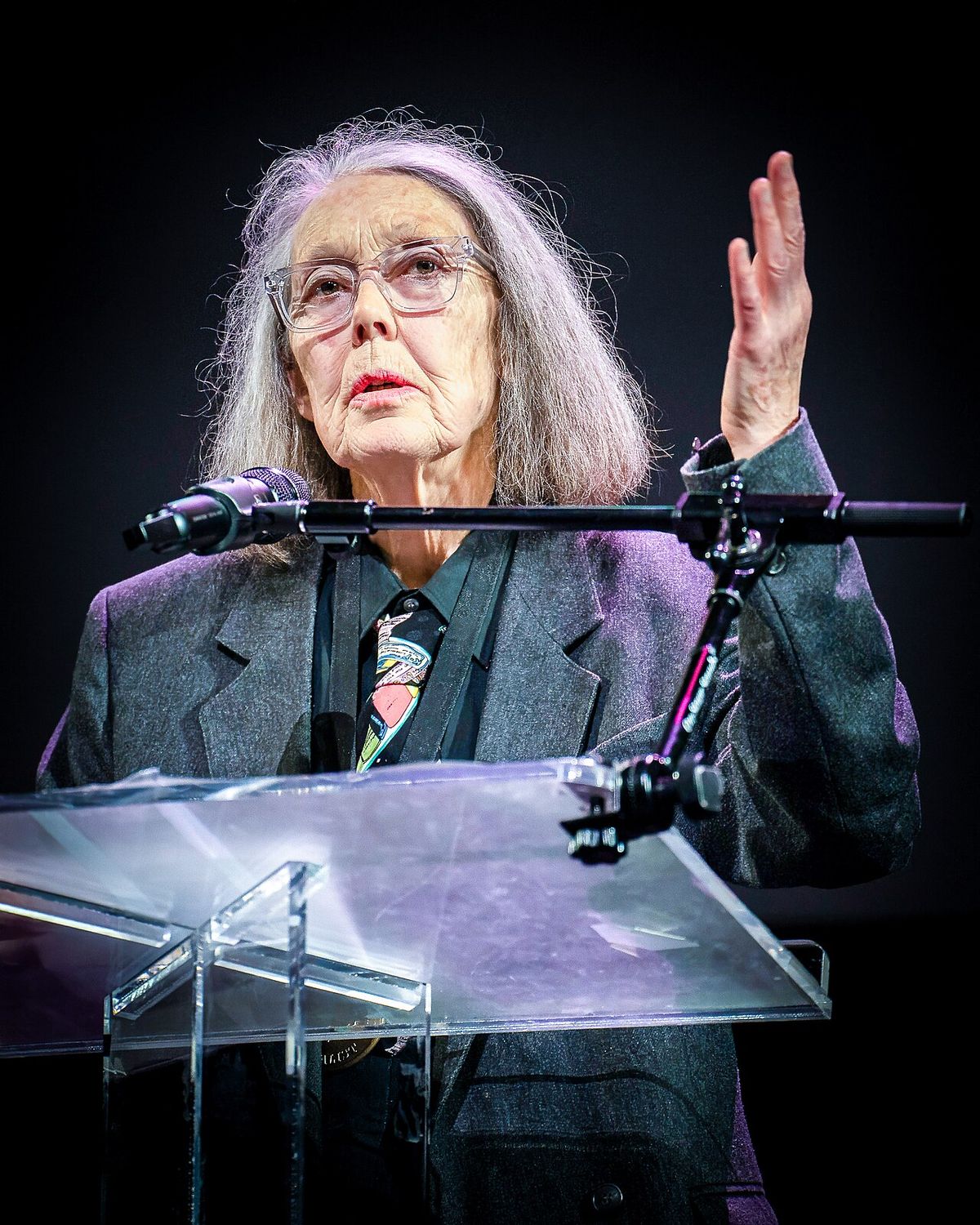
Lucy Maud Montgomery
Lucy Maud Montgomery, published as L. M. Montgomery, was a Canadian author best known for her 1908 novel Anne of Green Gables. She published 20 novels and more than a thousand short stories and poems over her career, establishing an international following for her work. Most of her novels were set on Prince Edward Island, locations which became literary landmarks and popular tourist sites. Her work, diaries, and letters continue to be studied by scholars and readers worldwide, cementing her status as a foundational figure in Canadian literature.
Early Life and Loss in Cavendish
Lucy Maud Montgomery was born on November 30, 1874, in New London, Prince Edward Island, to Hugh John Montgomery and Clara Woolner Montgomery. Her mother died of tuberculosis when Maud was 21 months old, a loss that defined her childhood. Her grief stricken father placed her in the custody of her strict maternal grandparents, Alexander Marquis Macneill and Lucy Woolner Macneill, in Cavendish. When Montgomery was seven, her father moved to Prince Albert, North West Territories, leaving her to be raised by her grandparents. Her early life in Cavendish was profoundly lonely, leading her to create elaborate imaginary friends named Katie Maurice and Lucy Gray who lived in a 'fairy room' behind the drawing room bookcase. She once asked her aunt where her dead mother was during a church service, and her aunt pointed upwards. Montgomery saw a trap door in the ceiling and wondered why the minister did not get a ladder to retrieve her mother, a poignant childhood misunderstanding. This solitude fostered a rich inner world she later credited for developing her creativity.
Education, First Publications, and 'The Flash'
After completing her education in Cavendish, Montgomery spent an unhappy year in 1890 in Prince Albert with her father and stepmother, Mary Ann McRae. It was there her first published work appeared, a poem titled 'On Cape LeForce' in the Charlottetown paper The Daily Patriot. Before returning to Prince Edward Island in 1891, she had another article published describing a visit to a First Nations camp on the Great Plains, noting the Blackfeet and Plains Cree she saw were 'much more handsome and attractive' than those she had seen in the Maritimes. In 1893, she attended Prince of Wales College in Charlottetown, completing a two year teaching license program in one year. She later studied literature at Dalhousie University in Halifax in 1895 and 1896. During solitary walks on Prince Edward Island, Montgomery began experiencing profound spiritual moments she called 'the flash'. These were moments of tranquility and clarity where she felt emotional ecstasy and awareness of a higher spiritual power in nature. She later wrote in her journal of being 'very near to a kingdom of ideal beauty' separated only by a thin veil. These experiences became the basis for Anne Shirley's and Emily Byrd Starr's deep communion with nature in her novels.
Teaching Career and Complex Romantic Entanglements
Upon leaving Dalhousie, Montgomery worked as a teacher in various Prince Edward Island schools, a job she disliked but which provided time to write. From 1897 to 1907, she published over 100 short stories in magazines and newspapers. Her personal life during these years was marked by a series of romantic relationships. She had an early, humorous friendship with Nate Lockhart that ended when she refused his marriage proposal. She then refused proposals from her teacher, John A. Mustard, whose conversations on predestination bored her, and from Will Pritchard, whom she considered merely a good friend. In 1897, she accepted a proposal from Edwin Simpson, a student, out of a desire for 'love and protection' but quickly came to find him intolerably self centred. While boarding with a family in Lower Bedeque, she began a passionate affair with Herman Leard, who was himself engaged to another woman. In her diary, she described Leard's kiss as sending 'flame through every fibre of my being' and confessed a 'wild, passionate, unreasoning love' for him. Despite her strict Presbyterian upbringing which condemned premarital sex, she often invited Leard into her bedroom for kissing and 'preliminary lovemaking'. She ultimately broke off the relationship due to family objections that Leard was not 'good enough'. She also ended her engagement to Simpson in 1898. Leard died of influenza in 1899, leaving Montgomery devastated.
Caretaking and the Creation of Anne of Green Gables
In 1898, Montgomery returned to Cavendish to live with and care for her widowed grandmother, a duty that lasted until the older woman's death in March 1911. For a nine month period between 1901 and 1902, she worked in Halifax as a substitute proofreader for the Morning Chronicle and The Daily Echo, which inspired her to write her first books. During her years of caretaking, she wrote Anne of Green Gables, which was published in June 1908. The novel was an immediate sensation, going through six printings by November 1909. The Canadian press celebrated her Prince Edward Island roots, portraying the Island as a charming, old fashioned part of Canada. American press coverage was more condescending, suggesting such a book was only possible in a rustic country like Canada. A 1911 Boston newspaper article described her as a 'modest young school teacher' surprised by her own success, an image that contrasted with Montgomery's own professional ambition. She wrote frankly to a friend, 'I am frankly in literature to make a living out of it.' Despite telling fans in a 1910 letter that she felt the 'freshness has gone out of the Anne idea', public demand led her to write numerous sequels, beginning with Anne of Avonlea in 1909.
Marriage to Ewen Macdonald and Life in Leaskdale
Shortly after her grandmother's death in 1911, Montgomery married Presbyterian minister Ewen Macdonald. The couple honeymooned in England and Scotland. Montgomery was eager to see the Scottish 'Old Country' of castles and glens, her ancestral homeland, while Macdonald, whose parents had been evicted in the Highland Clearances, had no such desire. In England, she visited literary sites associated with William Wordsworth, William Shakespeare, and the Brontë family. They moved to Ontario where Macdonald was minister of St. Paul's Presbyterian Church in Leaskdale. Montgomery wrote her next 11 books from the Leaskdale manse, which she noted lacked a bathroom or indoor toilet. Her husband was not intellectually inclined nor interested in literature. Montgomery wrote in her diary she hoped to find a friend in him, not a lover. They had three sons: Chester in 1912, a second son stillborn in 1914, and Stuart in 1915. She believed it was her duty to make the marriage work, though she once quipped to a reporter, 'Those women whom God wanted to destroy He would make into the wives of ministers.' Her prolific writing during this period is seen as an escape from domestic hardships. In 1911, she published The Story Girl, drawing on her Scottish Canadian heritage, with a character, Peter Craig, closely resembling her lost love Herman Leard.
World War I Advocacy and Wartime Writings
During the First World War, Montgomery was a fervent supporter of the Allied war effort, horrified by reports of German atrocities in Belgium in 1914. She saw the war as a crusade to save civilization and regularly wrote articles urging Canadian men to volunteer for the Canadian Expeditionary Force and for civilians to buy victory bonds. In her diary on September 12, 1914, she expressed agony over newspaper stories of the mutilation of children, writing, 'They harrow my soul. I walk the floor in my agony over them.' She connected these horrors directly to her own motherhood, writing, 'If it were Chester!' Her wartime advocacy was part of her broader engagement with public life through her writing. Despite the conflict, she maintained her prolific output. In 1915, she published Anne of the Island, continuing the beloved series. Her work during this period provided escapism for readers but also reflected her own need for creative solace amidst global and personal turmoil, including the stillbirth of her second son in 1914.
Writing Philosophy, Nature, and Professional Persistence
Montgomery's approach to writing was defined by disciplined habit and a deep connection to nature. She advised aspiring writers to 'write something every day, even if you burn it up after writing it', calling it the only way to 'climb that Alpine path'. This philosophy was born from her own experience of 'persistent rejection and publisher interference' before achieving success. Nature was not merely a backdrop but a vital source of inspiration and solace. Her decade caring for her grandmother in rural Cavendish honed her techniques of 'habitual, first hand, close up observations of the natural world' with few modern buffers between indoors and outdoors. She wrote of her 'deep love of nature' for 'a little fern growing in the woods, a shallow sheet of June bells under the firs'. This connection sustained her through personal misfortunes and informed the core of characters like Anne and Emily. Her journals and letters reveal a writer who saw her craft as a 'sharing endeavour', offering guidance born of hard won experience.
Later Life, Challenges, and Literary Impact
Montgomery continued to write and publish throughout her life, producing 20 novels in total along with countless short stories and poems. Her later years were marked by personal struggles, including battles with depression and the sexism prevalent in her era. She spent almost a decade in relative isolation in Cavendish, which deepened her literary voice. Her writings have been described as full of 'secret paths into the natural world'. The L. M. Montgomery Institute at the University of Prince Edward Island is now the centre for scholarly inquiry into her life, works, and cultural influence. Her homes, particularly the Green Gables farm in Cavendish and the Leaskdale Manse in Ontario, are preserved as National Historic Sites, attracting visitors from around the world. Montgomery's work remains a central and widely read part of Canadian literature, her characters and settings permanently connecting Prince Edward Island to the global literary imagination.
Questions about Lucy Maud Montgomery
What is Lucy Maud Montgomery best known for?
Lucy Maud Montgomery is best known for her 1908 novel Anne of Green Gables, which introduced the character Anne Shirley. The book was an immediate commercial and critical success, going through six printings in its first year and a half. This novel established Montgomery's career, and she wrote many sequels, including Anne of Avonlea and Anne of the Island. Over her lifetime, she published 20 novels and more than a thousand short stories and poems, though the Anne series remains her most famous work.
Where was Lucy Maud Montgomery from and how did it influence her writing?
Montgomery was born in New London and raised by her grandparents in Cavendish, Prince Edward Island. The Island is the setting for most of her novels, including the Anne series and The Story Girl. Locations like Green Gables farm became central to the stories and are now part of Prince Edward Island National Park. Her deep connection to the Island's landscape was spiritual as well as artistic, as she experienced moments of profound clarity called 'the flash' during solitary walks there. This intimate knowledge shaped her vivid, loving descriptions of the natural world in all her books.
Did Lucy Maud Montgomery have a happy marriage?
Montgomery married Presbyterian minister Ewen Macdonald in 1911. The marriage was dutiful rather than passionately romantic. Montgomery wrote in her diary she hoped to find a friend in him, and she once joked about the difficulties of being a minister's wife. Her husband was not especially interested in literature or intellectual pursuits. The couple had three sons, one of whom was stillborn. Scholars note that Montgomery's immense productivity during her years in the Leaskdale manse was partly a means of escaping the hardships and limitations of her domestic life.
Who was Herman Leard and what was his significance?
Herman Leard was a member of a family Montgomery boarded with while teaching in Lower Bedeque. She had a brief but intensely passionate affair with him in 1898, while she was technically engaged to another man, Edwin Simpson. In her private diaries, she described Leard as the great love of her life, writing that his kisses 'sent flame through every fibre of my being'. She broke off the relationship due to family objections that he was not 'good enough' for her. His death from influenza in 1899 devastated her. She later modelled the character of Peter Craig in her 1911 novel The Story Girl on Leard.
How is Lucy Maud Montgomery's work preserved and studied today?
Montgomery's work is preserved through continued readership, academic study, and historic sites. The L. M. Montgomery Institute at the University of Prince Edward Island coordinates scholarly research into her life and works. Key locations from her life, such as the Green Gables farm in Cavendish and the Leaskdale Manse in Ontario where she wrote 11 books, are designated National Historic Sites. Her vast body of work, including her novels, short stories, poetry, and extensive personal journals, remains in print and is studied globally.
What was Montgomery's role during World War I?
Montgomery was an intense supporter of the Canadian war effort during World War I. She saw the war as a crusade to save civilization and was horrified by reports of the Rape of Belgium in 1914. She regularly wrote articles urging men to volunteer for the Canadian Expeditionary Force and for people on the home front to buy victory bonds. Her diary entries from September 12, 1914, reveal her profound personal anguish over wartime reports, particularly stories of atrocities against children. She wrote that these accounts harrowed her soul and caused her to cry herself to sleep, illustrating her deep emotional investment in the conflict and its human cost.
Sources: Wikipedia and current public reporting, checked by the Yadude Books desk. Last updated 2026-10-22.