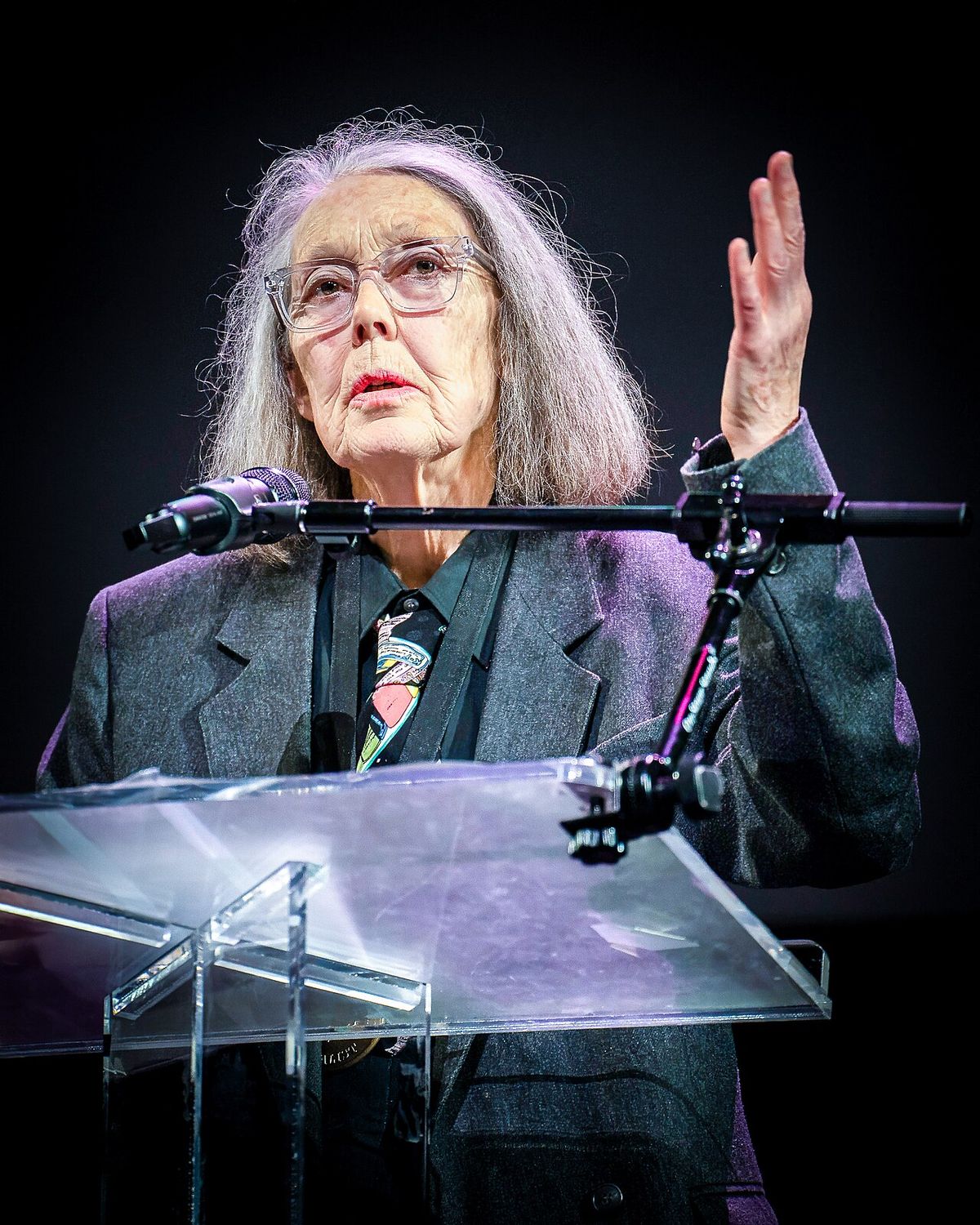
Margaret MacMillan
Margaret MacMillan is a preeminent Canadian historian and emeritus professor of international history at the University of Oxford, widely recognized for her authoritative works on the origins and consequences of war. Her acclaimed book, Paris 1919: Six Months That Changed the World, won Canada's Governor General's Literary Award in 2003 and the prestigious Samuel Johnson Prize in the United Kingdom. MacMillan's career has spanned prestigious academic leadership roles, including serving as Provost of Trinity College at the University of Toronto and as Warden of St Antony's College, Oxford. Her expertise on international relations and 20th-century history has made her a leading public intellectual in Canada and abroad, notably as the 2018 BBC Reith Lecturer. MacMillan's work continues to shape public understanding of how historical forces influence contemporary global politics.
Early Life, Family and Education
Margaret Olwen MacMillan was born on 23 December 1943 to Dr. Robert Laidlaw MacMillan and Eiluned Carey Evans. Her family background is connected to significant historical and political figures, most notably through her maternal lineage. Her maternal grandfather was Major Sir Thomas J. Carey Evans of the Indian Medical Service, who served as personal physician to Rufus Isaacs, 1st Marquess of Reading, during the latter's term as Viceroy of India from 1921 to 1926. More prominently, her maternal grandmother, Lady Olwen Carey Evans, was a daughter of David Lloyd George, the British Prime Minister who led the United Kingdom during the latter part of the First World War and was a central figure at the 1919 Paris Peace Conference. This familial link to a key architect of the post-war settlement has been noted as an influence on MacMillan's later scholarly focus. She is also the aunt of the British popular historian and television presenter Dan Snow. MacMillan pursued her undergraduate studies in history at the University of Toronto, where she was a student at Trinity College, earning a Bachelor of Arts degree. She then continued her education at the University of Oxford, where she obtained a Bachelor of Philosophy in politics from St Hilda's College. Her doctoral research, completed at St Antony's College, Oxford, was titled "Social and political attitudes of British expatriates in India, 1880 to 1920" and was submitted in 1974.
Academic Career and Leadership Roles
During her tenure at Ryerson, she held the position of department chair for a period of five years, overseeing the history department's operations and curriculum. In 2002, she returned to her alma mater, the University of Toronto, to become the Provost of Trinity College, a role she held until 2007. Her international academic stature was cemented with her appointment as Warden of St Antony's College, Oxford, and Professor of International History at the University of Oxford, positions she occupied from 2007 to 2017. Following her tenure as Warden, she was named an honorary fellow at Lady Margaret Hall, Oxford, in December 2017. Throughout her career, MacMillan has been deeply involved in scholarly publishing and institutional governance in both Canada and the United Kingdom. She co-edited the International Journal, published by the Canadian Institute of International Affairs, from 1995 to 2003 and remains on its editorial board. She previously served as a member of the National Board of Directors of the CIIA, now the Canadian International Council. Her service extends to numerous other boards, including those of Historica, the Atlantic Council of Canada, the Ontario Heritage Foundation, and the Churchill Society for the Advancement of Parliamentary Democracy in Canada. In the United Kingdom, she is a Member of the Board of Trustees of the Imperial War Museum. She also served as a Senior Fellow of Massey College at the University of Toronto until stepping down in 2020, and she sits on the European Advisory Board of Princeton University Press.
Major Published Works and Critical Reception
Margaret MacMillan has authored and co-authored numerous influential books that bridge academic scholarship and public history, with a focus on international relations and the British Empire. Her early work, Women of the Raj (1988), later reissued as Women of the Raj: The Mothers, Wives, and Daughters of the British Empire in India (2007), examined the lives of British women in colonial India. She has also co-edited volumes on Canadian foreign policy, such as Canada and NATO: Uneasy Past, Uncertain Future (1990) with David Sorenson and Parties Long Estranged: Canada and Australia in the Twentieth Century (2003) with Francine McKenzie. Her 1996 textbook The Uneasy Century: International Relations 1900 to 1990 summarized the field for students. Her breakthrough to wide public acclaim came with Peacemakers: The Paris Peace Conference of 1919 and Its Attempt to End War, published by John Murray in 2001. The book, also released in North America as Paris 1919: Six Months That Changed the World, is a detailed narrative history of the conference that redrew the world map after the First World War. It was met with critical and commercial success, winning multiple major literary prizes. In 2004, she co-authored Canada's House: Rideau Hall and the Invention of a Canadian Home with Marjorie Harris and Anne L. Desjardins. In 2008, she published The Uses and Abuses of History (also titled Dangerous Games ), a treatise on the public responsibilities of historians. She also authored a biography of Stephen Leacock in 2009. Her 2013 work, The War That Ended Peace: The Road to 1914, is a comprehensive study of the complex causes of the First World War, released in separate editions for the UK, Canada, and the US. For the 2015 CBC Massey Lectures, she published History's People: Personalities and the Past . Her most recent major work is War: How Conflict Shaped Us, published in 2020, which offers a broad reflection on the role of war in human society.
Margaret MacMillan's bibliography includes the key title Women of the Raj, published in 1988. She co-edited Canada and NATO: Uneasy Past, Uncertain Future in 1990 and Parties Long Estranged: Canada and Australia in the Twentieth Century in 2003. Her most successful work is Peacemakers: The Paris Peace Conference of 1919 and Its Attempt to End War, also published as Paris 1919: Six Months That Changed the World. Other notable books include Nixon in China: The Week That Changed the World from 2006, The War That Ended Peace: The Road to 1914 from 2013, and War: How conflict shaped us from 2020.
- Women of the Raj (1988)
- Peacemakers / Paris 1919: Six Months That Changed the World (2001)
- Nixon in China: The Week That Changed the World (2006)
- The Uses and Abuses of History (2008)
- The War That Ended Peace: The Road to 1914 (2013)
- History's People: Personalities and the Past (2015)
- War: How Conflict Shaped Us (2020)
Awards, Honours and Public Recognition
Margaret MacMillan's scholarly work has been recognized with some of the most prestigious awards in historical writing and non-fiction. Her book Paris 1919 achieved a rare sweep of major literary prizes, winning the Duff Cooper Prize for outstanding literary work in history, biography or politics, the Hessell-Tiltman Prize for History, the Samuel Johnson Prize for the best work of non-fiction published in the United Kingdom, and the 2003 Governor General's Literary Award for non-fiction in Canada. In the United Kingdom, she was appointed a Companion of Honour in the 2018 New Year Honours list on the advice of Prime Minister Theresa May, and in 2022, King Charles III appointed her a Member of the Order of Merit. She is also a Fellow of the Royal Society of Literature, an Honorary Fellow of St Antony's College, Oxford, and a member of the Learned Society of Wales. In Canada, she has received multiple honorary doctorates from institutions including the University of King's College, the Royal Military College of Canada, Ryerson University, Memorial University of Newfoundland and Labrador, and Huron College at the University of Western Ontario. She received an honorary degree from the American University of Paris in May 2019. She served as the 2018 BBC Reith Lecturer, delivering a series of five lectures on the theme of war titled The Mark of Cain in cities including London, York, Beirut, Belfast, and Ottawa. In May 2023, she represented the Order of the Companions of Honour at the coronation of King Charles III and Queen Camilla in London. She was the Young Memorial Visitor at the Royal Military College of Canada in 2004, delivering the J.D. Young Memorial Lecture on 24 November of that year.
Public Commentary, Media and Political Stances
Beyond her academic writing, Margaret MacMillan is a frequent commentator on international affairs and history in the public sphere, often focusing on events surrounding the First World War and contemporary parallels. She regularly contributes op-eds to publications like The New York Times and gives interviews to global media outlets. In 2014, she undertook a retrospective trip to Sarajevo on the centenary of the assassination of Archduke Franz Ferdinand, where she saw similarities between the geopolitical tensions of 1914 and those of her own time. In that interview, she remarked on the annexation of Crimea by the Russian Federation, her perception that Vladimir Putin deplored Russia's place in contemporary politics, and mentioned conflicts in Iraq and the contention between China and Japan over the Senkaku Islands. In a 2013 essay for the Brookings Institution, abridged by The New York Times, she argued that globalization can have the paradoxical effect of fostering intense localism and nativism, while also enabling the spread of radical ideologies. In that essay, she urged Western leaders to build a stable international order based on a moment of real danger to unite populations. On the tenth anniversary of the 11 September 2001 attacks, she authored an essay dismissing the long-term power of Osama bin Laden and stressing the secular nature of the Arab Spring revolutions that deposed leaders like Hosni Mubarak and Zine El Abidine Ben Ali. MacMillan has also engaged in public debates on political issues, such as signing a letter to The Guardian in August 2014 opposing Scottish independence ahead of that year's referendum. Her media work includes numerous television and radio appearances, lectures at institutions like the Bill Graham Centre for Contemporary International History, and the aforementioned Reith Lectures.
Research Focus and Academic Impact
The impact of Margaret MacMillan's work is evident in both academic circles and public discourse on history, driven by a consistent research agenda. Her research has focused on two primary areas: the British Empire in the late 19th and early 20th centuries and on international relations throughout the 20th century. This focus is clear from her doctoral work on British expatriates in India to her major books on the Paris Peace Conference and the origins of the First World War. Over the course of her career, she has taught a wide range of courses on the history of international relations, influencing students at Ryerson University, the University of Toronto, and the University of Oxford. Her books are notable for their narrative drive and accessibility, which have successfully brought complex diplomatic history to a broad readership without sacrificing scholarly rigour. This approach has made seminal events like the 1919 Paris Peace Conference and the road to the First World War comprehensible and engaging for countless readers. Her later works, such as The Uses and Abuses of History and War: How Conflict Shaped Us, demonstrate a mature reflection on the historian's craft and the enduring role of conflict in human development. Through her board memberships, editorial work, and frequent public lectures, MacMillan continues to advocate for the informed and responsible use of history in understanding modern global challenges. Her role in co-editing the International Journal for nearly a decade helped shape scholarly debate on Canadian international affairs.
Selected Bibliography and Publication Details
Margaret MacMillan's body of work includes single-author monographs, co-authored books, edited volumes, and contributions to the Massey Lectures. Her publications demonstrate a progression from specialized academic studies to broader works for a general audience, all while maintaining a core focus on international history. Her early work established her expertise in imperial and Canadian history, while her later books tackled global diplomatic events of the twentieth century. The following table lists her major single-author or co-authored books, showing the scope and evolution of her published work. This table provides specific publication years and notes on different editions, illustrating the international reach of her writing.
| Title | Year | Publisher/Notes |
|---|---|---|
| Women of the Raj | 1988 | Thames and Hudson. Reissued 2007 by Random House |
| Canada and NATO: Uneasy Past, Uncertain Future (co-editor) | 1990 | Waterloo |
| The Uneasy Century: International Relations 1900 to 1990 | 1996 | Kendall/Hunt |
| Peacemakers / Paris 1919: Six Months That Changed the World | 2001/2002/2003 | John Murray (UK), Random House (US) |
| Parties Long Estranged (co-author) | 2003 | University of British Columbia Press |
| Canada's House: Rideau Hall and the Invention of a Canadian Home (co-author) | 2004 | Knopf Canada |
| Nixon in China / Nixon and Mao | 2006/2008 | Viking Canada (CA), Random House (US) |
| The Uses and Abuses of History / Dangerous Games | 2008/2009/2010 | Penguin Canada, Profile Books, Random House |
| Stephen Leacock | 2009 | Penguin Group |
| The War That Ended Peace: The Road to 1914 | 2013 | Profile Books (UK), Penguin Canada, Random House (US) |
| History's People: Personalities and the Past | 2015 | House of Anansi Press (CBC Massey Lectures) |
| War: How Conflict Shaped Us | 2020 | Random House (US) |
Questions about Margaret MacMillan
What is Margaret MacMillan best known for?
Margaret MacMillan is best known as a Canadian historian and an expert on the history of international relations. She is renowned for her award-winning book Peacemakers: The Paris Peace Conference of 1919 and Its Attempt to End War, also published as Paris 1919: Six Months That Changed the World. The book won the Duff Cooper Prize, the Hessell-Tiltman Prize for History, the Samuel Johnson Prize, and the 2003 Governor General's Literary Award in Canada. She is also known for being the 2018 Reith lecturer and a former professor at the University of Oxford.
Where did Margaret MacMillan teach?
Margaret MacMillan taught history at Ryerson University (now Toronto Metropolitan University) in Toronto from 1975 to 2002, serving as department chair for five years. She was Provost of Trinity College at the University of Toronto from 2002 to 2007. From 2007 to 2017, she was a Professor of International History at the University of Oxford and served as the Warden of St Antony's College, Oxford. She is now an emeritus professor at Oxford.
What is Margaret MacMillan's connection to David Lloyd George?
Margaret MacMillan is the great granddaughter of David Lloyd George, the former Prime Minister of the United Kingdom. This connection comes through her maternal grandmother, Lady Olwen Carey Evans, who was a daughter of Lloyd George and his first wife, Dame Margaret Lloyd George. Her maternal grandfather was Major Sir Thomas J. Carey Evans of the Indian Medical Service. This family history provides a direct personal link to a major figure in early 20th century British and world politics, which has undoubtedly influenced her historical perspectives and interests.
What awards has Margaret MacMillan won?
Margaret MacMillan has won several prestigious awards for her historical work. Her most celebrated book, Peacemakers, which is also published as Paris 1919: Six Months That Changed the World, won the Duff Cooper Prize, the Hessell Tiltman Prize for History, the Samuel Johnson Prize, and the 2003 Governor General's Literary Award in Canada. In recognition of her broader contributions, she was appointed a Member of the Order of the Companions of Honour in the 2018 New Year Honours and was made a member of the Order of Merit by King Charles III in 2022. She also holds multiple honorary degrees from institutions including the University of King's College and the Royal Military College of Canada.
What were the 2018 BBC Reith Lectures about?
The 2018 BBC Reith Lectures delivered by Margaret MacMillan were a series of five lectures on the theme of war, collectively titled The Mark of Cain. As the Reith lecturer that year, she presented these talks across the globe, with the tour including locations in London, York, Beirut, Belfast, and Ottawa. This international lecture series reflects her expertise as a historian of international relations and her focus on how conflict has shaped human societies. The choice of cities with diverse historical experiences of war showed the global relevance of her scholarly topic.
What is Margaret MacMillan's most recent book?
Margaret MacMillan's most recent book is War: How conflict shaped us, published in 2020. This work continues her long standing scholarly examination of war and international relations, themes central to her career. Her research has consistently focused on the British Empire in the late 19th and early 20th centuries and on international relations in the 20th century. Prior to this 2020 publication, she authored other significant works such as The War That Ended Peace in 2013 and History's People in 2015, which was based on the CBC Massey Lectures.
Sources and further reading
- Margaret MacMillan (Wikipedia)
- Margaret MacMillan (margaretmacmillan.com)
- Margaret MacMillan: books, biography, latest update (amazon.ca)
- Margaret MacMillan (penguinrandomhouse.com)
- Margaret MacMillan (thecanadianencyclopedia.ca)
Checked by the Yadude Books desk. Last updated 2026-10-31.