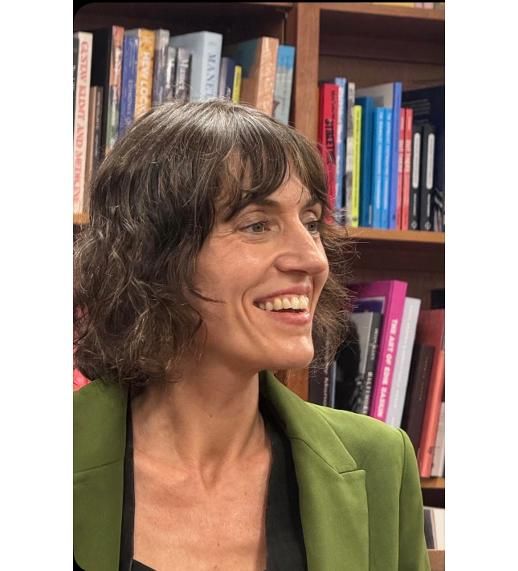
Naomi Klein
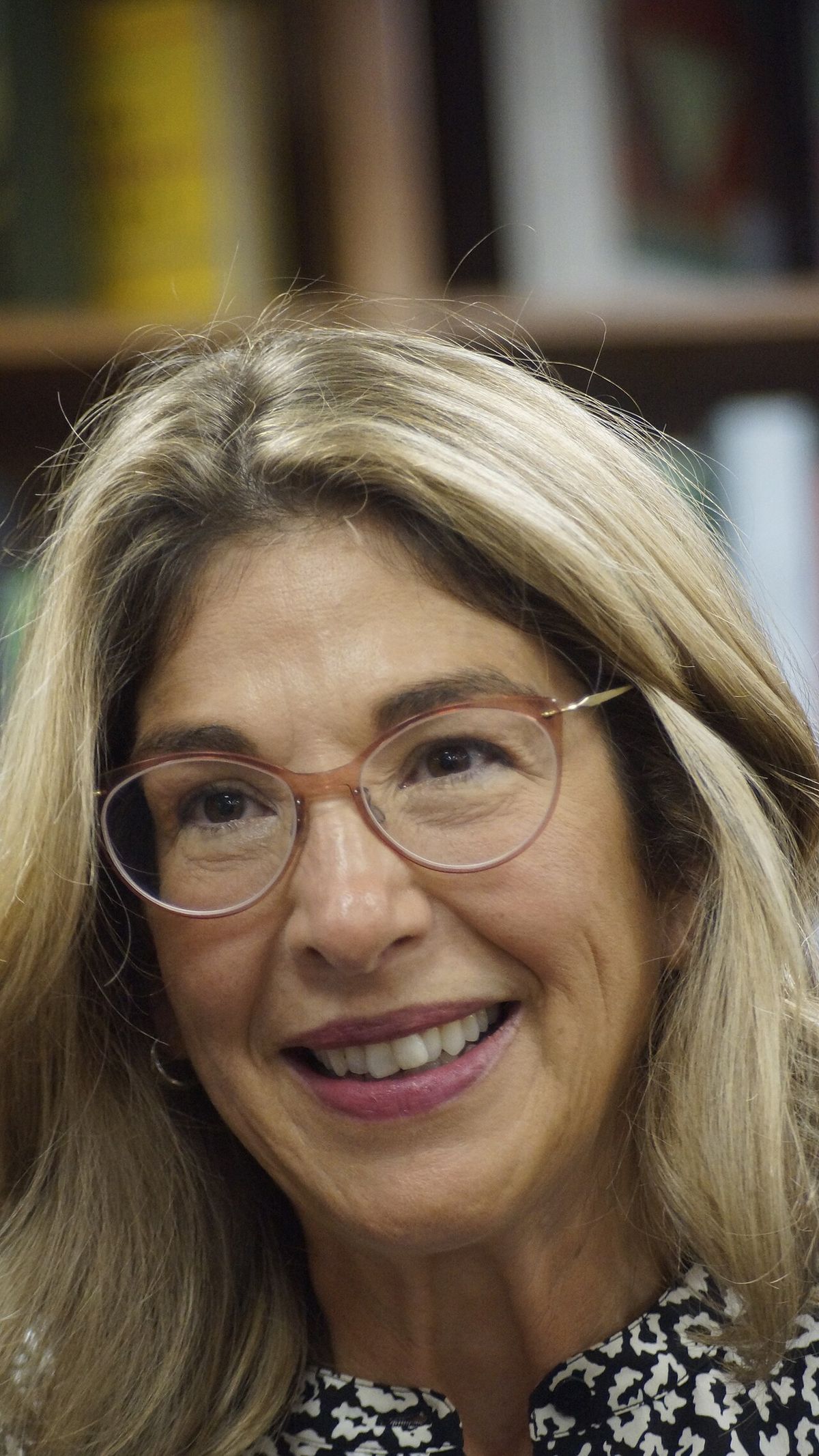
Naomi Klein is a Canadian author, social activist, and filmmaker whose influential critiques of corporate globalization, capitalism, and climate policy have made her a leading figure on the international left. Born in Montreal in 1970, she first gained global recognition with her 1999 book No Logo, a seminal text of the anti-globalization movement. Her subsequent works, including The Shock Doctrine and This Changes Everything, have solidified her reputation as a powerful voice on economic justice, disaster capitalism, and the climate crisis. For Canadians, Klein represents a prominent intellectual export whose ideas on climate justice, labour, and corporate power resonate deeply within the country's political and environmental discourse.
Early Life and Formative Influences
Naomi Klein was born in Montreal, Quebec, into a Jewish family with a strong tradition of peace activism and left-wing politics. Her parents, Bonnie Sherr Klein and Michael Klein, were American war resisters who emigrated to Canada in 1967 to oppose the Vietnam War. Her mother is a documentary filmmaker known for the anti-pornography film Not a Love Story, while her father was a physician and member of Physicians for Social Responsibility, later appointed to the Order of Canada in 2016. Her paternal grandparents were members of the Communist Party USA before World War II but began to turn against the Soviet Union after the Molotov-Ribbentrop Pact in 1939. Her grandfather, an animator at Disney, was fired after the 1941 strike and had to work in a shipyard, and by 1956 the family had abandoned Communism. Klein's brother, Seth Klein, is an author and former director of the British Columbia office of the Canadian Centre for Policy Alternatives, and is the domestic partner of politician Christine Boyle.
As a teenager, Klein consciously rejected her family's political engagement, immersing herself instead in consumer culture and an obsession with designer labels found in shopping malls. She found it oppressive to have a public feminist mother and embraced what she called full-on consumerism. She later attributed a major shift in her worldview to two specific events. The first occurred when she was 17, as her mother suffered a severe stroke, requiring the family to provide intensive care and forcing Klein to postpone her university plans for a year, which she said prevented her from being a brat.
Klein began her writing career at the University of Toronto, contributing to the student newspaper The Varsity, where she eventually served as editor-in-chief. After her third year, she dropped out to take a job at The Globe and Mail, followed by an editorship at This Magazine. In 1995, she returned to the University of Toronto with the intention of finishing her degree but left once more to pursue a journalism internship before acquiring the final credits required for graduation. This early career in journalism provided the foundation for her later work as an author and critic of corporate power.
Major Works and Publications
Naomi Klein's body of work constitutes a sustained critique of neoliberal capitalism, corporate branding, and climate inaction. Her books, including No Logo, The Shock Doctrine, and This Changes Everything, have been translated into dozens of languages, with The Shock Doctrine alone translated into 28 languages. These works have become central texts for activist movements worldwide, such as the anti-globalization movement. Her publications consistently achieve bestseller status, as seen with No Logo and The Shock Doctrine becoming international bestsellers. They have also won major literary prizes, including the Hilary Weston Writers' Trust Prize for Nonfiction and the Warwick Prize for Writing.
No Logo (1999) launched Klein onto the international stage, becoming a manifesto for the burgeoning anti-globalization movement. The book attacks brand-oriented consumer culture and documents the exploitation of workers in the world's poorest countries by large corporations in pursuit of greater profits. It specifically criticized companies like Nike so severely that the corporation issued a point-by-point public response. No Logo sold over one million copies in more than 28 languages, establishing Klein as a leading critical voice. Her follow-up, Fences and Windows (2002), was a collection of articles and speeches written on behalf of the anti-globalization movement, with all proceeds directed to activist organizations through The Fences and Windows Fund.
The Shock Doctrine: The Rise of Disaster Capitalism (2007) represents a key evolution in her analysis. The book argues that proponents of radical free-market policies, inspired by economist Milton Friedman and the Chicago school of economics, systematically exploit moments of collective shock, such as wars, natural disasters, or economic crises, to push through unpopular privatization and deregulation. Klein traces this pattern from Chile under Pinochet to Russia under Yeltsin and post-invasion Iraq, where she argues the Coalition Provisional Authority rushed through privatization while the country was in shock. The book won the inaugural Warwick Prize for Writing in 2009, which carried a cash award of £50,000, and was adapted into both a six-minute short film by Alfonso and Jonás Cuarón, viewed over one million times on YouTube, and a feature-length documentary by Michael Winterbottom that premiered in 2009.
This Changes Everything: Capitalism vs. the Climate (2014) directly confronts the climate crisis, arguing that the hegemony of neoliberal market fundamentalism is the primary barrier to meaningful environmental action. The book contends that addressing climate change requires a fundamental challenge to the current economic system. It won the 2014 Hilary Weston Writers' Trust Prize for Nonfiction and was shortlisted for the 2015 Shaughnessy Cohen Prize for Political Writing. A World Bank manager, Benoit Blarel, commented on the book's premise, acknowledging that the necessary write-off of fossil fuels would have a huge global impact.
Klein's later works continue this engagement with urgent political struggles. No Is Not Enough (2017) analyzes the rise of Donald Trump and argues for radical change and bold policies to provide an alternative to his vision, taking particular issue with the concept of philanthrocapitalism. The Battle for Paradise: Puerto Rico Takes on the Disaster Capitalists (2018) applies the shock doctrine framework to Puerto Rico after Hurricane Maria, criticizing recovery efforts and Governor Ricardo Rosselló's comment that the disaster created a blank canvas for business. On Fire: The (Burning) Case for a Green New Deal (2019) is a collection of essays championing the Green New Deal and discusses the 2020 U.S. election, stating the stakes were unbearably high. Her 2023 book, Doppelganger: A Trip into the Mirror World, is a memoir and social critique that explores political polarization through the lens of being chronically mistaken for writer Naomi Wolf. It debuted at number 8 on The New York Times hardcover nonfiction best seller list and won the inaugural Women's Prize for Non-Fiction in 2024. Her forthcoming work, End Times Fascism, co-written with Astra Taylor and scheduled for publication in September 2026, expands her critique of right-wing authoritarianism and its intersection with existential threats like artificial intelligence, supernatural forces, political crises, or nuclear war.
Film and Activist Collaborations
Beyond her writing, Klein has been involved in significant documentary film projects and sustained activist work, often in collaboration with her husband, filmmaker and journalist Avi Lewis. Their 2004 documentary, The Take, examines Argentine workers who took over a closed auto parts plant and resumed production as a collective. The film was screened in activist communities globally, including its first African screening in the Kennedy Road shack settlement in Durban, South Africa, a centre of the Abahlali baseMjondolo movement. An article in Z Communications criticized the film for its portrayal of Argentine leader Juan Domingo Perón, arguing he was falsely portrayed as a social democrat. Klein's written work has also inspired other films, notably providing inspiration for the 2008 film War, Inc., and her 2004 Harper's Magazine article Baghdad Year Zero was one of its inspirations.
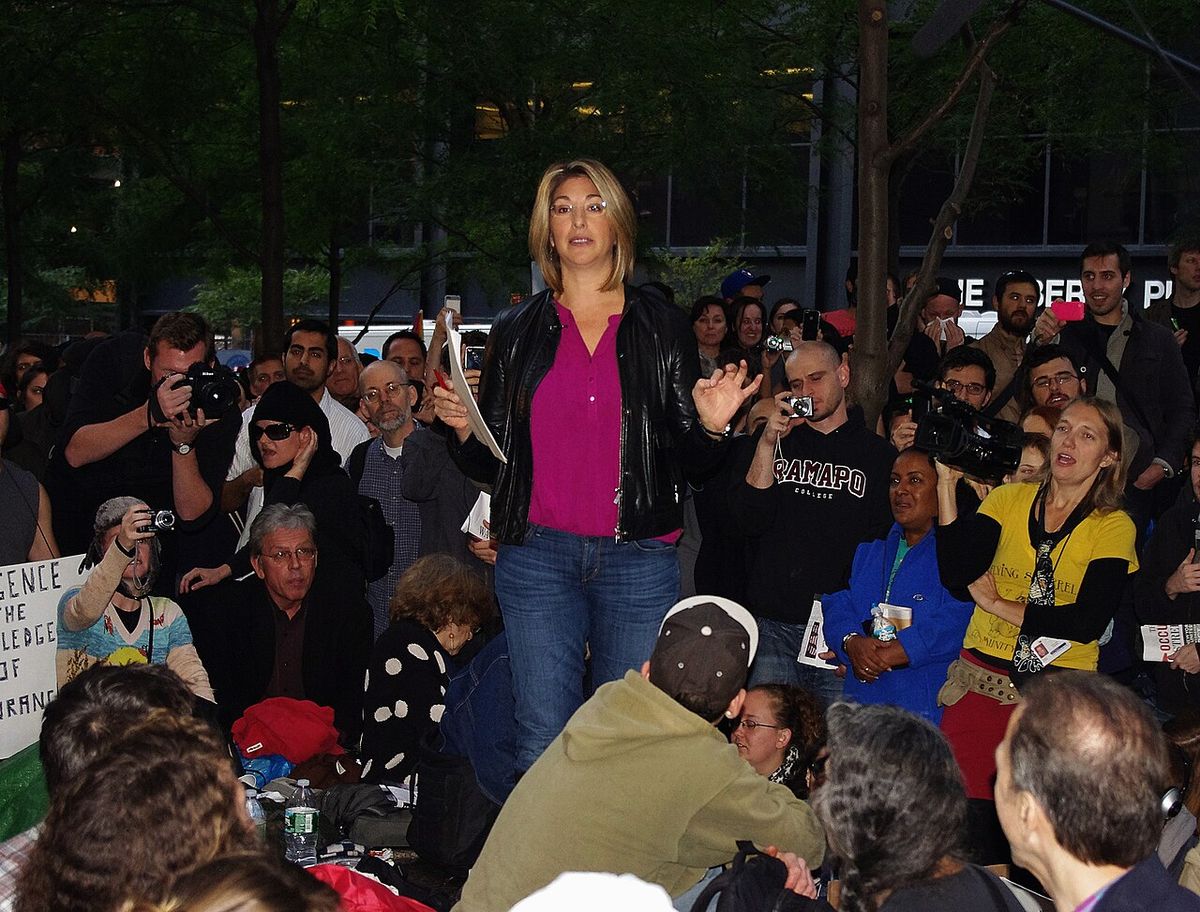
Klein's activism is deeply intertwined with her written analysis. She has been a longtime supporter of the Boycott, Divestment and Sanctions (BDS) campaign against Israel, advocating for it during a 2009 visit to Israel, the West Bank, and Gaza while promoting the Hebrew translation of The Shock Doctrine. In a Haaretz interview that year, she emphasized the importance of boycotting the normalization of Israel and the conflict, not Israelis. She was a keynote speaker at the first national conference of the Alliance of Concerned Jewish Canadians (now Independent Jewish Voices) in 2008 and a spokesperson for a 2009 protest against the Toronto International Film Festival's spotlight on Tel Aviv. Her remarks in Ramallah in 2009, including that some Jews think they get one get-away-with-genocide-free card, were criticized by a Jerusalem Post columnist as perpetuating negative stereotypes.
Her climate activism has been particularly prominent. She served on the board of directors for the group 350.org and, in 2021, took up the position of UBC Professor in Climate Justice at the University of British Columbia's Department of Geography. That same year, she became the co-director of the university's newly launched Centre for Climate Justice. This academic role formalizes her long-standing work connecting economic justice with environmental action. Her activism was recognized with the Sydney Peace Prize in 2016 specifically for her work on climate justice, and she has frequently appeared on global lists of influential thinkers, including the Gottlieb Duttweiler Institute's 2014 Thought Leaders ranking and Prospect magazine's world thinkers poll.

Political Views and Public Commentary
Klein's political commentary is characterized by a consistent critique of corporate power, neoliberalism, and imperialism. In that article, she described plans to allow foreigners to extract wealth from Iraq and the methods used to achieve those goals. In an August 2004 article for The Nation, Bring Najaf to New York, she argued that Muqtada Al Sadr's Mahdi Army represented the overwhelmingly mainstream sentiment in Iraq. She noted that his immediate demands were for direct elections and an end to foreign occupation, although she stated that if elected, Sadr would try to turn Iraq into a theocracy like Iran.
She has also expressed support for certain left-wing governments in Latin America, notably signing a 2004 petition titled We would vote for Hugo Chávez. In 2007, she described Venezuela under Chávez as a place where citizens had renewed faith in democracy and were sheltered from the worst economic shocks of global capitalism, building a zone of relative economic calm. In The Shock Doctrine, she portrayed Chávez's policies as an example of public control protecting poor people from globalization's harm. Reviewer Todd Gitlin, while praising the book's overall argument, described Klein as a romantic with unrealistic expectations for Venezuela's worker co-operatives. Critics like Mark Milke later lambasted her as a useful idiot for overlooking authoritarian media control and human rights abuses under Chávez, and journalist James Kirchick criticized her and other boosters for their silence during Venezuela's economic collapse.
Her analysis often focuses on the intersection of crises and ideology. In No Is Not Enough, she critiques the concept of philanthrocapitalism, the idea that wealthy individuals like Bill Gates or Richard Branson are best positioned to solve global problems, arguing it fosters a misplaced public faith in oligarchs that paved the way for a figure like Donald Trump. She writes that Trump's assertion he could fix America because he's rich is a vulgar echo of the idea that Bill Gates can fix Africa or that Branson and Bloomberg can solve climate change. Her work consistently advocates for grassroots, democratic movements and policy solutions, such as the Green New Deal, that challenge the concentration of wealth and power. The New Yorker once described her as the most visible and influential figure on the American left, comparing her to Howard Zinn and Noam Chomsky thirty years prior.
Awards and Recognition
Naomi Klein's work has been honoured with several major literary and peace prizes. She was awarded the Warwick Prize for Writing in 2009 for her book The Shock Doctrine. Klein won the Hilary Weston Writers' Trust Prize for Nonfiction in 2014 for her book This Changes Everything. In 2016, she was awarded the Sydney Peace Prize for her activism on climate justice. In 2024, her book Doppelganger won the inaugural Women's Prize for Non-Fiction. Klein has also frequently appeared on global lists of top influential thinkers, such as Prospect magazine's world thinkers 2014 poll.
- 2009: Awarded the inaugural Warwick Prize for Writing from the University of Warwick for The Shock Doctrine. The prize included a £50,000 cash award.
- 2014: Won the Hilary Weston Writers' Trust Prize for Nonfiction for This Changes Everything: Capitalism vs. the Climate.
- 2016: Received the Sydney Peace Prize for her activism on climate justice.
- 2024: Won the inaugural Women's Prize for Non-Fiction for her book Doppelganger: A Trip into the Mirror World.
In addition to these formal awards, her books have consistently been international bestsellers, with No Logo and The Shock Doctrine each translated into 28 languages. This Changes Everything was a New York Times nonfiction bestseller, and Doppelganger debuted at number 8 on the same list. She was listed on the 2014 Thought Leaders ranking by the Gottlieb Duttweiler Institute, in Prospect magazine's 2014 world thinkers poll, and on Maclean's 2014 Power List. Her influence is further cemented by her academic appointment as the UBC Professor in Climate Justice, a role that acknowledges her scholarly contribution to one of the defining issues of the era.
Personal Life and Family
Naomi Klein is married to Avi Lewis, a filmmaker, journalist, and political figure who serves as leader of the federal New Democratic Party. Lewis comes from a prominent Canadian political and journalistic family. His grandfather was federal NDP leader and architect David Lewis, and his father is former Ontario NDP leader Stephen Lewis. His mother is journalist, feminist, and campaigner Michelle Landsberg. Klein and Lewis have one son, named Toma. The couple's personal and professional lives are closely aligned, having collaborated on projects like the documentary The Take and sharing a commitment to social justice activism.
Klein's family background has been a significant influence on her life and work. Her mother's disability following a stroke was a formative personal experience that required her, her father, and her brother to provide care, and her father's medical and activist career modelled a commitment to social responsibility. Her father, Michael Klein, was awarded the Order of Canada in 2016 for his work. The legacy of her grandparents' communist activism and her parents' decision to resist the Vietnam War by moving to Canada established a family narrative of political engagement. Klein's father described growing up as a red diaper baby, the child of Communists, as difficult and frightening. This intergenerational story of activism, from war resistance to climate justice, forms a key part of her identity as a Canadian public intellectual.
Documentary Filmography and Media Adaptations
Naomi Klein's ideas have been translated into several documentary films. The Take, a 2004 documentary film about Argentine workers' self-managed factories, was written by Klein and directed by her husband Avi Lewis. The Shock Doctrine was adapted into a six-minute companion film directed by Jonás Cuarón and produced by Alfonso Cuarón, which was released on YouTube. A feature-length documentary on The Shock Doctrine was also produced by Michael Winterbottom and premiered in 2009. The Take was screened in activist venues such as the Kennedy Road shack settlement in Durban, South Africa.
- The Take (2004): Co-written by Klein and directed by her husband Avi Lewis, this feature-length documentary chronicles Argentine workers occupying and restarting a closed auto parts factory as a collective. It was shown in communities like the Kennedy Road settlement in Durban, South Africa.
- The Shock Doctrine (2007/2009): Klein's book was adapted into two distinct films. The first was a six-minute companion short film directed by Jonás Cuarón and produced by Alfonso Cuarón, released on YouTube where it was viewed over one million times. The second was a feature-length documentary directed by Michael Winterbottom and Mat Whitecross, which premiered in 2009.
- Inspiration for War, Inc. (2008): Klein's 2004 Harper's Magazine article Baghdad Year Zero, which argued the Iraq War was designed to create a free-market utopia, was cited as one of the inspirations for the satirical film War, Inc. starring John Cusack.
The production of these films demonstrates the cross-media impact of Klein's research and analysis. The collaboration with the Cuaróns brought her critique of disaster capitalism to a viral online audience, while Winterbottom's feature allowed for a deeper cinematic exploration. The Take remains a key text in labour and cooperative movements, used as an organizing tool to illustrate worker-led recovery. These adaptations have played a crucial role in solidifying Klein's profile not just as an author but as a filmmaker and a creator of influential political media.
Questions about Naomi Klein
What is Naomi Klein best known for?
Naomi Klein is best known as the author of several influential books critiquing corporate globalization and capitalism. Her international breakthrough came with No Logo (1999), an analysis of brand culture and sweatshop labour that became a handbook for the anti-globalization movement. She solidified her standing with The Shock Doctrine (2007), which argues that free-market policies are often imposed in the wake of disasters, and This Changes Everything (2014), which links the climate crisis to neoliberal economics. She is also a prominent social activist, filmmaker, and professor of climate justice at the University of British Columbia.
What awards has Naomi Klein won?
Klein has won several major awards for her writing and activism. She received the Warwick Prize for Writing in 2009 for The Shock Doctrine, which included a £50,000 award. In 2014, she won the Hilary Weston Writers' Trust Prize for Nonfiction for This Changes Everything. She was awarded the Sydney Peace Prize in 2016 for her work on climate justice. Most recently, her 2023 book Doppelganger won the inaugural Women's Prize for Non-Fiction in 2024. Her books have also been shortlisted for prizes like the Shaughnessy Cohen Prize for Political Writing.
Where does Naomi Klein teach?
Since 2021, Naomi Klein has held the position of UBC Professor in Climate Justice at the University of British Columbia. She is appointed within the university's Department of Geography. In the same year, she also became a co-director of UBC's Centre for Climate Justice upon its launch. This academic role formalizes her long-standing work and research at the intersection of economic policy, social justice, and climate action. Prior to this appointment, she was a member of the board of directors for the climate activist group 350.org.
Is Naomi Klein related to Avi Lewis?
Yes, Naomi Klein is married to Avi Lewis, a Canadian filmmaker, journalist, and political leader. Lewis comes from a well-known political family. His grandfather was federal NDP leader David Lewis, and his father is former Ontario NDP leader Stephen Lewis. His mother is journalist and feminist Michelle Landsberg. Klein and Lewis have collaborated professionally, most notably on the 2004 documentary The Take about worker-run factories in Argentina. They have one son together, named Toma.
What is Naomi Klein's stance on Israel and Palestine?
Naomi Klein is a supporter of the Boycott, Divestment and Sanctions (BDS) campaign against Israel. She first publicly backed BDS during the Gaza War in January 2009, arguing it was the best strategy to end the occupation, similar to the movement against apartheid in South Africa. In 2009, while promoting the Hebrew translation of The Shock Doctrine, she visited Israel, the West Bank, and Gaza, combining her book tour with advocacy for BDS. She has stated her aim is to boycott the normalization of the conflict, not Israeli individuals. She also served as a spokesperson for a 2009 protest against the Toronto International Film Festival's spotlight on Tel Aviv.
What is Naomi Klein's new book about?
Naomi Klein's most recent published book is Doppelganger: A Trip into the Mirror World (2023), a memoir and social critique that uses her experience of being chronically mistaken for writer Naomi Wolf to explore political polarization and conspiracy theories. She describes how Western society has fractured into mirror worlds with opposing realities. Her next book, scheduled for publication in September 2026, is titled End Times Fascism. Co-written with Astra Taylor, it expands her analysis of right-wing authoritarianism and examines how it intersects with fatalistic narratives around threats like artificial intelligence, political crises, and nuclear war.
Sources and further reading
- Naomi Klein (Wikipedia)
- Naomi Klein (naomiklein.org)
- Naomi Klein: books, biography, latest update (amazon.ca)
Checked by the Yadude Books desk. Last updated 2026-10-20.