Robert W. Service
Robert William Service, born on 16 January 1874, was an English-born Canadian poet and writer, celebrated as "The Bard of the Yukon" and often called "The Canadian Kipling". A former bank clerk by trade, he found his literary voice after his bank sent him to the Yukon, where he was inspired by tales of the Klondike Gold Rush. There, he crafted rollicking narrative poems like "The Shooting of Dan McGrew" and "The Cremation of Sam McGee", which enjoyed immediate popularity. Though often dismissed by critics as mere doggerel, Service's verses resonated deeply with the public, securing his place as a beloved figure in Canadian popular culture. His first collection, Songs of a Sourdough, published in 1907, achieved massive sales, and his subsequent works proved equally successful.
Early Life and Wanderings
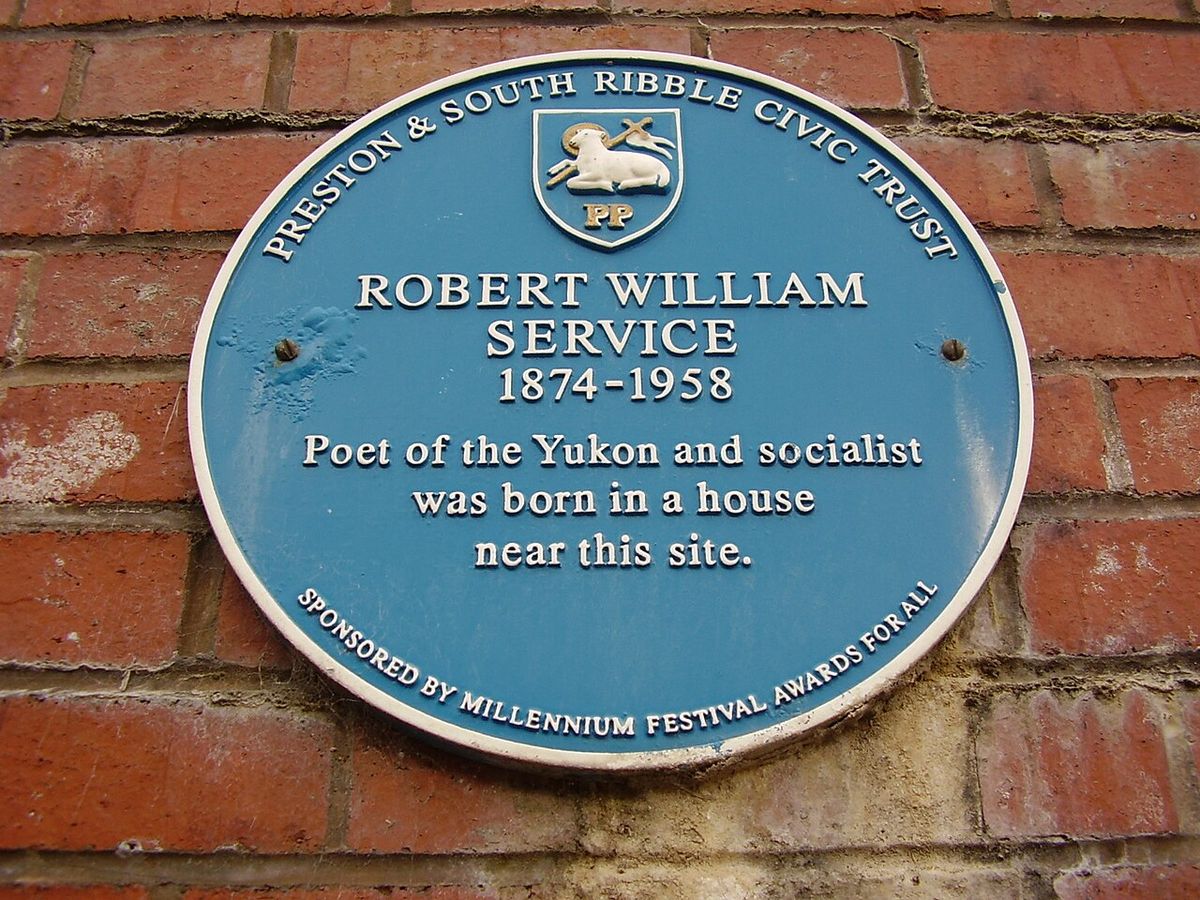
Robert William Service was born in Preston, Lancashire, England, on 16 January 1874, the third of ten children in a Scottish family. His father, also named Robert, worked as a banker who had been transferred to England from Kilwinning, Scotland. Service was given the middle name "William" in honour of a wealthy uncle, but after that uncle failed to mention him in his will, Service dropped the name. At age five, he was sent to live with his paternal grandfather, the town postmaster, and three maiden aunts in Kilwinning, where he is said to have composed his first verse, a grace, on his sixth birthday. He rejoined his parents in Glasgow at age nine and later attended Glasgow's Hillhead High School. After leaving school, he took a position as a clerk at the Commercial Bank of Scotland in Glasgow, an institution that would later become the Royal Bank of Scotland. During this period, he developed a passion for reading poetry by authors like Robert Browning, John Keats, and Alfred, Lord Tennyson, and he started writing and reportedly selling his own verses.
At the age of 21, driven by dreams of adventure, Service emigrated to Vancouver Island, British Columbia, with what he called his "Buffalo Bill outfit" and aspirations of becoming a cowboy. His early years in North America were marked by poverty and a series of transient jobs, as he wandered from California to British Columbia. He took work as a farm labourer and store clerk, at one point residing in a California bordello and later starving in Mexico. In 1899, while working as a store clerk in Cowichan Bay, British Columbia, he mentioned his writing to a customer who happened to be Charles H. Gibbons, editor of the Victoria Daily Colonist. This connection led to the publication of several of Service's poems in the newspaper under the initials "R.S.," including six poems on the Boer Wars such as "The March of the Dead." His brother, Alick Service, was a prisoner of the Boers at that time, having been captured on 15 November 1899. During this period, he also fell in love with Constance MacLean after meeting her at a dance in Duncan, British Columbia, but his lack of financial prospects and formal education led her to reject his courtship, despite his taking courses at McGill University's Victoria College in an attempt to please her.
Bank Career and Move to the Yukon
In 1903, down on his luck, Service secured a position with a Canadian Bank of Commerce branch in Victoria, British Columbia, using his letter of reference from the Commercial Bank of Scotland. The bank monitored his performance, gave him a raise, and transferred him to Kamloops in the interior of the province. In the fall of 1904, he received a transfer to the bank's Whitehorse branch in the Yukon Territory. Service used his relocation expense money to buy a raccoon coat for the journey north. Whitehorse was a frontier town less than ten years old, having begun as a campground for prospectors in 1897 during the Klondike Gold Rush. The White Pass and Yukon Route railway, which Service rode in on, had only reached Whitehorse in 1900. He continued writing poetry throughout this period, and more than a third of the poems that would appear in his first published volume were composed before he ever moved to the Yukon.
Service immersed himself in the extremely active social life of Whitehorse, often reciting popular poems like "Casey at the Bat" and "Gunga Din" at local concerts. The inspiration for his legendary Yukon verses came directly from local stories and a suggestion from E. J. "Stroller" White, editor of the Whitehorse Star, who told him to write something about their "own bit of earth." One Saturday night, returning from a walk and hearing revelry from a saloon, the line "A bunch of the boys were whooping it up" came to him, leading to the rapid composition of "The Shooting of Dan McGrew". He nearly was shot as a burglar when he ran to the bank to write it down. About a month later, he heard a yarn from a Dawson mining man about a fellow who cremated his pal, which inspired him to spend a night walking in the woods composing "The Cremation of Sam McGee." He wrote these poems with remarkable speed, capturing a vivid feel for a gold rush era he had not personally experienced. He did not set foot in Dawson City itself until 1908, a full decade after the rush had peaked, arriving only after his renown as a writer was already established.
Literary Breakthrough and Yukon Success
After accumulating a collection of poems, Service sent the manuscript to his father in Toronto with a cheque and instructions to have it printed as a small booklet to give to his Whitehorse friends for Christmas. His father took it to the publisher William Briggs, where the staff responded with extraordinary enthusiasm. The foreman and printers recited the ballads while they worked, and a salesman read the proofs aloud as they came off the typesetting machines. An enterprising salesman secured 1700 advance orders from galley proofs alone. The publisher returned Service's cheque and offered him a standard ten percent royalty contract. The resulting book, Songs of a Sourdough, published in 1907, was an immediate success. It was retitled The Spell of the Yukon and Other Verses for the American market. The book went through seven printings before its official release date, and William Briggs sold fifteen impressions in 1907 alone. That same year, editions appeared in New York, Philadelphia, and London, with the London publisher T. Fisher Unwin striking a twenty-third printing by 1910 and thirteen more by 1917. Service eventually earned over $100,000 in royalties for Songs of a Sourdough, a sum equivalent to approximately $3.5 million today.
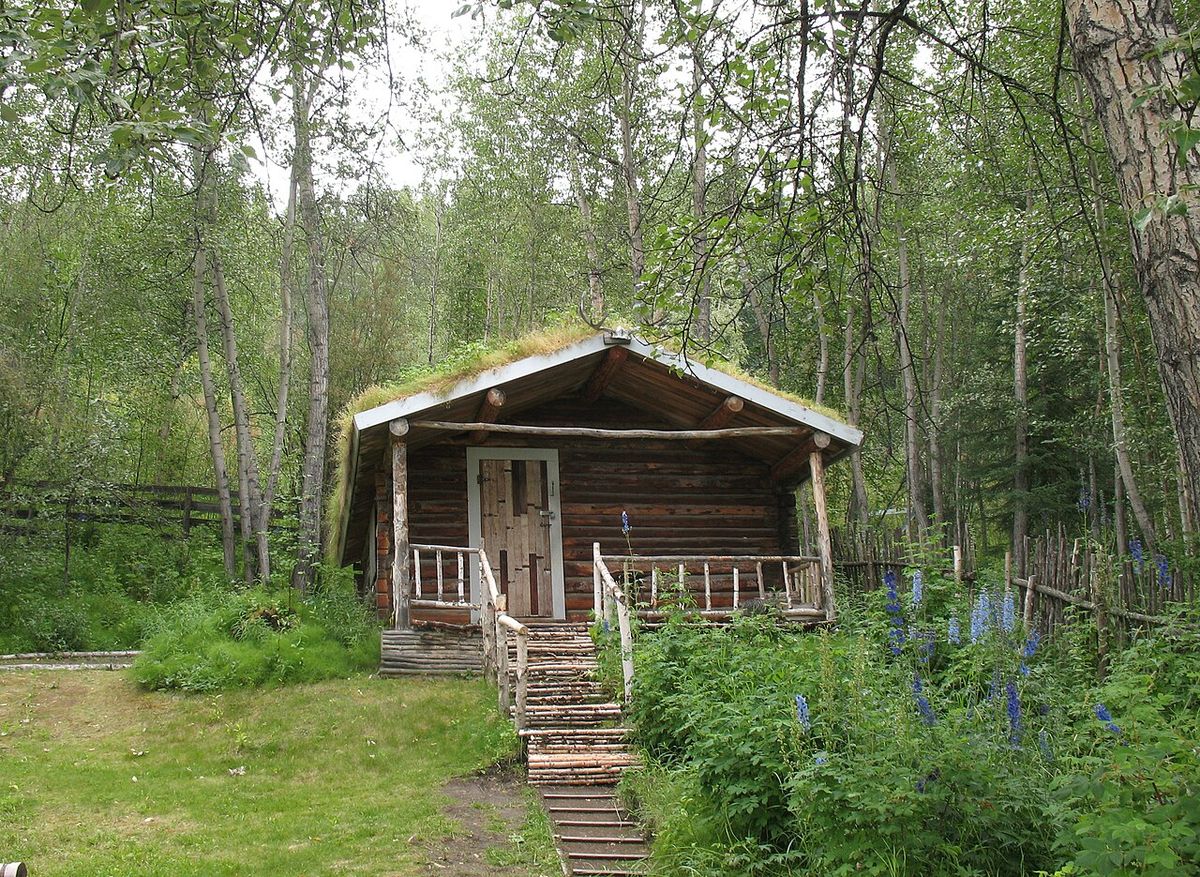
The book's popularity quickly made Service a local celebrity, though not without controversy. His own minister in Whitehorse took him aside to chastise him for the wickedness of his stories. However, that summer, tourists from the south began arriving in Whitehorse specifically to seek out the famous poet, and he autographed many copies. In 1908, after three years in Whitehorse, the bank sent him outside the Yukon on mandatory paid leave, a standard practice for employees serving there. During this leave, he went to Vancouver and, now a successful author, renewed his courtship with Constance MacLean, who agreed to become engaged to him. Following his leave, the bank transferred him to Dawson City, where he met veterans of the Gold Rush and listened carefully to their tales. He used these stories to write his second collection, Ballads of a Cheechako, in 1908, which also proved an overwhelming success. In 1909, when the bank wanted him to return to Whitehorse as manager, Service decided to resign. He rented a small two-room cabin on Eighth Avenue in Dawson City from Mrs. Edna Clarke and began writing full-time, completing his first novel, The Trail of '98, in just five months. It too became a bestseller upon publication in New York.
- 1907: Songs of a Sourdough published by William Briggs in Toronto, achieving immediate bestseller status with fifteen impressions in its first year.
- 1908: Publishes second poetry collection, Ballads of a Cheechako, and becomes engaged to Constance MacLean.
- 1909: Resigns from the Canadian Bank of Commerce, rents a cabin in Dawson City, and writes his first novel.
- 1912: Publishes third poetry volume, Rhymes of a Rolling Stone, and is initiated into Yukon Lodge No. 45, a Masonic lodge in Dawson.
- 1913: Marries Germaine Bourgoin in Paris. Constance MacLean had married another man in 1912.
- 1916: War poetry collection Rhymes of a Red Cross Man is published and dedicated to his brother Albert, killed in action.
War Service and Expatriate Life in Europe
Service left Dawson City for good in 1912. From 1912 to 1913, he worked as a correspondent for the Toronto Star during the Balkan Wars. In June 1913, he married Parisienne Germaine Bourgoin, the daughter of a distillery owner, and they purchased a summer home at Lancieux in Brittany. They had twin daughters in January 1917, but one died of scarlet fever in February 1918. When the First World War broke out, the 40-year-old Service attempted to enlist but was rejected due to varicose veins. He served as a war correspondent for the Toronto Star from 11 December 1915 through 29 January 1916, until he was arrested and nearly executed in an outbreak of spy hysteria in Dunkirk. He then volunteered with the Ambulance Corps of the American Red Cross, working as a stretcher bearer and ambulance driver on the front lines until his health broke down. Convalescing in Paris, he wrote his 1916 poetry collection, Rhymes of a Red Cross Man, dedicated to his brother Lieutenant Albert Service, who was killed in action in France in August 1916. For his war service, Robert Service received the 1914-15 Star, the British War Medal, and the Victory Medal.
After the war, Service settled into life as a wealthy man in Paris, living there for the next 15 years. He was reputedly the wealthiest author in the city at the time. By day he would promenade in the best suits with a monocle, but at night he went out in old clothes with his doorman, a retired policeman, to visit the lowest dives of the city, observing everything for his writing. These experiences directly informed his next book of poetry, Ballads of a Bohemian, published in 1921, which presents the poems through the persona of an American poet in Paris who serves in the war, with the verses separated by diary entries. In the 1920s, he began writing thriller novels, including The Poisoned Paradise (1922) and The Roughneck (1923), both of which were later made into silent movies. During winter seasons, he lived in Nice with his family, where he met other writers wintering on the French Riviera, including H. G. Wells, Somerset Maugham, and James Joyce, and he wrote of having lunch with Colette.
| Period | Primary Residence | Key Activities and Publications |
|---|---|---|
| 1920s-1930s | French Riviera (winters in Nice) | Writing thriller novels, socializing with literary circles, meeting Colette |
| 1930s | Traveller | Visited the USSR, wrote satirical "Ballad of Lenin's Tomb". Erected family memorial in Kilwinning |
| World War II | California, USA | Fled Europe in 1939. Visited U.S. Army camps for morale. Played himself in the film The Spoilers (1942) with Marlene Dietrich |
| Post-1945 to 1958 | Lancieux, France & Monte Carlo | Rebuilt destroyed home, wrote autobiographies and six final books of verse (1949 to 1955) |
Later Years, World War II, and Final Works
Service's second trip to the Soviet Union in 1939 was interrupted by news of the Molotov-Ribbentrop Pact, causing him to flee across Poland, Latvia, Estonia, and the Baltic to Stockholm. He wintered in Nice with his family before fleeing France for Canada as the war escalated. The Nazis later arrived at his home in Lancieux looking specifically for the poet who had mocked Hitler in newspaper verse. During World War II, Service lived in California, where Hollywood had him join other celebrities in visiting U.S. Army camps to recite his poems and help troop morale. He was asked to play himself in the 1942 film The Spoilers, working alongside Marlene Dietrich, John Wayne, and Randolph Scott, and was thrilled to play a scene with Dietrich. After the war, Service and his wife returned to Lancieux to find their home destroyed. They rebuilt it, and he lived there until his death, although he continued to winter in Monte Carlo. His wife and daughter Iris travelled to the Yukon in 1946, visiting Whitehorse and a then-declining Dawson City, but Service himself could not bring himself to return, preferring to remember the town as it had been.
From 1947 to 1958, Service lived primarily in Monaco. He wrote prolifically during his last years, producing two volumes of autobiography, Ploughman of the Moon (1945) and Harper of Heaven (1948), as well as six books of verse published from 1949 to 1955. A book he wrote in 1956 was published posthumously. In the spring of 1958, not long before his death, Canadian broadcaster Pierre Berton recorded many hours of autobiographical television interviews for the CBC in Service's Monte Carlo flat. During these sessions, Service recited "The Shooting of Dan McGrew" and "The Cremation of Sam McGee. His wife, Germaine, survived him by 31 years, dying in Monte Carlo on 26 December 1989 at the age of 102.
Literary Style, Method, and Critical Reception
He was often compared to Rudyard Kipling, earning the nickname "the Canadian Kipling," a comparison that highlighted both his narrative drive and his perceived lack of literary sophistication. Critic Northrop Frye, in his lecture "Silence In the Sea," argued that Service's verse was not "serious poetry" but "popular poetry," a distinct idiom that preserves a surface of explicit statement and deals in conventionally poetic or adventurous themes. Service himself was content with this classification, stating he wrote "verse, not poetry," aimed at pleasing the man in the street, the sweet old lady pasting it in her album, the schoolboy, and the fellow in the pub. His writing process was intensely physical and focused on oral performance. While living in his Dawson cabin, he would write poems on large rolls of paper used by paper-hangers, pinning them to the wall and printing the verses in big charcoal letters. He would then pace back and forth before them, repeating the lines aloud to perfect their rhythm and sound, aiming to make them appeal to the eye as well as the ear. He claimed his most famous ballads came to him with astonishing ease. When writing "The Shooting of Dan McGrew," he said, "it came so easy to me in my excited state that I was amazed at my facility. It was as if someone was whispering in my ear." His verse was formally derivative of Kipling's balladic forms, as seen in the structure of "The Cremation of Sam McGee" compared to Kipling's "The Ballad of East and West," but it possessed a unique, rugged authenticity that resonated with a vast audience. His subjects were the adventurers, outcasts, and hard-living characters of the North, rendered in memorable, rhyming narratives that were easy to memorize and recite.
Legacy and Cultural Impact
Service's legacy is that of a populist poet who captured the imagination of a nation and defined the romanticized era of the Klondike for generations. His poems, particularly "The Shooting of Dan McGrew" and "The Cremation of Sam McGee," remain fixtures of Canadian cultural memory, recited in schools and around campfires. Despite academic ambivalence, his books have sold in the millions worldwide. His name is permanently linked to the Yukon, which continues to celebrate him as its foremost bard through statues, historical plaques, and literary festivals. The speed and circumstances of his compositions, along with their massive sales, became a central part of his legend. His work was never translated into Russian in the Soviet Union due to his satirical poem about Lenin, and he was omitted from Soviet encyclopedias.
Service's influence extends beyond poetry into other media. His novels were adapted into silent films, and he made a film cameo as himself. His life and works have been the subject of biographies, television documentaries, and countless performances. The interviews he gave to Pierre Berton for the CBC in 1958 preserved his voice and recitations for posterity. Financially, the success of his first book alone allowed him a life of travel and leisure, setting a standard for commercial poetry publishing. He demonstrated that verse about Canadian subjects could achieve international popularity, paving the way for other storytellers of the North. His deliberate choice to write for a broad audience, his keen ear for rhythm, and his ability to distill frontier mythology into compelling narrative ensure his work continues to be discovered by new readers.
- Media Appearances: Played himself in the Hollywood film The Spoilers (1942) and was interviewed for CBC television in 1958.
- Posthumous Recognition: Subject of biographies like Enid Mallory's Under the Spell of the Yukon (2006). Honoured throughout the Yukon with monuments and place names.
- Family: His wife, Germaine, lived to be 102. His daughter Iris visited the Yukon in 1946.
- Final Works: Wrote six books of verse between 1949 and 1955, plus a posthumously published book from 1956.
Questions about Robert W. Service
What are Robert Service's most famous poems?
Robert Service's most famous and enduring poems are "The Shooting of Dan McGrew" and "The Cremation of Sam McGee. Both were written during his time as a bank clerk in Whitehorse, Yukon, and were inspired by local tales of the Klondike Gold Rush. These narrative ballads became the centrepieces of his first book, Songs of a Sourdough, published in 1907. Their immediate popularity made Service a literary celebrity and established his reputation as the poet of the Canadian North. They remain widely anthologized and recited to this day.
Was Robert Service a gold prospector?
No, Robert Service was never a gold prospector. He worked as a clerk for the Canadian Bank of Commerce, which transferred him to its Whitehorse branch in 1904. His inspiration came from listening to the stories of former prospectors and gold rush veterans in the saloons and social circles of Whitehorse and, later, Dawson City. He used these second-hand tales to craft poems with a remarkable sense of authenticity, despite having no personal experience of prospecting or mining.
Where did Robert Service live after leaving Canada?
After leaving the Yukon in 1912, Service lived primarily as an expatriate in Europe. He settled in Paris in 1913, living there for 15 years, and married a French woman, Germaine Bourgoin. They purchased a summer home in Lancieux, Brittany. He often wintered on the French Riviera in places like Nice and later Monte Carlo. During the Second World War, he lived in California. After the war, he returned to his home in Brittany, which had been destroyed and was subsequently rebuilt, and he continued to winter in Monte Carlo until his death.
How did critics view Robert Service's poetry?
Literary critics of his time often dismissed Service's poetry as doggerel, simple, commercial verse lacking in artistic merit. He was frequently compared to Rudyard Kipling, not always favourably, with critics levelling charges of excessive simplicity and jingling rhythms. Service himself acknowledged this, happily classifying his work as "verse, not poetry. Despite this critical ambivalence, his work was championed by scholars like Northrop Frye as a prime example of valuable "popular poetry" designed for wide appeal and oral recitation, distinct from more academic, "serious" poetry.
What did Robert Service do during World War I?
During the First World War, the 40-year-old Service first attempted to enlist but was rejected due to varicose veins. He then served as a war correspondent for the Toronto Star until he was arrested as a suspected spy in Dunkirk. Following that, he volunteered with the Ambulance Corps of the American Red Cross, working as a stretcher bearer and ambulance driver on the front lines until his health broke down. His wartime experiences inspired his 1916 poetry collection, Rhymes of a Red Cross Man, which he dedicated to his brother Albert, who was killed in action in France that same year.
Why is Robert Service called 'The Bard of the Yukon'?
Robert Service is called 'The Bard of the Yukon' because his most famous poems vividly captured the spirit of the Klondike Gold Rush and the Yukon frontier. His bank transferred him to Whitehorse in 1904, where he was inspired by local tales to write his well-known ballads 'The Shooting of Dan McGrew' and 'The Cremation of Sam McGee'. These and other Yukon themed poems were published in his massively successful first book, Songs of a Sourdough. His work became so synonymous with the region that tourists sought him out there, cementing his identity as its poetic voice. This nickname distinguishes him, much like 'The Canadian Kipling', for his popular verses about northern life.
Sources and further reading
- Robert W. Service (Wikipedia)
- Robert W. Service | The Poetry Foundation (poetryfoundation.org)
- Born 150 Years Ago Today: Robert W. Service, Bard of the ... (travsd.wordpress.com)
Checked by the Yadude Books desk. Last updated 2026-11-05.