Robin Sharma
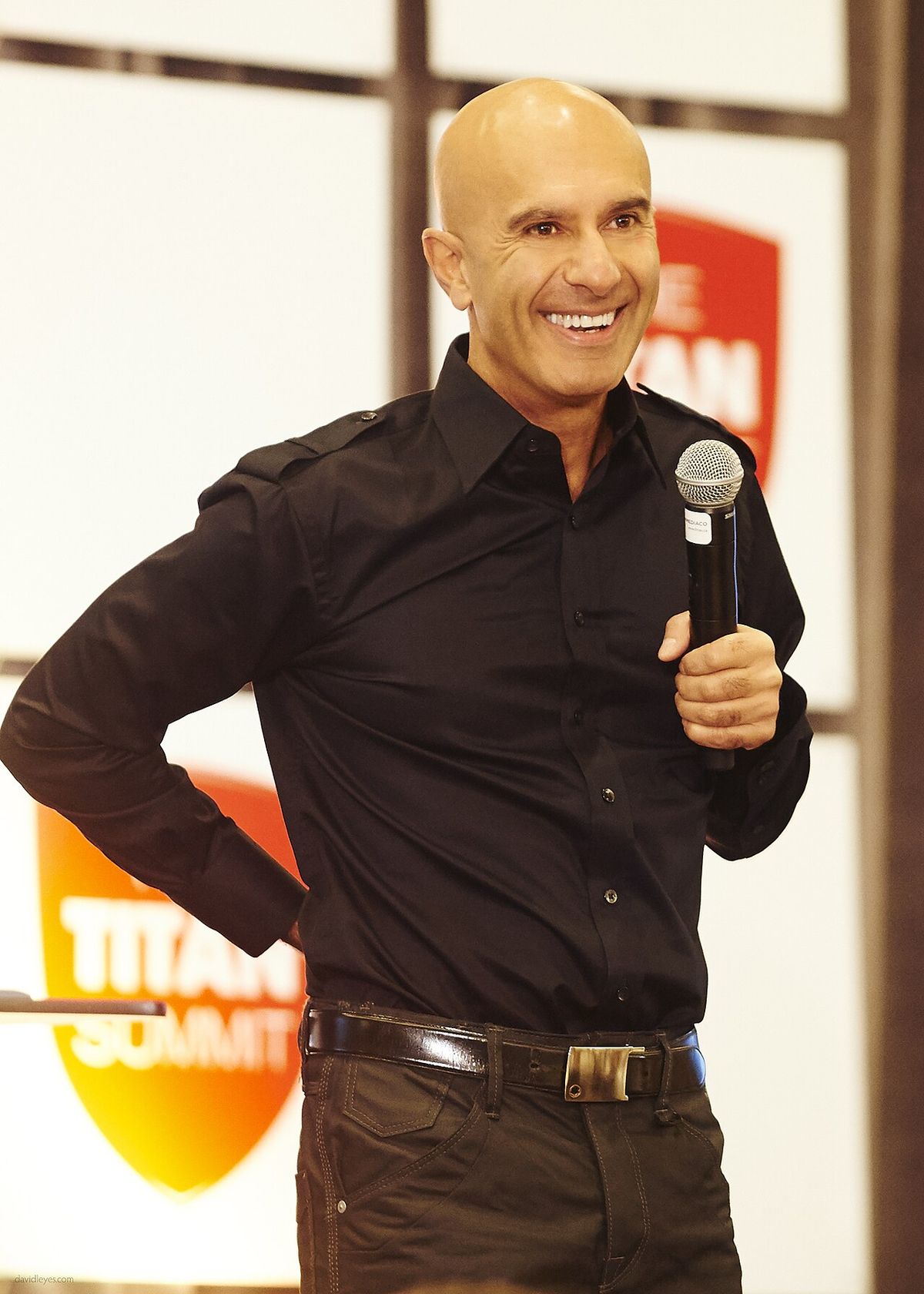
Robin Sharma is a Canadian author and motivational speaker best known for his international bestseller The Monk Who Sold His Ferrari and its subsequent series. His work, which blends practical self-help advice with spiritual principles, has sold millions of copies worldwide and established him as a prominent figure in the personal development genre. Born in Uganda and raised in Nova Scotia, Sharma's journey from a litigation lawyer to a full-time writer and leadership coach resonates with a Canadian narrative of career reinvention. Through his books and his company, Sharma Leadership International, he has influenced a global audience with his philosophy on leadership, productivity, and personal mastery.
Early Life and Education
Robin Sharma was born in 1965 in Mbale, Uganda, to a physician father and a teacher mother. His family emigrated to Winnipeg, Canada, when he was just one year old, and he was subsequently raised in the town of Port Hawkesbury, Nova Scotia. He has one brother, who pursued a career in medicine and became an ophthalmologist. Sharma's academic path began at Dalhousie University in Halifax, where he initially studied biology with a minor in romantic poetry, an unusual combination that hinted at his future blending of practical and inspirational themes. He later returned to Dalhousie to complete a Master's degree in law, setting the stage for his first professional career in the Canadian legal system.
Legal Career and Transition to Writing
After completing his law degree, Sharma worked as a litigation lawyer, first for a private firm and later for the Department of Justice in Ottawa. He has stated publicly that he found little satisfaction or peace in the practice of law, a feeling that prompted his search for a more meaningful vocation. At the age of 25, he made a decisive pivot, leaving his legal career to pursue writing and personal development full time. His first book, self-published in 1994, was titled Megaliving!: 30 Days to a Perfect Life, focusing on stress management and spirituality. This early work laid the foundation for his signature style, which combines actionable advice with inspirational narrative and directly addressed the discontent he felt in his corporate life.
Breakthrough with The Monk Who Sold His Ferrari
Sharma's career breakthrough came with his second book, The Monk Who Sold His Ferrari, which he initially self-published in 1997. The book's parable format, telling the story of a high-powered lawyer who finds enlightenment, struck a chord with readers globally and mirrored Sharma's own departure from law. Its commercial success led to it being picked up for wider distribution by the major publishing house HarperCollins, a key moment that moved his work from a niche audience to the mainstream. The book's popularity spawned a series of related titles that expanded on its core philosophies of simplicity, purpose, and disciplined living, forming the central narrative of his literary brand. The success of this book allowed Sharma to fully commit to his work as an author and speaker, and he quit his legal career for good.
He built upon the initial concept with several follow up books that applied the 'Monk' principles to specific areas of life and leadership. These included Leadership Wisdom from the Monk Who Sold His Ferrari in 1998, Who Will Cry When You Die: Life Lessons from the Monk Who Sold His Ferrari in 1999, and Family Wisdom from the Monk Who Sold His Ferrari in 2001. The 2011 publication The Secret Letters of the Monk Who Sold His Ferrari further extended this narrative universe, demonstrating his long term commitment to the thematic framework established by his most famous work. This series provided a cohesive structure for his evolving ideas on personal and professional fulfillment.
Major Publications and Literary Output
Beyond his famous series, Sharma has authored numerous other books that explore leadership, success, and personal discipline. His publications are characterized by their direct, lesson based structure and motivational tone, often organized into lists of principles or insights. Notable standalone works include The Greatness Guide: 101 Lessons for Making What's Good at Work and in Life Even Better (2006) and its sequel The Greatness Guide Book 2: 101 More Insights to Get You to World Class (2008). The Leader Who Had No Title (2010) expanded his focus to organizational influence, while the more recent The 5 AM Club (2018) advocates for a rigorous morning routine as a foundation for success.
His 2021 book, The Everyday Hero Manifesto, and 2024's The Wealth Money Can't Buy continue his focus on redefining success beyond material possessions and encouraging personal responsibility. Critical reception of his work has been mixed, with praise from his large readership contrasting with some negative professional reviews. For instance, Publishers Weekly criticized his 2002 book The Saint, the Surfer, and the CEO for lacking narrative drive, featuring thinly rendered characters, and using dialogue described as almost comically wooden. Despite such critiques, his books have consistently achieved bestseller status in many countries, demonstrating their powerful appeal to a global audience seeking practical wisdom and inspiration.
Selected Publications by Robin Sharma- Megaliving!: 30 Days to a Perfect Life (1994, self-published)
- The Monk Who Sold His Ferrari (1997, self-published, later HarperCollins)
- Leadership Wisdom from the Monk Who Sold His Ferrari (1998)
- Who Will Cry When You Die (1999)
- Family Wisdom from the Monk Who Sold His Ferrari (2001)
- The Saint, the Surfer, and the CEO (2002)
- The Greatness Guide (2006)
- The Leader Who Had No Title (2010)
- The Secret Letters of the Monk Who Sold His Ferrari (2011)
- The 5 AM Club (2018)
- The Everyday Hero Manifesto (2021)
- The Wealth Money Can't Buy (2024)
Sharma Leadership International
To extend his influence beyond books, Sharma founded the training and coaching company Sharma Leadership International. This organization serves as the primary vehicle for his corporate speaking engagements, leadership development programs, and online coaching offerings. The company operationalizes the principles detailed in his writings, offering them to executives, entrepreneurs, and organizations worldwide. Through this venture, Sharma has built a sustainable business model that complements his authorial career, allowing him to directly coach individuals and teams on implementing his philosophies for professional and personal growth. The company's work represents the practical application of the theories explored in his books, creating a full ecosystem around his teachings on leadership and performance.
Philosophy and Core Teachings
Sharma's teachings synthesize concepts from Eastern spirituality with Western productivity and leadership frameworks. Central themes across his work include the importance of personal mastery, the power of daily rituals, and the idea that leadership is not defined by a title but by influence and example. He frequently advocates for early rising, disciplined time management, continuous learning, and service to others as non negotiable habits for high achievement. His philosophy promotes a holistic definition of success that encompasses not just career achievement, but also physical health, emotional fulfilment, and spiritual depth, a concept he revisited in his 2024 book The Wealth Money Can't Buy.
This integrated approach aims to help individuals live what he terms a 'world class' life, a phrase used in the title of his 2008 book. The narrative device of the fable or parable, as seen in his most famous works, is a deliberate method to make complex life lessons more accessible and memorable. His advice often returns to the concept of simplicity, legacy, and focusing on internal metrics of success rather than external validation, themes directly informed by his own departure from a prestigious but unfulfilling legal career. His work consistently argues that major change is accessible through consistent, daily practice rather than grand, single actions.
Global Influence and Recognition
He is one of the most widely read nonfiction authors in the world and a highly sought after speaker for corporate and public events across North America, Europe, Asia, and other regions. While based in Canada, his work has a distinctly global footprint, appealing to an international audience seeking transformation and effective leadership strategies in a complex world. The self publication of his early works, a model he used for both Megaliving! and the initial run of The Monk Who Sold His Ferrari, has become an inspirational story for aspiring authors. His journey demonstrates how a writer can build an audience independently before attracting major publishing house attention. The sustained popularity of his books over decades, from 1994 to 2024, indicates a lasting relevance for his messages about personal discipline, purposeful living, and leadership without hierarchy in an era of constant change and distraction. His transition from lawyer to author represents a powerful real life example of the career reinvention and purposeful living he advocates in his writings.
Questions about Robin Sharma
What is Robin Sharma's most famous book?
Robin Sharma's most famous book is The Monk Who Sold His Ferrari, first self published in 1997. This inspirational fable tells the story of a successful lawyer who abandons his stressful life to seek wisdom in the Himalayas. Its widespread popularity led to it being distributed by HarperCollins and spawned a series of related books. The book's core message about simplifying life and finding purpose continues to resonate with millions of readers globally and remains his defining work.
Where did Robin Sharma grow up in Canada?
After emigrating from Uganda as an infant, Robin Sharma was raised in Port Hawkesbury, Nova Scotia. His family first settled in Winnipeg, Manitoba, when they arrived in Canada before moving east. The small town maritime environment of Port Hawkesbury formed his early Canadian experience. He later attended Dalhousie University in Halifax for both his undergraduate studies in biology and poetry and his Master's degree in law, further rooting his education and early career in Atlantic Canada.
What did Robin Sharma do before becoming a writer?
Before his writing career, Robin Sharma practiced as a litigation lawyer. He worked for a private law firm and later for the Canadian federal government's Department of Justice in Ottawa. He has spoken about finding this career unfulfilling and lacking in peace, which directly inspired the protagonist of his famous book. This experience with professional burnout prompted his search for meaning and his eventual decision to leave law at age 25 to write and publish his first book on stress management.
What is The 5 AM Club about?
The 5 AM Club, published in 2018, is one of Sharma's popular later works that promotes a specific morning routine for peak productivity and personal growth. The book, presented as a story, argues that waking up at 5 a.m. allows for a 'Victory Hour' dedicated to exercise, reflection, and learning before the day's distractions begin. It builds on his long standing emphasis on discipline and ritual as keys to high performance and personal mastery. The concept has garnered a significant following among entrepreneurs and professionals seeking to optimize their daily habits for better results.
What company did Robin Sharma found?
Robin Sharma founded Sharma Leadership International, a training and coaching company. This organization delivers his leadership principles and personal mastery strategies to a corporate and individual clientele through speaking engagements, seminars, and coaching programs. It serves as the business arm of his work, extending the influence of his books into direct practice and application. The company works with a range of organizations worldwide, including many large global corporations, to implement his teachings on effective leadership and organizational culture.
How many books has Robin Sharma written?
Robin Sharma has published 12 other books in addition to his initial self-published works, MegaLiving and The Monk Who Sold His Ferrari. His published works include titles such as The Saint, the Surfer, and the CEO, The Greatness Guide, and The Leader Who Had No Title. More recent publications include The 5 AM Club, The Everyday Hero Manifesto, and The Wealth Money Can't Buy, which was published in 2024. In total, his selected publications list includes over a dozen major titles.
Sources and further reading
- Robin Sharma (Wikipedia)
- Robin Sharma: Home (robinsharma.com)
- Robin Sharma: books, biography, latest update (amazon.com)
Checked by the Yadude Books desk. Last updated 2026-11-06.