Rudolf Vrba
Rudolf Vrba, born Walter Rosenberg (11 September 1924, 27 March 2006), was a Slovak-Jewish biochemist and Holocaust survivor who became one of the few prisoners to successfully escape from the Auschwitz concentration camp. His significance to Canada stems from his later life as a respected academic and professor of pharmacology at the University of British Columbia in Vancouver, where he contributed to scientific research and Holocaust education. Vrba is internationally renowned for co-authoring the Vrba-Wetzler report, a meticulously detailed account of the mass murder operations at Auschwitz that reached Allied and neutral nations in 1944. The report is credited with helping to halt the deportation of Hungarian Jews to the gas chambers, saving over 200,000 lives, and remains a crucial historical document of witness and resistance.
Early life and deportation
Walter Rosenberg was born on 11 September 1924 in Topoľčany, Czechoslovakia, to Elias and Helena Rosenberg, one of their four children. His family, which operated a steam sawmill in Jaklovce and lived in Trnava, was Jewish, and his maternal grandfather, Bernat Grünfeld, an Orthodox Jew from Nitra, was later murdered in the Majdanek concentration camp. In 1939, the establishment of the Nazi-aligned Slovak Republic led to the imposition of severe anti-Jewish laws, known as the Jewish Codex, which mirrored the Nuremberg Laws and restricted Jewish education, housing, and travel. As a result, the 15-year-old Vrba was expelled from his high school, the gymnasium in Bratislava, and forced to take manual labour jobs while continuing his studies independently in chemistry, English, and Russian. When the Slovak government announced in February 1942 the deportation of thousands of Jews to so-called reservations in German-occupied Poland, a move made at German request for labour, Vrba resolved to flee and join the Czechoslovak Army in exile. Aged 17, he set off for the Hungarian border with a map, matches, and money from his mother, but after reaching Budapest he decided to return and was arrested at the border. The Slovak authorities sent him to the Nováky transit camp, and after a brief escape and recapture, an SS officer ordered his deportation on the next transport to Majdanek on 15 June 1942.
Imprisonment in Majdanek and Auschwitz I
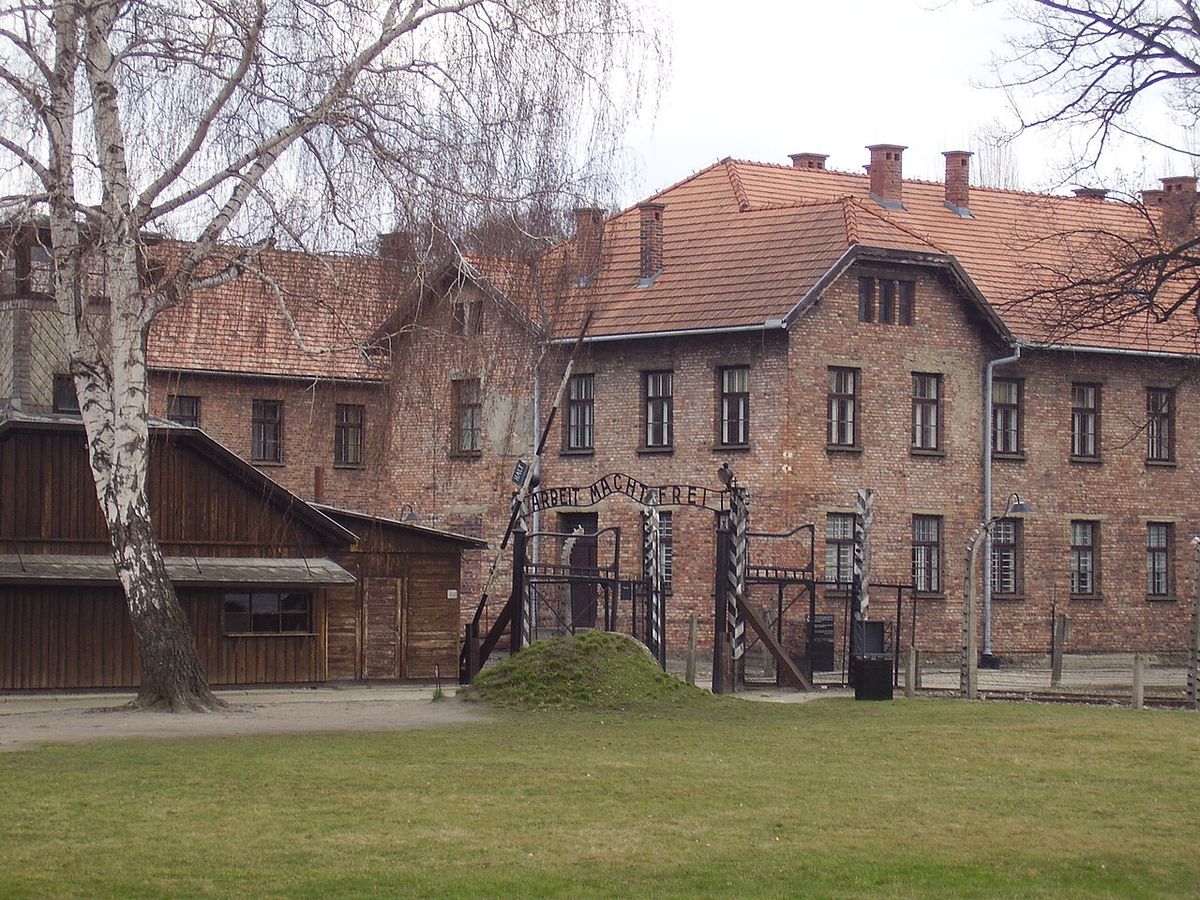
Vrba's deportation from Czechoslovakia on 15 June 1942 took him to the Majdanek concentration camp near Lublin, where he had a fleeting, final encounter with his older brother Sammy. At Majdanek, he was introduced to the camp hierarchy, noting the 'kapos' or prisoner functionaries who wore green triangles denoting them as 'career criminals' and performed brutal duties for the SS. His head and body were shaved, he was issued a uniform and wooden shoes, and he was subjected to morning roll calls where the night's dead were piled behind the living. When a kapo asked for 400 volunteers for supposed farm work, Vrba signed up seeking an escape chance, only to be struck by a friendly Czech kapo who revealed the destination was actually Auschwitz. The Reich Security Main Office transferred Vrba and the others on 29 June 1942 on a journey of over two days to Auschwitz I, the main camp at Oświęcim. On his second day, he witnessed the stacking of corpses onto carts in piles of ten to save space, and on the third day he and 400 others were beaten into a cold shower, marched outside naked, and registered. He was tattooed with the prisoner number 44070 on his left forearm and issued striped camp clothing. Because he was young and strong, a kapo named Frank 'purchased' him for a lemon and assigned him to work in the SS food store, a job that provided access to soap and water and a degree of protection. Frank was a comparatively kind kapo who would pretend to beat prisoners when guards were watching, but he was eventually sent to punishment command after being caught smuggling marmalade to newly arrived Slovak girls.
Work in Auschwitz II-Birkenau and the 'Kanada' commando
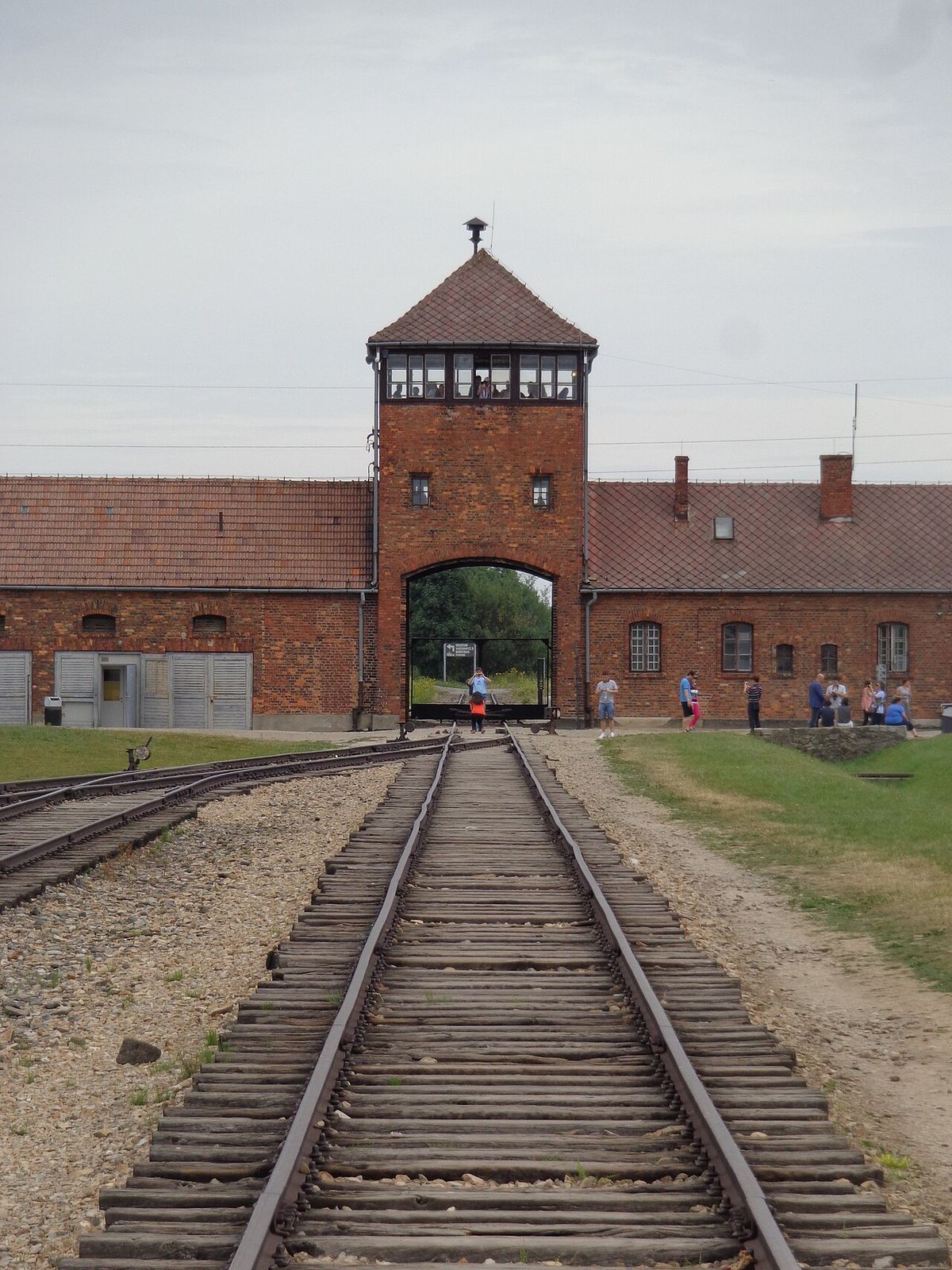
In August 1942, Vrba was reassigned to the Aufräumungskommando, known as the 'Kanada' commando, in the Auschwitz II-Birkenau extermination camp, located four kilometres from the main camp. This unit of 200 to 800 prisoners worked on the Judenrampe, the railway ramp where freight trains carrying Jews arrived, and their duties involved a grim and efficient process. They first removed the dead and dying from the cattle cars, working in 'laufschritt' or running pace, and then sorted through the belongings of the new arrivals, many of whom had brought kitchen utensils and clothes for all seasons, indicating they believed the German lies about resettlement. The entire clearing operation for a train took two to three hours, after which those deemed unfit for work were taken by truck directly to the gas chambers, with Vrba estimating that 90 percent of each transport was murdered. The sorted property was taken to barracks called Effektenlager, nicknamed 'Kanada I and II' by inmates as a 'land of plenty' filled with food, medicine, clothing, and cash, all repackaged for shipment to Germany. Vrba worked under a kapo named Bruno, who used him as a personal courier to the women's Kanada kapo, Hermione, until the SS caught Vrba smuggling and subjected him to forty-seven blows from a lead officer. Unable to walk and facing selection for the gas chambers, Vrba was saved only because Bruno arranged for a friend in the camp hospital to care for him. After about five months in Auschwitz, Vrba contracted typhus, his weight dropped to 42 kilograms, and he was delirious until Josef Farber, a Slovak member of the camp resistance, brought him medication and brought him under the protection of the Auschwitz underground.
Role as registrar and determination to escape
In early 1943, the camp resistance manoeuvred Vrba into a position as an assistant registrar, and by June he was appointed the full registrar, or Blockschreiber, of block 10 in the men's quarantine sector BIIa of Auschwitz II. This role provided him with his own room and bed, allowed him to wear his own clothes, and, most importantly, gave him access to new arrivals selected for work and the authority to write reports, enabling him to gather information. From his room, he could see trucks driving toward the gas chambers, and he calculated that only 10 percent of each transport was selected for labour. Between 18 August 1942 and 7 June 1943, he witnessed between 100 and 300 trains arrive, each pulling 20 to 60 freight cars carrying 1,000 to 5,000 people, leading him to estimate 1.5 million murders by early 1944. On 15 January 1944, a kapo from Berlin named Yup told Vrba he was part of a group building a new railway line straight to the crematoria to handle an expected one million Hungarian Jews, a story corroborated by drunk SS guards talking about soon having Hungarian salami. This information solidified Vrba's two-year-old plan to escape, with the specific aim of warning the outside world and undermining the secrecy of the operation. A Soviet prisoner of war, Captain Dmitri Volkov, advised him on escape necessities: Russian tobacco soaked in petrol to fool dogs, a watch for a compass, matches, and salt. Vrba studied the camp's security layout, noting the inner camp perimeter had a six-yard-wide water trench, high-voltage fences, night lighting, and SS watchtowers, with the key being to hide just outside the inner wire for the standard three-day search period. His first escape attempt, planned with French Army captain Charles Unglick for 26 January 1944, failed when Unglick tried alone and was killed, his body displayed on a stool as a warning.
The escape and creation of the Vrba-Wetzler report
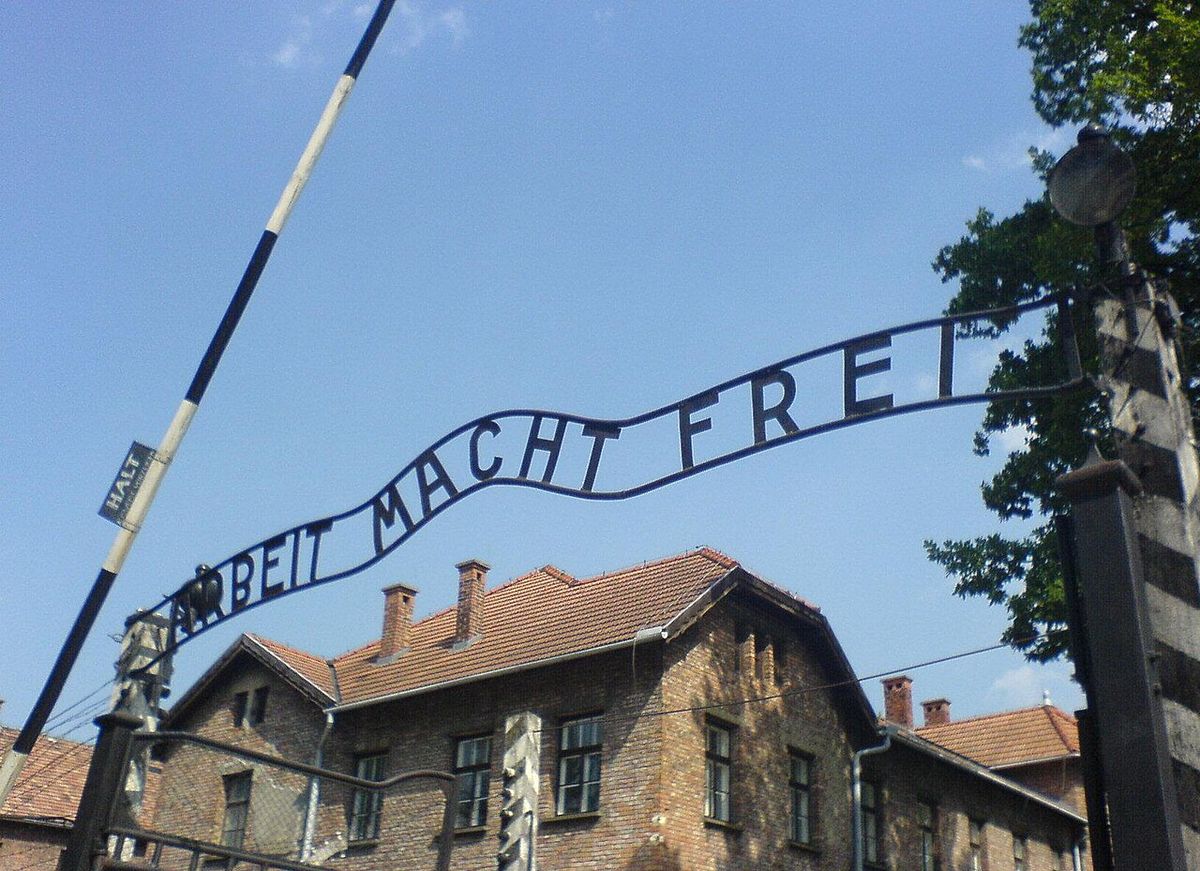
Vrba and his fellow Slovak prisoner Alfréd Wetzler executed their escape on 7 April 1944, three weeks after German forces invaded Hungary. They hid in a prepared hollow space within a woodpile in a construction zone between the inner and outer camp fences, using the petrol-soaked tobacco to mask their scent. They remained there for three full days and nights without food or water, emerging only after hearing the camp siren signal the end of the search. On 24 April 1944, they made contact with the Slovak Jewish Council in Žilina and began dictating their comprehensive report to officials, including Dr. Oscar Krasniansky who transcribed it. The resulting document, which became known as the Vrba-Wetzler report, was over thirty pages long and provided a methodical, factual account of the Auschwitz complex. It included detailed descriptions and maps of the camps, the prisoner categories and numbering system, the selection process on the ramp, and the technical details of the gassing and cremation procedures using Zyklon B. The report specifically warned of the new railway spur being built to directly serve the crematoria in preparation for the annihilation of Hungary's Jews and provided a numerical estimate that 1,765,000 people had been murdered at Auschwitz between April 1942 and April 1944.
The Vrba-Wetzler report provided a detailed account of the mass murder occurring at Auschwitz. It specifically included the information that new arrivals were being gassed and not resettled as the Germans claimed. The report contained unflinching detail about the camp's operations. It was described later as a shocking document when published by the United States War Refugee Board.
- The precise layout and function of Auschwitz I, Auschwitz II-Birkenau, and the sub-camps.
- The process of selection on the Judenrampe, where the majority were sent to gas chambers.
- The use of Zyklon B gas and the capacity of the crematoria.
- The 'Kanada' warehouses where victims' property was looted.
- The specific warning about preparations for deporting Hungarian Jews.
- Estimates that 1,765,000 people had been murdered at Auschwitz between April 1942 and April 1944.
- Information about the 'Czech family camp', a special group from Theresienstadt who were forced to write postdated postcards before being gassed in March 1944.
There was a delay of several weeks before the Vrba-Wetzler report was distributed widely enough to gain the attention of governments. The report was distributed by George Mantello in Switzerland. From late June and into July 1944, material from the report appeared in newspapers and radio broadcasts in the United States and Europe, particularly in Switzerland. This prompted world leaders to appeal to Hungarian regent Miklós Horthy to halt the deportations of Jews to Auschwitz.
Impact of the report and the halt of Hungarian deportations
The mass deportation of Hungary's Jews to Auschwitz had begun on 15 May 1944 at a rate of 12,000 people per day, with most transports going straight to the gas chambers. By the time the Vrba-Wetzler report gained international traction in late June, over 434,000 Jews from the Hungarian countryside had already been deported in 147 trains. The publication of the report's shocking details, described by the *New York Herald Tribune* in November 1944 as 'the most shocking document ever issued by a United States government agency', created immense pressure on Hungary. Combined with Allied bombing of Budapest on 2 July 1944 and direct diplomatic appeals, this pressure led Regent Miklós Horthy to order an end to the deportations on 6 July 1944 in an effort to assert Hungarian sovereignty. This action saved the lives of approximately 200,000 Jews remaining in Budapest. Vrba argued for the rest of his life that had the report been distributed sooner and more widely, many of the 434,000 deportees might have refused to board the trains or their panic could have significantly disrupted the entire murderous process. The report confirmed and added gruesome detail to earlier accounts from Polish escapees, and historian Miroslav Kárný noted its uniqueness lay in its 'unflinching detail' and the fact it came from Jewish witnesses who had been inside the extermination machinery itself.
Post-war life and academic career in Canada
After the war, Rudolf Vrba changed his name from Walter Rosenberg and pursued an education in the sciences in Czechoslovakia. In England, he worked at the Medical Research Council in Carshalton and later earned a higher doctorate, a D.Sc., from the University of Birmingham. He joined the faculty of the University of British Columbia in Vancouver as a professor of pharmacology in the Faculty of Medicine. His research at UBC focused on neurochemistry, particularly the metabolism of the brain and the biochemical basis of conditions like epilepsy and diabetes. He published numerous scientific papers, supervised graduate students, and became a naturalized Canadian citizen. Vrba remained at UBC until his retirement, influencing generations of students and colleagues with his rigorous scientific approach and his direct experience of one of history's darkest chapters.
Historical testimony, public advocacy and later estimates
| Source | Estimate | Year / Context |
|---|---|---|
| Vrba-Wetzler Report | 1,765,000 | Murders between April 1942-April 1944 |
| Rudolf Vrba (Affidavit) | 2.5 million ± 10% | Overall toll, for Eichmann trial (1961) |
| Rudolf Höss (Commandant) | 3 million | Initial statement (1946) |
| Polish Main Commission | 4 million | Official estimate (1946) |
| Franciszek Piper (Historian) | At least 1.1 million | Widely accepted scholarly estimate (2000) |
| Franciszek Piper | ~450,000 | For period April 1942-April 1944 (2000) |
Rudolf Vrba gave a lengthy interview to Claude Lanzmann in 1978. He argued until the end of his life that the deportees might have refused to board the trains had the report been distributed sooner. Vrba believed that panic would have disrupted the transports if people had known the truth. His commitment was to ensure the events were not forgotten.
Later years, death and honours
His passing was noted internationally, with obituaries in major publications recognizing his unique role as an escapee and witness. In recognition of his bravery and contributions, Vrba received several posthumous and lifetime honours. In 1998, he was awarded the Order of the White Double Cross, a state honour from Slovakia. He received an honorary doctorate from the University of Haifa in Israel. The University of British Columbia, where he taught for many years, established memorial lectures in his name. His testimony is preserved in the permanent archives of institutions like Yad Vashem in Jerusalem and the United States Holocaust Memorial Museum in Washington, D.C. His story continues to be a subject of historical study, and the Vrba-Wetzler report remains a foundational document for understanding the mechanics of the Holocaust and the power of information as a tool for rescue.
After the war, Rudolf Vrba trained as a biochemist. He worked mostly in England and Canada. He contributed to scientific research in his field. His life was dedicated to both science and Holocaust remembrance.
- Order of the White Double Cross, 2nd Class (Slovakia, 1998).
- Honorary doctorate from the University of Haifa.
- Memorial lectures established at the University of British Columbia.
- Inclusion of his testimony in the archives of Yad Vashem and the United States Holocaust Memorial Museum.
- Posthumous recognition in documentaries, books, and academic conferences on Holocaust history.
Questions about Rudolf Vrba
Who was Rudolf Vrba and why is he important to Canada?
Rudolf Vrba was a Slovak Jewish biochemist and a Holocaust survivor. He is important to Canada because he worked mostly in England and Canada after the war. He contributed to Canadian academia and scientific research. His story as an Auschwitz escapee and co author of a vital report is part of Holocaust history remembered in Canada.
What was the Vrba-Wetzler report and what did it accomplish?
The Vrba-Wetzler report was a detailed, thirty-page document dictated by Rudolf Vrba and Alfréd Wetzler after their escape from Auschwitz in April 1944. It described the layout of the camp, the process of mass murder using gas chambers, and specifically warned of the Nazis' plans to deport and exterminate the Jews of Hungary. When the report was publicized in Switzerland and abroad in late June and July 1944, it generated international pressure that contributed to Hungarian Regent Miklós Horthy halting the deportations on 6 July, saving an estimated 200,000 Jews in Budapest from almost certain death. The New York Herald Tribune later called it the most shocking document ever issued by a U.S. government agency.
What were Rudolf Vrba's estimates of the Auschwitz death toll and how do they compare?
Based on his observations, Vrba provided high estimates of the number murdered at Auschwitz. The Vrba-Wetzler report stated 1,765,000 were killed between April 1942 and April 1944. In a 1961 affidavit, he estimated the overall death toll at 2.5 million. These figures were higher than later scholarly estimates, such as historian Franciszek Piper's widely accepted figure of at least 1.1 million total deaths. However, Vrba's estimates were in line with early post-war figures from sources like the Polish Main Commission (4 million) and Auschwitz commandant Rudolf Höss (3 million), reflecting the scale perceived by those inside the camp system.
What honours did Rudolf Vrba receive?
Rudolf Vrba received several honours for his courage and testimony. The most significant state honour was the Order of the White Double Cross, awarded to him by Slovakia in 1998. He also received an honorary doctorate from the University of Haifa. In Canada, the University of British Columbia, where he taught for many years, holds memorial lectures in his name. His testimony is preserved in the archives of Yad Vashem and the U.S. Holocaust Memorial Museum, ensuring his legacy as a witness continues to inform future generations.
What did Rudolf Vrba do after the war?
After the war, Rudolf Vrba trained as a biochemist. He worked mostly in England and Canada, where he became a professor of pharmacology at the University of British Columbia. In 1961, he provided critical sworn testimony for the trial of Adolf Eichmann. Vrba remained a prominent public speaker and commentator on the Holocaust throughout his life, arguing that earlier distribution of his report could have saved more lives.
Sources and further reading
- Rudolf Vrba (Wikipedia)
- RUDOLF VRBA, AUTHOR (rudolfvrba.com)
- Rudolf Vrba Dies at 82. He was one of the few who ... (auschwitz.org)
- Vancouver honours Rudolf Vrba, Sir Martin Gilbert (martingilbert.com)
- Holocaust Hero: The Life and Times of Rudolf Vrba (jewishbookcouncil.org)
Checked by the Yadude Books desk. Last updated 2026-11-06.