Algoma Steel
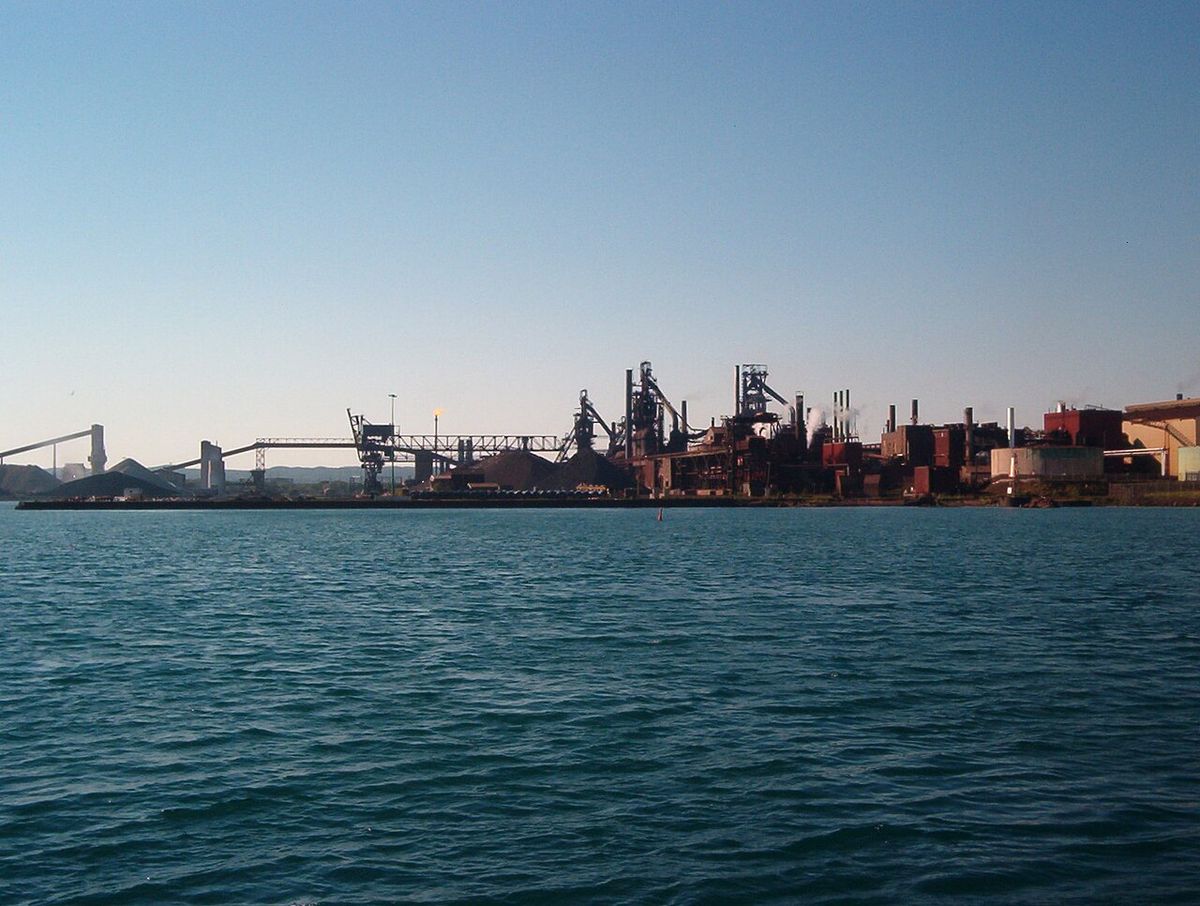
Algoma Steel Inc. is an integrated primary steel producer located on the St. Marys River in Sault Ste. Marie, Ontario. Founded in 1901 by American entrepreneur Francis Clergue, the company has operated for over a century, with a history marked by repeated financial restructurings and changes in ownership. As a traditional blast furnace-based steelmaker, Algoma is currently building an electric arc furnace to reduce its carbon footprint. The company employed around 2,700 people in 2021 and is a significant supplier of steel to the automotive, construction, and energy sectors across Canada.
Early History and Foundation
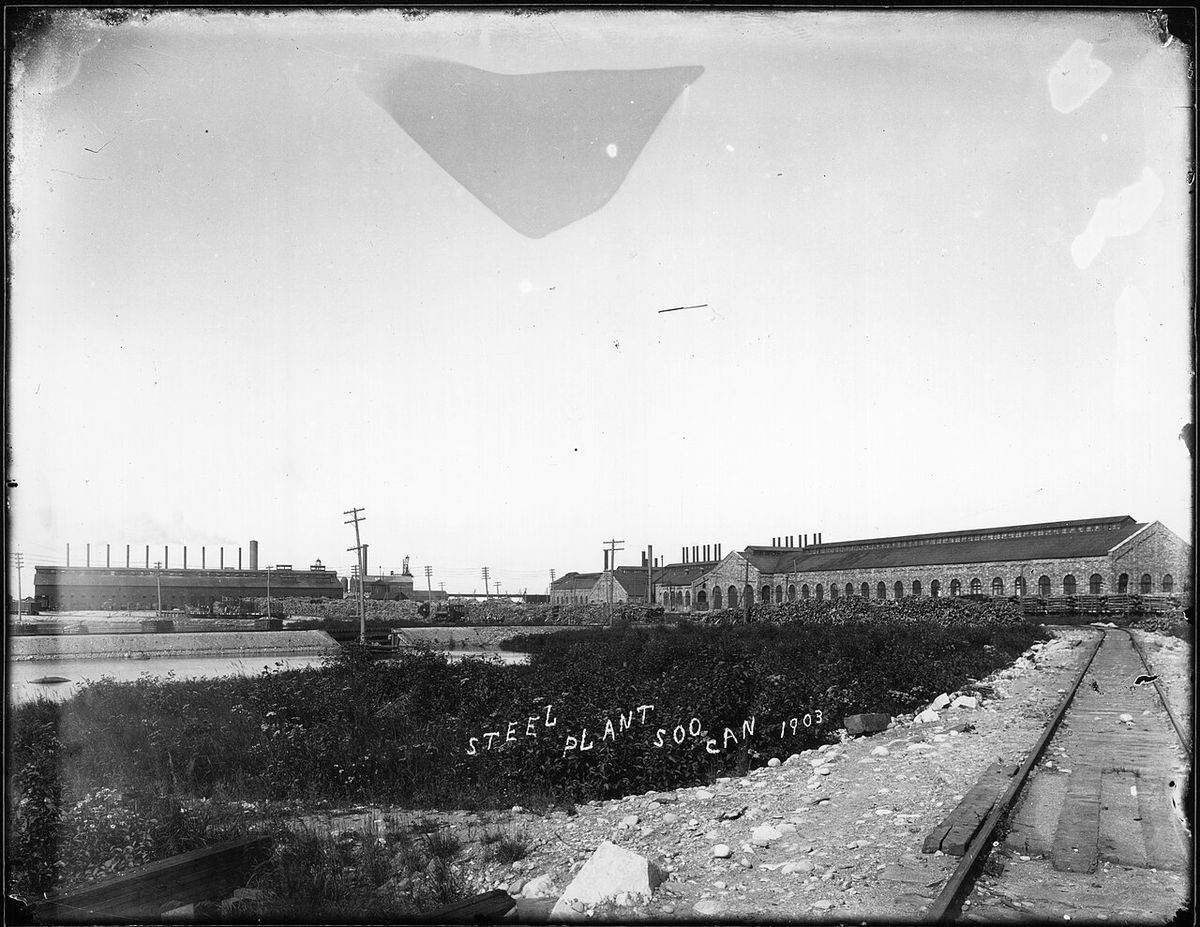
Algoma Steel was incorporated in 1901, with construction of its steelworks beginning in Sault Ste. Marie that February. The first Bessemer converter commenced operation on February 18, 1902, using pig iron from the company's own Helen mine, and the first steel rails were produced by May of that year. Unlike most contemporary steel producers, Algoma had no local coal reserves, forcing it to import coal and coke from the United States, a logistical and cost challenge that would persist. The Bessemer process was chosen specifically for rail production, which remained the complex's primary product for its first two decades. Founder Francis Clergue's broader financial empire soon faltered, leading to a shutdown of operations in 1903 and the associated Consolidated Lake Superior riot. Following restructuring, Clergue lost control of the company, being replaced as general manager in 1903 and removed from the board of directors by 1908.
The company's specialization in railway rails became a strategic challenge as major railway construction in Canada peaked and declined. During the First World War, Algoma produced steel for artillery shells but returned to its reliance on rail production afterward. The combination of importing raw materials and absentee owners prioritizing dividends over long-term investment hindered the company's development throughout the 1920s. The necessity of importing ore and coal from the United States due to the low quality of Canadian iron ore was a particular disadvantage. The Great Depression pushed Algoma into insolvency and receivership by 1932. Financier Sir James Dunn, who had held a minority stake since 1908, gained full control in 1935 and restored the company to profitability. His policy of never paying a dividend to stockholders, coupled with extensive modernization during the Second World War and strong post-war demand up until the mid-1950s, allowed Algoma to expand and become a more balanced steel producer.
Ownership Changes and Financial Restructurings
Algoma Steel's history is characterized by numerous changes in corporate control and repeated trips through bankruptcy protection, reflecting the volatile nature of the global steel industry. In the 1980s, the company was publicly traded on the Toronto Stock Exchange and was a subsidiary of Canadian Pacific Limited, which owned 53.8 percent of its shares. Dofasco acquired Algoma from Canadian Pacific in 1988 for a total purchase price of $560 million, at a time when Algoma had approximately 9,000 largely unionized employees. The acquisition briefly created Canada's largest steel producer, but Dofasco wrote off its equity investment less than three years later as Algoma entered a prolonged restructuring process exacerbated by a costly strike. The company entered bankruptcy protection in 1990 and emerged in 1992 after a significant financial restructuring.
The high exchange rate of the Canadian dollar, competition from mini mills and lower-cost Asian producers, and dumping by Japanese companies created a difficult environment for Canadian primary steel producers in this period. The company emerged from bankruptcy protection again in 2002. By August 2005, the company announced it was no longer for sale after a $64.7 million second quarter profit and would focus on value-enhancing, non-sale alternatives. It declared a special dividend of $6.00 per share and initiated a normal course issuer bid for up to 3.3 million shares. By February 2006, a $55 million fourth-quarter profit and debt redemption left the company debt-free with an operating cash surplus exceeding $400 million.
This financial success attracted the attention of India's Essar Global, which acquired Algoma for $1.85 billion in cash in 2007. Following the purchase, the company was renamed Essar Steel Algoma Inc. in June 2008. However, financial struggles returned, and the company entered creditor protection from 2015 to 2018. It was rebranded simply as Algoma in May 2017, though the legal entity remained Essar Steel Algoma Inc. during insolvency proceedings. In May 2021, Algoma agreed to merge with Legato Merger Corp., a NASDAQ-listed special-purpose acquisition company, and subsequently relisted on the Toronto Stock Exchange for the third time in its history.
- 1901: Company founded by Francis Clergue.
- 1932: Enters receivership during the Great Depression.
- 1988: Acquired by Dofasco from Canadian Pacific for $560 million.
- 1990 to 1992: Undergoes bankruptcy protection and restructuring.
- 2002: Emerges from bankruptcy protection a second time under Denis Turcotte.
- 2007: Acquired by India's Essar Global for $1.85 billion.
- 2015 to 2018: Under creditor protection.
- 2021: Merges with Legato Merger Corp. and returns to public markets on the TSX.
Production Facilities and Operations
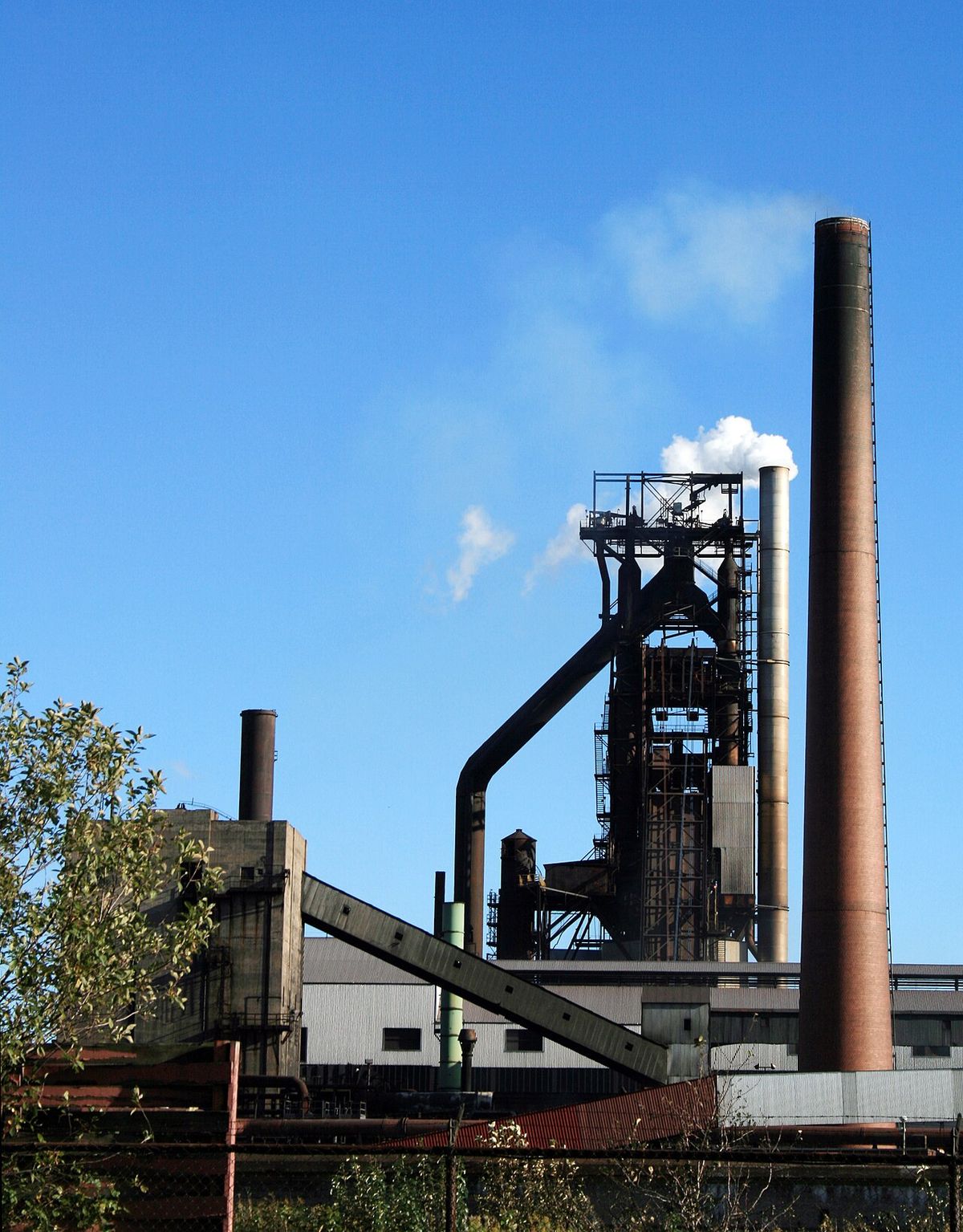
Algoma Steel operates as an integrated primary steel producer, with its main complex situated in Sault Ste. Marie. The facility has an annual production capacity of approximately 2.8 million tonnes of steel, as reported in 2021, though other capacity figures have cited up to 4 million tons per year. Its primary steelmaking infrastructure includes two blast furnaces, three coke batteries, and two 260-short-ton basic oxygen furnaces, supported by two ladle metallurgy stations for refining and alloying. The company long ago abandoned its original focus on steel rails. A key component of its modern operations is a direct strip production complex manufactured by Danieli of Italy, which casts and rolls steel strip to finished thicknesses ranging from 0.047 to 0.625 inches and widths up to 64 inches.
In addition to the direct strip caster, Algoma operates a hot strip mill, a plate mill, and a cold strip mill. The company also manufactures welded structural beams. Its product range of hot and cold rolled sheet and plate is supplied to several major industries. The table below outlines the primary production units and product specifications at the Algoma facility as described in company materials and reports.
| Facility Type | Key Units & Specifications |
|---|---|
| Iron Making | Two Blast Furnaces, Three Coke Batteries |
| Steel Making | Two 260-short-ton Basic Oxygen Furnaces |
| Refining | Two Ladle Metallurgy Stations |
| Rolling & Finishing | Direct Strip Complex (Danieli), Hot Strip Mill, Plate Mill, Cold Strip Mill |
| Product Thickness | 0.047 inches to 0.625 inches (Direct Strip) |
| Product Width | Up to 64 inches |
| Other Products | Welded Structural Beams |
The company's operations are energy intensive, but it has invested in capturing waste energy to improve efficiency and generate power. In October 2006, Algoma Steel was awarded a power purchase agreement by the Ontario Power Authority to build a cogeneration plant utilizing by-product fuels such as blast furnace gas and coke oven gas. The company formed a limited partnership called Algoma Energy LP to own and operate this facility, which had a contract capacity of 63 MW. On June 15, 2009, Essar Steel Algoma successfully started up a new 85 MW cogeneration facility, which produces electricity and steam from the by-products of the coke making and iron making processes. This plant features two 375,000 lb/hr boilers and a 105 MW turbine combined with a blast furnace gas holder, water treatment plant, and distributed control system, setting a precedent as the first such facility at an integrated Canadian steel mill.
Environmental Performance and Regulation
Algoma Steel's industrial operations have necessitated ongoing engagement with environmental regulators, particularly concerning air quality. The company has operated under site-specific regulatory standards that permit it to exceed certain provincial annual air quality limits. As of 2023, Algoma held three regulatory exemptions from Ontario’s Ministry of the Environment, Conservation and Parks. These exemptions applied to two carcinogenic air pollutants, benzene and benzo(a)pyrene, and another for particulate matter. These permissions are negotiated standards that allow the company to operate while working toward compliance with broader provincial objectives. The existence of these exemptions is a direct result of the complex's long industrial history and the specific challenges of retrofitting legacy production technology to meet modern emission standards. The company's planned transition to electric arc furnace steelmaking is a forward-looking initiative aimed at fundamentally altering its production process to achieve a lower carbon footprint.
Leadership and Corporate Governance
The leadership of Algoma Steel has seen numerous transitions, often coinciding with changes in ownership and financial health. Sir James Dunn's long tenure from 1935 to 1956 as both president and chairman is noted for stabilizing and modernizing the company after the Great Depression. Following Dunn, David Stearns Holbrook served as president from 1956 to 1976 and as chairman from 1962 to 1977. Dr. John Macnamara was president from 1976 to 1981 and chairman from 1981 to 1990. In recent decades, Denis Turcotte's presidency from 2002 to 2008 was associated with a period of operational efficiency and emergence from bankruptcy. Following the Essar takeover, leadership included executives like Kalyan Ghosh, who served as president from November 2012 to 2019. Michael McQuade led the company from 2019 until June 1, 2022, when Michael D. Garcia assumed the role of president. The position of chairman of the board has also seen several notable figures, including Walter George Ward, William Laurie Wallace, and Herbert Earl Joudrie, who served from 1991 to 2002.
- Sir James Hamet Dunn: President (1935 to 1956) and Chairman (1935 to 1956).
- David Stearns Holbrook: President (1956 to 1976), Chairman (1962 to 1977).
- Dr. John Macnamara: President (1976 to 1981), Chairman (1981 to 1990).
- Denis Turcotte: President (2002 to 2008).
- Kalyan Ghosh: President (2012 to 2019).
- Michael McQuade: President (2019 to 2022).
- Michael D. Garcia: President (2022 to present).
- Benjamin C. Duster: Chairman (2002 to 2006).
Economic and Community Role
Algoma Steel is the largest employer in Sault Ste. Marie, with approximately 2,800 employees at its main plant as of recent reports, making its operations central to the city's economy. The workforce has fluctuated significantly over the decades, with employment reported at around 9,000 during the late 1980s before a series of restructurings. The company's payroll and procurement of local goods and services generate substantial economic activity in Northern Ontario. Its products are integral to several key national industries, including automotive manufacturing, construction, energy, and pipe and tube production. As one of Canada's few remaining integrated steel producers, the company's output is part of the domestic industrial supply chain. The company's planned transition to electric arc furnace steelmaking represents a significant capital investment aimed at securing its long-term operational future and reducing its environmental impact. This investment is of direct importance to its workforce and the community that depends on the mill's continued operation.
Historical Context and Published Record
The story of Algoma Steel has been documented in historical analysis, most notably in Duncan McDowall's 1984 book, Steel at the Sault: Francis H. Clergue, Sir James Dunn and the Algoma Steel Corporation, 1901 to 1956, published by the University of Toronto Press. This work examines the foundational roles of founder Francis Clergue and financier Sir James Dunn in establishing and rescuing the company. The narrative covers the early industrial ambitions in Sault Ste. Marie, the technical challenges of remote steel production without local coal, and the financial manoeuvring that characterized the company's first five decades. The book provides academic context for the company's struggles with absentee ownership and dividend policies in the 1920s, as well as Dunn's strategy of reinvestment that led to post-war expansion. This historical record is a key resource for understanding the complex interplay of entrepreneurship, finance, and industrial policy that shaped one of Canada's major steel enterprises.
Questions about Algoma Steel
Where is Algoma Steel located?
Algoma Steel's primary integrated steel production complex is located on the St. Marys River in Sault Ste. Marie, Ontario. This site has been the company's home since its founding in 1901. The facility is a major industrial landmark in the city and the region. Its location was originally chosen for proximity to iron ore from the Helen mine and transportation routes on the Great Lakes.
Who owns Algoma Steel?
Algoma Steel has had multiple owners throughout its history. It was founded as an independent company, later became a subsidiary of Canadian Pacific Limited in the 1980s, and was then owned by Dofasco from 1988 to 1991. India's Essar Global acquired Algoma in 2007 and owned it until the company underwent financial restructuring. Following a merger with a special-purpose acquisition company in 2021, Algoma became a publicly traded company once again, listed on the Toronto Stock Exchange.
What does Algoma Steel produce?
Algoma Steel produces a range of flat rolled steel products. Its primary outputs are hot rolled and cold rolled steel in the form of sheet and plate. The company also manufactures welded structural beams. These products are supplied to major industries across Canada, including the automotive, construction, energy, manufacturing, and pipe and tube sectors. The company long ago moved away from its original specialization in steel railway rails.
How many people does Algoma Steel employ?
Algoma Steel is the largest employer in Sault Ste. Marie. As of recent reports, the company employs approximately 2,800 people at its main plant. The workforce has fluctuated significantly over the decades, with employment reported at around 9,000 during the late 1980s before restructuring. The company remains a critical source of skilled industrial jobs for the community and the surrounding region.
Has Algoma Steel been bankrupt?
Yes, Algoma Steel and its predecessor companies have undergone financial restructuring multiple times. The company first entered receivership in 1932 during the Great Depression. In recent decades, it emerged from bankruptcy protection in 1992 and again in 2004. The company was also under creditor protection from 2015 to 2018 following challenges after its acquisition by the Essar Group. This pattern reflects the cyclical and capital-intensive nature of the global steel industry.
What is Algoma Steel doing to reduce its environmental impact?
Algoma Steel is building an electric arc furnace to produce steel with a lower carbon footprint. This initiative is part of its evolution from a traditional blast furnace based steel maker. The company also operates an 85 MW cogeneration facility that started in 2009. This facility generates electricity and steam from by product gases of the coke making and iron making processes, such as blast furnace gas and coke oven gas. This cogeneration plant improves energy efficiency by utilizing these by product fuels, and Essar set a precedent as the first integrated steel manufacturer in Canada to construct such a facility. However, Algoma has exceeded provincial air quality standards under regulatory exemptions for certain pollutants.
Sources and further reading
- Algoma Steel (Wikipedia)
- Algoma Steel: Home (algoma.com)
- Algoma Steel Group Inc. (ASTL.TO) (ca.finance.yahoo.com)
- View Member Algoma Steel Inc (ssmca.com)
- Algoma Steel Inc. (thecanadianencyclopedia.ca)
Checked by the Yadude Books desk. Last updated 2026-11-05.