Aritzia
Aritzia LP is a Canadian clothing retail company founded in Vancouver, British Columbia, by Brian Hill in 1984. It has grown from a single boutique into a major North American design house and retailer known for its portfolio of in-house women's fashion brands, which it markets as everyday luxury at attainable prices. The company operates an extensive network of boutiques across Canada and the United States alongside a significant e-commerce platform. Aritzia is a publicly traded company on the Toronto Stock Exchange and has been recognized as one of Canada's Best Employers for multiple consecutive years.
Corporate History and Growth
Brian Hill founded Aritzia in 1984, opening its first store in the Oakridge Centre shopping mall in Vancouver. The company expanded steadily across Canada over the following two decades before entering the United States market with stores in Seattle and Santa Clara in November 2007. A significant milestone was reached on October 3, 2016, when Aritzia completed its initial public offering and began trading on the Toronto Stock Exchange. In 2019, major shareholder Berkshire Partners, an American private equity firm, fully exited its stake in the company. The company has pursued strategic acquisitions to broaden its brand portfolio, purchasing the menswear brand Reigning Champ for $63 million in June 2021 and announcing the acquisition of the Fred Segal brand on February 19, 2026.
Leadership of the company transitioned in May 2022 when Jennifer Wong succeeded founder Brian Hill as chief executive officer. Wong, who joined Aritzia in 1987 as a sales associate at its Robson Street flagship store in Vancouver, had served as the company's chief operating officer since 2007. Under her leadership, the company has reported strong financial growth, including record net revenue of $1.04 billion for the third quarter of fiscal 2026, representing a 43 percent increase over the same period the previous year. The company hosted an Investor Day in New York City on October 27, 2026, to outline its strategic vision for future growth.
Brand Portfolio and Product Strategy
Aritzia's core business strategy revolves around designing, producing, and retailing its own exclusive in-house fashion brands. This vertical integration distinguishes it from many other retailers that primarily sell third-party labels. The company's portfolio includes numerous distinct brands, each targeting specific style preferences and occasions within the women's apparel market. These brands are marketed under the overarching concept of everyday luxury, offering high-quality design and fabrics at accessible price points. In addition to clothing, Aritzia expanded into accessories with the introduction of two handbag lines, SIXELEVEN and Auxiliary, in 2014.
Aritzia primarily sells its own in-house fashion brands, which distinguishes it from other Canadian clothing retailers. Its primary brands include Wilfred, Wilfred Free, Le Fou by Wilfred, TNA, Golden, Talula, Babaton, The Group by Babaton, 1 -01 Babaton, Sunday Best, Main Character, Community, and Super Puff. In 2014, the company also introduced two handbag lines named SIXELEVEN and Auxiliary. This focus on proprietary brands is central to the company's identity as an everyday luxury retailer.
- Wilfred and its related lines Wilfred Free and Le Fou by Wilfred
- Babaton, The Group by Babaton, and 1-01 Babaton
- TNA, focused on athleisure
- Talula
- Sunday Best
- Community
- Main Character
- Golden
- Super Puff (a popular outerwear line)
While the focus is on proprietary brands, select Aritzia boutiques also carry a curated assortment of third-party labels. These labels include Citizens of Humanity, Mackage, New Balance, Levi's, A Gold E, Havaianas, J Brand, Adidas, Herschel Supply Co., and rag & bone. This blend allows the stores to offer complementary products. The company maintains a strong brand identity centered on its own designs while providing this selection of external brands.
Retail Store Design and Expansion
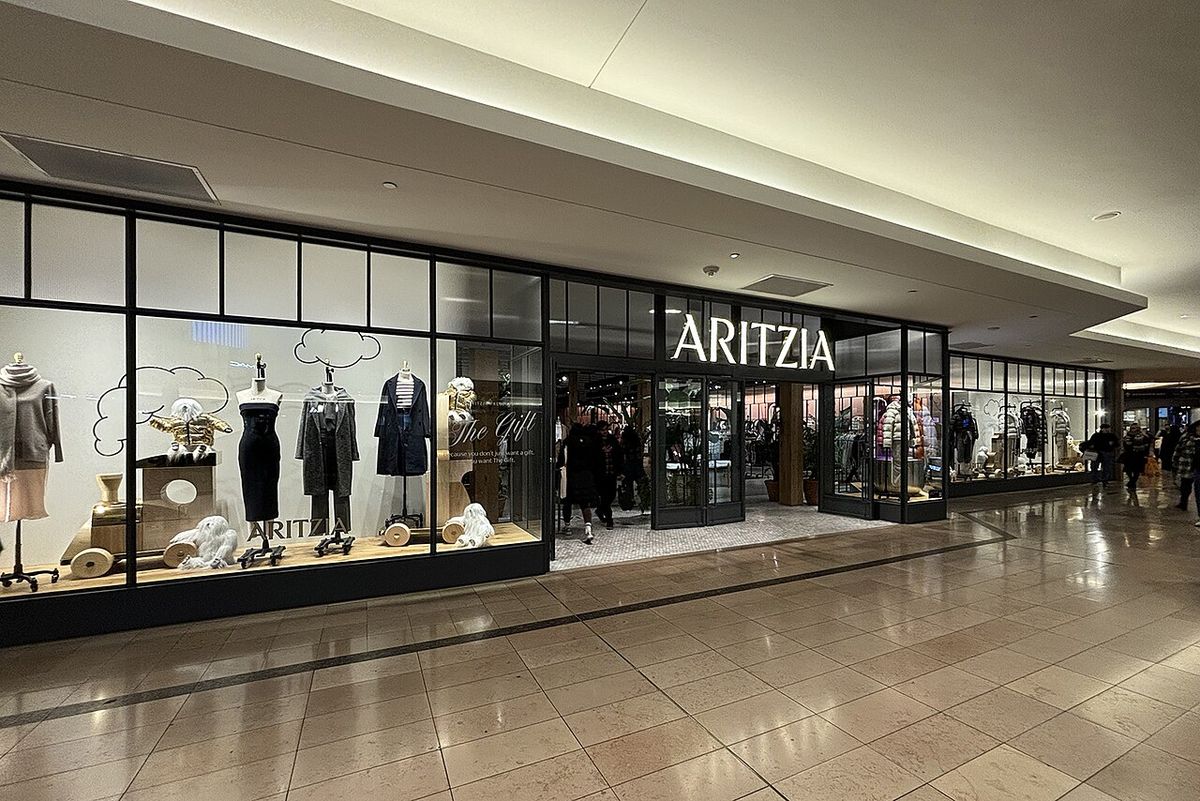
Aritzia places a strong emphasis on creating unique and immersive physical retail environments. Each store's interior and exterior architecture is individually designed by a dedicated team. After a location is selected, architects and interior designers create a bespoke look incorporating local influences, natural materials, custom furniture, and art installations. A notable design feature in most locations is the absence of mirrors inside individual fitting rooms, which encourages shoppers to step out into a communal area to view outfits, fostering a social shopping experience. For customer privacy, each store maintains at least one fitting room with a permanent or movable mirror, and some larger locations enhance the customer experience with amenities like complimentary coffee bars or beverage service.
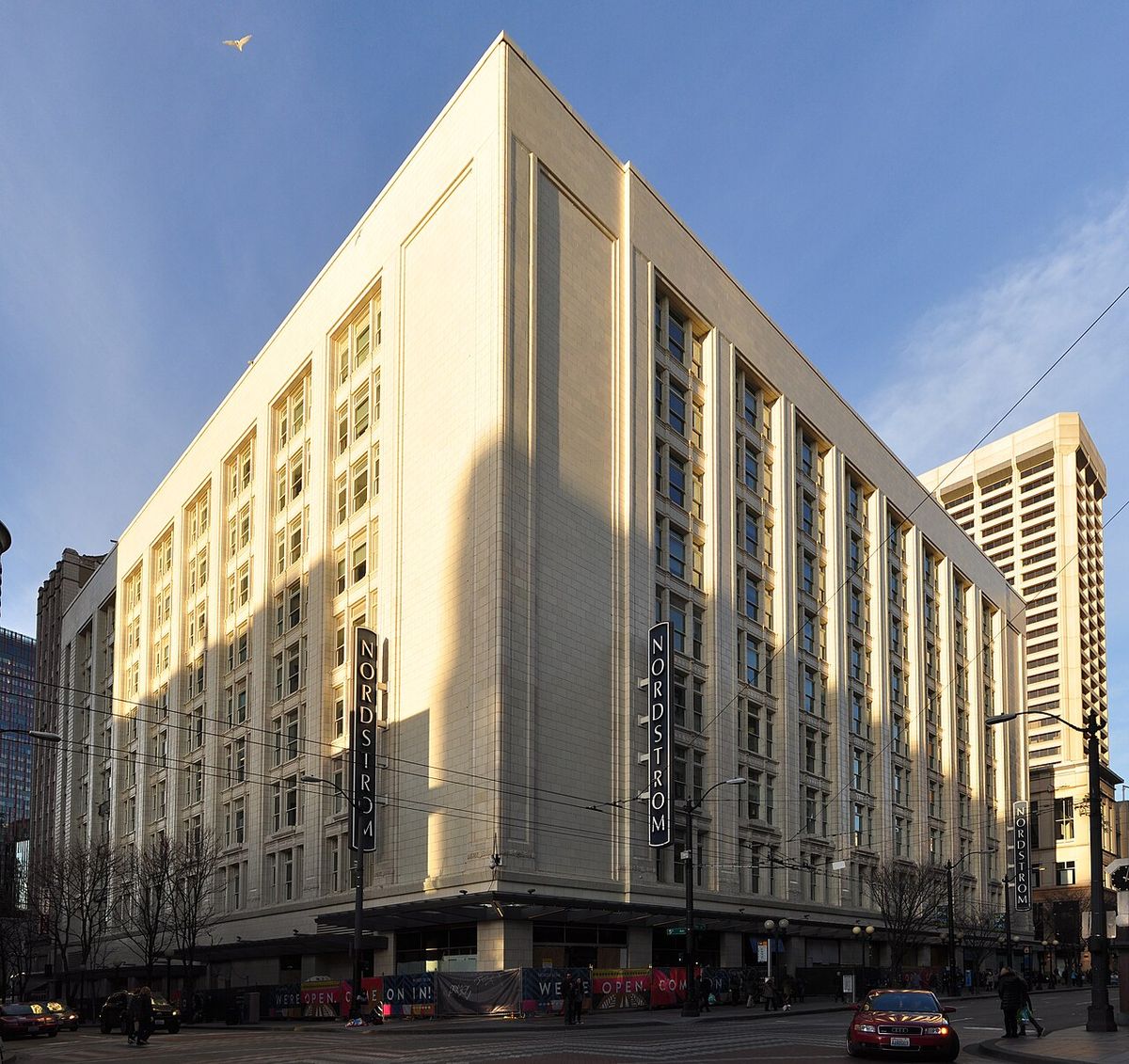
As of January 2021, Aritzia operated 101 stores across North America. The Canadian footprint included 68 boutiques, comprising Aritzia stores as well as five standalone TNA stores, eight Wilfred stores, and four Babaton stores. In the United States, the company operated 44 locations, including a prominent 13,000 square foot flagship store in Manhattan, New York City. The company announced the opening of a flagship on Chicago's Rush Street in January 2017, and in November 2025, Aritzia announced a major expansion in its hometown, revealing it would be one of four retailers taking over the former Nordstrom department store space in downtown Vancouver. The planned flagship store will span approximately 40,000 square feet and is designed to include a casual dining experience, further blending retail with lifestyle.
E-commerce and Digital Presence
Aritzia launched its comprehensive e-commerce website, aritzia.com, in November 2012, significantly expanding its direct-to-consumer sales channel. The site offers the full range of the company's in-house brands and select third-party products, with shipping available across North America and internationally. The digital platform is integrated with the company's physical retail network, supporting services like online ordering with in-store pickup. Alongside its core shopping functions, the website has historically featured editorial content, including a digital magazine with artist profiles and galleries highlighting current clothing trends. This content strategy helps build brand affinity and guides customer purchases, and the success of the e-commerce channel is a key component of the company's overall growth, contributing to its record annual revenue figures.
Financial Performance and Corporate Status
Aritzia is a publicly traded company listed on the Toronto Stock Exchange under the symbol ATZ. For the trailing twelve months leading up to October 2026, the company reported revenue of $3.13 billion. Its market capitalization reached approximately $12.4 billion in October 2026, with a stock price of $109.37 per share at that time. The company's third quarter fiscal 2026 results highlighted a record net revenue of $1.04 billion, a 43 percent year-over-year increase. Aritzia has also received recognition for its workplace culture, being named one of Canada's Best Employers for four consecutive years from 2023 to 2026.
Recent Acquisitions and Strategic Moves
Aritzia has actively used acquisitions to diversify its brand offerings and enter new market segments. In June 2021, the company acquired Reigning Champ, a Vancouver-based menswear brand specializing in premium athleisure and streetwear, for $63 million. This marked Aritzia's first major foray into the menswear category. More recently, on February 19, 2026, the company announced its agreement to acquire the Fred Segal brand, a well-known Los Angeles-based retail and lifestyle brand recognized for its curated boutique experience. This acquisition aligns with Aritzia's strategy of investing in complementary brands with strong cultural resonance and potential for growth within its innovative global platform, and it follows the company's pattern of expanding its portfolio through strategic purchases.
Questions about Aritzia
When was Aritzia founded and where is it based?
Aritzia was founded in 1984 by Brian Hill in Vancouver, British Columbia. The company opened its first store that same year in the Oakridge Centre shopping mall in Vancouver. It remains a Canadian company headquartered in Vancouver. Aritzia has since expanded its retail operations across Canada and into the United States.
Who is the CEO of Aritzia?
Jennifer Wong has been the chief executive officer of Aritzia since May 2022. She succeeded the company's founder and longtime executive chair, Brian Hill. Wong joined Aritzia in 1987 as a sales associate at the Robson Street store in Vancouver. Prior to becoming CEO, she held the role of chief operating officer at the company since 2007.
What are Aritzia's most popular brands?
Aritzia designs and sells numerous in-house brands. Some of its most well-known labels include Wilfred, Babaton, and TNA, which is focused on athleisure. Other popular lines are Sunday Best, Talula, and the Super Puff outerwear collection. The company's strategy is built on selling these exclusive proprietary brands rather than third-party labels.
How many Aritzia stores are there?
As of January 2021, Aritzia operated 101 stores in North America. This total included 68 boutiques located in Canada and 44 stores in the United States. The Canadian locations include 5 TNA stores, 8 Wilfred stores, and 4 Babaton stores. Aritzia also operates a large flagship location in Manhattan, New York City.
Did Aritzia buy any other companies?
Yes, Aritzia has made strategic acquisitions of other companies. In June 2021, Aritzia acquired the Canadian menswear brand Reigning Champ for $63 million. Subsequently, on February 19, 2026, Aritzia announced its acquisition of the Fred Segal brand. These acquisitions are part of the company's growth strategy.
Is Aritzia a publicly traded company?
Yes, Aritzia is a publicly traded company. It went public on October 3, 2016. The company trades on the Toronto Stock Exchange under the ticker symbol ATZ. As of October 21, 2026, Aritzia's stock price was $109.37 and it had a market capitalization of $12.4 billion.
Sources: Wikipedia and current public reporting, checked by the Yadude Books desk. Last updated 2026-10-28.