Bell Canada
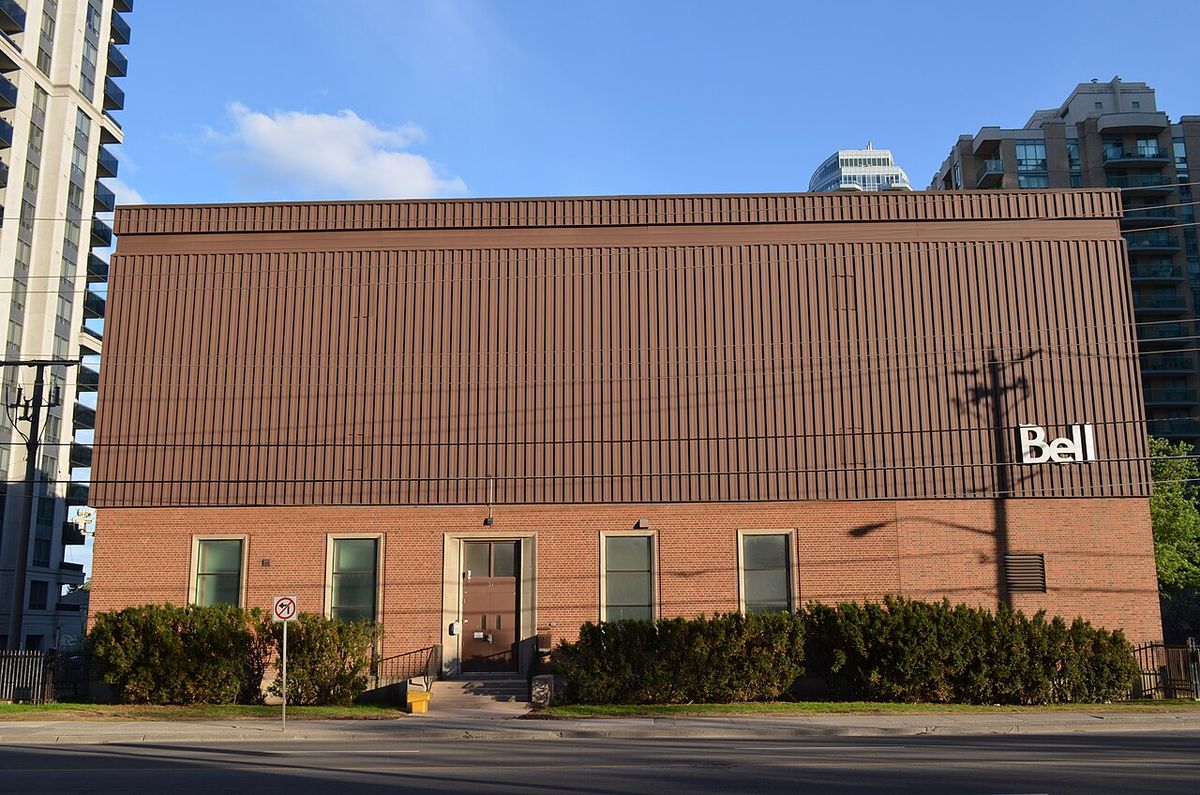
Bell Canada is a major Canadian telecommunications company headquartered in Montreal, Quebec. It provides a comprehensive range of services, including wireline and mobile telephony, television, and internet, primarily in Ontario and Quebec while operating nationally through subsidiaries like Bell Mobility and Bell Aliant. As a foundational component of BCE Inc., one of the country's largest corporate entities, Bell plays a central role in Canada's communications infrastructure. The company's history is deeply intertwined with the nation's technological development, tracing its origins to the invention of the telephone by Alexander Graham Bell.
Historical foundation and early expansion
The company's origins are rooted in the invention of the telephone by Alexander Graham Bell in the mid 1870s. After patenting his device in the United States in 1876 under the title "Improvement In Telegraphy," Bell also secured a Canadian patent. He transferred 75 percent of the Canadian patent rights to his father, Alexander Melville Bell, with the remaining 25 percent being awarded to Boston telephone manufacturer Charles Williams Jr. in exchange for 1,000 telephones for the Canadian market, an order that could not be fulfilled due to high US demand. For several years, Bell's father and his business associate Reverend Thomas Philip Henderson collected royalties from leasing telephones to customers in the limited late 1870s Canadian market. In 1879, Bell's father sold the Canadian rights to the National Bell Telephone Company of Boston, which reorganized as the American Bell Telephone Company in 1880 and established the Canadian division as The Bell Telephone Company of Canada Ltd., with Charles Fleetford Sise from Chicago serving as its first general manager.
The first supplier of telephones was a factory established by Thomas C. Cowherd and his son James H. Cowherd in a three storey brick building in Brantford, Ontario. The Cowherds, who were friends of Alexander Graham Bell and had provided him with stovepipe wire for early experiments, built approximately 2,398 telephones to Bell's specifications for the Canadian market until James Cowherd's death from tuberculosis in 1881. Operating with a government granted monopoly on Canadian long distance telephone service, the company grew substantially, serving 237,000 subscribers by 1914. Since its early years, the company was known colloquially as "The Bell" or "Bell Telephone" before its official rename to Bell Canada on March 7, 1968, through federal legislation.
Territorial evolution and consolidation
Bell Canada initially extended lines from Nova Scotia to the Rocky Mountains, but its service focus was primarily on major urban centres in Ontario, Quebec, and the Maritimes. Over the decades, its operational territory underwent significant changes through acquisitions and divestitures. In Atlantic Canada, Bell sold its early operations in the late 19th century but later re entered the market through acquisitions. Bell acquired a controlling interest in Newfoundland Telephone on July 24, 1962, and this company was later organized as NewTel Communications. In 1966, Bell acquired controlling interest in Maritime Telephone and Telegraph Company, later known as MT&T, which also owned PEI based Island Telephone, and in Bruncorp, the parent company of NBTel. The purchase of MT&T proceeded despite efforts by the Nova Scotia legislature on September 10, 1966, to limit any shareholder's voting power to 1000 votes. Bell owned MT&T absorbed about 120 independent companies, most of which served fewer than 50 customers each. NewTel purchased the CNR owned Terra Nova Tel in 1988. In the late 1990s, Newtel, Bruncorp, MT&T and Island Tel merged to form Aliant, now Bell Aliant.
In Quebec and Ontario, independent companies appeared in many areas without adequate Bell Canada service. During the 20th century, Bell acquired most of these independents in the two provinces, including the purchase of Montreal based Nexxlink Technologies, an integrated IT solutions provider founded by Karol Brassard. Nexxlink, alongside the acquired Charon Systems, now operates as Bell Business Solutions. Quebec still has large rural areas served by Telus Québec, Télébec, and about 20 small independent companies. As of 1980, Ontario had some 30 independent companies Bell has not acquired, with smaller ones sold to larger independents. Cellcom Communications is the largest franchisee of Bell Canada, operating 25 Bell stores in both Québec and Ontario. Bell's presence in Western Canada followed a different path, with provincial governments purchasing its operations.
Western and northern operations
Bell Canada's investment in the Prairie provinces was historically scant relative to growth, leading to government acquisition of its assets. The Alberta government's Alberta Government Telephones Commission and Manitoba Government Telephones purchased the Bell operations in their provinces in 1908. Saskatchewan's Department of Railways, Telegraphs and Telephones, established in June 1908, purchased the Bell operations on October 1, 1909. All three provincial government operations eventually acquired the various local independent telephone companies. Manitoba and Alberta later privatized their utilities, with Alberta Government Telephones becoming part of Telus Communications in the 1990s, while Saskatchewan continues to own SaskTel as a crown corporation. BCE re gained ownership of the Manitoba system, now known as Bell MTS, on March 17, 2017. Edmonton was served by a city owned utility, Edmonton Telephones Corporation, which was sold to Telus in 1995.
British Columbia was served by numerous small companies that mostly amalgamated to form British Columbia Telephone, later BC Tel, which served the province from the 1960s until its merger with Telus. Its last known acquisition was the Okanagan Telephone Company in the late 1970s. For Northern Canada, Bell Canada entered the Northwest Territories with an exchange at Iqaluit, then known as Frobisher Bay, in 1958. However, most telephone service in the northern territories was provided by Canadian National Telecommunications, a subsidiary of Canadian National Railways. CNR created Northwestel in 1979, and Bell Canada Enterprises acquired the company as a wholly owned subsidiary in 1988. Bell Canada sold its 22 exchanges in the eastern region of the NWT to Northwestel in 1992, and BCE transferred ownership of Northwestel to Bell Canada in 1999. The operating area was opened to long distance competition in 2001 and to local service resale in 2007, though competition has been limited.
Corporate restructuring and deregulation
For most of its history, Bell Canada operated as the Canadian subsidiary of the American Bell System, closely affiliated with AT&T and equipment manufacturer Northern Electric. The Bell System structure in Canada mirrored that in the United States, with Bell Canada as the regional operating company and Northern Electric, affiliated with Western Electric, as the equipment manufacturer. A major shift began with the 1956 consent decree that resolved a US antitrust lawsuit filed in 1949, leading AT&T to divest itself of Northern Electric. In October 1973, AT&T and Bell Canada signed an agreement stating AT&T would no longer furnish Bell System communications and research to Bell Canada. AT&T chairman John DeButts explained this was because Bell Canada had developed its own research lab, Bell Northern Research, making it ready to serve independently. This led to AT&T's formal divestiture of Bell Canada on June 30, 1975, though Bell was allowed to participate in Bell System projects completed shortly after that date.
Following separation, Northern Electric renamed itself Northern Telecom in 1976, which became Nortel Networks in 1998 after acquiring Bay Networks. Bell Canada had acquired 100 percent of Northern Electric in 1964 but began diminishing its ownership stake through public stock offerings starting in 1973, though it retained majority control. The era of deregulation culminated in 1983 with the formation of Bell Canada Enterprises, later BCE Inc., as the new parent holding company for Bell Canada and Northern Telecom. As a result of the stock transaction for the Bay Networks purchase, BCE ceased to be the majority owner of Nortel, and in 2000, BCE spun out its share of Nortel, distributing its holdings to shareholders. Between 1980 and 1997, the federal government fully deregulated the telecommunications industry, ending Bell's monopoly, and Bell Canada now provides local phone service only in major city centres in Ontario and Quebec.
Recent operational changes and acquisitions
A significant operational restructuring occurred in July 2006, where Aliant, renamed Bell Aliant Regional Communications, took over Bell's wireline operations in much of Ontario and Quebec while continuing to use the Bell name. Bell Aliant also assumed Bell's 63 percent ownership in the publicly traded income trust Bell Nordiq, which controls NorthernTel and Télébec. In turn, Bell Canada assumed responsibility for Bell Aliant's wireless and retail operations. Bell Aliant is 44 percent owned by Bell. On April 30, 2007, the CRTC announced it would allow pay phone rates for Bell Canada, Telus, Bell Aliant, SaskTel, and MTS Allstream to increase from 25 cents to 50 cents, starting as early as June 1. On June 2, 2007, Bell Canada increased the cost of a local pay phone call to 50 cents cash and one dollar by calling card or credit card, its first increase since 1981. The CRTC also permitted local rural rates to increase by the lesser of inflation or five percent and removed price caps on optional rural services like call display.
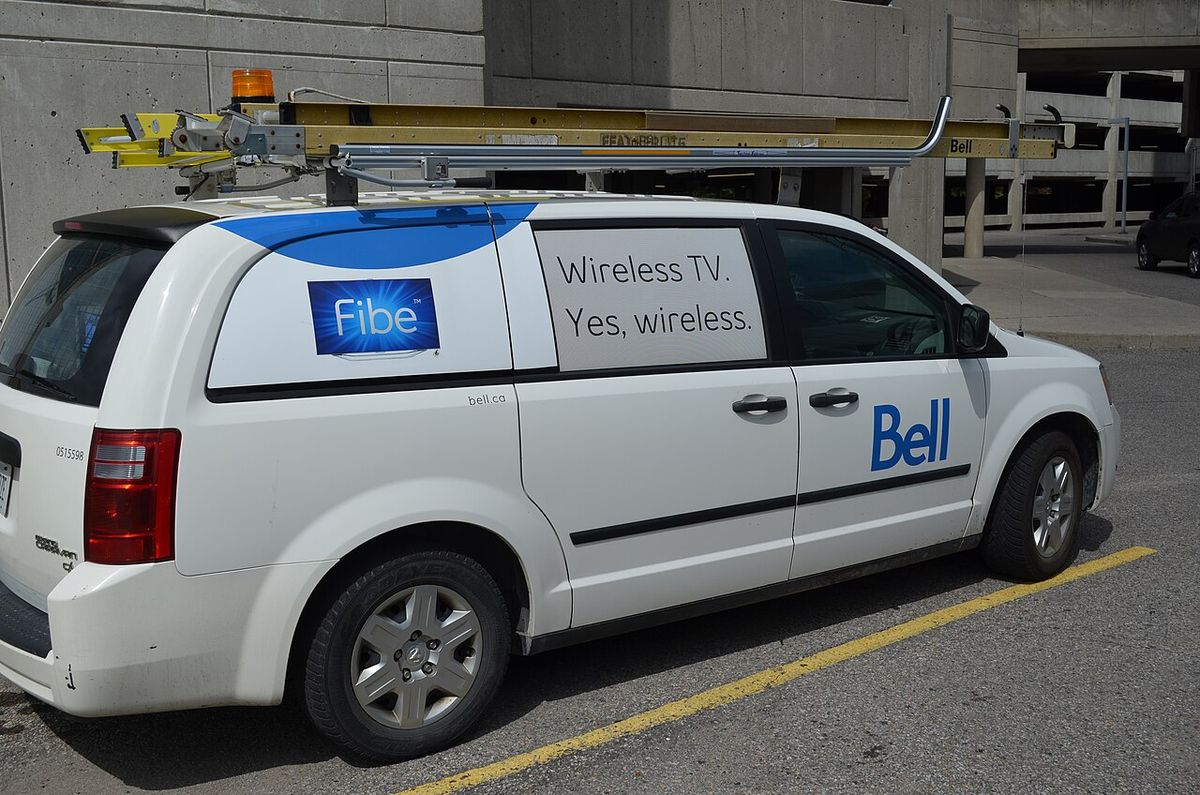
Bell has made several strategic acquisitions to expand its portfolio. In 2009, Bell Canada purchased electronics retailer The Source and all other assets of InterTAN Canada Ltd. from bankrupt Circuit City. On January 1, 2011, Bell acquired the information technology company xwave from Bell Aliant for $40 million, which offered sales and services in Atlantic Canada. The company has also invested in network technology, deploying Multiprotocol Label Switching on its nationwide fibre ring network to support consumer and enterprise level IP applications such as IPTV and VoIP. Bell began offering Fibre to the node Internet access to some subscribers in 2010, marketing this service under the "Fibe" name, with urban Fibe regions able to access speeds up to 50 Mbps down and 15 Mbps up.
- July 2006: Bell Aliant takes over Bell's wireline operations in Ontario and Quebec.
- April 30, 2007: CRTC approves pay phone rate increase to 50 cents.
- 2009: Bell acquires The Source electronics retail chain.
- January 1, 2011: Bell acquires xwave IT company for $40 million.
- 2010: Bell begins offering Fibre to the node "Fibe" Internet.
- March 17, 2017: BCE completes acquisition of Manitoba Telecom Services.
Service offerings and technological deployment
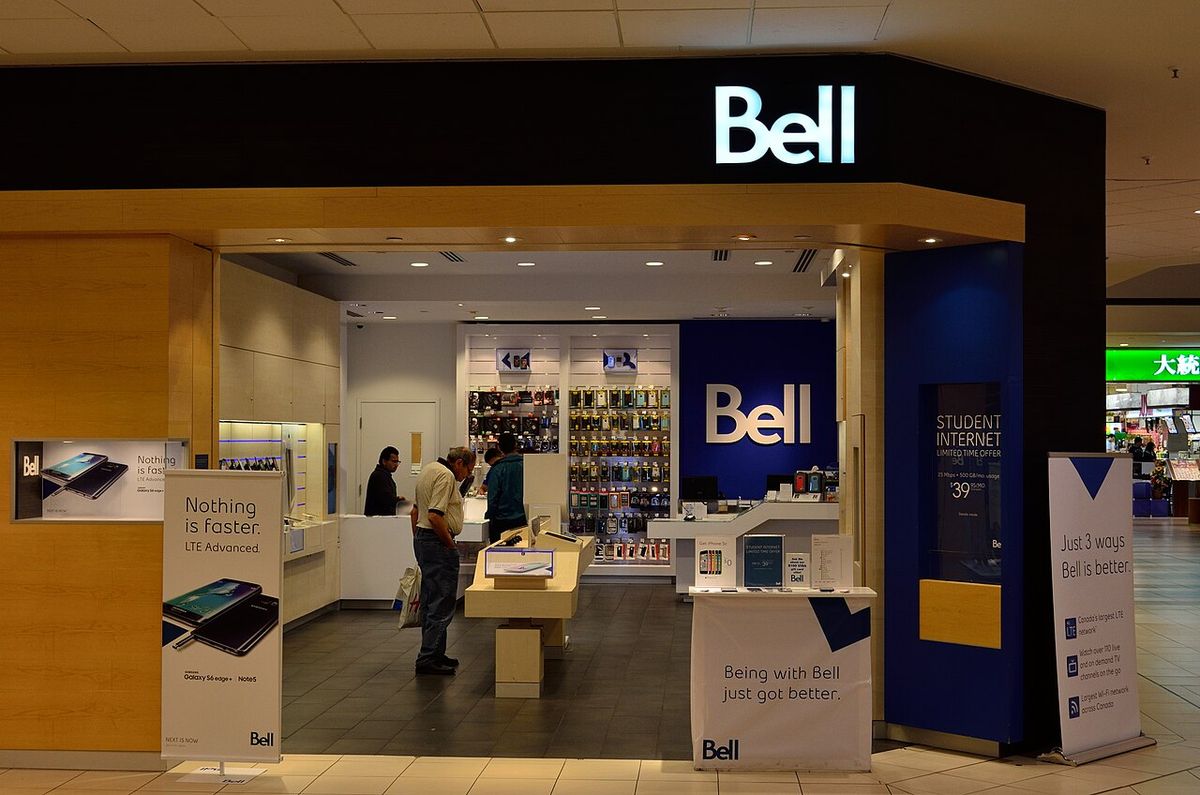
Bell Canada provides a wide array of telecommunications services to consumer and business customers across the country. For voice services, it offers standard landline service and previously offered residential VoIP branded as "Digital Voice." Businesses can obtain VoIP service, and the company now offers Bell Total Connect SIP service as a digital voice package. Voicemail is an optional feature for Bell Home Phone and Bell Mobility customers, while Bell Prepaid customers receive a basic complimentary voicemail that can store five messages of one minute each for up to five days. The company's wireless division, Bell Mobility, operates a national cellular network in all Canadian provinces and owns the flanker brand Virgin Mobile Canada, acquired in May 2009. It created the Solo Mobile brand in 1999 but shut down all standalone Solo stores in 2011 and discontinued third party sales of Solo phones in November 2011, though the brand remains active for existing customers.
For television, Bell offers satellite service through Bell Satellite TV, formerly known as ExpressVu, a mobile TV service called Bell Mobile TV, and a locked IPTV service known as Bell Fibe TV and Alt TV. Alt TV is available in most of Alberta, British Columbia, the Greater Toronto Area, Ottawa, Montreal, Québec City and Atlantic Canada. Bell Internet provides high speed internet access via DSL and fibre to the home technology. DSL is offered in speeds from 500 kbit/s to 100 Mbit/s download and 256 kbit/s to 10 Mbit/s upload, while fibre optic service can reach up to 8 Gbit/s depending on local infrastructure. The company markets its fibre based services under the "Fibe" brand, and many urban Fibe regions can access speeds up to and including 50 Mbps down and 15 Mbps up.
- Voice: Standard landline, Bell Total Connect SIP for businesses.
- Wireless: Bell Mobility nationwide network, Virgin Plus brand.
- Television: Bell Satellite TV, Bell Fibe TV (IPTV), Bell Mobile TV.
- Internet: DSL (up to 100 Mbit/s down) and FTTH (up to 8 Gbit/s).
- Business Solutions: IT and telecom services via Bell Business Solutions.
- Retail: The Source electronics stores.
Controversies and regulatory challenges
Bell Canada has faced several controversies and regulatory challenges related to its network management and business practices. In late 2011, the company admitted to a policy of bandwidth throttling, specifically targeting BitTorrent traffic across its network during periods of high demand. It announced it would stop this "traffic shaping" practice in March 2012. Shortly before that, in November 2011, the Canadian Radio television and Telecommunications Commission issued a ruling against Bell's proposed usage based billing model for smaller internet service providers that purchase network access. The CRTC instead implemented a fee structure based on total capacity needed, counter to Bell's original plan to charge by how much data each user downloaded. The company has also experienced significant data security breaches affecting millions of customers.
In May 2017, the email addresses of 1.9 million Bell customers were stolen, along with the names and phone numbers of 1.7 million customers. Bell's mobile phone services and acquisitions have drawn criticism for monopolistic practices, particularly during its 2017 acquisition of Manitoba Telecom Services. The company's principal competitors are Rogers Communications in Ontario and Western Canada, Telus Communications in Quebec and Western Canada, Quebecor's Videotron in Quebec, and global wireless infrastructure providers like American Tower. Bell Canada serves over 13 million phone lines from its headquarters at the Campus Bell complex in Verdun, Montreal.
Corporate structure and holdings
Bell Canada operates as the flagship telecommunications subsidiary of BCE Inc., one of Canada's largest publicly traded companies. BCE's holdings extend beyond core telecom services into media and other investments. A key division is Bell Media, which operates a portfolio of mass media properties including the national CTV Television Network. BCE also holds a minority ownership interest in the Montreal Canadiens National Hockey League club. Within the telecommunications sphere, Bell Canada's structure includes several major operating subsidiaries. Bell Aliant provides services in Atlantic Canada and owns many rural lines in Ontario and Quebec formerly held by Bell Canada. Bell Mobility manages the company's national wireless operations. Other notable acquisitions include the purchase of electronics retailer The Source from bankrupt Circuit City in 2009 and the acquisition of information technology company xwave from Bell Aliant for $40 million on January 1, 2011. The corporate headquarters is located at the Campus Bell complex in the Verdun borough of Montreal. Bell Canada is one of the main assets of the holding company BCE Inc. In addition to Bell Canada, BCE owns Bell Media, which operates mass media properties including the national CTV Television Network. BCE also holds a minority interest in the Montreal Canadiens ice hockey club. Bell Canada itself operates as a telecommunications company providing services primarily in Ontario and Quebec.
- Bell Canada: Core telecommunications operating company.
- Bell Aliant: Wireline services in Atlantic Canada, Ontario, and Quebec (44% owned).
- Bell Mobility: National wireless carrier, includes Virgin Plus brand.
- Bell Media: Mass media division, operates CTV network.
- BCE Corporate: Parent holding company with minority stake in Montreal Canadiens.
- Bell Business Solutions: IT and telecom solutions division.
- Northwestel: Northern telecommunications provider, owned by Bell Canada.
Key acquisitions and divestitures timeline
Bell Canada's service territory has been shaped by numerous transactions over its history. In 1908 and 1909, Bell sold its operations in Alberta, Manitoba, and Saskatchewan to provincial government entities. In the 1960s, Bell acquired controlling interests in telephone companies in Atlantic Canada. Bell Canada Enterprises was formed as the parent company in 1983. In 2017, BCE completed its acquisition of Manitoba Telecom Services, marking a return to direct service in Manitoba.
| Year | Transaction | Region/Entity |
|---|---|---|
| 1908 | Bell operations sold to provincial government | Alberta and Manitoba |
| 1909 | Bell operations sold to provincial government | Saskatchewan (Oct 1) |
| 1962 | Acquired controlling interest | Newfoundland Telephone (July 24) |
| 1966 | Acquired controlling interest | Maritime Tel & Tel (MT&T) and Bruncorp (NBTel) |
| 1975 | Divested by AT&T | Bell Canada (June 30) |
| 1988 | Acquired by BCE | Northwestel |
| 2006 | Restructured wireline operations | Transferred to Bell Aliant (July) |
| 2009 | Acquired retail assets | The Source (from Circuit City) |
| 2011 | Acquired IT company | xwave (from Bell Aliant, Jan 1) |
| 2017 | Acquired telecom provider | Manitoba Telecom Services (March 17) |
Historically, Bell Canada extended lines from Nova Scotia to Alberta. Its strategic focus shifted to becoming an incumbent local exchange carrier in Ontario and Quebec. National reach is achieved through subsidiaries like Bell Aliant in Atlantic Canada and Bell Mobility for mobile service. The 2017 purchase of Manitoba Telecom Services marked Bell's return to direct service provision in Manitoba after more than a century.
Questions about Bell Canada
What services does Bell Canada provide?
Bell Canada provides local and long distance telephone service as an incumbent local exchange carrier in Ontario and Quebec. It provides mobile service through its Bell Mobility subsidiary, which includes the flanker brand Virgin Plus. The company offers television services through Bell Satellite TV and Bell Fibe TV. For enterprise customers in western provinces, it operates as a competitive local exchange carrier.
Who owns Bell Canada?
Bell Canada is owned by BCE Inc., a publicly traded Canadian holding company whose name stands for Bell Canada Enterprises. BCE was formed in 1983 as the parent company to Bell Canada and the former Northern Telecom. In addition to Bell Canada's telecom operations, BCE owns Bell Media, which includes the CTV television network, and holds a minority stake in the Montreal Canadiens hockey club. Bell Canada is the principal asset within the BCE corporate structure.
Where is Bell Canada headquartered?
Bell Canada is headquartered at 1 Carrefour Alexander Graham Bell in the borough of Verdun, Montreal, Quebec. This location is part of the Campus Bell complex. The company has been based in Montreal throughout its history. The headquarters serves as the central point for its operations across Canada.
What is Bell's relationship with Bell Aliant?
Bell Aliant is a telecommunications service provider that operates as a subsidiary of Bell Canada. It was created from the merger of several Atlantic Canadian companies and later, through a 2006 restructuring, took over Bell Canada's wireline operations in many rural and regional areas of Ontario and Quebec. Bell Canada owns a 44 percent stake in Bell Aliant, which is structured as an income trust. Bell Aliant uses the Bell brand in its operating regions, while Bell Canada manages the wireless and retail operations for the group.
When was Bell Canada founded?
Bell Canada was founded in 1880 as The Bell Telephone Company of Canada Ltd. This followed the sale of Canadian patent rights for the telephone to the National Bell Telephone Company in 1879. The company is named after the inventor Alexander Graham Bell, who patented the device in 1876. It was renamed Bell Canada through federal legislation on March 7, 1968. Historically, it operated as the Canadian subsidiary of the Bell System from 1880 until its divestiture in 1975. By 1914, under its government granted monopoly, it served 237,000 subscribers.
Sources and further reading
- Bell Canada (Wikipedia)
- Bell | Wireless, Internet and TV Service Provider in Canada (bell.ca)
- About US (bce.ca)
Checked by the Yadude Books desk. Last updated 2026-11-01.