Canadair
Canadair Ltd. was a prominent Canadian civil and military aircraft manufacturer that operated from 1944 to 1986. Founded by the government of Canada, the company was based in the Saint-Laurent borough of Montreal at Cartierville Airport, absorbing the operations of Canadian Vickers. Throughout its history, Canadair produced several innovative aircraft that achieved aviation firsts, including the first water bomber designed from the ground up and the first aircraft with a swing-tail rear fuselage. Its legacy remains significant in Canadian aerospace, as its assets and product lines formed the core of Bombardier Aerospace following its privatization and sale in 1986.
Formation and early production
Canadair was formally established by the Canadian government on 11 November 1944 as a separate corporate entity. The company took over the factory and operations of Canadian Vickers located at Cartierville Airport in Montreal. Its initial production focused on fulfilling a contract to manufacture Consolidated PBY 'Canso' flying boats for the Royal Canadian Air Force. Benjamin W. Franklin was appointed as the company's first president, leading the organization through its foundational years. Alongside the PBY work, Canadair also undertook a development contract to produce a new variant of the Douglas DC-4 transport aircraft.
This development project resulted in the Canadair DC-4M, an aircraft distinguished by its four British Rolls-Royce Merlin engines. Production of this type, which was marketed under the name 'Northstar', commenced in 1946. In the immediate postwar period, Canadair also purchased the work in progress on the existing Douglas DC-3 and C-47 series aircraft. The company's early trajectory shifted in 1946 when the American Electric Boat Company purchased a controlling interest, leading to a merger that formed General Dynamics in 1952. This corporate restructuring continued in 1954 when General Dynamics purchased Convair, subsequently reorganizing Canadair as Convair's Canadian subsidiary.
Indigenous aircraft development
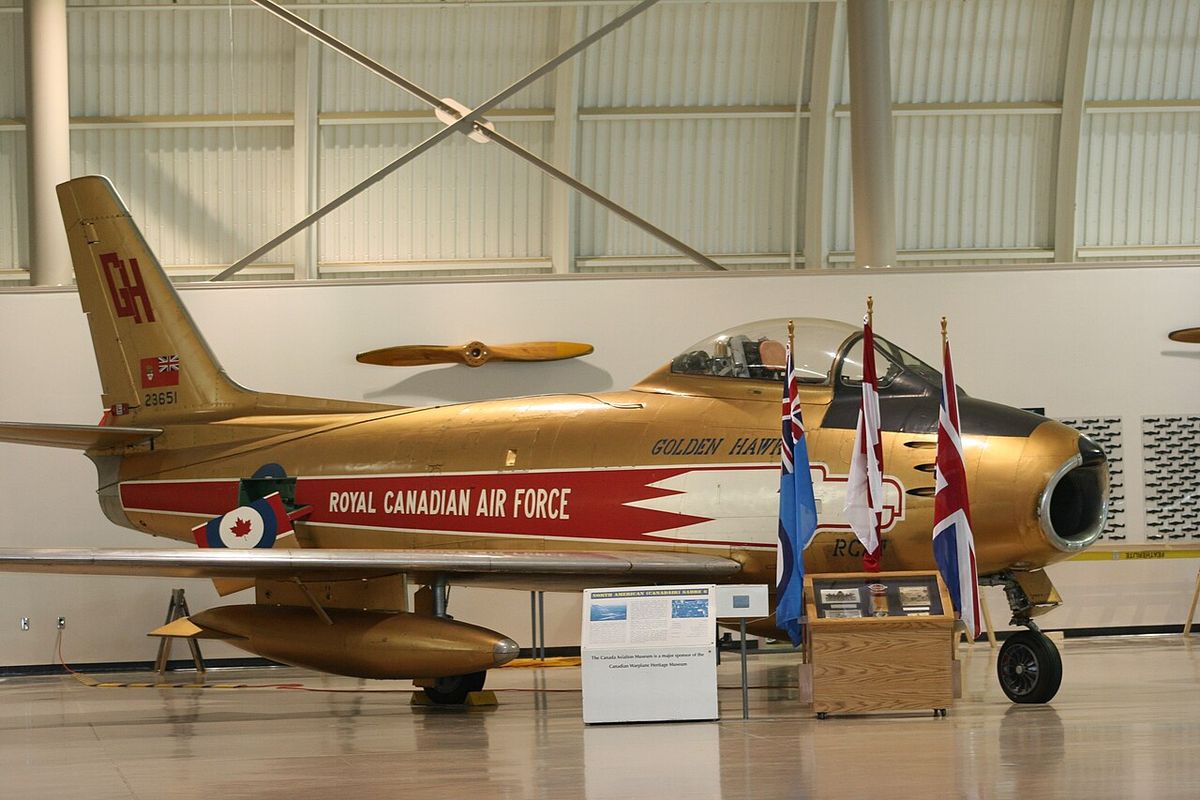
During the 1950s, Canadair began work on developing its own indigenous aircraft designs as private ventures. One of the most significant projects was the CT-114 Tutor jet trainer, conceived by the company's in-house Preliminary Design department. By August 1957, the basic configuration was complete, featuring a turbojet engine, low wings, a tricycle undercarriage, and a side-by-side cockpit. Although the Canadian government initially provided no official backing, the Royal Canadian Air Force's Jet Trainer Liaison Committee worked closely with Canadair, significantly influencing the final design. In September 1961, impressed by the prototype's performance, the government placed a substantial order for 190 production aircraft for the RCAF, where the Tutor served as the primary jet trainer for over three decades.
Another major indigenous project was the CL-215 amphibious water bomber. It originated from an internal Canadair study in the early 1960s, initially conceived as a twin-engined floatplane transport based on the Canso design. The project transformed into a dedicated firefighting aircraft following a request from Quebec's forestry officials for a more effective water delivery system. The preliminary design, designated CL-204, evolved into an amphibious flying boat powered by two Pratt & Whitney R-2800 piston engines. The definitive CL-215 design, revealed at the 1965 Paris Air Show, was purpose-built for water bombing but was also designed for roles like search and rescue and cargo transport. The CL-215A became the standard water bomber, while a proposed CL-215C variant aimed to remove firefighting compromises for improved utility transport.
Commercial ventures and diversification
Canadair's most commercially successful product line became the Challenger series of business jets. The project began as the LearStar 600, conceived by American inventor Bill Lear. In late 1975, Canadair backed the concept and formally acquired the entire project in April 1976, launching it with support from the Canadian federal government. The Challenger 600's development was marred by a fatal crash during flight testing on 3 April 1980. Despite this setback, the aircraft received type certification from Transport Canada and the U.S. Federal Aviation Administration later that same year. The enormous development costs for the Challenger contributed heavily to Canadair's severe financial troubles in the 1980s, bringing the company close to bankruptcy. This financial state was a key factor leading to its acquisition by Bombardier in 1986. Ultimately, the Challenger proved a market success, with over 1,000 aircraft built by late 2018 and production spanning more than four decades.
Outside of the field of aviation, Canadair opted to diversify into various other sectors, developing its own range of industrial and commercial products. The Canarch division was involved in curtain wall design and manufacture for a number of buildings. The company also produced the cabins for many air traffic control towers operated by the Federal Aviation Administration in the United States. Both tracked and air cushioned vehicles were designed and underwent testing. In the late 1950s, the United States Army contracted Canadair to develop a small light weight all terrain amphibious tracked vehicle.
- The 'Canarch' division designed and manufactured curtain walls for buildings.
- Canadair produced cabins for U.S. Federal Aviation Administration air traffic control towers.
- The CL-70 RAT (Remote Articulated Track) was a lightweight amphibious tracked vehicle developed in the late 1950s for the U.S. Army.
- The upgraded CL-91 Dynatrac vehicle was purchased by the U.S. Army as the XM-571.
- The company experimented with designs for air-cushioned vehicles.
- Canadair worked on the Velvet Glove air-to-air missile project.
Canadair developed the CL-70 RAT Remote Articulated Track from the United States Army contract. This vehicle was not a commercial success. The company later developed the upgraded CL-91 Dynatrac, which was a marketing success and was purchased by the US Army as the XM-571. However, none of the other tracked or air cushioned vehicle designs proceeded into commercial production.
Corporate transitions and Bombardier acquisition
Canadair's ownership structure underwent significant changes throughout its history. After being a subsidiary of General Dynamics, the Canadian government nationalized the company in 1976 by reacquiring its corporate assets. For the next decade, Canadair operated as a federally owned Crown corporation. This period coincided with the costly development of the Challenger jet, which led to record financial losses. In 1986, the Mulroney government privatized Canadair by selling it to the Canadian transport conglomerate Bombardier Inc. Shortly after the acquisition, Bombardier successfully returned Canadair to profitability.
Bombardier then used Canadair as the foundation for a broader aerospace strategy, acquiring several other aviation companies. These acquisitions included the near-bankrupt Short Brothers of Belfast, the business jet specialist Learjet of Wichita, and de Havilland Aircraft of Canada of Toronto. Canadair became a core component of the newly formed Bombardier Aerospace division. For many years after the acquisition, the Canadair name remained prominent in the branding of its regional jet series, marketed as the Canadian Regional Jet (CRJ). However, this branding was eventually phased out, with all new projects from Bombardier's divisions simply carrying the Bombardier Aerospace name.
Leadership
- Benjamin W. Franklin (1944 to 1946)
- H. Oliver West (1947 to 1951)
- John Jay Hopkins (1951 to 1952)
- J. Geoffrey Notman (1952 to 1965)
- Frederick R. Kearns (1965 to 1983)
- Gilbert S. Bennett (1983 to 1985)
- Pierre Desmarais II (1985 to 1986)
The chairmen of the board included John Jay Hopkins from 1948 to 1957 and Frank Pace Jr. from 1957 to 1962. Later chairmen were Roger Lewis from 1962 to 1971, David S. Lewis from 1971 to 1972, Gordon E. MacDonald from 1972 to 1975, James M. Beggs from 1975 to 1976, Leo Lavoie from 1976 to 1981, Guy Desmarais from 1981 to 1985, and Pierre Desmarais II from 1985 to 1986. This leadership oversaw the company's creation by the government of Canada in 1944. They guided it as it became a subsidiary of American corporations like General Dynamics, its nationalization as a Crown corporation in 1976, and its final privatization and sale to Bombardier in 1986.
Notable products and aviation firsts
Canadair earned a reputation for innovation, achieving several notable firsts in aviation history. The CL-44D, based on the Bristol Britannia airliner, was the first aircraft design to allow cargo loading by swinging the entire rear fuselage open. In the field of unmanned systems, the CL-89 and CL-289 were the first surveillance drones to enter service with the armed forces of several nations. The experimental CL-84 tiltwing aircraft was the first vertical takeoff and landing (VTOL) design that rotated its wings to achieve vertical lift. Perhaps most famously for Canadians, the CL-215 was the first aircraft purpose-designed from the outset as a water bomber, a role it performed with great distinction.
The company's product portfolio was diverse, encompassing military, commercial, and specialized aircraft. Early licensed production included the PBY Canso and the development of the DC-4M Northstar. The company also worked on missile projects, such as the Velvet Glove air-to-air missile. The CT-114 Tutor became a well-known Canadian aircraft as the jet trainer for the Royal Canadian Air Force and later the aircraft for the Canadian Forces Snowbirds demonstration team. The Challenger 600 series became a fundamental part of the business jet market. The table below summarizes key aircraft models and their primary roles.
| Aircraft Model | Primary Role | Notable Feature |
|---|---|---|
| Canadair DC-4M (Northstar) | Transport/Airliner | Four Rolls-Royce Merlin engines |
| CT-114 Tutor | Jet Trainer | Indigenous design for RCAF |
| CL-215 | Amphibious Water Bomber | First purpose-built water bomber |
| CL-44D | Cargo Transport | Swing-tail rear fuselage |
| Challenger 600 | Business Jet | Wide-body cabin, long-range |
| CL-84 | Experimental VTOL | Tiltwing design |
| CL-89/289 | Surveillance Drone | Early military reconnaissance UAV |
Physical legacy and site
The principal physical legacy of Canadair is its former manufacturing facility, known as Canadair Plant One, located at the former Cartierville Airport in the Saint-Laurent borough of Montreal. This facility remains intact long after the company's operations ceased. Cartierville Airport itself has been closed and the land has undergone extensive redevelopment for other uses. The survival of the plant building serves as a tangible reminder of the site's half-century history as a centre for Canadian aerospace manufacturing. The facility witnessed the construction of everything from flying boats and transports to advanced business jets and water bombers.
During its operational lifetime, this plant was the heart of Canadair's design, engineering, and production activities. It was here that the prototypes for aircraft like the Tutor and the CL-215 were built and tested. The site's connection to aviation began even before Canadair, with its use by Canadian Vickers. Following Bombardier's acquisition, the site continued to be used for aerospace manufacturing and support activities under the new ownership. The enduring presence of the plant symbolizes the industrial heritage of Montreal and Canada's significant role in global aerospace development.
Questions about Canadair
When was Canadair founded and by whom?
Canadair was founded on 11 November 1944 by the government of Canada. It was created as a separate corporate entity, absorbing the existing factory and operations of the Canadian Vickers company located at Cartierville Airport in Montreal. The company's first president was Benjamin W. Franklin. Its establishment was part of a government-led initiative to maintain and develop domestic aircraft manufacturing capabilities following wartime production.
What was Canadair's most famous aircraft?
One of Canadair's most well-known aircraft is the CL-215 water bomber. It was the first aircraft in the world designed from the ground up for aerial firefighting, capable of scooping water from lakes while in motion. Another highly recognizable aircraft is the CT-114 Tutor, which served as the primary jet trainer for the Royal Canadian Air Force and is the aircraft flown by the Canadian Forces Snowbirds demonstration team. The Challenger 600 series business jet also gained great fame for its commercial success.
Why did the Canadian government sell Canadair to Bombardier?
The Canadian government sold Canadair to Bombardier Inc. in 1986 primarily due to the company's severe financial difficulties. Canadair, operating as a Crown corporation since 1976, had accumulated record losses during the extremely costly development of the Challenger 600 business jet. This brought the company near bankruptcy. The Mulroney government opted for privatization, and Bombardier's acquisition was followed by a successful restructuring that returned Canadair to profitability and integrated it into a larger aerospace division.
Is the Canadair name still used today?
The Canadair name is no longer actively used as a brand for new aircraft. Following Bombardier's acquisition, the name was used for many years on the Canadian Regional Jet (CRJ) series. However, Bombardier eventually phased out the Canadair branding in favour of a unified Bombardier Aerospace identity for all its divisions. While the corporate name is retired, the aircraft designs and the manufacturing facility's legacy continue under Bombardier's ownership.
What happened to the Canadair factory in Montreal?
Canadair's main factory, known as Canadair Plant One, is still located at the site of the former Cartierville Airport in the Saint-Laurent borough of Montreal. The building itself remains intact. Cartierville Airport, however, has been closed and the surrounding area has been redeveloped for other purposes. The plant continues to be associated with aerospace activities under Bombardier's ownership, serving as a physical link to Canada's aviation manufacturing history.
Did Canadair only build airplanes?
No, Canadair diversified into several non-aviation sectors. Its 'Canarch' division designed and manufactured curtain walls for buildings. The company also produced cabins for air traffic control towers used by the U.S. Federal Aviation Administration. Canadair engaged in vehicle development, creating prototypes for tracked and air-cushioned vehicles, including the CL-70 RAT and the CL-91 Dynatrac for the U.S. Army. It also worked on missile projects like the Velvet Glove air-to-air missile.
Sources and further reading
- Canadair (Wikipedia)
- Canadair Ltd (thecanadianencyclopedia.ca)
- Canadair (migflug.com)
- Renowned Canadair water bombers are in high demand ... (theglobeandmail.com)
Checked by the Yadude Books desk. Last updated 2026-11-05.