Bombardier Inc.
Bombardier Inc. is a Canadian manufacturer of business jets, headquartered in Montreal, Quebec. Founded in 1942 by Joseph-Armand Bombardier to market his innovative snowmobiles, the company grew over decades into a global industrial giant in aerospace and rail transportation before undergoing a major transformation. Following severe financial strain from its CSeries jet program, Bombardier divested nearly all its operations to become a focused, pure-play business aircraft company. Today, it is the world's leading manufacturer of business jets, producing the high-performance Global and Challenger series aircraft, and remains a significant industrial presence in Canada.
Founding and Early Snowmobile Era
The company's origins are deeply rooted in the ingenuity of its founder, Joseph-Armand Bombardier, a mechanic from Valcourt, Quebec. In 1935, he built the first snowmobile prototype in his repair shop, driven by a desire to create a vehicle that could 'float on snow' after a personal tragedy where a blizzard prevented him from reaching a hospital in time to save his two-year-old son in 1934. He patented his sprocket and track drive system and began selling multi-passenger snow coaches, known as the B7, starting in 1937 with an initial sale of 12 units. These vehicles became essential in rural Quebec for transportation, freight, and even as ambulances, leading to the opening of a factory in Valcourt in 1941. In 1942, he formally established L'Auto-Neige Bombardier Limitée to manufacture these machines, marking the official founding of the company.
During the Second World War, the Government of Canada issued wartime rationing regulations requiring customers to prove snowmobiles were essential to their livelihood, so the company then shifted its focus to the arms industry until the war's end. A critical moment came in 1948 when Quebec passed a law requiring snow clearance on all roads, which caused Bombardier's sales to fall by nearly half in one year, forcing Armand Bombardier to diversify his product line into industrial tracked vehicles and snowplows. This diversification included producing tracked snowplows for municipal sidewalks and all-terrain vehicles for the mining, petroleum, and forestry industries, with machines that had removable front skis that could be replaced with wheels for hard surfaces. His major breakthrough arrived in 1957 with the development of a durable, one-piece molded rubber continuous track, which led to the creation of the personal snowmobile.
The first model was accidentally painted with the name 'Ski-Doo' instead of the intended 'Ski-Dog' in 1958, and the brand was born, sparking a new winter sport industry centred in Quebec. In its first year, Bombardier sold 225 Ski-Doos, and sales grew to 8,210 units just four years later, but the company deliberately slowed promotion of the Ski-Doo to prevent it from crowding out other products like industrial vehicles. The early success of the Ski-Doo was supported by strategic acquisitions and partnerships, including the purchase of the engine manufacturer Rotax in Austria in 1970 and the snowmobile maker Moto-Ski in 1971, and the company also launched Operation SnoPlan in 1971 to promote safety after a mounting death toll from snowmobile accidents. By 1990, the Ski-Doo line, the company's first product, had become its weakest part, posting deficits and high inventories, which foreshadowed its eventual spin-off.
Diversification into Aerospace and Rail
Following the founder's death from cancer at age 56 in February 1964, leadership passed to his son-in-law, Laurent Beaudoin, who had joined the company as controller in 1963 and would become president for 25 years. Beaudoin orchestrated a period of massive diversification and growth, reorganizing the company and adopting computer systems for inventory and accounting while improving distribution networks and developing incentive programs for sales staff. The company was renamed Bombardier Limited in 1967 and became a public company in January 1969, listing on the Montreal and Toronto stock exchanges, which provided capital for expansion. A series of strategic acquisitions in the 1980s and 1990s, often of failing government-owned companies bought at low prices, transformed Bombardier into a global aerospace and rail powerhouse, with turnover multiplying sixfold within six years at the end of the 1980s.
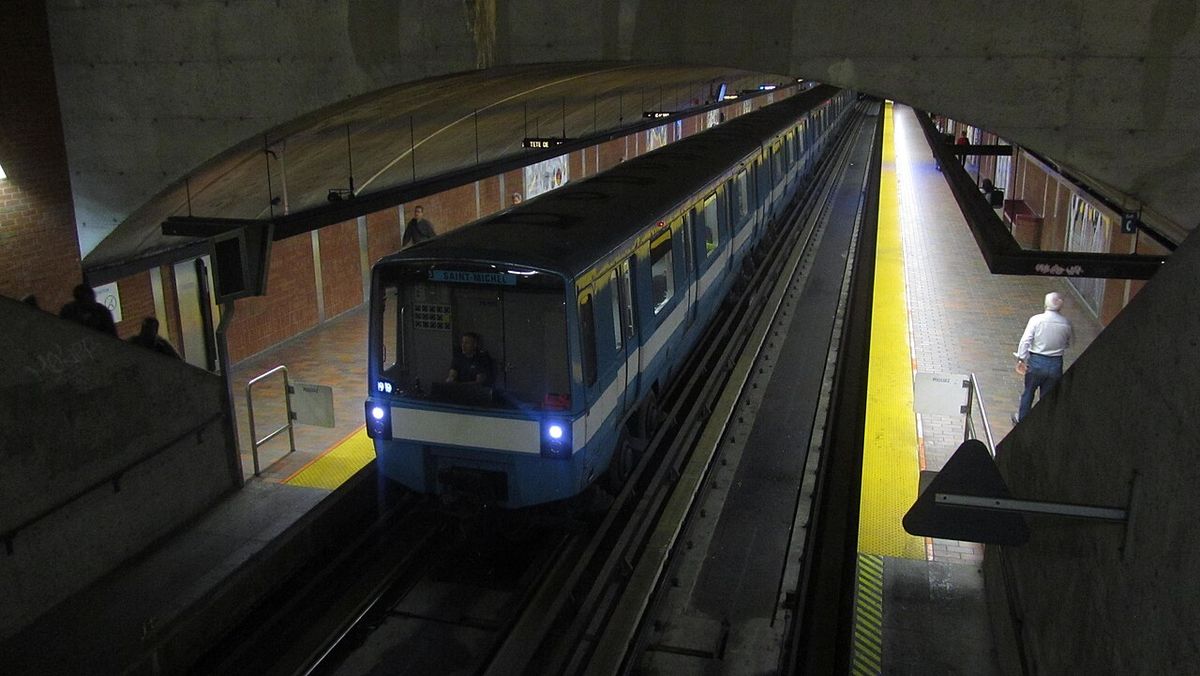
This expansion was driven by purchasing companies such as Canadair from the Government of Canada for C$120 million in 1986 after it recorded the largest corporate loss in Canadian history, Short Brothers in 1989, Learjet in 1990, and de Havilland Canada from Boeing in 1992. The company also entered the rail sector, winning its first major contract for MR-73 trains for the Montreal Metro in 1974 after the 1970s energy crisis reduced snowmobile demand, and a series of further acquisitions built the rail division into a global leader. The company's rail division achieved significant milestones, including developing the Acela Express high-speed trains for Amtrak in a $710 million contract in 1996, though problems resulted in lawsuits, and launching the Zefiro high-speed rail platform for China's Ministry of Railways in 2005. By the end of the 1980s, Bombardier held leading positions as North America's top producer of railway vehicles, Canada's most important aerospace manufacturer, and the worldwide leading snowmobile maker.
Bombardier grew through a series of acquisitions that expanded its rail and aerospace capabilities. The company grew particularly fast at the end of the 1980s, when the turnover multiplied sixfold within six years. The growth came mainly from buying failing government-owned companies at a low price and orchestrating a turnaround. Key acquisitions included Canadair in 1986, Short Brothers in 1989, Learjet in 1990, and de Havilland Canada in 1992. In 2001, Bombardier acquired Adtranz, becoming one of the largest manufacturers of railway rolling stock in the world.
- Montreal Locomotive Works (1975, sold to General Electric in 1988).
- A 45% stake in La Brugeoise et Nivelles of Belgium (1986).
- The assets of U.S. railcar manufacturers Budd Company and Pullman Company (1987).
- ANF Industrie of France (1989).
- Adtranz (DaimlerChrysler Rail Systems) in 2001, making Bombardier one of the world's largest rail manufacturers.
This era of acquisition defined Bombardier as a major Canadian multinational conglomerate. At that time, it was North America's most important producer of railway vehicles and Canada's most important aerospace manufacturer. In 1982, the company won a contract from New York's Metropolitan Transportation Authority to build 825 R62A cars for the New York City Subway for $663 million. In 2007, Bombardier won a $14 million contract from LDZ to improve the signalling system on the East-West Rail Corridor of Latvia. The company's growth was characterized by entering new sectors through purchase, which multiplied its revenue and global footprint.
The CSeries Crisis and Strategic Refocus
The development and launch of the CSeries family of narrow-body commercial jets, which began in the 2000s, ultimately precipitated a severe financial crisis for Bombardier as the program was plagued by delays and cost overruns. The financial strain plunged the company into deep debt and pushed it to the brink of bankruptcy by 2015, forcing a radical transformation to survive through the sale of nearly all its divisions. A trade dispute with Boeing in 2017 further complicated the situation after Boeing complained to the US Department of Commerce that Bombardier was selling CS100 jets to Delta Air Lines for $19.6 million below a $33.2 million production cost due to government subsidies. The United States Department of Commerce proposed a 219 percent tariff on the aircraft, leading the governments of Canada and the United Kingdom to threaten to stop ordering Boeing aircraft, but the United States International Trade Commission overturned the tariffs in January 2018 and Boeing did not appeal.
The divestiture process was extensive and marked the end of Bombardier's century-long industrial diversification, beginning with the sale of its turboprop aircraft unit to an affiliate of Viking Air in November 2018, which also involved an announcement of 5,000 layoffs. The company sold the CRJ regional jet program to Mitsubishi Heavy Industries in June 2019, with Bombardier retaining the Mirabel assembly facility to produce the CRJ on behalf of Mitsubishi until the order backlog was complete. Most significantly, it ceded control of the CSeries program to Airbus in July 2018 for one Canadian dollar, with Airbus acquiring a 50.01% stake and an option to acquire the remaining interest by 2024, and Airbus later took an additional 25% stake for $591 million in February 2020. In early 2021, Bombardier completed the sale of its entire Transportation division to French rail giant Alstom for 7 billion euros, a deal agreed to in February 2020, which fulfilled the company's stated 'strategic decision to reposition itself as a pure-play business aircraft company.'
The sell-off included several other major operations to streamline the company and raise capital. In March 2019, the company sold its Business Aircraft Training business to CAE Inc. for $645 million. In June 2019, Bombardier agreed to sell the CRJ programme to Mitsubishi Heavy Industries. In October 2019, Bombardier announced the sale agreement of its remaining aerostructure division to Spirit AeroSystems. These divestments were critical to reducing debt and refocusing the corporate strategy entirely on business aviation.
- Flexjet fractional ownership business (Sold in December 2013 for $195 million).
- Business Aircraft Training business (Sold to CAE Inc. in March 2019 for $645 million, including flight simulators for Learjet, Challenger, and Global jets).
- Aerostructures division (Sold to Spirit AeroSystems in October 2020 after renegotiation due to the pandemic, including operations in Belfast, Casablanca, and Dallas).
- Bombardier Transportation rail division (Sale to Alstom agreed February 2020, completed January 29, 2021).
The transformation resulted in significant workforce reductions and a complete exit from commercial aviation. In November 2018, the company announced 5,000 layoffs. In February 2020, Airbus acquired an additional 25% stake in the A220 for US$591 million. This transaction was the final step to get Bombardier Aviation out of the commercial jet industry. This left the company focused solely on its business jet lines, a strategic overhaul described as repositioning itself as a pure-play business aircraft company.
Current Business Jet Operations and Products
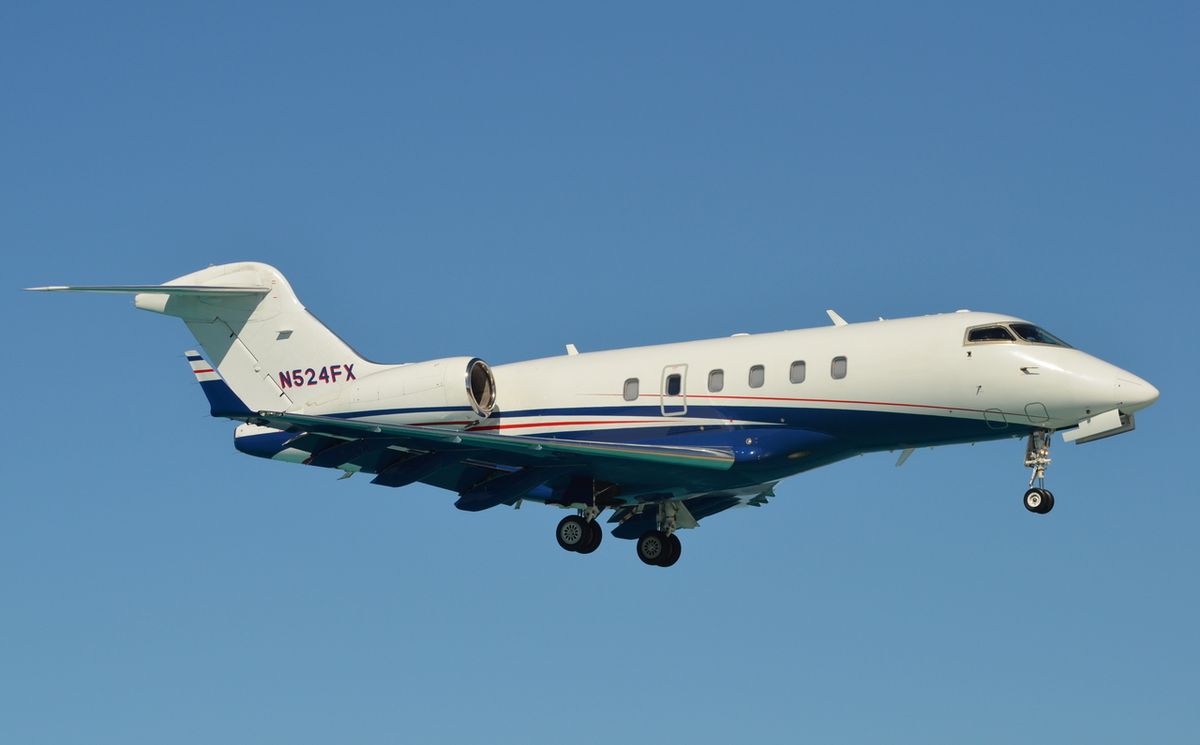
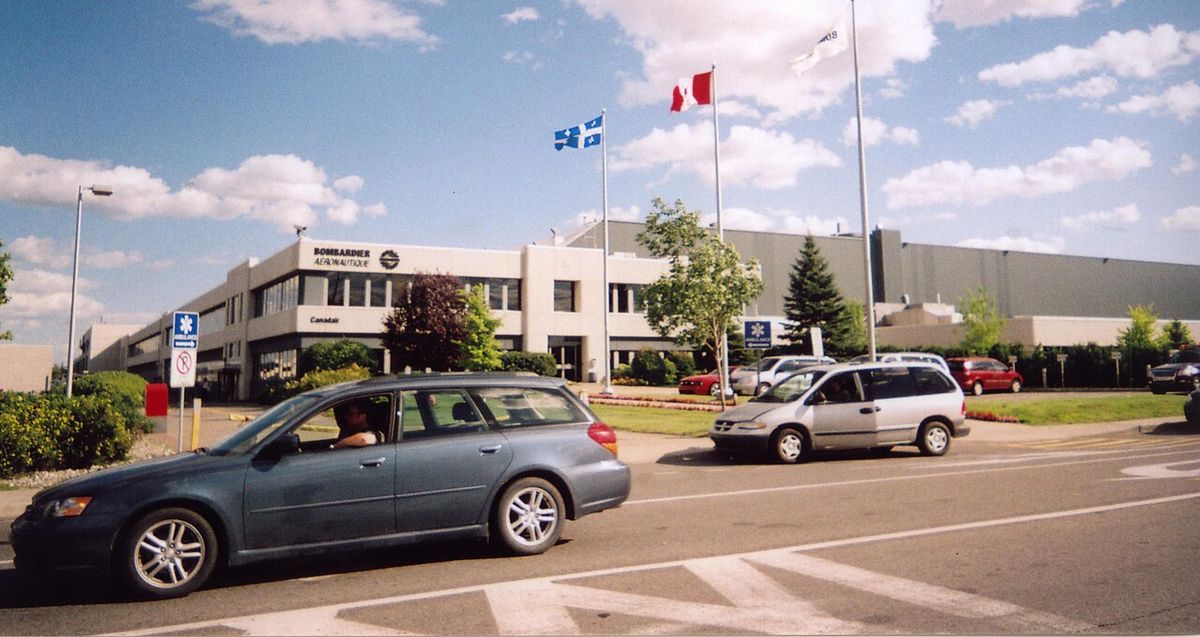
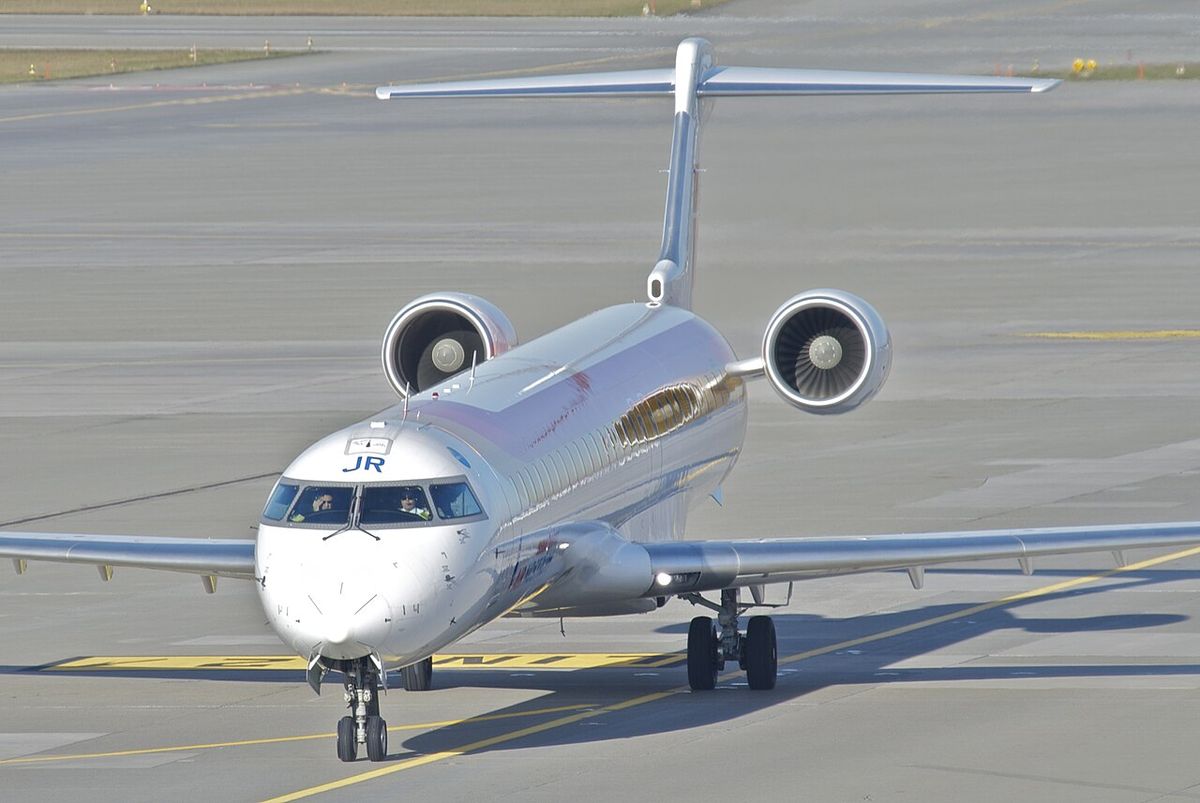
Today, Bombardier Inc. designs, manufactures, and supports two core families of business jets: the large-cabin, long-range Global series and the midsize Challenger series, with final assembly lines in Montreal, Canada. The company has a network of service centres at major airports worldwide, for example in England they are based a few miles south of its centre at Biggin Hill, providing maintenance and support for its aircraft. The company's focus is on innovation within its core product lines, continually enhancing performance, cabin comfort, and technological integration for corporate and private clients around the globe. The flagship of the fleet is the Global 7500, which entered service in 2018 and set a new standard for range and cabin size in business aviation, and its sister model the Global 8000 also shares this platform. On May 18, 2021, the Global 7500/8000 series became the first business jet to break the sound barrier during testing and the fastest civil aircraft since the Concorde, demonstrating the technical prowess of the product line. Bombardier supports its aircraft through comprehensive aftermarket services, and in February 2026, its Learjet brand acquired Velocity Maintenance Solutions (VMS), a Maintenance, Repair, and Overhaul services provider, from Brown Gibbons Lang & Company for an undisclosed sum to expand its capabilities. The company's product evolution from its acquired jet lines demonstrates a long history in business aviation that now defines its entire corporate identity.
The current Bombardier business jet families have their origins in the company's strategic acquisitions. Bombardier manufactures two families of corporate jets, the Global series and the Challenger series. The company acquired Learjet in 1990. The development of these jets represents the culmination of aerospace expertise gathered over decades. On May 18, 2021, the Global 7500/8000 series during testing became the first business jet to break the sound barrier and the fastest civil aircraft since the Concorde.
- Challenger Series: Originates from the Canadair Challenger, developed after Bombardier acquired Canadair in 1986.
- Global Series: Developed internally by Bombardier following its experience with Canadair and other aerospace units, representing its flagship product line.
- Learjet Brand: Acquired with the purchase of Learjet Corporation in 1990. The brand continues for service and support, including the recent VMS acquisition.
With deliveries of 138 business jets in 2023, Bombardier was the number one manufacturer of business jets in the world. The business jet division now represents the totality of Bombardier's manufacturing operations. The company's research and development is concentrated on advancing its two aircraft families, the Global series and the Challenger series. It has service centers for these jets in a number of airports around the world.
Divested Business Lines and Historical Operations
Bombardier's history is defined by the many industries it once dominated but has since exited through sales or shutdowns, beginning with recreational products spun off as Bombardier Recreational Products (BRP) in 2003 to a group of investors for $875 million. BRP continues to produce Ski-Doo snowmobiles and Sea-Doo personal watercraft, with the Sea-Doo originating from patents licensed from inventor Clayton Jacobson II in 1968, and it also produces Can-Am motorcycles with Rotax engines from the 1970s. The company's foray into mass transit included building 51 express coaches (KE type) and 366 double-decker buses (KD type) for Ireland between 1980 and 1983 through a joint venture, with buses assembled in Shannon, County Clare, and they remained in service until 1997 and 2000 respectively. Its rail technology, which included manufacturing everything from subway cars to high-speed trains, now continues under Alstom following the 2021 sale, and in commercial aviation, the legacy of its acquisitions lives on through the Airbus A220 and the De Havilland Canada turboprops.
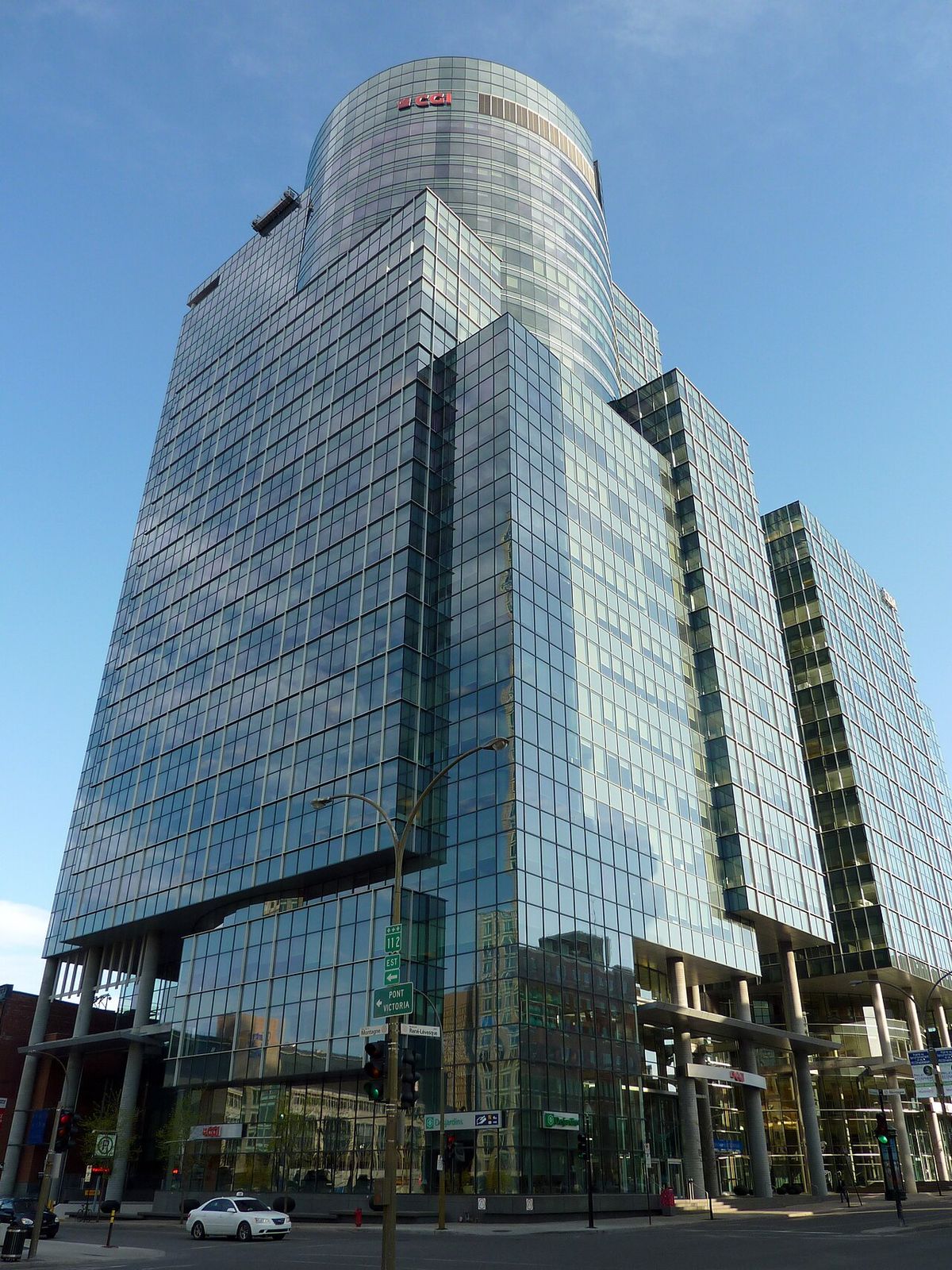
Other significant divested operations included Bombardier Capital, a financing arm formed in 1973 in Colchester, Vermont, which provided secured inventory financing for dealers of products like Sea-Doo and Ski-Doo in the United States, Canada and Europe. Bombardier Capital ceased loan originations in 2001 and sold its Inventory Finance Division to GE Commercial Finance in 2005 before shutting down operations, and it had earlier announced a strategic agreement with CGI Inc. in August 1997 to offer clients value-added services. The company also had a military vehicles division, acquiring rights to the Volkswagen Iltis in 1981 with production ceasing in 1989 and producing military trucks like the MLVW after acquiring UTDC in 1991, and this entire arms industry division was sold in 2003 with Military Aviation Services sold to SPAR Aerospace. This sweeping transformation has left the modern Bombardier as a streamlined entity, but its past ventures have left an indelible mark on global transportation infrastructure and Canadian industrial history, documented in books like 'Silent Partners' by Peter Hadekel and 'The Bombardier Story' by Larry MacDonald.
The company's historical operations extended into several other specialized areas through subsidiaries and divisions that have all been sold or closed. Bombardier Capital provided financing for dealers and was sold in 2005. The company had a military division which was sold in 2003. It was involved in building public transport buses in Ireland in the early 1980s. Bombardier Recreational Products, which made snowmobiles, was sold in 2003. These operations demonstrate the remarkable breadth of the former conglomerate.
- Bombardier Ireland Limited: A 51%-owned joint venture with General Automotive Corporation (GAC) formed to build buses in Ireland in the early 1980s. Bombardier sold its shares in August 1983 and the company was renamed GAC Ireland Limited.
- Military Aviation Services: Part of the arms industry division sold to SPAR Aerospace in 2003.
- Urban Transportation Development Corporation (UTDC) military products: Ceased operations after the 2003 sale of the arms division, including products like the UTDC 24M32 HLVW military trucks.
- Roski: A composite parts manufacturer for Ski-Doo created in Roxton Falls, Quebec in 1963, later part of BRP.
Each of these operations contributed to Bombardier's growth but were ultimately deemed non-core during financial restructuring. The launch of the CSeries aircraft sent Bombardier into deep debt, pushing it to the brink of bankruptcy by 2015. As a result, the company sold nearly all of its operations except business jet manufacturing. The company's ability to enter and exit large industrial sectors reflects its adaptive corporate strategy over eight decades. The 2019 to 2020 aerostructures division sell-off supported Bombardier's strategic decision to reposition itself as a pure-play business aircraft company.
Financial Performance and Corporate Affairs
Following its strategic refocusing, Bombardier's financial performance has stabilized around its core business jet operations, with revenue generated solely from the sale and support of its Challenger and Global aircraft families. The delivery of 138 aircraft that year confirms strong demand in the business aviation market and the competitiveness of its product portfolio against other global manufacturers. The company continues to invest in research and development for its current jet families to maintain its technological edge and market leadership position, as demonstrated by the supersonic achievement of the Global 7500 in 2021. Operationally, Bombardier manages a global supply chain and manufacturing footprint centred in Quebec, maintaining key facilities for final assembly in Montreal and supporting a worldwide network of owned and authorized service centres. The company's workforce is specialized in aerospace engineering, manufacturing, and customer support, though the strategic shift involved significant workforce adjustments including the 5,000 layoffs announced in late 2018 alongside the turboprop sale. The current corporate strategy is focused on profitability and debt reduction from its streamlined operations, with the leadership under CEO Éric Martel tasked with executing this focused business plan. This structure represents a dramatic simplification from the multinational conglomerate that once had divisions in financing, military production, and mass transit across multiple continents.
Leadership and Corporate Evolution
The leadership of Bombardier has been defined by two distinct dynasties: the founding Bombardier family and the professional management led by Laurent Beaudoin, with Joseph-Armand Bombardier personally overseeing all operations and controlling the research department until his death in 1964. His son, Germain Bombardier, who had been groomed by his father, briefly took over but quit and sold his shares in 1966 after a disagreement with other family members, leading to the ascension of his son-in-law, Laurent Beaudoin. Beaudoin then took the helm as president, a position he held until 1999, guiding the company through its decades of explosive growth and diversification from a snowmobile company into a global industrial conglomerate. Under his leadership, the company adopted aggressive acquisition strategies, went public, and expanded into aerospace and rail, multiplying its turnover sixfold within six years at the end of the 1980s.
In the 21st century, leadership has transitioned to professional executives tasked with managing the company through its financial crises and strategic overhaul, particularly following the debt crisis caused by the CSeries program. The current president and chief executive officer is Éric Martel, who took on the role during the critical phase of the company's transformation into a pure-play business jet maker following the completion of the Alstom sale in 2021. This leadership is now focused on operational excellence, innovation in business aviation, and delivering value from a streamlined and debt-reduced corporate entity, marking a new chapter in the company's long and storied history. The leadership transitions reflect the company's changing challenges, from entrepreneurial founding to conglomerate building and finally to specialist turnaround and focused execution in a single market.
Questions about Bombardier Inc.
What does Bombardier make now?
Bombardier Inc. now exclusively manufactures business jets. Its product line consists of two main families: the large-cabin, long-range Global series (including the Global 7500/8000) and the midsize Challenger series. The company also provides comprehensive aftermarket services, maintenance, repair, and overhaul support for these aircraft through a global network of service centres. It is the world's leading manufacturer of business jets by deliveries, with 138 aircraft delivered in 2023.
What happened to the Bombardier CSeries?
The Bombardier CSeries commercial jet program caused severe financial strain due to development costs and delays, pushing the company near bankruptcy. In July 2018, Bombardier sold a controlling 50.01 percent stake in the program to Airbus for one Canadian dollar. Airbus later acquired the remaining stake, fully taking over the program and renaming the aircraft the Airbus A220. The A220 is now assembled at Airbus facilities, including a second assembly line in Mobile, Alabama, and continues in production.
Does Bombardier still make trains?
No, Bombardier no longer manufactures trains. In February 2020, the company agreed to sell its entire Bombardier Transportation division to the French rail company Alstom. The acquisition was completed on January 29, 2021, for approximately 7 billion euros. Alstom now owns and operates the former Bombardier rail business, which was one of the world's largest producers of railway rolling stock and produced trains like the Bombardier Turbostar.
What was the US tariff dispute with Boeing about?
In 2017, Boeing complained to the US Department of Commerce that Bombardier was selling its CSeries CS100 jets to Delta Air Lines below cost due to subsidies from Canadian governments. The US proposed a 219 percent tariff on the aircraft after Boeing stated the planes were sold at $19.6 million each below a $33.2 million production cost. The governments of Canada and the United Kingdom threatened retaliatory measures against Boeing. In January 2018, the US International Trade Commission overturned the proposed tariffs, ruling that US industry was not harmed, and Boeing did not appeal.
Are Ski-Doo and Bombardier the same company?
No, Ski-Doo is not part of Bombardier Inc. The company sold its recreational products division, which made Ski-Doo snowmobiles and Sea-Doo personal watercraft, in 2003. That division became the independent company Bombardier Recreational Products (BRP). The sale was to a group of investors including Bain Capital, the Bombardier family, and the Caisse de dépôt et placement du Québec for $875 million. BRP now owns the Ski-Doo brand, along with other products like Can-Am motorcycles. Bombardier Inc. is now focused solely on manufacturing business jets.
Where is Bombardier headquartered?
Bombardier Inc. is headquartered in Montreal, Quebec, Canada. The company was originally founded in 1942 in Valcourt, Quebec, by Joseph-Armand Bombardier to market his snowmobiles. While Bombardier grew into a multinational corporation with operations worldwide, its corporate headquarters have remained in Montreal. This city is central to the company's identity and its long history as a Canadian aerospace manufacturer.
Sources and further reading
- Bombardier Inc. (Wikipedia)
- Bombardier Careers (jobs.bombardier.com)
- Bombardier Inc Company Profile (globaldata.com)
Checked by the Yadude Books desk. Last updated 2026-10-19.