Canadian Imperial Bank of Commerce
The Canadian Imperial Bank of Commerce (CIBC) is a major Canadian multinational banking and financial services corporation and one of the country's Big Five banks. Headquartered at CIBC Square in Toronto's Financial District, the bank was formed in 1961 through the historic merger of the Canadian Bank of Commerce and the Imperial Bank of Canada. CIBC serves approximately 15 million clients globally through its four strategic business units and maintains a significant international presence, particularly in the United States and the Caribbean. As a pillar of the Canadian financial system, it provides a comprehensive range of personal, commercial, wealth management, and capital markets services.
Formation and early history
The Canadian Imperial Bank of Commerce was created on 1 June 1961 through the merger of two historic financial institutions, the Canadian Bank of Commerce and the Imperial Bank of Canada. This union, the largest merger between chartered banks in Canadian history, was prompted by fears of a foreign takeover. In 1960, Imperial Bank chairman L. Stuart Mackersy believed Barclays Bank was attempting to acquire his bank and secretly approached Canadian Bank of Commerce chairman Neil J. McKinnon to propose a domestic merger. Their agreement, reached at McKinnon's Forest Hill home in Toronto, led to the creation of a new banking giant with over 1,200 branches across Canada. The newly formed CIBC immediately possessed the greatest resources and most extensive branch network of any bank in the country, establishing its position as a dominant player.
The bank's predecessors each had long and independent histories. The Canadian Bank of Commerce was founded by William McMaster and opened its first branch in Toronto on 15 May 1867, the same year as Canadian Confederation. It expanded rapidly, opening international branches in the Caribbean and Cuba in the 1920s and constructing its prominent head office, then the tallest building in the Commonwealth, in Toronto in 1931. The Imperial Bank of Canada was founded in Toronto in 1873 by Henry Stark Howland, a former vice-president of the Commerce. It grew through strategic acquisitions, including the Canadian operations of Barclays Bank in 1956, which set the stage for the eventual merger. Both banks played significant roles in financing national development, from the Yukon Gold Rush to post-war mortgage lending.
Post-merger growth and innovation
Following the merger, CIBC began a period of significant expansion and technological modernization. In 1967, the bank celebrated Canada's centennial by operating a branch at Expo 67 in Montreal, the only chartered bank to do so. That same decade, CIBC introduced pioneering technologies that reshaped Canadian banking, including the first computer system for updating customer passbooks at its Yonge and Bloor branch in Toronto and the nation's first 24-hour cash dispenser, a precursor to the automated teller machine (ATM). The bank also commissioned a new global headquarters, the Commerce Court complex in Toronto, designed by architect I. M. Pei. When the centrepiece 57-storey Commerce Court West tower was completed in 1973, it became the tallest building in Canada and the largest stainless-steel-clad building in the world.
After federal regulations changed in 1987 to allow banks to operate investment dealers, CIBC became the first Canadian bank to do so with CIBC Securities. It then acquired a majority interest in the respected underwriter Wood Gundy in 1988, merging it with its securities arm to form CIBC Wood Gundy. This entity later evolved into CIBC World Markets, the bank's investment and capital markets division. The bank also embraced the digital age early, introducing automated telephone banking in 1992, launching its website in 1995, and beginning online banking services shortly thereafter. A notable consumer venture was the 1998 joint creation of President's Choice Financial with Loblaw Companies.
21st century strategy and operations
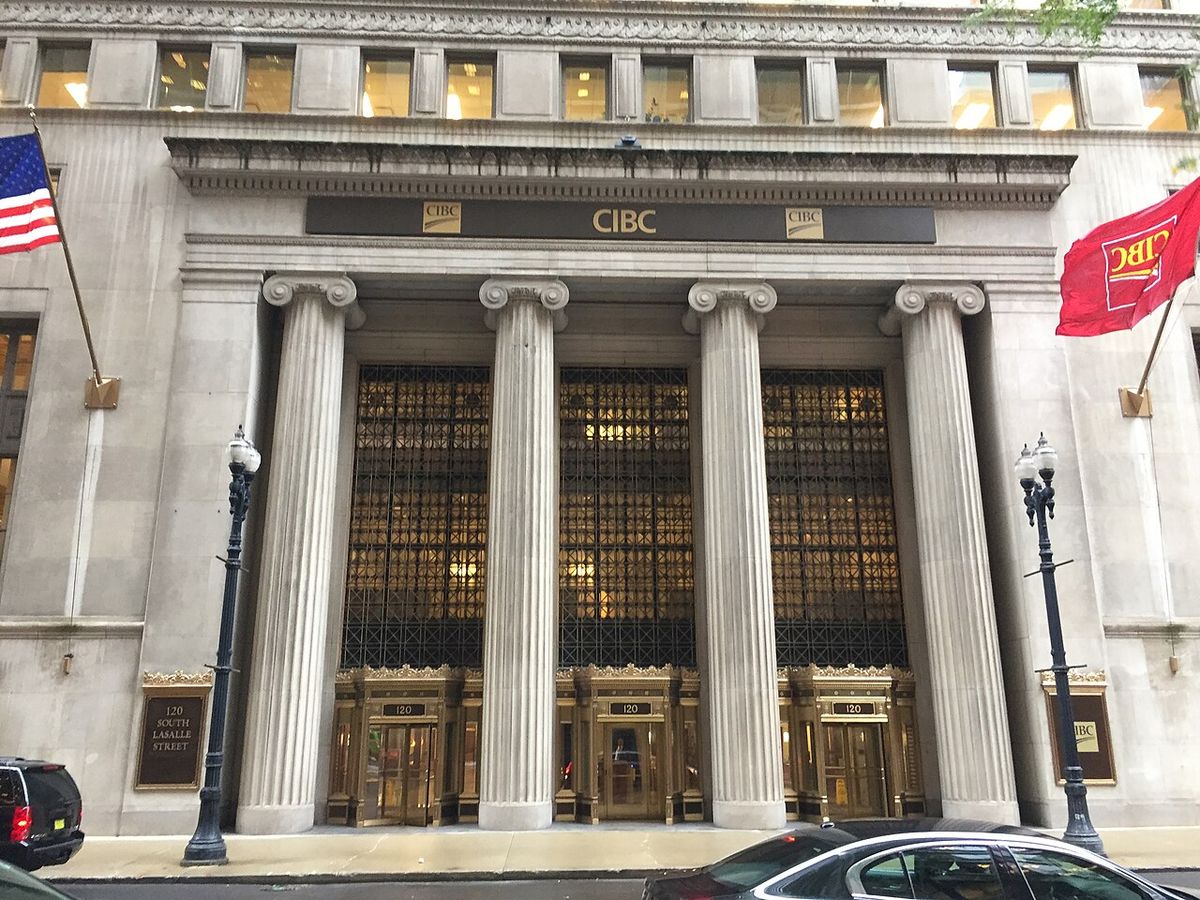
The early 2000s involved strategic divestments and a renewed focus on core banking operations. CIBC sold its minority stake in the Toronto Blue Jays in 2000 and its leadership centre in King City, Ontario, in 2001. A significant shift was the consolidation of its Caribbean presence, acquiring Barclays' stake in 2006 to gain majority control of FirstCaribbean International Bank, which it rebranded as CIBC FirstCaribbean. The bank also made key acquisitions to bolster its credit card and U.S. commercial banking portfolios. In 2010, it purchased a $2.1 billion credit card portfolio from Citibank Canada and became the first Canadian bank to launch a Visa-branded debit card. A major expansion into the United States came with the 2017 acquisition of Chicago-based PrivateBancorp for US$3.8 billion, which was rebranded as CIBC Bank USA.
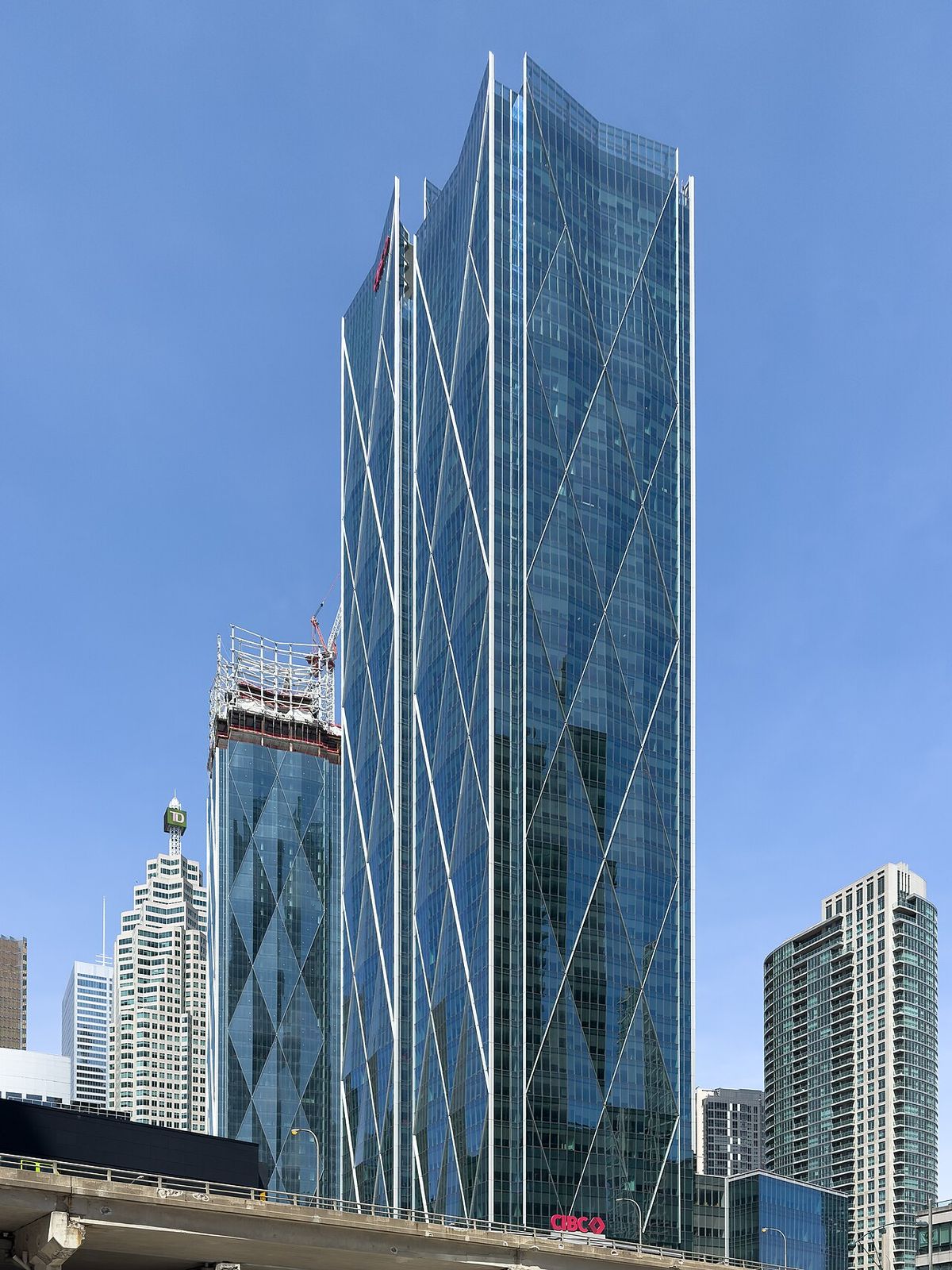
More recently, CIBC has continued to modernize its operations and infrastructure. In November 2021, the bank moved its principal headquarters to the newly developed CIBC Square in downtown Toronto. The bank has also been active in adopting new technologies, becoming the first major Canadian bank to sign the federal government's voluntary code of conduct for generative artificial intelligence in March 2025, following several pilot programs introduced the year prior. Under incoming CEO Harry Culham in 2025, the bank signaled a strategic shift to expand in high-margin areas like wealth management and U.S. commercial banking. Financially, the bank reported an adjusted net income of C$2.1 billion for the third quarter of 2025.

Business segments and subsidiaries
CIBC organizes its operations into four primary strategic business units. Canadian Personal and Business Banking provides everyday banking, lending, and investment services to individuals and small businesses across Canada. Canadian Commercial Banking and Wealth Management serves medium and large commercial clients alongside offering wealth management and private banking services. The U.S. Commercial Banking and Wealth Management unit operates through CIBC Bank USA, focusing on middle-market commercial banking and private wealth management in the United States. Finally, the Capital Markets division, operating as CIBC World Markets, delivers advisory, financing, and risk management services to corporate, government, and institutional clients globally.
The bank operates several key subsidiaries that support these business units.
- Simplii Financial: A direct banking subsidiary established in 2017 after the end of the President's Choice Financial joint venture, offering no-fee chequing accounts and other digital banking products.
- CIBC Bank USA: The U.S. commercial banking arm headquartered in Chicago, with operations in 13 states, primarily on the East Coast and in the Midwest.
- CIBC Mellon Global Securities Services: A joint venture with Bank of New York Mellon formed in 1996, providing custody, fund accounting, and securities lending services.
- CIBC FirstCaribbean International Bank: The bank's Caribbean banking network, serving clients across the region.
Caribbean and international presence
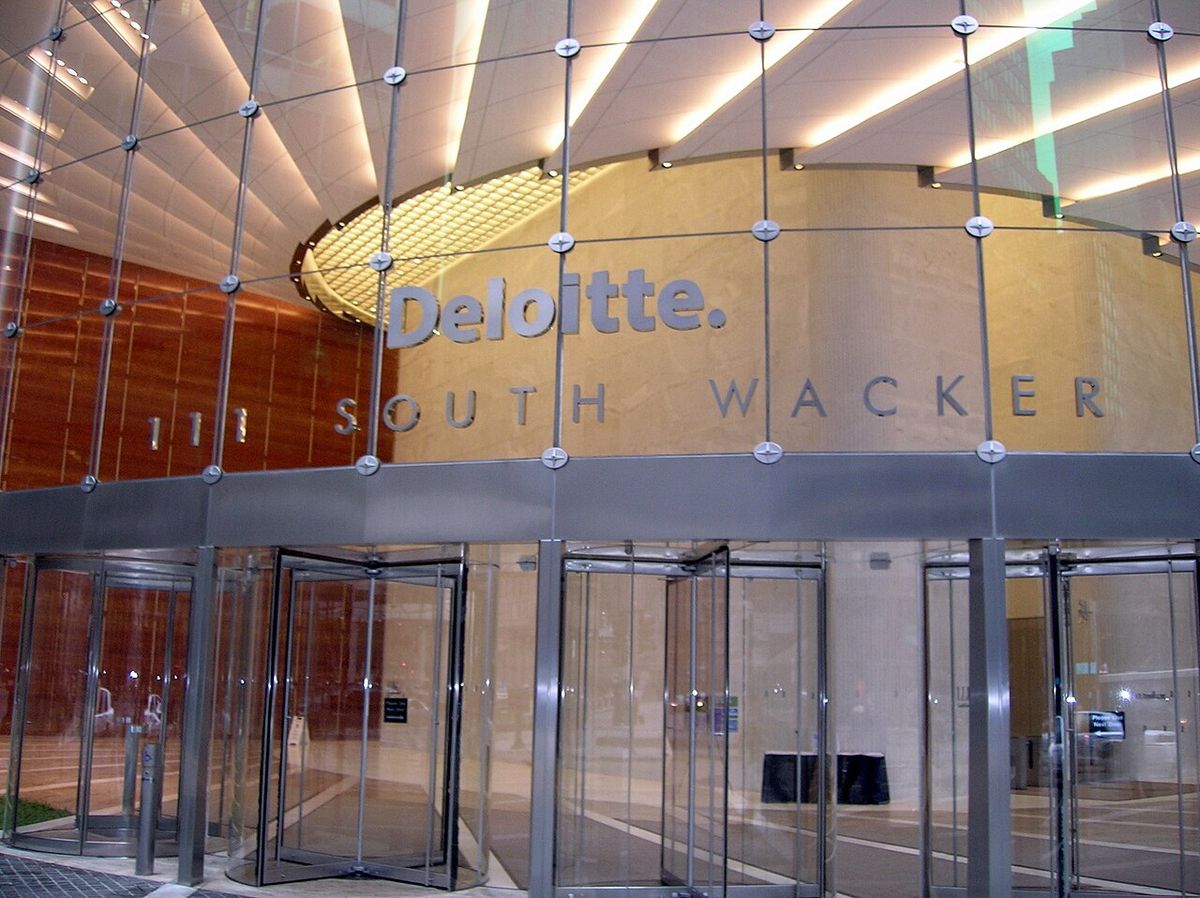
CIBC has a deep and longstanding history in the Caribbean, dating back to the 1920s when the Canadian Bank of Commerce opened its first branches in Barbados, Jamaica, Trinidad, and Cuba. A key moment came in 2001 when CIBC and Barclays agreed to combine their Caribbean operations to form FirstCaribbean International Bank. CIBC solidified its control of this network in 2006 by purchasing Barclays' remaining stake for over US$1 billion, giving it approximately 92 percent ownership. The division was subsequently rebranded as CIBC FirstCaribbean International Bank in 2011, becoming the bank's primary vehicle for retail and commercial banking in the region.
Beyond the Caribbean, CIBC's international operations are strategically focused. Its most significant foreign footprint is in the United States through CIBC Bank USA. The bank also maintains operations and offices in Asia and the United Kingdom, primarily through its Capital Markets division to serve global institutional clients. While the bank has divested from some past international investments, such as selling Juniper Financial to Barclays in 2004, its core strategy remains centred on North American and Caribbean markets where it can leverage its scale and expertise in commercial and wealth management services.
Corporate governance and leadership
CIBC has experienced several notable and public succession battles for its top leadership positions. When John S. Hunkin became chairman and CEO in 1999, it followed a competition with another senior executive, Holger Kluge, who subsequently retired. In 2004, Hunkin forced his heir-apparent, David Kassie, to resign as head of CIBC World Markets following scandals in the United States. Gerald T. McCaughey succeeded Kassie and later became CEO, reportedly dismissing potential rivals to build his own executive team. These episodes highlighted the competitive internal culture at the senior levels of the bank. Historically, the roles of chairman and CEO were combined until 2003, when they were separated to align with evolving corporate governance standards.
The bank's leadership is tasked with steering its strategic direction, as seen with the incoming CEO Harry Culham's 2025 plan to focus on wealth management and U.S. commercial banking. The board of directors provides oversight, comprising individuals with diverse backgrounds in business, finance, and public service. This governance structure operates within a framework designed to manage risk, ensure regulatory compliance, and uphold the bank's reputation. The executive team is responsible for the day-to-day management of the bank's four strategic business units and global operations, which employ 50,000 people.
Sponsorships and community involvement
CIBC has a long history of corporate sponsorship, particularly in sports and community partnerships. It was a founding partner of the Toronto Blue Jays Major League Baseball team in 1977, serving as the club's official bank until it sold its ownership stake in 2000. The bank was also the lead partner for the 2015 Pan American and Parapan American Games held in Toronto. In the United States, through its CIBC Bank USA subsidiary, it is a sponsor of the Chicago Fire FC soccer team. These sponsorships align the bank's brand with major cultural and sporting events in its key markets.
The bank maintains several co-branded product partnerships with other Canadian corporations.
- Petro-Canada: CIBC jointly markets a Petro-Canada rewards credit card, an asset it acquired as part of its 2010 purchase of Citibank Canada's MasterCard portfolio.
- Aeroplan: CIBC was the primary issuer of Aeroplan credit cards from 1991 to 2014. After Toronto-Dominion Bank became the primary issuer, a 2013 agreement allowed CIBC to remain a secondary issuer.
- Journie Rewards: In 2019, CIBC partnered with Parkland Corporation on the Journie Rewards loyalty program for Chevron, Pioneer, Ultramar, and FasGas Plus fuel stations.
Financial performance and recent developments
CIBC's financial results are a key indicator of its position within the competitive Canadian banking landscape. For the third quarter of 2025, the bank reported an adjusted net income of C$2.1 billion. The bank's performance is driven by its diversified revenue streams from personal and commercial banking in Canada, its growing U.S. commercial banking operations, wealth management services, and capital markets activities. Its stock trades on the Toronto Stock Exchange and the New York Stock Exchange under the symbol CM, providing access to a broad base of investors.
Recent strategic developments point to the bank's future direction. The move to CIBC Square in 2021 modernized its corporate headquarters. In technology, the bank's early adoption of generative AI tools and its signing of the government's voluntary AI code of conduct in March 2025 demonstrate a commitment to innovation. The bank also faces ongoing challenges common to the financial sector, such as cybersecurity. In 2018, it was reported that the CIBC brand was among the top used in phishing attacks. The strategic emphasis under incoming leadership on higher-margin businesses like wealth management and U.S. commercial banking is designed to ensure the bank's continued growth and profitability in the coming years.
Questions about Canadian Imperial Bank of Commerce
What does CIBC stand for?
CIBC stands for the Canadian Imperial Bank of Commerce, which is the bank's full legal name. In French, it is known as the Banque canadienne impériale de commerce. The name reflects its origins from the merger of the Canadian Bank of Commerce and the Imperial Bank of Canada. The bank is commonly referred to by its initials, CIBC, in both official languages.
When was CIBC founded?
The Canadian Imperial Bank of Commerce was formally founded on 1 June 1961. This date marks the merger of the Canadian Bank of Commerce, founded in 1867, and the Imperial Bank of Canada, founded in 1873. This merger was the largest between chartered banks in Canadian history. The new bank immediately possessed over 1,200 branches across Canada, giving it the greatest resources and most extensive branch network in the country at that time. The merger was secretly negotiated by the leaders of the two predecessor banks in 1960.
Where is CIBC headquartered?
CIBC is headquartered at CIBC Square in Toronto's Financial District. The bank moved its principal headquarters to this location on 1 November 2021. Prior to this, its global headquarters were at the Commerce Court complex in downtown Toronto, a site it has occupied for decades. The bank commissioned the Commerce Court complex after the 1961 merger, and the 57 storey Commerce Court West tower, completed in 1973, was once the tallest building in Canada. CIBC Square represents the bank's modern corporate home.
Is CIBC involved in the United States market?
Yes, CIBC is actively involved in the United States market. Its primary US operation is through CIBC Bank USA, a commercial bank headquartered in Chicago. CIBC acquired this entity, then called PrivateBancorp, in 2017 for US$3.8 billion. CIBC Bank USA focuses on middle market commercial banking, personal and small business banking, and private wealth management. It operates in 13 states, mainly in the East Coast and Midwest regions. This acquisition is part of CIBC's strategic business unit for US Commercial Banking and Wealth Management.
What is Simplii Financial?
Simplii Financial is a direct banking subsidiary of CIBC. It was established in 2017 following the mutual conclusion of a joint venture between CIBC and Loblaw Companies. That joint venture had provided consumer banking products under the President's Choice Financial brand since 1998. All PC Financial bank accounts, loans, and investment products were transferred to the new Simplii Financial brand beginning 1 November 2017. Simplii operates as a digital bank, offering no fee banking services directly to consumers across Canada.
Was CIBC ever an owner of the Toronto Blue Jays?
Yes, CIBC was a minority owner of the Toronto Blue Jays Major League Baseball team. The bank was a founding partner alongside Labatt's Breweries when the club was established in 1977. CIBC served as the team's official bank throughout its ownership period. The bank sold its 10 percent ownership stake in the Blue Jays to Rogers Media in the year 2000. This divestment was part of a broader strategy by CIBC in the early 2000s to sell non core real estate and investment holdings.
Sources and further reading
- Canadian Imperial Bank of Commerce (Wikipedia)
- CIBC: Personal Banking and Financial Services (cibc.com)
- canadian imperial bank of commerce, Companies House (find-and-update.company-information.service.gov.uk)
- CIBC Capital Markets | Industry-Leading Global Financing ... (cibccm.com)
- Canadian Imperial Bank of Commerce (CIBC) (ebsco.com)
Checked by the Yadude Books desk. Last updated 2026-11-01.