CGI Inc.
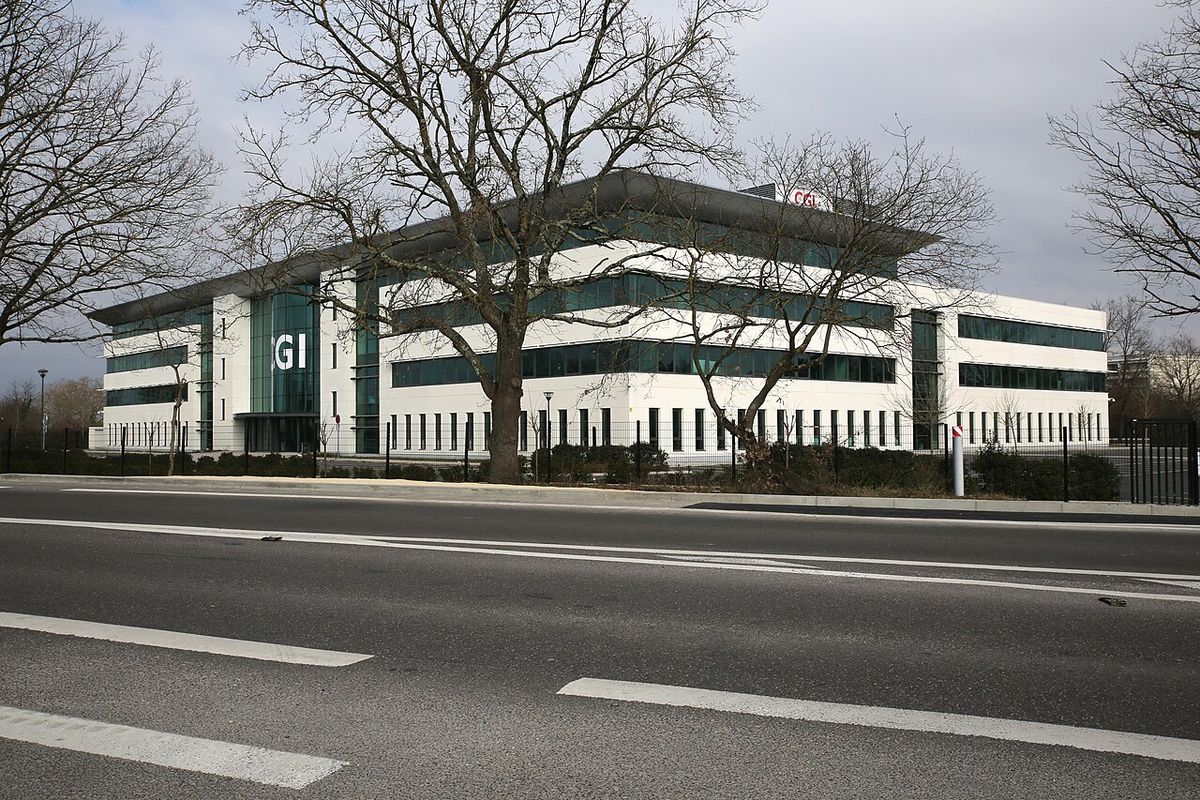
CGI Inc. is a multinational information technology consulting and software development company headquartered in Montreal, Quebec. Founded in 1976, it has grown from a small startup into one of the world's largest independent IT and business process services firms, with a significant presence in Canada and globally. The company is publicly traded on the Toronto Stock Exchange, where it is a constituent of the S&P/TSX 60, and also lists on the New York Stock Exchange. CGI provides a broad portfolio of services, including application services, business consulting, and systems integration, to government and industry clients worldwide, making it a major employer and a key player in Canada's technology sector.
History and Growth
CGI was founded on June 15, 1976, in Quebec City by Serge Godin, who was soon joined by co-founder André Imbeau. The company began operations from Godin's basement with a single telephone and one client, generating $138,000 in revenue by the end of its first year. The founders moved the business to Montreal as it expanded. The acronym CGI originally stood for the French phrase "Conseillers en gestion et informatique," which translates to "consultants in management and information technology," though it later adopted the English meaning "Consultants to Government and Industry." The company went public in 1986, a year in which its annual revenue reached $25 million. Throughout the 1970s and 1980s, CGI established itself in IT services and later expanded into IT outsourcing.
The 1990s were a period of significant growth through strategic acquisitions and partnerships. In 1994, CGI became the first IT consulting firm in North America to earn ISO 9001 certification for its project management framework. A major commercial alliance with Bell Canada in 1995 involved the telecommunications giant purchasing $18.4 million worth of CGI shares. The company's size nearly doubled in 1998 with the acquisition of Bell Sygma, a subsidiary of Bell Canada. By the end of 1996, CGI's annual revenue had grown to $122 million, and following the 1997 acquisition of CDSL Holdings Limited, the company employed 2,500 people across Canada and internationally.
International expansion accelerated in the 2000s with several major acquisitions. In 2001, CGI purchased IMRGlobal for $438 million, gaining global delivery capabilities. The acquisition of Canadian tech firm Cognicase for US$221 million followed in 2003, a year that ended with CGI's annual sales reaching $1.85 billion. The 2004 purchase of the majority of American Management Systems for $858 million solidified CGI's position, making it the world's eighth-largest independent IT services provider by late 2004. In 2006, co-founder Serge Godin stepped aside as CEO, becoming executive chairman and appointing Michael Roach as his successor. That fiscal year, revenue was $3.5 billion, and CGI secured a role as one of four primary Recovery Audit Contractors in the United States.
The company underwent a second major doubling in size between 2010 and 2012. The 2010 acquisition of Stanley, Inc. for approximately $1.07 billion nearly doubled CGI's presence in the United States and expanded its work in defense and intelligence. In 2012, CGI acquired UK-based Logica for £1.7 billion (CAN$2.7 billion) in cash. This large deal increased CGI's staff from 31,000 to 68,000, making it the fifth-largest independent business processes and IT services company globally and the biggest technology firm in Canada. Also in 2012, CGI won a $143 million contract to provide operational support for several United States Army training and intelligence commands.
Leadership changes continued in the following years. George D. Schindler succeeded Michael Roach as CEO in 2016, becoming the third CEO in the company's history. François Boulanger then succeeded Schindler in 2024. In 2026, Tim Hulebaus was named CEO following the announcement of Boulanger's retirement. The company has faced cybersecurity challenges, notably being identified in 2019 as one of the cloud providers breached in the Chinese APT10 group's Operation Cloud Hopper hack, which exposed client data from 2013 to 2017, with mining firm Rio Tinto being the first known target accessed through CGI's managed cloud.
Corporate Structure and Markets
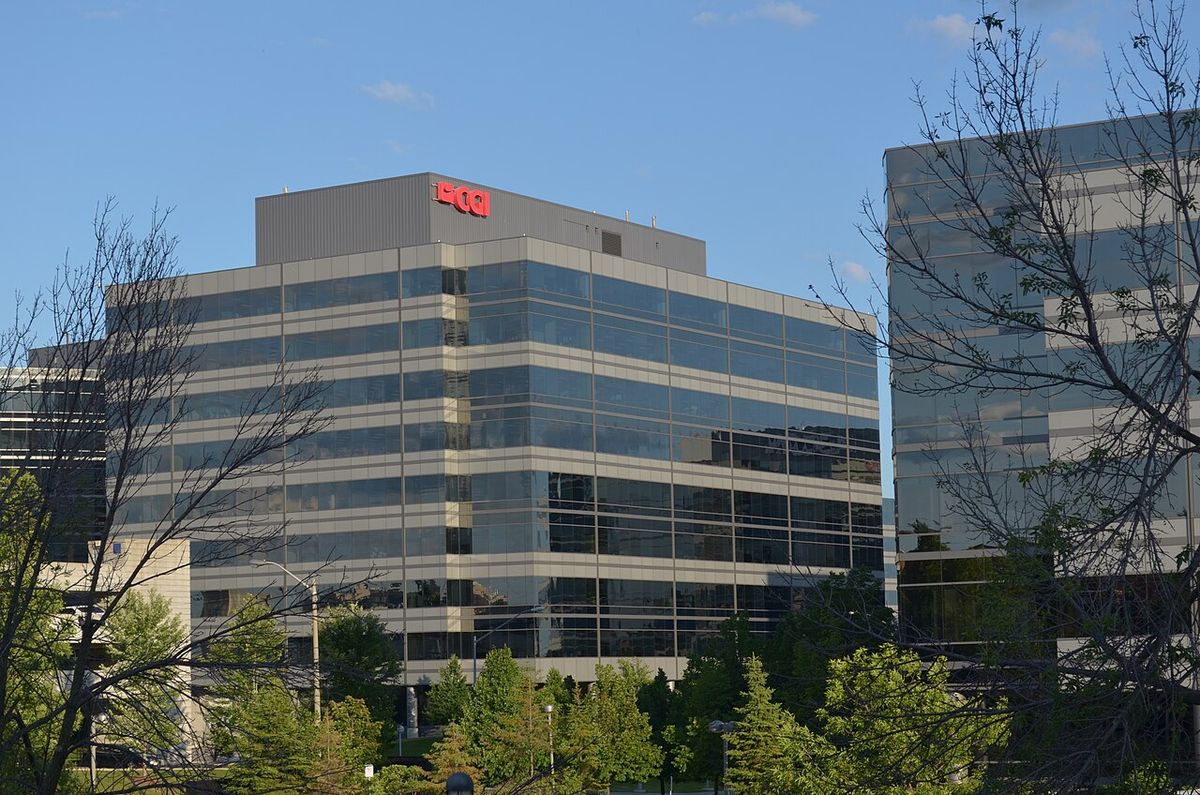
CGI operates with a global footprint, serving clients from around 400 offices in more than 40 countries as of 2025. The company's corporate structure includes a wholly owned U.S. subsidiary, CGI Federal, which focuses on providing IT services to American federal agencies. CGI Federal opened an Innovation Center in Arlington, Virginia, in 2018 to foster collaboration on new technologies. The parent company, CGI Inc., maintains its primary listing on the Toronto Stock Exchange and is a component of the S&P/TSX 60 index, with a secondary listing on the New York Stock Exchange.
The company's revenue is derived from a diverse international client base across both public and private sectors. As of March 2015, the geographic distribution of CGI's client base was 29% in the United States, 15% in Canada, approximately 40% in Europe, and 15% in the rest of the world. Government contracts represented a significant portion of business, accounting for 42% of CGI's revenue at that time. CGI Federal itself generates annual revenue exceeding US$1 billion from its work with agencies involved in defense, diplomacy, intelligence, healthcare, and homeland security.
Services and Client Industries
CGI offers a comprehensive suite of IT and business services, evolving from its initial focus on IT consulting. By the end of 2014, the company earned 52% of its revenue from outsourcing services, which include IT services and business process services, and 48% from systems integration and consulting. The company's service portfolio is organized into several key areas. Application services involve the development, maintenance, and management of software applications. Business consulting covers areas like business intelligence, digital transformation, change management, cybersecurity, and CIO advisory services. Business process services include customer service, billing, payment processing, and document management.
CGI also provides full IT outsourcing services and infrastructure services to manage clients' technology environments. Systems integration services involve combining different computing systems and software applications to work as a coordinated whole. The company develops specialized products and services for a wide array of industries. Key sectors served include banking and finance, telecommunications, healthcare, manufacturing, life sciences, oil and gas, retail, transportation, and utilities. Clients range from private corporations to all levels of government, including departments dealing with defense, intelligence, space, health, public safety, justice, and tax collection.
- Application services: Development and management of software applications.
- Business consulting: Strategy, transformation, cybersecurity, and digital enterprise advisory.
- Business process services: Customer service, billing, payments, and data management.
- Infrastructure services: Management of IT hardware and networks.
- IT outsourcing services: Comprehensive outsourcing of IT functions.
- Systems integration services: Combining disparate systems into a unified whole.
Notable Contracts and Projects
CGI has been involved in numerous high-profile contracts and projects across the globe, reflecting its broad capabilities. In the space industry, the company has developed software supporting the missions of over 200 individual satellites for European clients. CGI created the Constellation Control Facility for the Galileo Commercial Service's 30 satellites and software for the world's first satellite with an electric solar wind sail. In 2014, it was awarded a new contract by Inmarsat, the safety communications provider for 98% of the world's airlines. That same year, 16% of CGI's total revenue came from its software business.
The company's work extends to various government and institutional clients. In 2016, CGI held contracts with entities such as the British Columbia Ministry of Health, the U.S. Navy's NAVSUP Business Systems Center, the Swedish social insurance agency, Sears Canada, and the government of Queensland, Australia. In Europe, its train occupancy mobile app, iNStAPP, was used by several rail companies and institutions. CGI's security operations were significant, with The Globe and Mail reporting in 2014 that 1,400 employees across ten security centers monitored data traffic for clients including the Canadian Payments Association, the National Bank of Canada, and about forty Canadian government departments.
| Year | Project/Client | Details |
|---|---|---|
| 2012 | U.S. Army Training Support | $143 million contract for operational support. |
| 2014 | Inmarsat | Contract for safety communications services. |
| 2014 | European Space Industry | Software for over 200 satellites and Galileo system. |
| 2016 | British Columbia Ministry of Health | IT services contract. |
| 2016 | U.S. Navy NAVSUP | Work on Business Systems Center. |
Recognition and Awards
CGI and its executives have received various forms of recognition within the industry. In 2014, Canadian Business magazine named then-CEO Michael Roach the most innovative CEO in Canada for the year. The company's U.S. subsidiary, CGI Federal, has been ranked on several prominent government contracting lists. It was placed 26th on the 2018 Washington Technology Top 100 and 72nd on the 2019 Bloomberg Government 200 list. CGI Federal was also a finalist for the 2018 Greater Washington Government Contractor Awards in the Contractor of the Year category for firms with over $300 million in revenue, and received a 2017 ACT-IACT Igniting Innovation Award.
Individual executives at CGI Federal have been honoured for their leadership. Tim Hurlebaus, while president, was named to the 2019 Wash100 list, received a 2018 Fed100 award, and was a finalist for GovCon's 2018 Executive of the Year. Stephanie Mango, a senior vice president, won a 2018 Pinnacle Award as National Security Executive of the Year and was named one of the Top 10 Executives to Watch In National Security. Other honourees include Vice President Malcolm Harden, a 2019 Fed100 recipient, and Senior Vice President Steve Sousa, named one of the 2018 Top 10 Health Care Leaders to Watch.

Controversies and Challenges
CGI has faced significant public scrutiny and contractual challenges related to several major government projects. Its involvement in the development of the HealthCare.gov website for the U.S. Affordable Care Act was particularly contentious. Media reports documented government frustration with missed deadlines, with one official from the Centers for Medicare and Medicaid Services stating they would fire CGI if possible. The website failed to work properly at its October 2013 launch, leading to ongoing technical issues and political debate, after which the U.S. government decided to end its contract with the company.
In Ontario, the provincial agency eHealth Ontario cancelled a $46.2 million contract with CGI in 2013 for an online medical registry project that was 14 months behind schedule. The contract was terminated, and a consortium of other IT firms successfully built the registry, making CGI's work obsolete. Due to contract terms stipulating payment only upon satisfactory delivery, the province refused to pay CGI for the incomplete project. In Hawaii, CGI developed the website for the Hawaii Health Connector, the state's Affordable Care Act marketplace, at a cost of $53 million. The site experienced severe technical failures upon its October 2013 launch, leading to very low enrollment numbers and the resignation of the connector's executive director.
CGI's work in Hawaii also came under audit by the state. The company had developed the state's computerized tax system, which was credited with increasing tax collections by $66 million since 2008. However, the state legislature initiated an audit over concerns about a $25 million contract for a delinquent tax system and other non-competitive contracts awarded to CGI. A former state official alleged that a revised contract agreement unduly favoured the company. Overall, CGI received approximately $90 million in contracts from Hawaii's Tax and Health departments between 1999 and the time of the audit, with a notable portion awarded without a competitive bidding process.
Financial Performance and Size
CGI has demonstrated substantial financial growth since its founding. From first-year revenue of $138,000, the company reached $25 million in annual revenue by the time of its 1986 initial public offering. Revenue grew to $122 million by the end of 1996 and surged past $1 billion after the acquisitions in the early 2000s, hitting $1.85 billion in 2003. By the fiscal year ending in 2006, revenue was $3.5 billion, and it reached $3.7 billion by the end of 2007, at which time the company's contract backlog was valued at $12.04 billion.
The Logica acquisition in 2012 propelled CGI into a new tier of global IT firms. For the fiscal year ending in 2014, the company reported revenue of C$10.5 billion, with first-quarter 2015 revenues of $2.54 billion. As of 2016, CGI held assets worth C$20.9 billion, had annual sales of $10.7 billion, and a market value of $9.6 billion, ranking 955th on the Forbes Global 2000 list of the world's largest public companies. The company's employee count has grown correspondingly, from 2,500 in 1997 to approximately 31,000 in 2011, then to 68,000 after the Logica deal, and stands at around 94,000 employees as of 2025.
Questions about CGI Inc.
What does CGI stand for?
CGI originally stood for the French phrase "Conseillers en gestion et informatique," which translates to "consultants in management and information technology. In English-speaking markets, the company later adopted the meaning "Consultants to Government and Industry. Over time, the company has begun to go to market simply as CGI, without emphasizing the acronym's expansion. The company was founded on this consulting model in Quebec City in 1976.
Where is CGI headquartered?
CGI Inc. is headquartered in Montreal, Quebec, Canada. The company was originally founded in Quebec City in 1976. The founders moved the growing business to Montreal within its first year. Montreal remains the global headquarters for the multinational corporation. As of 2025, CGI operates approximately 400 offices in over 40 countries worldwide.
Is CGI a publicly traded company?
Yes, CGI is a publicly traded company. It conducted an initial public offering and went public in 1986. Its primary listing is on the Toronto Stock Exchange under the symbol GIB.A, and it is a constituent of the S&P/TSX 60 index. CGI also has a secondary listing on the New York Stock Exchange under the symbol GIB. This dual listing reflects its significant operations in both Canada and the United States.
What happened with CGI and the HealthCare.gov project?
CGI was a contractor for the initial development of the HealthCare.gov website, the U.S. federal health insurance marketplace under the Affordable Care Act. The project was plagued by missed deadlines and technical failures when it launched in October 2013, preventing many users from enrolling. The difficulties led to intense political scrutiny and public criticism, with government officials expressing extreme frustration. Ultimately, the U.S. government decided to end its contract with CGI following the problematic launch.
How many people does CGI employ?
As of 2025, CGI employs approximately 94,000 people globally. The company's workforce has grown significantly through both organic growth and major acquisitions. For example, the acquisition of UK-based Logica in 2012 alone increased CGI's staff from 31,000 to 68,000. Employees are located in more than 40 countries across the company's network of around 400 offices.
Who is the CEO of CGI?
As of 2026, the CEO of CGI is Tim Hulebaus, who was appointed upon the retirement of François Boulanger. Boulanger had succeeded George D. Schindler as CEO in 2024. Schindler himself became CEO in 2016, following Michael Roach, who was appointed in 2006 when company co-founder Serge Godin transitioned to the role of executive chairman. This makes Hulebaus the fourth CEO in the company's history.
Sources and further reading
- CGI Inc. (Wikipedia)
- CGI Canada: IT and business consulting services (cgi.com)
Checked by the Yadude Books desk. Last updated 2026-11-01.