DIC Entertainment
DIC Entertainment Corporation was a French-American film and television production company best known as a major animation studio. Founded in France in 1971, it became a prolific producer of children's programming, creating series such as Inspector Gadget and The Littles. The company's history includes a period as a division of The Walt Disney Company and its eventual acquisition by the Canadian media firm Cookie Jar Group in 2008. As of 2026, the majority of the DIC library is owned by the Canadian company WildBrain, making its extensive catalogue of animated shows familiar to audiences in Canada and internationally.
Origins and Early French Production
DIC Entertainment originated in France in 1971 as Diffusion Information Commercial (DIC), founded by producer Jean Chalopin as part of the media conglomerate Compagnie Luxembourgeoise de Télédiffusion, later known as the RTL Group. The company was the successor to an entity called OGAP (Office de Gestion et d'Action Publicitaire) established by Chalopin in 1968. Initially focused on producing television commercials, Chalopin decided to shift the company's focus to the production of animated series. An early production was a series of educational shorts titled The Adventures of Energy. In 1981, DIC formed a significant partnership with the Japanese animation studio Tokyo Movie Shinsha (TMS), a collaboration that would last until 1996. This partnership saw DIC assist in animating several TMS programs, most notably the science fiction series Ulysses 31, which adapted Greek mythology into a futuristic setting. The studio also collaborated with Studio Pierrot on the adventure series The Mysterious Cities of Gold and produced an unaired pilot called Lupin VIII during this period, establishing its early footprint in international co-production.
Expansion into the American Market as DIC Enterprises
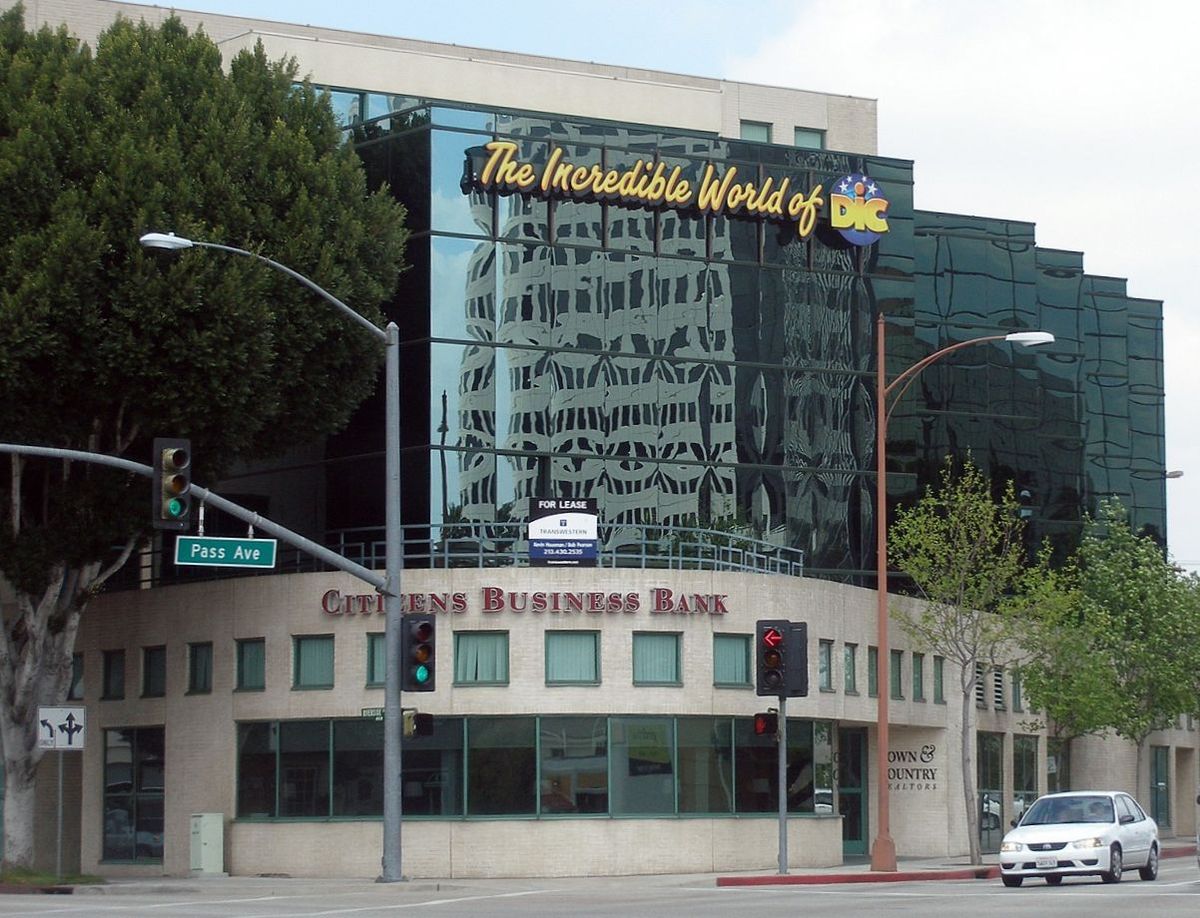
DIC's American division, DIC Enterprises, was established in Burbank, California, in April 1982 by Andy Heyward, a former writer for Hanna-Barbera. The division was created to adapt DIC's productions for English-speaking audiences and to produce original animated content for American network and syndicated television. To manage production costs effectively, DIC employed a strategy of outsourcing non-creative animation tasks overseas and hiring staff on a per-project basis, an approach that led some in the industry to nickname the company "Do It Cheap." Under the creative direction of Bruno Bianchi and Bernard Deyriès, DIC quickly found success. Its first major hit was Inspector Gadget, co-produced with the Canadian studio Nelvana, which premiered in 1983 and became a defining series for the studio. DIC also pioneered a business model of collaborating with toy and greeting card companies to develop character-based product lines that could be spun off into animated series, providing built-in advertising and financial backing. This strategy yielded other successful shows such as The Littles and Heathcliff. In 1983, DIC further solidified its production capabilities by establishing its own animation facility in Japan, known as K.K. DIC Asia. The company expanded its distribution through syndication deals with firms like LBS Communications, Columbia Pictures Television, and Access Syndication, and secured home video rights through agreements with Karl-Lorimar Home Video and CBS/Fox Video in the United States.
Corporate Restructuring and Financial Challenges
In a major corporate shift between late 1986 and 1987, Andy Heyward led a leveraged buyout worth $70 million, acquiring the 52 percent stake held by Jean Chalopin and the RTL Group with backing from investors Bear Stearns and Prudential Insurance. This transaction transformed the company into DIC Animation City, Inc., and relocated its headquarters definitively to the United States. Following the buyout, key French and Japanese creative leads, including Chalopin, Bianchi, Deyriès, and producer Tetsuo Katayama, departed the company. Chalopin retained control of the original French offices and the Japanese studio, which he renamed K.K. C&D Asia, and founded a new production entity called Créativité et Développement (C&D) in 1987. The newly independent DIC soon faced significant financial strain due to debt from the buyout, a strategy of underbidding on projects to secure work, and an overestimation of market demand for children's programming. To manage its debt, DIC sold foreign rights to its programming library to Saban Productions in 1987, a deal that later resulted in legal disputes and a settlement in 1991. Despite these challenges, the company continued to expand its operations through partnerships with NBC and Coca-Cola Telecommunications for program distribution and ventured into toy manufacturing with the Old MacDonald talking toy line. DIC also resolved legal disputes with Family Home Entertainment and LBS/Lorimar Home Video, paving the way for new distribution deals with Golden Book Video and Bohbot Communications.
Strategic Partnerships and the Disney Era
The early 1990s marked a period of strategic partnerships and eventual absorption by a media giant. In July 1993, DIC Animation City formed a limited partnership with Capital Cities/ABC Video Enterprises, creating DIC Entertainment, L.P. to manage its production library for international distribution, with DIC holding a 95 percent stake. Later that year, a second partnership, DIC Productions, L.P., was formed with Capital Cities/ABC holding a 95 percent majority stake and Andy Heyward retaining 5 percent. These partnerships became the successors to DIC Animation City, and the company relocated to a larger facility in Burbank. This period also saw DIC diversify into new areas, establishing a multimedia unit called DIC Interactive in November 1993 and beginning live-action television production in 1994. In response to the popularity of Mighty Morphin Power Rangers, DIC collaborated with Tsuburaya Productions to adapt the Japanese series Gridman the Hyper Agent into Superhuman Samurai Syber-Squad. The company also engaged in syndication agreements with SeaGull Entertainment and produced an English dub of the Japanese anime Sailor Moon in 1995. A landmark deal was signed with Buena Vista Home Video in 1993, granting Disney distribution rights to over 1,000 half-hours of DIC's animated content and establishing a dedicated home video label. The Walt Disney Company's acquisition of Capital Cities/ABC was announced in July 1995 and finalized in January 1996, making DIC a subsidiary of Disney. During its Disney tenure, DIC launched DIC Films, signed a first-look deal with Walt Disney Pictures in 1996, and opened a French animation studio, Les Studios Tex S.A.R.L., in March 1997. The company also extended its first-look deal with Disney in March 1998 and commenced a direct-to-video division the following month.
Return to Independence and Final Acquisitions
In September 2000, Andy Heyward, backed by investment firms Bain Capital and Chase Capital Partners, began the process to repurchase DIC from The Walt Disney Company, with the deal closing on November 25. This returned the company to independent operation and allowed it to relaunch its international sales division at the MIPCOM trade show that same year. The early 2000s were a period of renewed ambition and diversification for DIC. In 2001, the company formed DIC Home Entertainment and, after a delay, secured North American distribution through a deal with Lions Gate Home Entertainment in July. It also attempted, but ultimately abandoned, a $170 million purchase of Golden Books Family Entertainment, which was instead bought by Random House and Classic Media. The company expanded its preschool holdings by acquiring the Mommy & Me label in July 2002. In January 2003, DIC launched three syndicated educational children's programming blocks under the banner DIC Kids Network. That April, the company sued Speed Racer Enterprises over a sub-licensing agreement, and in July signed a television production deal with POW! Entertainment for a series called Stan Lee's Secret Super Six, though it never aired. In 2004, Heyward acquired Bain Capital's share and took the company public on the London Stock Exchange's Alternative Investment Market in 2005, trading under the symbol DEKEq.L. A significant move in March 2006 saw DIC reacquire international rights to 20 of its shows from The Walt Disney Company and Jetix Europe, and acquire the Copyright Promotions Licensing Group (CPLG) while appointing Jeffrey Edell as president and COO. The company also partnered with CBS and AOL's KOL service to launch programming blocks like KOL Secret Slumber Party in September 2006 and KEWLopolis, with American Greetings, in September 2007. In April 2007, DIC joined with Corus Entertainment's Nelvana and Sparrowhawk Media to establish the international children's network KidsCo.
Programming Blocks and Syndication Strategies
Throughout its history, DIC Entertainment was active in creating and managing television programming blocks to distribute its library, often through partnerships with syndicators and networks. These blocks were tailored for different time slots, audiences, and international markets. A key early block was Kideo TV, an anthology series produced as a joint venture with syndicator LBS Communications and with sponsorships handled by Mattel. It launched in April 1986 on Metromedia stations, airing for 90 minutes and featuring live-action material framing cartoons like Rainbow Brite, Popples, and Ulysses 31. In the fall of 1987, DIC produced the 90-minute Weekend Funday strand, syndicated through Coca-Cola Telecommunications, which aired on Sundays as Funday Sunday and on Saturdays as Funtastic Saturday, featuring shows such as Sylvanian Families and Starcom: The U.S. Space Force. On September 11, 1989, DIC launched Funtown, a daily children's block on the CBN Family Channel that ran for 26 hours per week with a mix of live-action and animated programs, though planned companion specials did not materialize. The company also operated international strands, including Dragon Club (Little Dragon Club), launched in China on September 19, 1994, through Capital Cities/ABC to broadcast DIC and ABC programs, and its short-lived sister strand Panda Club, which ran from 1994 to 1999. A planned educational block called Freddy's Firehouse, announced in May 1998 to air on Pax TV, was ultimately rejected in favour of the network's in-house Pax Kids block. The company's later nationally syndicated blocks are listed below.
- DIC Kids Network (2003): A set of three syndicated educational and informational (E/I) programming blocks for children launched on September 1, 2003.
- KOL Secret Slumber Party (2006): A three-hour Saturday morning block on CBS launched on September 16, 2006, in partnership with AOL's KOL online service.
- KEWLopolis (2007): A Saturday morning block on CBS launched on September 15, 2007, in partnership with American Greetings.
Following the merger of DIC Entertainment with Cookie Jar Group in 2008, several of its programming blocks were rebranded. The DIC Kids Network was renamed the Cookie Jar Kids Network in 2009. Similarly, the KEWLopolis block on CBS was renamed Cookie Jar TV in 2009. The Cookie Jar Kids Network ceased operations in 2011. The Cookie Jar TV block closed down in 2013 and was replaced by CBS Dream Team.
Legal Disputes and Final Projects
DIC Entertainment was involved in several notable legal disputes throughout its operations, often related to licensing and partnership agreements. The 1987 sale of foreign rights to Saban Productions led to a strained relationship and legal disputes that were settled in 1991. In April 2003, DIC sued Speed Racer Enterprises, alleging that SRE had sub-licensed worldwide exploitation rights for Speed Racer to DIC the previous year and then terminated the agreement without DIC's knowledge. In October 2007, DIC filed a lawsuit against the Dam company, maker of troll dolls, alleging fraud and negligent misrepresentation related to the license for DIC's Trollz television series. Dam counter-sued DIC, accusing the company of misrepresenting its financial status and harming the troll doll's reputation. During its final years as an independent entity, DIC continued production on several projects. The company produced the final season of Sushi Pack, which aired until 2009 under the Cookie Jar banner. It also partnered with CBS and American Greetings on the KEWLopolis block and with Nelvana and Sparrowhawk on the KidsCo channel launch in 2007. These activities continued until the merger with Cookie Jar was announced in June 2008.
Acquisition by Cookie Jar and Legacy with WildBrain
The independent chapter of DIC Entertainment concluded on June 20, 2008, when the company announced a merger with the Canadian media company Cookie Jar Group valued at $87.6 million. President and COO Jeffrey Edell played a key role in finalizing the deal, which was completed on July 23, 2008, and DIC was subsequently folded into Cookie Jar's operations. By August 2009, DIC Entertainment Corporation had been formally rebranded as Cookie Jar Entertainment (USA) Inc. Cookie Jar continued to produce and air DIC's final projects, such as the last season of Sushi Pack, and managed the rebranded programming blocks like Cookie Jar Kids Network and Cookie Jar TV, which replaced KEWLopolis on CBS in 2009. Cookie Jar also operated a programming block called Cookie Jar Toons on This TV from 2008 to 2013. In a subsequent major consolidation of children's media assets, the Halifax-based DHX Media (later renamed WildBrain) acquired Cookie Jar on October 22, 2012. This acquisition transferred ownership of the vast DIC programming library to the Canadian company. Cookie Jar itself ceased operations in 2014. As of 2026, WildBrain owns and manages most of the DIC library, which includes hundreds of animated series and specials that continue to be distributed globally. The library encompasses classic series from the 1980s and 1990s as well as later productions, ensuring the studio's output remains available to new generations of viewers.
Questions about DIC Entertainment
Did DIC Entertainment work with Disney?
Yes, DIC Entertainment had a significant relationship with The Walt Disney Company. After Disney acquired Capital Cities/ABC in 1996, DIC became a subsidiary of Disney for four years. During this period, DIC collaborated closely with Disney, launching DIC Films and signing a first-look development deal with Walt Disney Pictures. Disney also distributed DIC's home video content through Buena Vista Home Video starting in 1993.
What happened to DIC's founders after they left the company?
After the 1987 management buyout led by Andy Heyward, founder Jean Chalopin departed DIC. He retained control of the original French offices and the Japanese animation facility, which he renamed K.K. C&D Asia. Chalopin then founded a new production company called Créativité et Développement (C&D) in 1987 to continue producing animated content. Andy Heyward remained with DIC through its various transitions until its sale to Cookie Jar in 2008.
What does DIC Entertainment stand for?
DIC originally stood for Diffusion Information Commercial. The company was founded under this name in France in 1971 by Jean Chalopin as part of the Compagnie Luxembourgeoise de Télédiffusion. Initially, DIC focused on producing television commercials before shifting to animated series production. The name reflects its early commercial and informational broadcasting roots.
What was DIC Entertainment's first major successful animated series?
Inspector Gadget was DIC's first major successful animated series. Shortly after establishing its American division, DIC Enterprises, in 1982, the company introduced Inspector Gadget. This series became one of its most successful productions and helped make the company profitable. DIC became known for a cost effective approach to animation during this period, with some in the industry even referring to it as "Do It Cheap". The success of Inspector Gadget was followed by other hits like The Littles and Heathcliff.
How did DIC Entertainment's ownership change in the late 1980s?
In a leveraged buyout between late 1986 and 1987, Andy Heyward and investors acquired the majority stake in DIC for $70 million. This acquisition transformed the company into DIC Animation City, Inc. and moved its headquarters to the United States. The buyout led to the departure of founders Jean Chalopin and key creative personnel like Bruno Bianchi. Chalopin retained control of the original French offices and Japanese facility, forming a new company called Créativité et Développement. This transaction left DIC with significant financial debt as it entered a new phase.
When and why did DIC Entertainment become a subsidiary of The Walt Disney Company?
DIC Entertainment became a subsidiary of The Walt Disney Company in January 1996. This occurred after Disney completed its merger with Capital Cities/ABC, which owned a 95% stake in DIC Productions, L.P. Following this acquisition, DIC collaborated closely with Disney, launching DIC Films and signing a first look deal with Walt Disney Pictures in 1996. The company also extended this first look deal in March 1998. This period ended in November 2000 when Andy Heyward led a buyback of the company from Disney.
Sources and further reading
- DIC Entertainment (Wikipedia)
- The History of DIC, Entertainment Junkie Blog (ejunkieblog.com)
- DIC Entertainment (Film Production Studio) (hobbydb.com)
- DIC Entertainment Facts for Kids (kids.kiddle.co)
Checked by the Yadude Books desk. Last updated 2026-10-25.