Nelvana
Nelvana Limited, commonly known as Nelvana, is a Canadian animation studio and entertainment production company headquartered in Toronto, Ontario. Founded in 1971 by Michael Hirsh, Patrick Loubert, and Clive A. Smith, the company is named after Nelvana of the Northern Lights, Canada's first national superhero. Acquired by Corus Entertainment in 2000, Nelvana has been a major force in the Canadian animation industry for over five decades, producing and distributing a vast library of children's programming, feature films, and adult animation series. Its production logo features a polar bear looking at Polaris, the North Star.
Founding and early productions
Along with friends Jack Christie and Peter Dewdney, they formed a small company named Laff Arts, which produced experimental films. They were joined by animator and designer Clive A. Smith, who had previously worked on the Beatles' animated film Yellow Submarine . Laff Arts was dissolved after being advised its name was unprofessional, leading the trio to formally establish Nelvana in 1971. The founders named their new company after the Canadian comic book superheroine Nelvana of the Northern Lights, created by Adrian Dingle. Their first office was a derelict apartment in downtown Toronto, where they used makeshift equipment, such as a camera stand mounted over a toilet and phone books to create zooms. In its initial years, Nelvana focused on documentaries and live-action films with animated elements, living off a credit card until securing their first paid work.
The company's first major project was a half-hour television documentary on Canadian comics for the Canadian Broadcasting Corporation. Early animation work included producing ten short fillers for the CBC, each budgeted at $1,500. Their first television special was Christmas Two Step in 1975, which combined live-action and animation to tell a story from a child's perspective. This was followed by a series of holiday specials throughout the late 1970s, which became a signature early output for the studio and helped establish its reputation in family programming.
- A Cosmic Christmas (1977)
- The Devil and Daniel Mouse (1978)
- Romie-0 and Julie-8 (1979)
- Please Don't Eat the Planet (Intergalactic Thanksgiving) (1979)
- Easter Fever (1980)
- Take Me Up to the Ball Game (1980)
A significant early commission came from George Lucas in 1978. He was impressed with Nelvana's special A Cosmic Christmas and commissioned the company to work on a 10-minute sequence for the Star Wars Holiday Special. This short scene was officially entitled The Faithful Wookiee. It featured the voices of Harrison Ford, Mark Hamill, Carrie Fisher, Anthony Daniels, and James Earl Jones. The sequence also introduced the bounty hunter Boba Fett to audiences.
Expansion and major franchises in the 1980s
The 1980s marked a period of significant growth and diversification for Nelvana, though it began with a major financial setback. The studio chose to produce its first feature film, the adult-oriented rock musical Rock & Rule, instead of working on the anthology Heavy Metal. The film took five years and cost $8 million to produce, draining the studio's resources and leading to its commercial failure upon release by MGM/UA in 1983. To survive, Nelvana pivoted to full-time work on children's television series, producing its first live-action franchises like The Edison Twins and Mr. Microchip, and collaborating on the first season of Inspector Gadget with DIC Entertainment. The company's fortunes changed dramatically with the acquisition of the Care Bears character rights from American Greetings.
The 1985 feature film The Care Bears Movie was a massive success, grossing US$23 million in the United States and another $1.5 million in Canada. This led to two sequels, Care Bears Movie II: A New Generation and The Care Bears Adventure in Wonderland, as well as a television series. Other notable productions from this era included television specials based on American Greetings properties like Strawberry Shortcake and shows based on AmToy's Madballs and My Pet Monster. Nelvana also co-produced the Star Wars-based Saturday-morning series Droids and Ewoks.
The company continued to expand its live-action output with series like T. and T. starring Mr. T, which premiered in 1988 on Canada's Global network. The decade closed with another major success: the international co-production of the Babar television series and film, based on Jean de Brunhoff's books, which won many ACE Awards in the United States and Geminis in Canada. In 1989, Nelvana co-produced the animated series Beetlejuice for ABC, based on Tim Burton's film. The studio also established BearSpots, a facility for producing television commercials that operated from 1988 to 1993.
Growth, acquisitions and the 1990s
Building on the success of Babar, Nelvana secured the rights to several other beloved literary properties in the 1990s. The studio produced animated series based on Hergé's The Adventures of Tintin, Maurice Sendak's Little Bear, and the book series The Magic School Bus. It also adapted the British comic strip Rupert Bear. Alongside these adaptations, Nelvana developed original series such as Eek! The Cat and Dog City, the latter in collaboration with Jim Henson Productions. The studio ventured into adult animation again with Bob and Margaret, which debuted in 1997 and was based on the Academy Award-winning short Bob's Birthday.
The decade was also characterized by ambitious film projects and significant corporate changes. In 1993, Nelvana signed a multi-year deal to co-produce five feature films for Paramount Pictures with The Kennedy/Marshall Company at a cost of over US$20 million each. The planned films were based on books by E. B. White (The Trumpet of the Swan), Clive Barker (The Thief of Always), and Graeme Base (The Sign of the Seahorse), with an original co-production called Mask Vision also in development. None were completed. The studio's live-action psychological thriller Malice, released in 1993, became its highest-grossing co-production, earning US$46 million in North America. In 1996, Golden Books Family Entertainment entered talks to acquire Nelvana for US$102 million, but withdrew from the deal two months later.
A significant strategic move came in 1998 when Nelvana acquired Kids Can Press. This publisher was responsible for the Franklin and Elliot Moose children's books upon which the shows were based. This acquisition turned Nelvana into an integrated company where subsequent publications would begin with its franchising of those works. In 1998, Nelvana also entered into an agreement with the United States network CBS to program a new Saturday morning animation block for the 1998 to 1999 television season. This block was branded as the CBS Kidshow.
- Acquired Kids Can Press (August 1998)
- Acquired North American rights to Cardcaptor Sakura (September 1999)
- Announced US$40 million PBS deal (August 1999)
- Reported a 75% increase in earnings for 1998 (March 1999)
- Co-produced Cadillacs and Dinosaurs for CBS (1993)
- Co-produced Nancy Drew and The Hardy Boys series (September 1995)
Key productions and programming library
Over its long history, Nelvana has built an extensive and diverse library of animated and live-action content. Its productions range from preschool series to adult animation, often based on licensed properties or original concepts. The company's library comprised more than 1,650 cumulative half-hours of original programming as of 2001. Its distribution arm, Nelvana International, has handled series such as Taina, the first five seasons of The Fairly OddParents, The Backyardigans, Mr. Young, and Horrid Henry. The company has maintained international offices in France, Ireland, and Japan, as well as smaller offices in major United States cities to support its global distribution. Notable children's and family franchises produced by Nelvana include the Care Bears film and TV series from the 1980s, the Babar series starting in 1989, and the CGI series Franklin which aired from 1997 to 2004. In 1998, it premiered two of its first fully computer-animated series: Donkey Kong Country (with Medialab) and Rolie Polie Olie (with Sparx*). The six series produced for the PBS Kids Bookworm Bunch in 1999 were Corduroy, Elliot Moose, Timothy Goes to School, Seven Little Monsters, George Shrinks, and Marvin the Tap-Dancing Horse .
Although the company specializes in children's media, Nelvana has also co-produced adult animation. These co-productions include Rock and Rule, John Callahan's Quads, Clone High, Bob and Margaret, Family Dog, Delta State, Robin and Committed. In late 1997, Nelvana and the United Kingdom's Channel 4 began work on Bob and Margaret. This was the company's first animated franchise for adults since Rock and Rule. These productions demonstrate the company's wide-ranging capabilities across different genres and target audiences.
- Rock & Rule (feature film, 1983)
- Bob & Margaret (1998 to 2001)
- Family Dog (1993)
- Delta State (2004)
- Committed (2001)
Corporate ownership and structural evolution
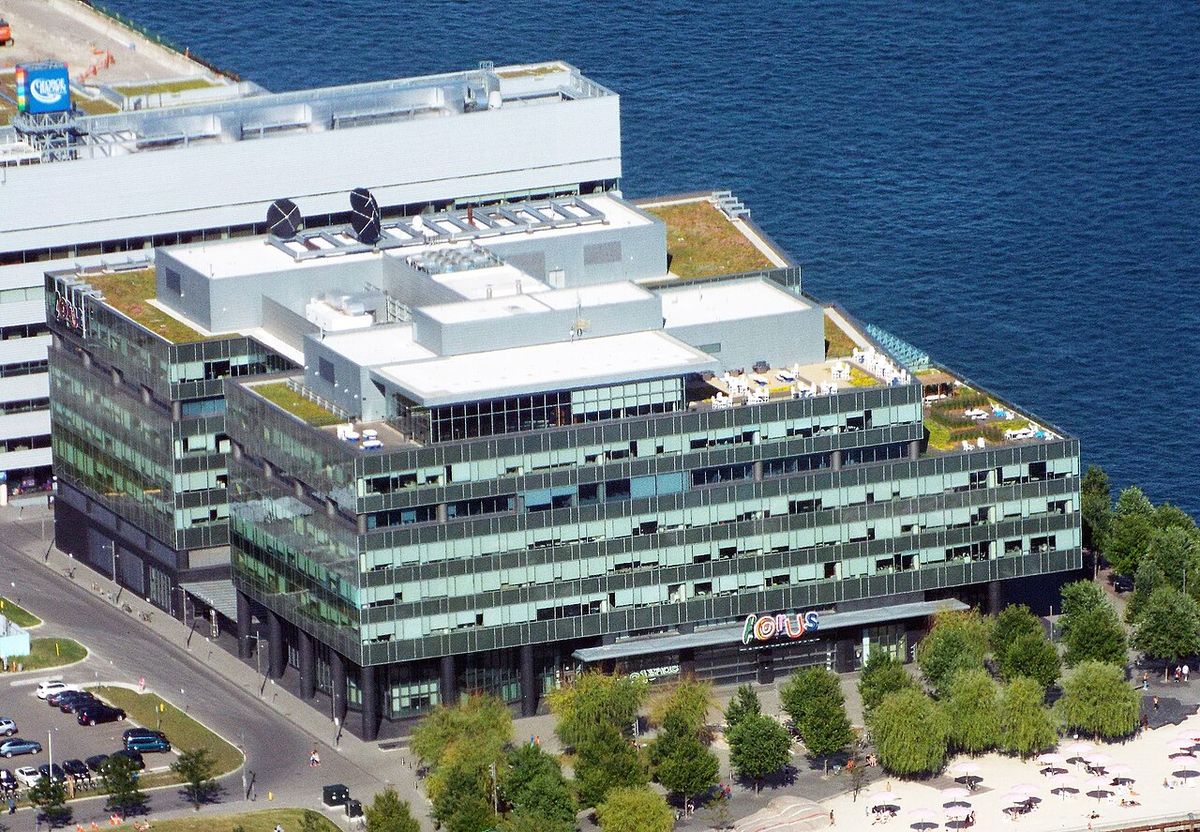
Nelvana underwent a major ownership change at the turn of the millennium. In September 2000, Canadian media conglomerate Corus Entertainment announced its acquisition of Nelvana for $540 million. The purchase was completed in November 2000, with Corus viewing Nelvana as a strategic complement to its existing children's television networks, YTV and Treehouse TV. Following the acquisition, co-founders Patrick Loubert and Clive A. Smith departed the company while founder Michael Hirsh remained in a leadership role. Prior to the Corus deal, Nelvana had expanded its corporate footprint through several key acquisitions, including the purchase of children's book publisher Klutz for US$74 million in April 2000, which was at that time its largest buyout ever.
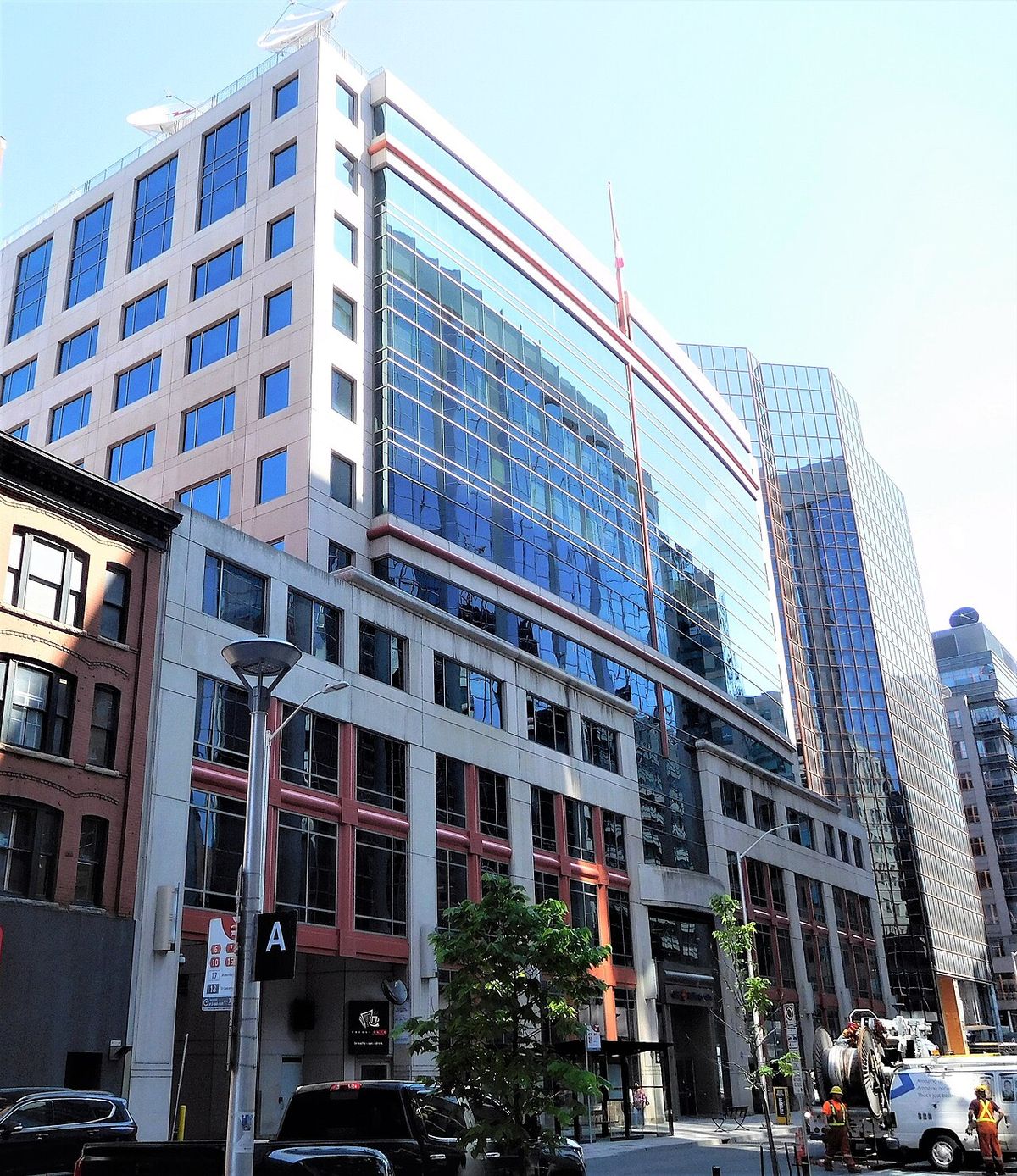
This followed the 1998 acquisition of Kids Can Press, which gave Nelvana direct ownership of the publishing rights to properties like Franklin and Elliot Moose. The company also attempted to launch digital cable channels, filing for two Category 2 television licences from the CRTC in April 2000. The first, 'The Nelvana Channel,' would have presented the company's library, while the second, 'Booknet,' was to be a 60/40 joint venture with Corus focused on literary adaptations. Both licences were approved but expired in 2004 as neither channel launched. Nelvana has maintained its headquarters in Toronto, Ontario, throughout its history. The company's structure includes divisions focused on production, distribution through Nelvana International, and consumer products, leveraging its extensive character library.
Production techniques, partnerships and industry role
Nelvana's production history reflects the evolution of animation technology from traditional hand-drawn cel animation to early computer-generated imagery. The company began with traditional techniques, using rudimentary methods in its early years, and became known for its high-quality traditional animation in series like Care Bears and Babar. A notable early technical achievement was its work on the 1978 Star Wars Holiday Special. The company was an early adopter of computer-generated imagery for television, premiering two of its first fully CGI series in 1998. The studio also experimented with mixed-media formats, such as the live-action/animation hybrid in the 1986 film Three Amigos, for which it created a lip-synced animated sequence of singing horses.
In 1996, it co-produced the adventure game Toonstruck with Rainbow Animation, which blended traditional 2D animation with the digitized likeness of actor Christopher Lloyd. The company absorbed the small computer animation company Windlight Studios in 1997, and its co-founder Scott Dyer later became Nelvana's senior vice-president of production in 2001. Nelvana's business model has had a notable impact, pioneering the concept of the integrated company by acquiring publishers to control intellectual property from book to screen. Its strategy of international co-production with entities like CBS, HBO, and Channel 4 helped finance larger projects and distribute Canadian content globally.
The company's financial and production milestones demonstrate its scale and the risks involved in animation. At the beginning of the 1980s, Nelvana chose to co-produce its first feature film, Rock and Rule. This film took five years to produce and cost eight million dollars, using all of the studio's resources. The film was a financial failure upon its release in 1983. In early 1985, the first Care Bears film grossed twenty three million United States dollars in the United States. Its tremendous success turned the company's assets around.
| Project/Deal | Year | Financial Figure |
|---|---|---|
| Rock & Rule production cost | 1983 | $8 million |
| The Care Bears Movie US gross | 1985 | US$23 million |
| Malice North American gross | 1993 | US$46 million |
| Golden Books proposed acquisition | 1996 | US$102 million |
| Klutz acquisition price | 2000 | US$74 million |
| Corus Entertainment acquisition price | 2000 | $540 million |
| PBS six-series deal | 1999 | US$40 million |
These figures illustrate the substantial investments and revenues associated with running a major animation studio. The costly gamble of Rock and Rule was a financial failure. In contrast, the successful Care Bears Movie in 1985 grossed twenty three million United States dollars. The company survived early setbacks by working full-time on children's television series. Nelvana's evolution is also demonstrated by its library, which comprised more than one thousand six hundred fifty cumulative half-hours of original programming as of 2001.
Questions about Nelvana
Who founded Nelvana and when?
Nelvana was founded in 1971 by three partners: Michael Hirsh, Patrick Loubert, and Clive A. Smith. The founders met through connections at York University and their earlier collaborative venture, Laff Arts. They named the company after Nelvana of the Northern Lights, a Canadian comic book superheroine created by Adrian Dingle. The studio's first office was a derelict apartment in downtown Toronto.
What is Nelvana's most famous production?
Nelvana has produced many famous series, but its breakout commercial success was The Care Bears Movie in 1985. The film grossed twenty three million United States dollars in the United States and revitalized the studio's finances. This success led to two more feature films and a television series. Other well-known franchises from Nelvana include Babar, which won many awards, and The Magic School Bus, based on the book series.
Does Nelvana only make cartoons for kids?
No, while Nelvana specializes in children's media, it has a notable history of producing adult animation as well. Its first feature film was the adult rock musical Rock & Rule in 1983. In the 1990s and 2000s, it co-produced series such as Bob & Margaret, Clone High, John Callahan's Quads!, and Delta State. The company's portfolio demonstrates a consistent commitment to animation for older audiences.
Who owns Nelvana now?
Nelvana has been owned by Corus Entertainment since November 2000. Corus, a Canadian media and entertainment conglomerate, acquired Nelvana for $540 million. The purchase was strategic, as Corus also owns children's television networks YTV and Treehouse TV, allowing for synergy between production and broadcasting. Following the acquisition, co-founders Patrick Loubert and Clive A. Smith left the company.
What was Nelvana's involvement with Star Wars?
Nelvana's involvement with Star Wars began in 1978. George Lucas commissioned the company to work on a 10-minute sequence for the Star Wars Holiday Special after being impressed with A Cosmic Christmas. This short scene, entitled The Faithful Wookiee, introduced the bounty hunter Boba Fett. Later, in the area of science fiction, Nelvana co-produced Droids and Ewoks. These were two Saturday morning series based on Star Wars.
Did Nelvana produce any live-action shows?
Yes, Nelvana has produced several live-action television series throughout its history. Its first live-action franchises in the early 1980s included The Edison Twins and 20 Minute Workout. Other notable live-action series include T. and T. (1988) starring Mr. T, and Nancy Drew and The Hardy Boys (1995). The company also co-produced the live-action feature film Malice in 1993, which was a box office success.
Sources and further reading
- Nelvana (Wikipedia)
- Nelvana (avid.wiki)
- Company that made Care Bears, Magic School Bus ... (cbc.ca)
Checked by the Yadude Books desk. Last updated 2026-10-22.