Esso
Esso is a global petroleum retail brand owned by ExxonMobil and is one of the company's two primary fuel brands outside the United States. In Canada, the Esso brand is a ubiquitous presence at fuel stations, supplied by Imperial Oil, which is 69.8 percent owned by ExxonMobil. The brand has a long history dating back to 1926, originating from the Standard Oil Company of New Jersey following the breakup of the original Standard Oil trust. For Canadian consumers, Esso represents a major network of service stations, often paired with convenience stores, and is a significant player in the country's downstream fuel market and aviation fuel supply.
Origins and Historical Development in the United States
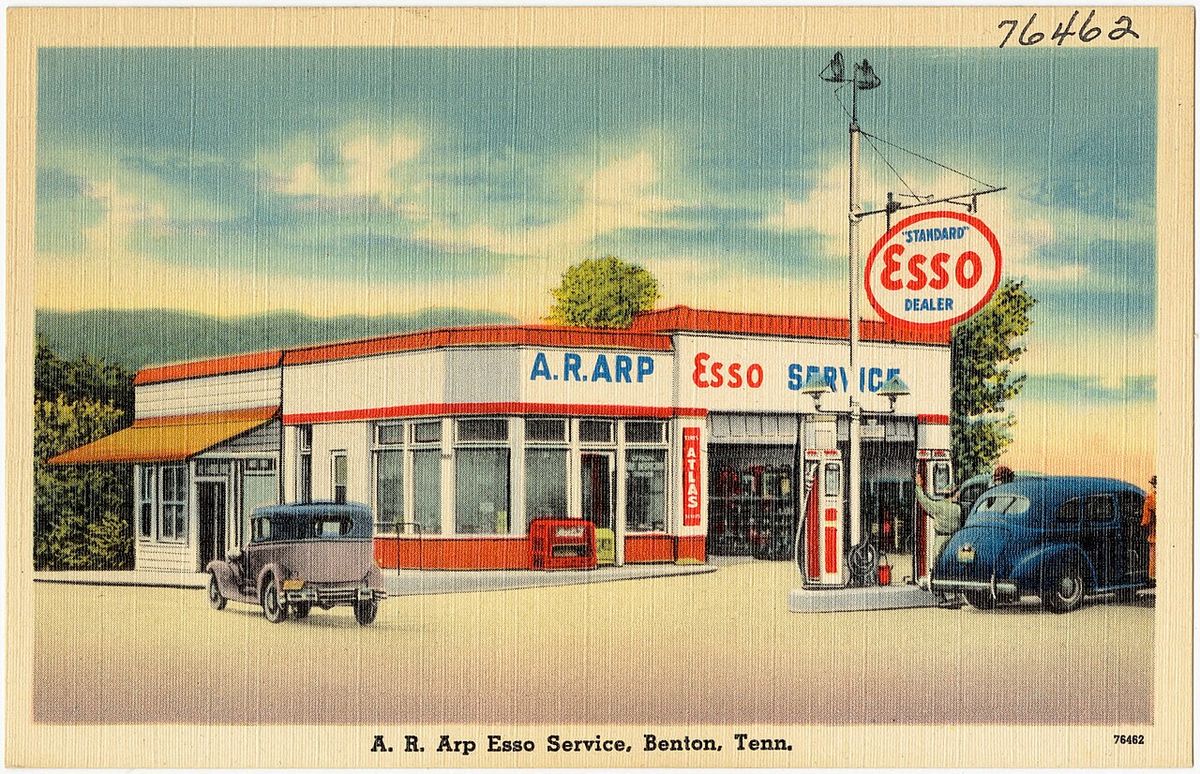
The Esso brand was born from the 1911 breakup of the Standard Oil monopoly into 34 separate companies. Standard Oil Company of New Jersey, often called Jersey Standard, inherited the rights to the Standard Oil name in several eastern and southern US states including New Jersey, Maryland, Virginia, and the District of Columbia. By 1941, it had also acquired the rights in Pennsylvania, Delaware, Arkansas, Tennessee, and Louisiana. In 1926, the company began marketing products under the Esso brand name, which was derived phonetically from the initials 'S.O.' in Standard Oil. For decades, Jersey Standard used the Esso brand in states where it held the trademark rights, but it faced legal injunctions from other Standard Oil spin-off companies in other regions. A 1937 US federal court injunction forced Jersey Standard to use other brand names in those contested states, primarily Enco for 'Energy Company' and, in a few areas, the Humble brand from its acquisition of Humble Oil.
The objections to the Esso name were led mostly by Standard Oil of Ohio and, later, Standard Oil of California after it acquired former Esso jobber Standard Oil of Kentucky. Standard Oil of Indiana, which became Amoco, largely did not object as the Midwest was a weaker market for Esso. The company ranked 31st among American corporations in the value of its World War II production contracts. During the era of racial segregation in the United States, Esso franchises distributed The Negro Motorist Green Book, a travel guide for African American motorists. In 1973, Standard Oil of New Jersey renamed itself Exxon Corporation and adopted the Exxon brand name throughout the country. It maintained the trademark rights to the Standard and Esso brands in the states where it held those rights by selling Esso Diesel fuel at stations that sold diesel, thus preventing the trademark from being declared abandoned.
The Enco brand name was used on locations in the Midwest until 1977, when they were sold to Cheker Oil Company, now part of 7-Eleven. Exxon retained a presence in southern Ohio and much of Appalachia, though Mobil became the company's primary brand in the Midwest. The Esso brand was retained in Puerto Rico and the United States Virgin Islands until 2008, when those stations were sold to TotalEnergies. A major legal shift occurred in February 2016 when ExxonMobil successfully petitioned a US federal court to lift the 1930s trademark injunction. The court agreed, noting that after decades of mergers, most of the objecting companies had been acquired by BP and there was no longer a risk of consumer confusion. ExxonMobil did not specify plans to open new US stations under the Esso name but sought to reduce expenses from separate marketing materials. The Esso name returned to minor station signage at some Exxon and Mobil stations, effectively allowing ExxonMobil to claim the Standard trademark in states like Colorado, Kentucky, and North Dakota.
Global Operations and Affiliates
Esso serves as ExxonMobil's primary motor fuel brand in most markets outside the United States, operating through a network of affiliates and subsidiaries with varied histories. In Australia, Esso is an affiliate focused on oil and gas production, while its retail petrol stations were acquired by Mobil Australia in 1990. In Japan, the brand was established as Esso Standard Sekiyu K.K. in 1962 following the dissolution of Stanvac. It became Esso Sekiyu K.K. in 1982 and, after the Exxon-Mobil merger, was reorganized into ExxonMobil Y.K. in 2002. Its downstream business was spun off and eventually absorbed into what is now Eneos, with the Esso and Mobil brands being phased out in Japan in 2019 in favour of the Eneos EneJet banner.
Across South America, Esso had a long history, notably in Argentina where Standard Oil of New Jersey started business in 1911 by acquiring the Compañía Nacional de Aceites. This became the first oil refinery in Latin America. The company opened its first service station in Santa Fe in 1927 and introduced its Essolube motor oil line in 1936. By 1943, Esso produced 60 percent of the petroleum in Argentina. In 2011, the local Bridas Corporation acquired the rights to the Esso brand in Argentina, Paraguay, and Uruguay, rebranding all 520 stations, 450 of which were under franchise, to Axion Energy. At the time of sale, Esso held a 12 percent market share, making it the third-largest producer in Argentina after YPF and Shell.
A significant corporate change occurred in France, where the subsidiary Esso S.A.F. operated several hundred filling stations and two refineries. In 2025, ESSO S.A.F was sold to North Atlantic and became North Atlantic Energies. In the Caribbean, ExxonMobil sold most of its assets. Operations in Puerto Rico, the US Virgin Islands, and Jamaica were sold to TotalEnergies in 2008 and converted to the Total brand. In 2014, Sol Petroleum purchased Esso operations in The Bahamas, Barbados, Bermuda, the Cayman Islands, the Dominican Republic, Guadeloupe, and Martinique, with rights to continue using the Esso name included in the sale. The brand's presence is maintained in various other regions through licensing and supply agreements with local companies.
Esso in Canada: Supply and Retail Network
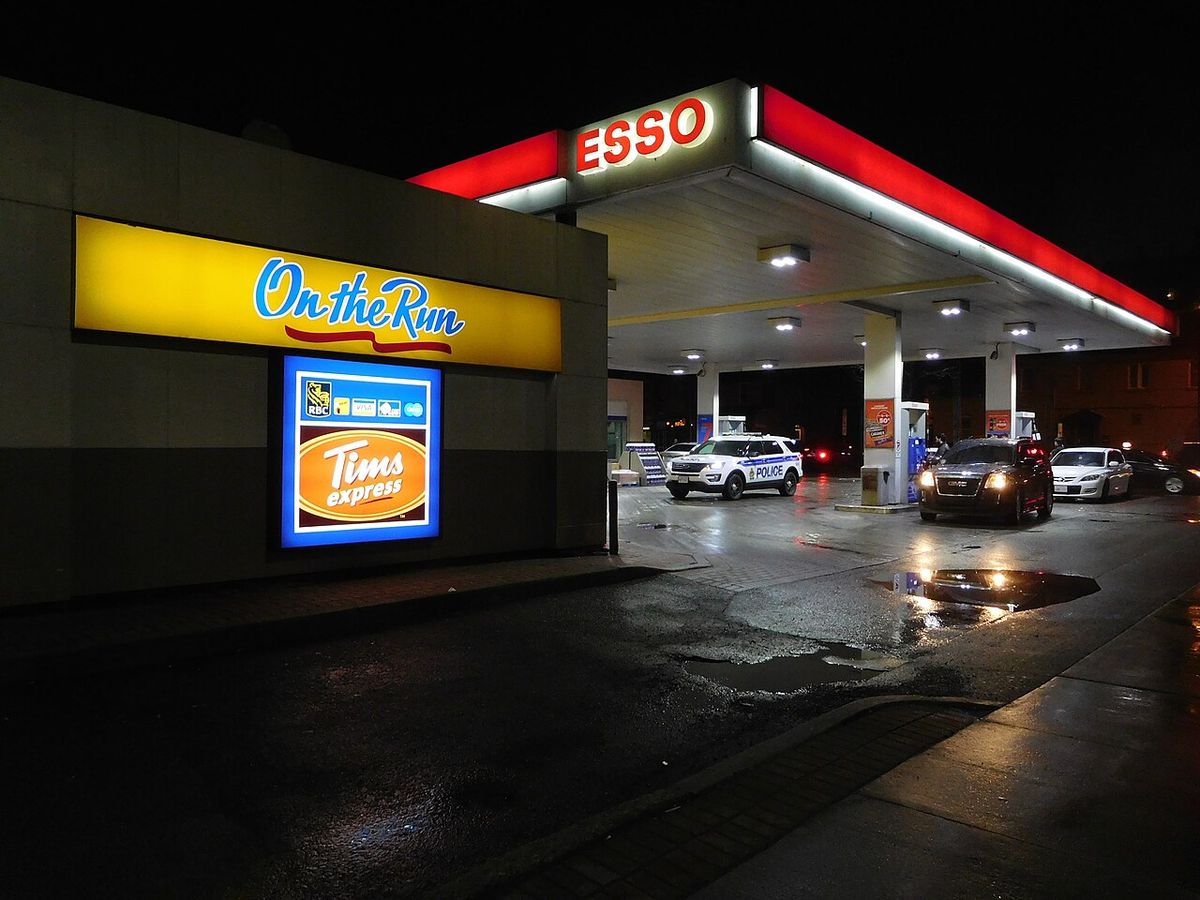
In Canada, the familiar Esso brand is supplied by Imperial Oil, which is 69.8 percent owned by ExxonMobil. Imperial Oil does not own the majority of retail stations. Instead, it supplies fuel to a network of third-party retailers who operate the sites. This network includes major convenience store chains and fuel retailers across the country. The stations are owned and operated by a diverse group of companies, each dominant in different regions. Couche-Tard operates many locations in Ontario and Quebec under its Circle K, Couche-Tard, and Mac's banners. 7-Eleven has a strong presence in Alberta and British Columbia. Other significant operators include Parkland Fuel, Harnois Groupe pétrolier in Quebec, and Wilson Fuel in Atlantic Canada, which was sold to Couche-Tard in 2021.
Imperial Oil began selling the majority of its company-owned stations in 2016, further cementing the third-party retailer model. Beyond automotive fuel, Esso also provides critical aviation fuel services at 80 airport locations across Canada through its Aviation and Avitat operations. This makes Esso a key infrastructure partner for Canadian air travel. The brand's partnership with various retail chains means that many Esso stations are coupled with well-known convenience stores, creating a one-stop destination for fuel, snacks, and other goods. This model has proven successful in the competitive Canadian fuel market. Former Husky Energy stations, which were supplied by Esso, were sold to Parkland Fuel and Federated Co-operatives in 2022.
- Couche-Tard (operating as Circle K, Couche-Tard, Mac's) is a major retailer primarily in Ontario and Quebec.
- 7-Eleven operates a large network of stations mostly in Alberta and British Columbia.
- Parkland Fuel is a significant operator and fuel distributor across Canada.
- Harnois Groupe pétrolier operates mostly in Quebec, with a few stations in Ontario, and one each in Alberta, New Brunswick and Nova Scotia as of August 2023.
- Former Husky Energy stations were sold to Parkland and Federated Co-operatives ('Co-op') in 2022.
- Wilson Fuel operated in Nova Scotia and Newfoundland until its 2021 sale to Couche-Tard.
In Canada, the Esso brand is used on stations supplied by Imperial Oil, which is majority-owned by ExxonMobil. Imperial Oil began to sell the majority of its company-owned stations in 2016. The stations are now owned by third-party retailers such as Couche-Tard, 7-Eleven, Parkland Fuel, Harnois Groupe pétrolier, and others. This separation of brand supply from station ownership allows Imperial Oil to focus on its operations. The widespread presence of Esso-branded stations, regardless of owner, ensures the brand maintains visibility across the country.
Branding Strategy and Advertising Campaigns
Esso's global branding strategy positions it as ExxonMobil's primary motor fuel brand worldwide except in Australia, Guam, Mexico, Nigeria, and New Zealand, where the Mobil brand is used exclusively. In some countries, including Canada since 2017, Colombia, and Egypt, both the Esso and Mobil brands are used concurrently. In Hong Kong and Singapore, the Mobil brand is applied on Esso fuel tanks after a merger of service stations between 2003 and 2007. Within the United States, Mobil is the primary retail brand in California, Florida, New York, New England, the Great Lakes and the Midwest, while Exxon is primary in the rest of the country, with high concentrations in New Jersey, Pennsylvania, Texas, and the Mid-Atlantic and Southeastern states.
The brand is associated with one of the most recognizable advertising campaigns in history: 'Put a Tiger in Your Tank.' Invented by Emery Smith in 1959, this campaign launched in the 1960s with heavy spending on television, radio, and print media across North America and Europe. The campaign featured imagery of tiger tails emerging from gas tanks, promotional events with real tigers, tiger-striped pump hoses, and even pop music songs, creating immense brand awareness. In England, the campaign included faux tiger tails with pink ribbons for motorists to tie to their gas caps. Tiger imagery can still be seen on ExxonMobil pumps today as a nod to this legacy.
In the United Kingdom, Esso was also known for its Esso Blue brand of paraffin oil for domestic heaters. Its advertising from the 1950s to the 1970s featured a memorable jingle, 'Bom, Bom, Bom, Bom, Esso Blue!' and a beloved animated character named 'Joe', a bowler-hatted salesman who famously introduced himself with the spoonerism 'Hello, I'm the Esso Blee Dooler.' One campaign rewrote the lyrics to the song 'Smoke Gets in Your Eyes' to promote Esso Blue as a non-smoking paraffin. This tune was released as a flexi disk given away free in hardware stores. These campaigns firmly embedded the Esso name in the public consciousness in the UK. The company has also utilized other media, such as a television advertisement in the 1980s featuring Jeff Wayne's musical composition.
Motorsport Sponsorship History and Automotive Partnerships
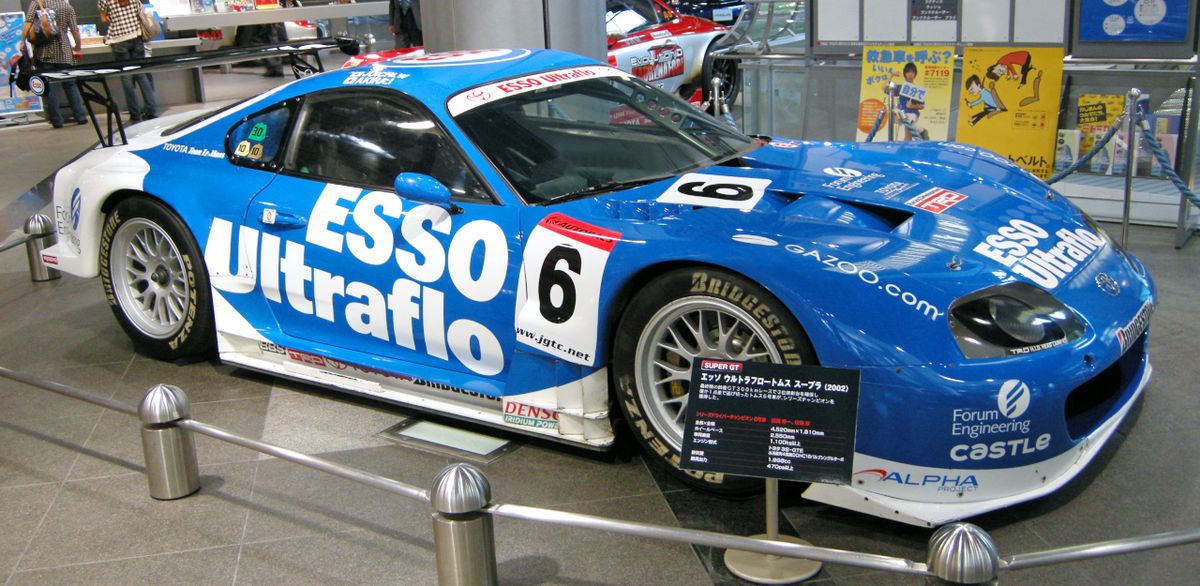
Esso has a long and storied history in motorsport sponsorship, leveraging high-profile racing to promote its fuels and lubricants. In Formula One, the brand sponsored the Lotus team from 1962 to 1967, during the career of champion driver Jim Clark. Esso later sponsored the Brabham team from 1964 to 1973. Following the Exxon and Mobil merger in 1999, Esso became ExxonMobil's global primary fuel brand and sponsored the Toyota F1 team from 2002 to 2009. It also had brief sponsorships with Jordan and its successor Midland in 2005 and 2006, and with Williams for the 2009 season after Petrobras left the sport. More recently, ExxonMobil's partnership shifted to Red Bull Racing and its sister teams Scuderia Toro Rosso, Scuderia AlphaTauri, and Racing Bulls from 2017 onward. The Esso brand was used on McLaren Formula One cars along with Mobil from 2014, with Esso actually supplying the team from 2015 to 2016 and Exxon appearing on the car at the United States Grand Prix in 2015.
The brand has also been active in endurance racing, sponsoring teams at the 24 Hours of Le Mans. Key partnerships included Martini Lancia from 1982 to 1986, the winning Peugeot 905 from 1990 to 1993, and the Toyota GT-One in 1998 and 1999. Since 1996, Esso, under the Mobil brand, has supplied fuel for all entrants in the Porsche Mobil 1 Supercup, with ExxonMobil increasing its fuel partnership role and using the Esso brand specifically since the 2015 season. In North American open-wheel racing, Esso's former sister brand Enco sponsored three Indianapolis 500 winning cars: Jim Clark's in 1965, A.J. Foyt's in 1967, and Bobby Unser's in 1968, with the 1965 and 1967 cars powered by Ford and the 1968 car by Offenhauser.
| Racing Series | Team/Partnership | Period | Notable Detail |
|---|---|---|---|
| Formula One | Lotus | 1962 to 1967 | Sponsored champion driver Jim Clark. |
| Formula One | Brabham | 1964 to 1973 | Long-term sponsorship. |
| Formula One | Toyota | 2002 to 2009 | Primary sponsor after Exxon-Mobil merger. |
| 24 Hours of Le Mans | Peugeot (905) | 1990 to 1993 | Sponsored the winning car. |
| Indianapolis 500 | Enco-sponsored cars | 1965, 1967, 1968 | Winning cars driven by Clark, Foyt, Unser. |
| Porsche Supercup | Fuel supplier | Since 2015 (as Esso) | Supplies all series entrants. |
Esso, along with its sister brands Exxon and Mobil, holds official long-term recommended fuel partnerships with several major automotive manufacturers. These include two Volkswagen Group marques, Bentley and Porsche, all Toyota Group marques and subsidiaries such as Toyota, Lexus, and Daihatsu, and all General Motors marques and subsidiaries including Chevrolet, Cadillac, and Holden. The fuels are also recommended for KTM motorcycles. These partnerships are used to certify the compatibility and performance of Esso and Mobil fuels in those vehicles.
Operations and Evolution in the United Kingdom
Esso has a deep-rooted history in the United Kingdom, dating back to the Anglo American Oil Company's head office opening in London in 1888. A significant retail partnership began in August 1998 when Tesco announced a joint venture with Esso to open Tesco Express convenience stores within Esso forecourts. This partnership proved highly successful, creating thousands of jobs, and by February 2000 the companies were opening one new store per month. It continues to operate today. The UK market also saw the distinct Esso Blue brand for paraffin oil for domestic heaters, which became a household name through its advertising. In the 1930s, Esso acquired the independent Cleveland company based in North East England, founded by Norman Davis who had spent time in Cleveland, Ohio, and both brand names were used until filling stations were fully rebranded as Esso in 1973.
Esso's direct operational presence in the UK has evolved over time. The company traded in Northern Ireland until the early 2000s, after which its forecourts were rebranded to Maxol and Texaco and some remained privately owned. In Great Britain, Esso's directly operated forecourts were known under the ROC umbrella, featuring Snack and Shop and On the Run convenience stores, with larger sites featuring a Costa Cafe. However, by 2015, ROC UK had sold all its sites to operators like Rontec and Euro Garages, leaving no forecourts directly operated by Esso in the country. Euro Garages, which purchased 45 forecourts from Esso in 2013, continues to operate them under the Esso brand while planning to roll out partner brands like Starbucks and Spar, replacing the Esso-branded shops.
The legacy of the Esso Blue campaign remains a notable part of British advertising history. The animated salesman 'Joe' and the catchy jingle achieved widespread recognition. The deliberate spoonerism in Joe's introduction was a runaway success that firmly imprinted the brand in the public consciousness. The transition from company-operated sites to a franchise and partnership model mirrors similar shifts in other markets, including Canada, reflecting a broader corporate strategy within ExxonMobil to focus on fuel supply and branding while leaving retail operations to specialized partners.
Questions about Esso
Who owns Esso in Canada?
The Esso brand in Canada is supplied by Imperial Oil, a publicly traded company that is 69.8 percent owned by ExxonMobil. Imperial Oil does not own most of the retail stations. Instead, it supplies fuel to a network of third-party retailers like Couche-Tard (Circle K), 7-Eleven, Parkland Fuel, and Harnois Groupe pétrolier, who own and operate the service stations. Imperial Oil began selling the majority of its company-owned stations in 2016. This means when you visit an Esso station, you are likely at a store owned by one of these independent retailers who have a supply agreement with Imperial Oil.
What is the history behind the Esso name?
The name Esso originated in 1926 from the Standard Oil Company of New Jersey, one of the companies created after the breakup of the Standard Oil trust in 1911. Esso is a phonetic spelling of the initials 'S.O.' from Standard Oil. For decades, the company used the Esso brand in US states where it held the trademark rights, but a 1937 federal court injunction forced it to use other names like Enco and Humble in states where other Standard Oil spin-offs objected. In 1973, the parent company renamed itself Exxon and largely replaced Esso with the Exxon brand in the United States, while retaining Esso for international markets.
What was the 'Put a Tiger in Your Tank' campaign?
'Put a Tiger in Your Tank' was a massively successful global advertising campaign for Esso that launched in the 1960s. Invented by Emery Smith in 1959, the campaign used extensive television, radio, and print ads featuring tiger imagery to suggest power and performance. It included visuals of tiger tails on cars, promotional events with real tigers, tiger-striped pump hoses, and even pop music songs. In England, faux tiger tails were given out for motorists to tie to their gas caps.
Does Esso operate in the United States?
The Esso brand is not widely used for retail fuel in the United States today, having been largely replaced by the Exxon brand in 1972. However, ExxonMobil retained the trademark rights by selling Esso Diesel in certain states. Following a 2016 court decision that lifted a decades-old injunction, it regained the legal right to use the Esso name in all US states. The company has not announced major plans to reopen stations under the Esso brand, but the name has returned to minor signage at some Exxon and Mobil stations. Historically, Esso was used in certain US regions and territories like Puerto Rico until those assets were sold in 2008.
What is Esso's connection to motorsports?
Esso has a long history of sponsorship in high-level motorsports. In Formula One, it has sponsored teams including Lotus, Brabham, Toyota, and Williams. The brand has also been active in endurance racing like the 24 Hours of Le Mans, sponsoring winning teams such as Peugeot. Esso's former brand Enco sponsored three Indianapolis 500 winning cars in the 1960s. Esso and its sister brands Exxon and Mobil are the official recommended fuels for several major automobile manufacturers, including Porsche, Toyota, and General Motors marques, and for KTM motorcycles. This involvement is used to demonstrate the performance quality of its fuels.
What happened to Esso in the United Kingdom?
In the United Kingdom, Esso maintains a brand presence but no longer directly operates its own forecourts. Its retail network is primarily run through a long-standing partnership with Tesco, where Tesco Express stores are located within Esso forecourts. Former company-operated sites under the ROC banner were all sold to independent operators like Euro Garages and Rontec by 2015. Euro Garages, which bought 45 sites in 2013, operates them under the Esso brand but plans to introduce other retail partners like Starbucks. The Esso Blue paraffin brand and its advertising with the animated 'Joe' were also a major part of its UK history.
Sources and further reading
- Esso (Wikipedia)
- Esso™ and Mobil™ Business Gas Cards | A Better Way To ... (essobusinesscards.ca)
- Our Gas Station Brands | Esso, Mobil & Cardlock (globalfuels.ca)
Checked by the Yadude Books desk. Last updated 2026-10-23.