Labatt Brewing Company
The Labatt Brewing Company Limited is a Canadian brewery and a major beverage producer, with a history originating in 1847. Headquartered in Toronto, it holds the position of the largest brewer in Canada and operates multiple facilities across the country. Since 1995, Labatt has been part of the global Anheuser-Busch InBev SA/NV conglomerate, following a series of international mergers. The company's portfolio includes flagship beers like Labatt Blue and Labatt 50, and it has expanded into ready-to-drink products through strategic acquisitions such as Goodridge & Williams in 2020.
Founding and 19th Century Development
John Kinder Labatt, an Irish immigrant who arrived in Canada in the 1830s, founded the brewery in 1847 after establishing himself as a farmer near London, Canada West. His initial venture was a partnership with Samuel Eccles, launching the firm under the name Labatt and Eccles. This partnership lasted seven years until Eccles retired in 1854, at which point John Kinder Labatt acquired his partner's interest and renamed the operation the London Brewery. Labatt was assisted in the business by his sons Ephraim, Robert, and John, who would later play roles in its management. Following John Kinder Labatt's death in 1866, his son John assumed control of the company and supervised its growth over the next five decades. Under his leadership, the brewery expanded to become the largest in Canada by the time of his death in 1915. Control of the company then passed to a trust operated by his nine children, with direct managerial responsibilities assumed by his sons John Sackville Labatt and Hugh Francis Labatt.
The Prohibition Era and Recovery
The era of prohibition presented an existential threat to the Canadian brewing industry, beginning with provincial legislation in Prince Edward Island in 1901. Ontario instituted prohibition in 1916, which immediately affected all 64 breweries operating in the province at the time. Labatt employed a survival strategy that involved producing full-strength beer for export to the United States, where alcohol was still legal, and introducing two temperance ales containing less than two percent alcohol for sale within Ontario. This approach was complicated by the onset of national prohibition in the United States in 1919, which eliminated a crucial export market. When prohibition was finally repealed in Ontario in 1926, the industry landscape had been drastically reduced, with only 15 breweries remaining from the original 64. Labatt was the sole survivor among these to retain its original pre-prohibition management, a factor that solidified its market position. The company emerged from this period with a strengthened industry standing and later transitioned to public ownership in 1945 through the issuance of 900,000 shares.
Post-War Innovation and Brand Development
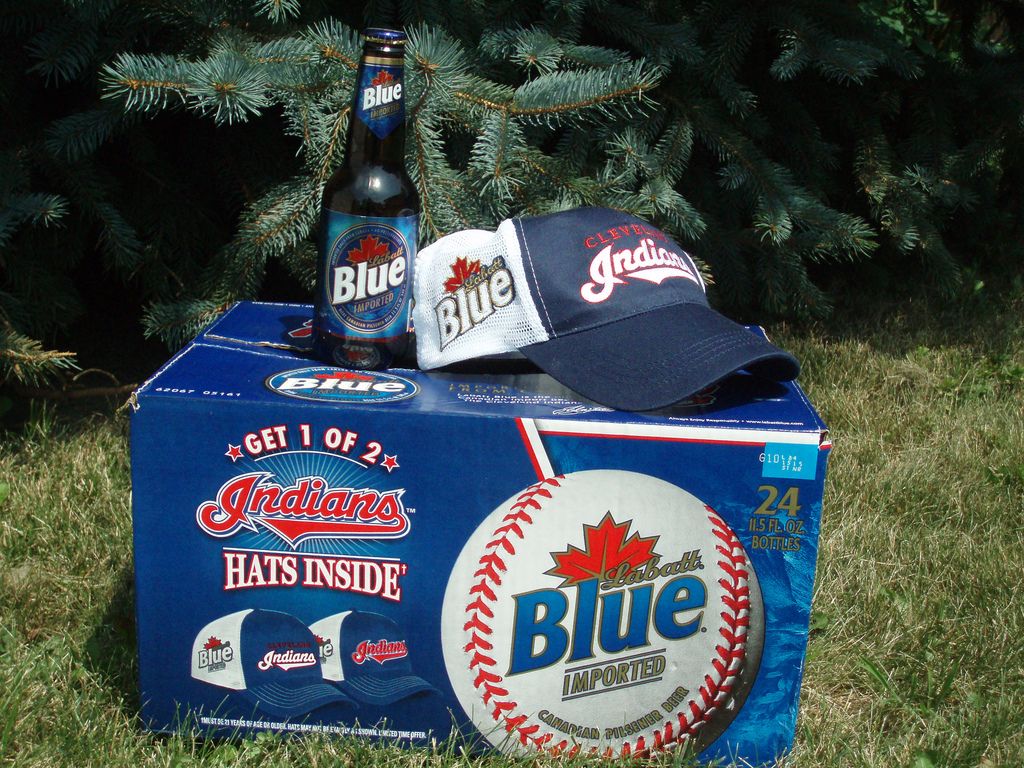
The post-war period marked significant brand innovation for Labatt. In 1950, grandsons John Sackville Labatt and Hugh Francis Labatt launched Labatt 50 to commemorate 50 years of their partnership. This product was the first light ale introduced in Canada and utilized a special ale yeast that had been in use at the brewery since 1933. Labatt 50 achieved substantial commercial success, becoming Canada's best-selling beer and holding that position for nearly three decades until 1979. Another major brand, Labatt's Pilsener Lager, was introduced in 1951. When launched in Manitoba, the beer was nicknamed Blue due to the colour of its label and the company's sponsorship of the Winnipeg Blue Bombers Canadian Football League team. Brewmaster Robert Frank Lewarne, who was born in Toronto in 1921 and also led the team that developed Labatt 50, was central to its creation. The Blue nickname was formally adopted, and the beer, marketed as Labatt Blue, eventually claimed the top spot in the Canadian beer market in 1979.
Corporate Ownership Changes and Modern Structure
Labatt experienced several major changes in corporate ownership during the latter half of the 20th century. By the 1960s, the founding family's direct management had waned, and John Moore served as company president while the Labatt family retained a controlling interest. In 1964, the American Schlitz brewing company executed a friendly takeover, purchasing majority control of Labatt. This ownership was short-lived due to antitrust concerns in California stemming from the combined holdings of Schlitz and Labatt. By 1966, Schlitz sold its interest back to a Canadian-led group headed by John Moore. A more permanent shift occurred in 1995 when the large Belgian multinational brewer Interbrew, the world market leader at the time, acquired Labatt. Interbrew merged with Brazilian brewer AmBev in 2004 to form InBev, which then merged with American brewer Anheuser-Busch in 2008 to create Anheuser-Busch InBev. A final major merger between Anheuser-Busch InBev and SABMiller closed on October 10, 2016, making Labatt part of the resulting entity, Anheuser-Busch InBev SA/NV, which trades on the New York Stock Exchange.
Key corporate events and transactions in Labatt's recent history include its purchase by the Belgian brewer Interbrew in 1995. In 2004, Interbrew merged with the Brazilian brewer AmBev to form InBev. In 2008, InBev merged with the American brewer Anheuser-Busch to form Anheuser-Busch InBev, making Labatt part of that larger entity. A major merger between Anheuser-Busch InBev and SABMiller closed in October 2016, with Labatt now part of the resulting company, Anheuser-Busch InBev SA/NV. In early 2007, Labatt acquired the Lakeport Brewing Company of Hamilton, Ontario. In 2020, Labatt acquired the Canadian distiller Goodridge & Williams, known for Nütrl Vodka Soda.
- 1995: Acquisition by Belgian brewer Interbrew.
- 2004: Merger of Interbrew and AmBev to form InBev.
- 2007: Acquisition of Lakeport Brewing Company in Hamilton, Ontario.
- 2008: Merger of InBev and Anheuser-Busch to form Anheuser-Busch InBev.
- 2009: Sale of Labatt USA, including U.S. rights to Labatt Blue and Labatt 50, to FIFCO USA.
- 2016: Completion of the merger between Anheuser-Busch InBev and SABMiller.
- 2020: Acquisition of Canadian distiller Goodridge & Williams.
Operations, Brands, and Technical Innovations
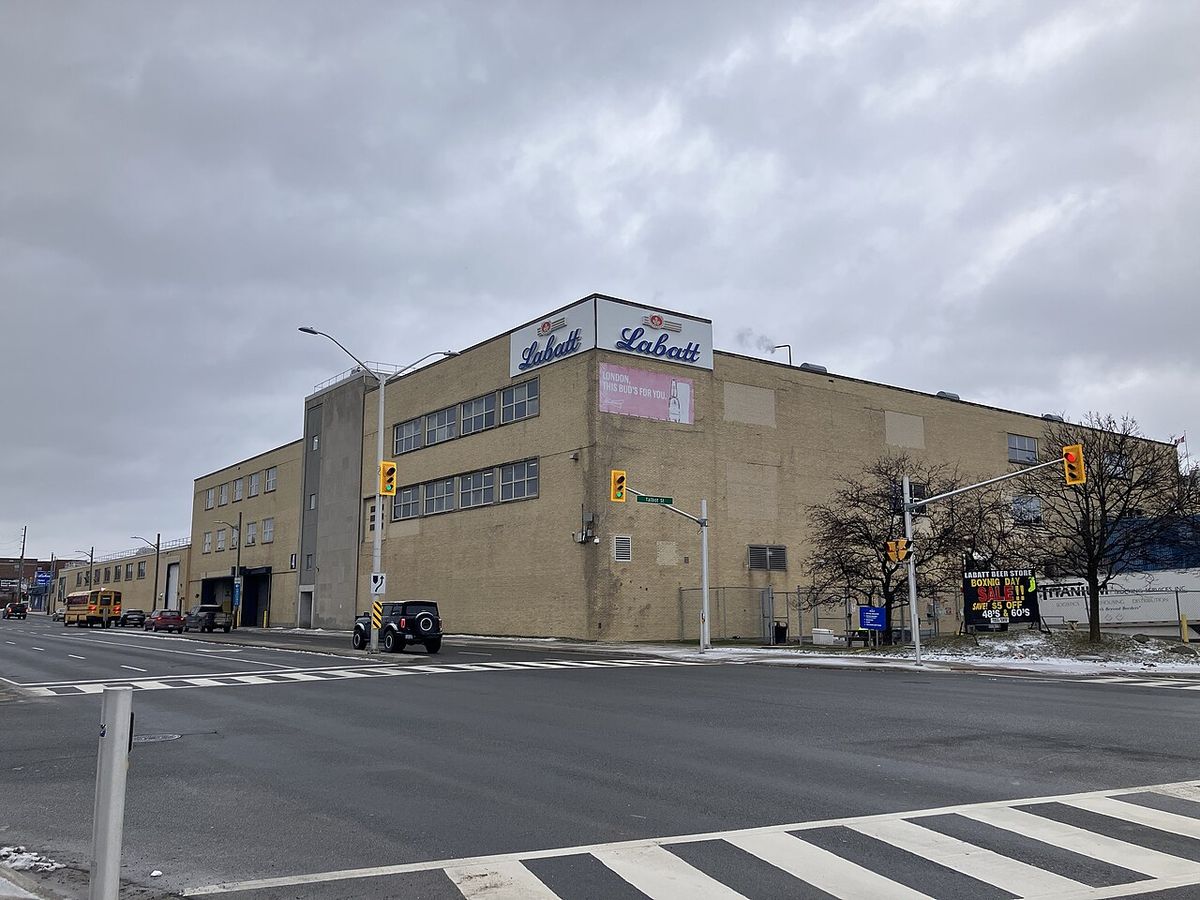
Labatt operates brewing facilities across Canada in London, Ontario, St. John's, Newfoundland and Labrador, Montreal, Quebec, Halifax, Nova Scotia, Creston, British Columbia, and Edmonton, Alberta. The company's large Toronto brewery in the Rexdale area, constructed in 1970, ceased operations in 2005 and was demolished by 2007. Labatt's brand portfolio is diverse, with Labatt Blue being a 5% alcohol by volume pale lager sold in 341 mL bottles and 355 mL standard cans in Canada. In Quebec, the beer is sold as Labatt Bleue, featuring a fleur-de-lis logo and an alcohol content of 4.9% instead of 5.0%, with the red maple leaf replaced by a stylized red sheaf of wheat. The company also produces a stronger lager for the Quebec market called Labatt Bleue Dry at 6.1% alcohol by volume. Labatt holds patents for a specific ice beer production process, filed in 1997, 1998, and 2000, which involves rapidly cooling beer to near its freezing point, forming minimal ice crystals, mixing it with a beer slurry containing crystals, and then extracting the treated beer. The separation of its United States operations was a significant development in 2009, following the InBev and Anheuser-Busch merger, when the U.S. Department of Justice mandated the sale of Labatt USA for competitive reasons, as both Budweiser and Labatt Blue were among the top brands in upstate New York.
The sale transferred the American rights to core Labatt brands to FIFCO USA of Rochester, New York, which became fully independent of the Canadian firm. Labatt agreed to brew those brands for Labatt USA until 2012. The sale did not include U.S. rights to brands not carrying the Labatt name, such as Kokanee or Alexander Keith's, which are distributed by Anheuser-Busch, and the underlying Labatt trademarks remained the property of the Canadian company. The company's innovations also include the introduction of the first twist-off cap on a refillable bottle in 1984.
Sponsorships, Community Investments, and Media Ventures
Labatt has a extensive record of sponsorships and community investments, particularly in London, Ontario. The company sponsored the construction of Labatt Park, the John Labatt Centre, and the John Labatt Visual Arts Centre at the University of Western Ontario. Arthur Labatt, son of Bessie Labatt, served as the 19th chancellor of the University of Western Ontario from 2004 to 2008. In professional sports, Labatt was the majority owner of the Toronto Blue Jays from their founding in 1976 until 1995. The company also held a 20-year sponsorship and naming rights agreement with the Montreal Expos in 1998 for a downtown ballpark that was never built. In motorsport, Labatt sponsored driver Gilles Villeneuve and was the main sponsor of the Formula One Canadian Grand Prix from 1972 to 1986, later sponsoring the Williams Formula One team from 1991 to 1994. Other sponsorships included the English football club Nottingham Forest from 1992 to 1997, the OHL hockey franchise Plymouth Whalers, a PGA Tour golf tournament called the Labatt Open in the 1950s, and Canadian Frisbee champion Ken Westerfield from 1983 to 1986.
Beyond brewing, Labatt operated broadcasting assets through Labatt Communications, which held stakes in The Sports Network (TSN) and the Discovery Channel. This division was spun out in 1995 to form NetStar Communications, owned by multiple Canadian investors and ESPN Inc. NetStar was later acquired outright by CTV Inc. in 2000, which was subsequently sold to BCE Inc. to form Bell Globemedia, later renamed CTVglobemedia and now Bell Media. A notable marketing incident occurred in 1989 when Canadian model Pamela Anderson, spotted at a BC Lions game wearing a Labatt's Blue Zone crop-top, was featured on a poster created independently by her boyfriend. After initially declining involvement, Labatt later purchased 1000 of the posters to meet consumer demand.
Market Position and Industry Role
Labatt maintains a dominant position within the Canadian beer industry as the country's largest brewer. The company is a part-owner of Brewers Retail Inc., the operator of The Beer Store retail chain, which holds over 90 percent market share of off-premises beer sales in Ontario, a position protected by provincial legislation. The performance of its flagship brands has seen shifts over time. Labatt 50 was Canada's best-selling beer from its 1950 launch until 1979, when it was surpassed by the rising popularity of Labatt Blue. Labatt Blue itself held the top market spot periodically, losing it to Molson Canadian in the late 1980s and to Budweiser in 2004. Labatt has brewed Budweiser in Canada under licence since the 1980s, which meant the parent company's overall portfolio was not adversely affected by Budweiser's rise. Labatt Blue received a Gold Quality Award at the Monde Selection World Quality Selections in 2003. According to the company, Labatt Blue remains the best-selling Canadian beer in the world based on worldwide sales figures.
| Brand | Key Characteristic | Notable Achievement |
|---|---|---|
| Labatt 50 | First light ale in Canada, 5% ABV | Canada's best-selling beer until 1979 |
| Labatt Blue | 5% ABV pale lager | Top market spot in Canada in 1979. Gold Quality Award 2003 |
| Labatt Bleue Dry | 6.1% ABV lager for Quebec | Stronger variant for regional market |
| Labatt Ice | Ice beer using patented process | Patents filed in 1997, 1998, 2000 |
Questions about Labatt Brewing Company
Who owns Labatt Brewing Company?
Labatt Brewing Company is owned by Anheuser-Busch InBev SA/NV, the global brewing conglomerate formed through successive mergers. The Belgian brewer Interbrew first acquired Labatt in 1995. Interbrew merged with AmBev to create InBev in 2004, and InBev merged with Anheuser-Busch in 2008. A further merger with SABMiller was finalized in 2016. While the ultimate parent is a multinational corporation, Labatt's Canadian operations continue from its headquarters in Toronto under this ownership structure.
What is the difference between Labatt Blue in Canada and the United States?
Labatt Blue sold in Canada is brewed and distributed by Labatt Brewing Company, part of Anheuser-Busch InBev. Labatt Blue sold in the United States is brewed and distributed by Labatt USA, a subsidiary of FIFCO USA, which is an independent company based in Rochester, New York. This separation resulted from a 2009 sale mandated by U.S. antitrust authorities after InBev merged with Anheuser-Busch. The Canadian company retains ownership of the Labatt trademarks, but the American operation is fully independent and produces the beer under a licensing arrangement.
What was Labatt's role with the Toronto Blue Jays?
Labatt Brewing Company was the majority owner of the Toronto Blue Jays Major League Baseball franchise from the team's creation in 1976 until 1995. When Interbrew purchased Labatt in 1995, ownership of the baseball team was included in the transaction. In 2000, Rogers Communications purchased an 80 percent stake in the Blue Jays, with Interbrew retaining a 20 percent share. Rogers later acquired the remaining interest, concluding Labatt's direct ownership role after nearly two decades as the franchise's founding principal owner.
What is Labatt 50?
Labatt 50 is a 5% alcohol by volume ale launched in 1950 to mark 50 years of partnership between John Sackville Labatt and Hugh Francis Labatt, the grandsons of founder John Kinder Labatt. It was the first light-tasting ale introduced in the Canadian market. The beer is fermented with a special ale yeast that Labatt has used since 1933. Labatt 50 achieved significant commercial success, becoming the best-selling beer in Canada and holding that position until 1979 when consumer preference shifted toward lagers like Labatt Blue.
Did Labatt own any television networks?
Labatt once held substantial broadcasting assets through its Labatt Communications division. This division owned stakes in prominent Canadian specialty television channels, including The Sports Network and the Discovery Channel. In 1995, these broadcasting interests were spun off into a separate entity called NetStar Communications. NetStar was later acquired by CTV Inc. in 2000, and through subsequent corporate reorganizations, these channels became part of the media group now known as Bell Media.
Where are Labatt beers brewed in Canada?
Labatt beers are brewed in several Canadian cities including London, Ontario, St. John's, Newfoundland and Labrador, Montreal, Quebec, in the LaSalle borough, Halifax, Nova Scotia, Creston, British Columbia, and Edmonton, Alberta. The company historically operated a brewery in Toronto's Rexdale area, which was built in 1970. This Toronto brewery ceased operations in 2005 and was demolished by 2007, formally ending Labatt's brewing ties to that city. The company's headquarters are located in Toronto, Ontario, but its primary brewing operations are spread across the country from coast to coast. This network of breweries allows Labatt to serve the national market effectively.
Sources and further reading
- Labatt Brewing Company (Wikipedia)
- Labatt: A Closer Look (labattheritage.lib.uwo.ca)
Checked by the Yadude Books desk. Last updated 2026-11-05.