Restaurant Brands International
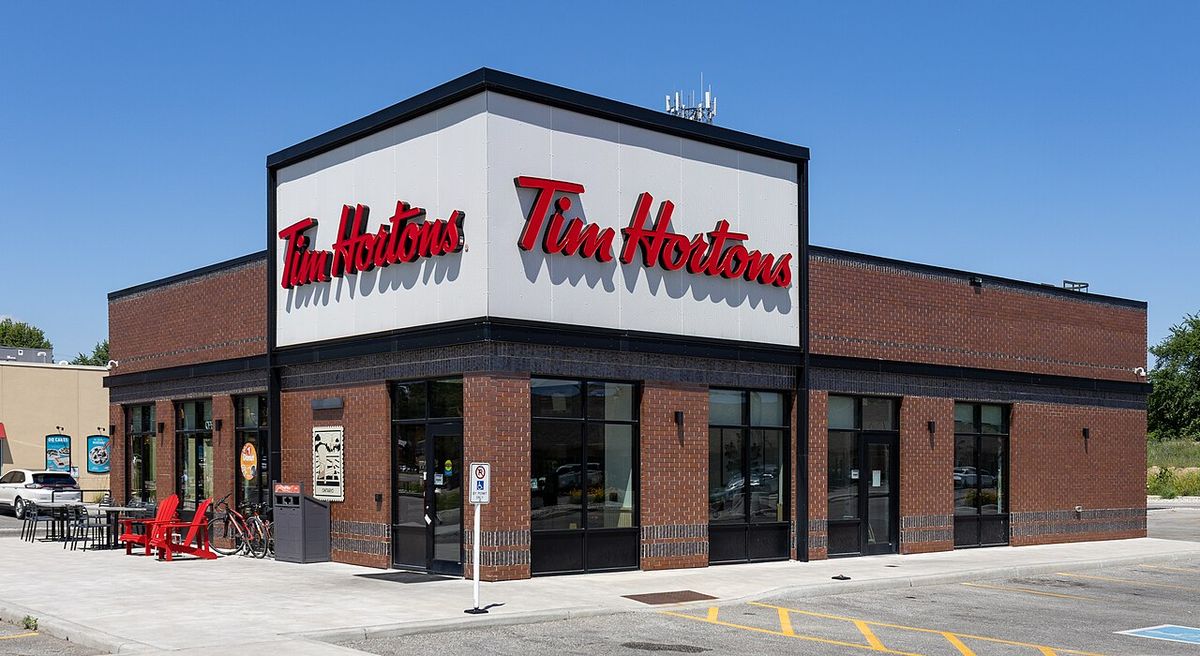
Restaurant Brands International Inc. (RBI) is a Canadian multinational fast food holding company formed in 2014 through the $12.5 billion merger of American chain Burger King and Canadian chain Tim Hortons. Headquartered in Toronto, the company has grown to become the world's fifth-largest fast food restaurant operator by adding Popeyes Louisiana Kitchen in 2017 and Firehouse Subs in 2021 to its portfolio. RBI's structure allows its four major brands to maintain distinct operations and headquarters while leveraging shared corporate resources for international growth and financial efficiency. The company is significant to Canadians as the corporate steward of the culturally prominent Tim Hortons brand and is a major publicly traded entity on the Toronto Stock Exchange under the ticker symbol QSR.
Formation and the Burger King-Tim Hortons merger
The company was created through a landmark merger announced on August 24, 2014, when Burger King, then majority-owned by Brazilian investment firm 3G Capital, confirmed it was in negotiations to merge with Tim Hortons. The deal was officially confirmed on August 25, 2014, as a $12.5 billion acquisition that would involve a tax inversion into Canada, creating a new holding company majority-owned by 3G Capital. While the U.S. corporate tax rate was 39.1% compared to Canada's 26%, Burger King had already reduced its effective rate to 27.5%, and 3G Capital co-founder Alex Behring denied the merger was tax-related, stating it was fundamentally about growth and creating value through accelerated expansion. The proposed merger caused Tim Hortons' shares to increase in value by 28 percent, and Tim Hortons CEO Marc Caira reassured the public that the acquisition would enable the brand to move more quickly to reach a new global customer base. The deal was approved in Canada by the Competition Bureau on October 28, 2014, ruling it unlikely to lessen competition, and received final approval from Minister of Industry James Moore on December 4, 2014, with specific conditions attached. These conditions required the chains to retain separate operations, not combine locations in Canada and the U.S., maintain significant employment in Oakville, and ensure Canadians made up at least 30% of Tim Hortons' board of directors.
Tim Hortons shareholders approved the merger on December 9, 2014, the same day it was announced the new holding company would be called Restaurant Brands International. Vice-chairman Marc Caira described the merger as the next chapter for Tim Hortons, envisioning a bolder and more dynamic future for the brand. The merger focused primarily on expanding the international reach of Tim Hortons and providing financial efficiencies for both companies, with 3G Capital purchasing Tim Hortons at $65.50 per share and offering existing shareholders a mix of cash and shares in the new entity. Although the tax inversion aspect was criticized by some U.S. politicians, the merger proceeded and established the foundation for a major global fast food conglomerate based in Canada.
Subsequent acquisitions and portfolio expansion
RBI pursued a multi-brand growth strategy following its formation, significantly expanding its portfolio through two major acquisitions in the years after the merger. The company first moved to acquire Popeyes Louisiana Kitchen, the fried chicken chain, on February 21, 2017, announcing its intent to purchase the brand for $1.8 billion at $79 per share. The deal closed on March 27, 2017, with RBI purchasing Popeyes through an indirect subsidiary called Orange, Inc., adding a strong southern U.S. brand with global potential into the corporate fold. Several years later, on November 15, 2021, RBI announced its intent to acquire the sandwich chain Firehouse Subs for $1 billion, a transaction that was completed on December 15, 2021, adding a fourth major brand focused on hot subs. Each acquired brand continues to operate from its existing headquarters in the United States, with Burger King and Popeyes maintaining operations in Miami and Firehouse Subs based in Jacksonville, while RBI's corporate headquarters remain in Toronto alongside Tim Hortons. These acquisitions transformed RBI from a two-brand company into a diversified portfolio player spanning multiple fast food categories, contributing to its position as the world's fifth-largest fast food operator.
Corporate structure and brand operations
Restaurant Brands International functions as a holding company, overseeing four distinct fast food brands: Burger King, Tim Hortons, Popeyes, and Firehouse Subs. The company's corporate headquarters are located in Toronto, co-located with Tim Hortons, while the other brands maintain their operational bases in Florida, a structure designed to provide centralized strategic and financial oversight while preserving unique identities and operational independence. A notable recent franchisee relationship began in 2024 with Carrols Restaurant Group, which operates over 1,000 Burger King locations and more than 50 Popeyes locations, demonstrating the scale of RBI's franchise network. The operational separation of brands was a key condition of the 2014 merger approval, requiring that Burger King and Tim Hortons chains retain separate operations and not combine locations in Canada and the United States, a principle that extends to the newer acquisitions as well.
Ownership, leadership and financial profile
3G Capital, the Brazilian investment firm that engineered the 2014 merger and held a 71% majority stake in Burger King beforehand, remains the largest single shareholder in RBI. As of December 2024, it holds a 32% equity stake and controls 26% of the shareholder voting power, a decrease from its 47% voting power at the company's inception in 2014. Berkshire Hathaway, which partially funded the initial merger, held a 4.8% stake in the mid to late 2010s but completely sold its position by August 2020, as disclosed in a regulatory filing. Previous Tim Hortons shareholders also hold a sizeable share of the combined company, a result of the share exchange terms of the original merger. Leadership of the company has seen several transitions since its founding, with Daniel Schwartz serving as the initial CEO until early 2019, when Jose Cil was named to the role while Schwartz became executive chairman. Cil served as CEO until March 2023, when Joshua Kobza was appointed as the company's chief executive, marking the latest leadership change for the multinational holding company.
The company's financial and operational scale is substantial, as reflected in its restaurant count and publicly stated growth targets. At the end of its 2023 fiscal year, RBI operated a total of 31,070 restaurants worldwide across all its brands. In February 2024, the company announced it anticipates reaching 40,000 restaurants globally by 2028, a projection that signals a commitment to aggressive unit growth over the next several years. This growth is expected to come from expansion across all four brands in both existing and new international markets, executed primarily through the franchise model that defines the company's operational approach.
- Burger King: Acquired in the 2014 merger that formed RBI, with operations based in Miami.
- Tim Hortons: Acquired in the 2014 merger that formed RBI, with headquarters in Toronto.
- Popeyes Louisiana Kitchen: Acquired for $1.8 billion in 2017, with operations based in Miami.
- Firehouse Subs: Acquired for $1 billion in 2021, with headquarters in Jacksonville.
Growth strategy and market position
RBI's core strategy revolves around the growth of its four established brands, both domestically and internationally, with a key initial rationale for the 2014 merger being to leverage Burger King's global infrastructure to accelerate the international expansion of Tim Hortons. This focus on unlocking growth potential remains central, with each brand pursuing development in new markets while also striving to improve performance in existing ones through digital innovation and menu development. The company emphasizes a franchise-heavy model, which allows for capital-efficient expansion by partnering with local operators who bear many of the costs and risks associated with opening new locations. This multi-brand approach provides RBI with diversified revenue streams across different fast food categories: burgers, coffee and baked goods, fried chicken, and submarines, insulating the company from downturns in any single segment. This portfolio positions RBI as the fifth-largest operator of fast food restaurants globally, trailing only Subway, McDonald's, Starbucks, and Yum! Brands in total size, a ranking that reflects the significant scale achieved through merger and acquisition activity.
Recent developments and future outlook
Under the leadership of CEO Joshua Kobza, who took the role in March 2023, RBI continues to execute its long-term growth plan centered on reaching 40,000 restaurants by 2028. The integration of Firehouse Subs, the most recent acquisition completed in December 2021, remains an ongoing process as the company works to apply its operational expertise to support the brand's development and market expansion. A major focus for the company is digital innovation and enhancing the customer experience across all brands through improved mobile ordering, loyalty programs, and delivery capabilities, initiatives that are critical for driving same-store sales growth. The publicly stated goal of 40,000 restaurants by 2028 requires successful execution in both mature markets like North America and emerging international regions, a challenge that will test the company's franchise recruitment and support systems. As a publicly traded company on both the New York and Toronto stock exchanges, RBI's performance is closely watched by investors assessing its ability to drive sales and profitability across its diverse brand portfolio while managing the costs associated with rapid global expansion.
Questions about Restaurant Brands International
Is Tim Hortons still a Canadian company?
Tim Hortons is a brand owned by Restaurant Brands International, a Canadian multinational fast food holding company headquartered in Toronto. The 2014 merger that created RBI was structured as a tax inversion into Canada. Conditions of the merger approval required that Canadians make up at least 30 percent of the Tim Hortons board of directors. The brand's headquarters remain in Canada alongside RBI's corporate office.
Who owns Restaurant Brands International?
The largest single shareholder is the Brazilian investment firm 3G Capital, which owned Burger King before the merger and orchestrated the deal with Tim Hortons. As of December 2024, 3G Capital holds a 32% equity stake and 26% of the shareholder voting power in RBI, down from 47% in 2014. The remainder of the company is owned by public shareholders through its listings on the New York and Toronto stock exchanges, with previous Tim Hortons shareholders holding a sizeable portion. Berkshire Hathaway was once a significant shareholder but sold its entire 4.8% stake by August 2020.
What brands does Restaurant Brands International own?
Restaurant Brands International owns four major fast food brands. It was formed in 2014 by merging Burger King and Tim Hortons in a $12.5 billion deal. The company then expanded its portfolio by acquiring Popeyes Louisiana Kitchen for $1.8 billion in 2017 and Firehouse Subs for $1 billion in 2021. Each brand operates independently with its own management and headquarters, but they all fall under the strategic and financial oversight of the RBI holding company based in Toronto.
Why did Burger King merge with Tim Hortons?
The 2014 merger focused primarily on expanding the international reach of the Tim Hortons brand. A Tim Hortons representative stated the merger would allow Tim Hortons to leverage Burger King's resources for international growth. 3G Capital co founder Alex Behring stated that the merger was fundamentally about growth and creating value through accelerated expansion. The merger also provided financial efficiencies for both companies.
How many restaurants does RBI have?
Restaurant Brands International operated 31,070 restaurants globally as of the end of its 2023 fiscal year. This total spans its four brands: Burger King, Tim Hortons, Popeyes, and Firehouse Subs. In February 2024, the company announced a growth target, anticipating it will reach 40,000 restaurants worldwide by 2028. This planned expansion reflects the company's ongoing strategy to increase its international footprint. The company is currently the fifth largest operator of fast food restaurants in the world.
Who is the CEO of Restaurant Brands International?
Joshua Kobza is the CEO of Restaurant Brands International, having been named to the role in March 2023. He succeeded Jose Cil, who had served as CEO since 2019. Prior to Cil, Daniel Schwartz was the company's CEO from its founding in 2014 until early 2019. The company's leadership is part of a corporate structure where 3G Capital, a Brazilian investment firm, holds a significant ownership stake. Restaurant Brands International is publicly traded on both the New York and Toronto stock exchanges.
Sources and further reading
- Restaurant Brands International (Wikipedia)
- Restaurant Brands International Inc. (QSR) (ca.finance.yahoo.com)
Checked by the Yadude Books desk. Last updated 2026-10-21.