Seagram
The Seagram Company Ltd., commonly known as Seagram or Seagram's, was a Canadian multinational beverage and entertainment conglomerate. Founded in 1857 as a distillery in Waterloo, Ontario, it grew under the leadership of the Bronfman family to become the world's largest producer and distributor of distilled spirits by the mid-20th century. The company's history is a defining chapter in Canadian business, marked by its global brands, international expansion, and a dramatic late-1990s diversification into entertainment that led to its dissolution. Its legacy persists in numerous well-known beverage brands and in architectural landmarks like the Seagram Building in New York City.
Foundations and Early Growth
The origins of Seagram trace back to 1857 with the establishment of the Granite Mills and Waterloo Distillery in Waterloo, Canada West, by William Hespeler and George Randall. The distillery began as a side venture using surplus grain from their milling operations, and by 1861 the mill was producing 12,000 barrels of flour and the distillery about 2,700 barrels of whisky. Joseph Emm Seagram, a bookkeeper hired in 1864 to supervise Hespeler's interest, bought Hespeler's share in 1868, George Randall's in 1878, and finally William Roos's share in 1883, becoming sole owner. He renamed the business Joseph Seagram Flour Mill and Distillery Company and concentrated on distillation, changing the name of its Alte Kornschnapps rye whisky to Seagram's Old Rye to reach a broader market.
In a parallel development, the Bronfman family entered the liquor business during the First World War, capitalizing on the patchwork of provincial prohibition laws in Canada. After fleeing anti-Semitic pogroms in czarist Russia, the family borrowed money to buy the Anglo-American Hotel in Emerson, Manitoba, in 1903 and later owned three hotels in Winnipeg. When prohibition closed legal drinking establishments, they purchased the Bonaventure Liquor Store Company near Montreal's railway station in 1916, selling liquor by mail order to 'dry' provinces. Samuel Bronfman opened a distillery in LaSalle, Quebec, in 1924 and incorporated Distillers Corporation Limited, which grew substantially in the 1920s partly due to exports during American Prohibition. In 1928, the Distillers Corporation acquired all stock in Joseph E. Seagram and Sons, merging the companies under the public name Distillers Corporation-Seagrams Ltd. and retaining the Seagram name.
The merged entity was well-positioned with aged whiskey stocks to supply the newly reopened American market after Prohibition ended in 1933. The company's growth during the Prohibition era involved exporting alcohol to the United States, which was initially legal under Canadian law. After 1930, when it became illegal to export directly to countries under prohibition, Seagram and other Canadian companies exported to Saint Pierre and Miquelon, a French territory off Newfoundland, from where bootleggers smuggled it into the United States. In the 1930s, Seagram established business in the United States and paid a fine of $1.5 million to the U.S. government to settle delinquent excise taxes on liquor illegally exported during Prohibition, a fraction of the original $60 million claim. Samuel Bronfman's dealings with bootleggers have been researched by historians, though he was never convicted of criminal activity.
The Bronfman Era and Strategic Diversification
Under Samuel Bronfman's leadership, Seagram expanded aggressively, modernizing its Waterloo plant and building distilleries in the United States. The company's strategic growth was supported by a 1927 deal where Distillers Corporation sold a 50 percent interest to the United Kingdom's Distillers Company Limited, which controlled more than half the world's Scotch whisky market, in exchange for distribution rights for blended Scotch brands like Haig and Dewar's. After Samuel's death in 1971, his son Edgar Bronfman Sr., who had assumed the presidency in 1957, became chairman and CEO. The company officially became The Seagram Company Ltd. in 1975. From the 1950s, most of Distillers-Seagram was owned by Samuel Bronfman's four children through their holding company, Cemp Investments.
Throughout the mid-20th century, Seagram diversified its holdings beyond spirits into natural resources and other consumer goods. In 1963, Seagram purchased the Texas Pacific Coal and Oil Company for $61 million in cash and a $216 million production payment sale, merging it with its Frankfort Oil Company to form Texas Pacific Oil Company. The Bronfman heirs sold these oil holdings to Sun Oil Co. in 1980 for $2.3 billion. In 1981, cash-rich and seeking to diversify further, Seagram attempted a takeover of Conoco Inc. but was outbid by DuPont, which acted as a white knight. In exchange for its 32.2 percent stake in Conoco, Seagram became a 24.3 percent owner of DuPont, holding four seats on its board and becoming its largest single shareholder by 1995.
- In 1978, Seagram took over the Stonyfell winery in Adelaide, Australia, from Dalgety Australia, though the winemaking operation there was soon wound up.
- During the early 1980s, Seagram attempted to acquire St. Joe Minerals but was outbid by Fluor Corporation.
- The company purchased French cognac maker Martell & Cie in 1987 for $1.2 billion.
- Seagram acquired the fruit beverage company Tropicana Products in 1988 for $1.2 billion.
In 1986, Seagram launched a television commercial campaign for its Golden wine cooler products featuring Bruce Willis as the spokesperson. This advertising propelled the brand from fifth place among distillers to first place in just two years. The three most popular Seagram distilled products from the 1960s through the 1990s were Seven Crown, VO, and Crown Royal. The company's innovative advertising associated its brands with modernity and an upscale lifestyle. Its commissioning of extensive market research from the 1950s onward was also a significant factor in its consumer success.
The Entertainment Foray and Corporate Demise
In June 1994, Edgar Bronfman Jr. succeeded his father as CEO and quickly pivoted the company toward the entertainment industry. In a critical 1995 decision, Seagram sold its lucrative 24.3 percent stake in DuPont for $9 billion. The move was heavily criticized by investors and credit agencies like Standard & Poor's, which warned the sale could lead to a downgrade of Seagram's more than $4.2 billion in long-term debt, as the DuPont interest accounted for 70 percent of the company's earnings. Bronfman Jr. used the proceeds, along with increased debt, to acquire a controlling 80 percent interest in MCA Inc. from Matsushita, whose assets included Universal Pictures and its theme parks, marking Seagram's formal entry into the entertainment business.
The expansion continued in 1998 with the $10.6 billion purchase of music giant PolyGram, whose assets were scattered within Universal Studios, notably bolstering both Universal Music Group and Universal Pictures. To help fund this acquisition, Seagram sold Tropicana to PepsiCo for $3.1 billion the same year. The company's rapid transformation into a media conglomerate strained its finances, and it was unable to maintain stability. By 2000, Seagram was broken up and sold. Its beverage division, consisting of about 180 brands and brand extensions, was sold to industry titans Diageo and Pernod Ricard. Its entertainment assets, including Universal's television holdings and studios like Interscope Communications and Gramercy Pictures, were initially sold to Barry Diller, and the remainder of the Universal empire was sold to French conglomerate Vivendi, merging with Canal+ to form Vivendi Universal on December 11, 2000.
In a 2013 interview with The Globe and Mail, Charles Bronfman, the uncle of Edgar Bronfman Jr., stated that the decisions leading to the demise of Seagram were a disaster and a family tragedy. The corporate strategy involved abandoning a stable core business. This strategy financed a high risk venture into the entertainment business through debt and the sale of prime assets. The result was the complete dissolution of the Canadian corporate institution within five years.
Brand Portfolio and Post-Dissolution Fate
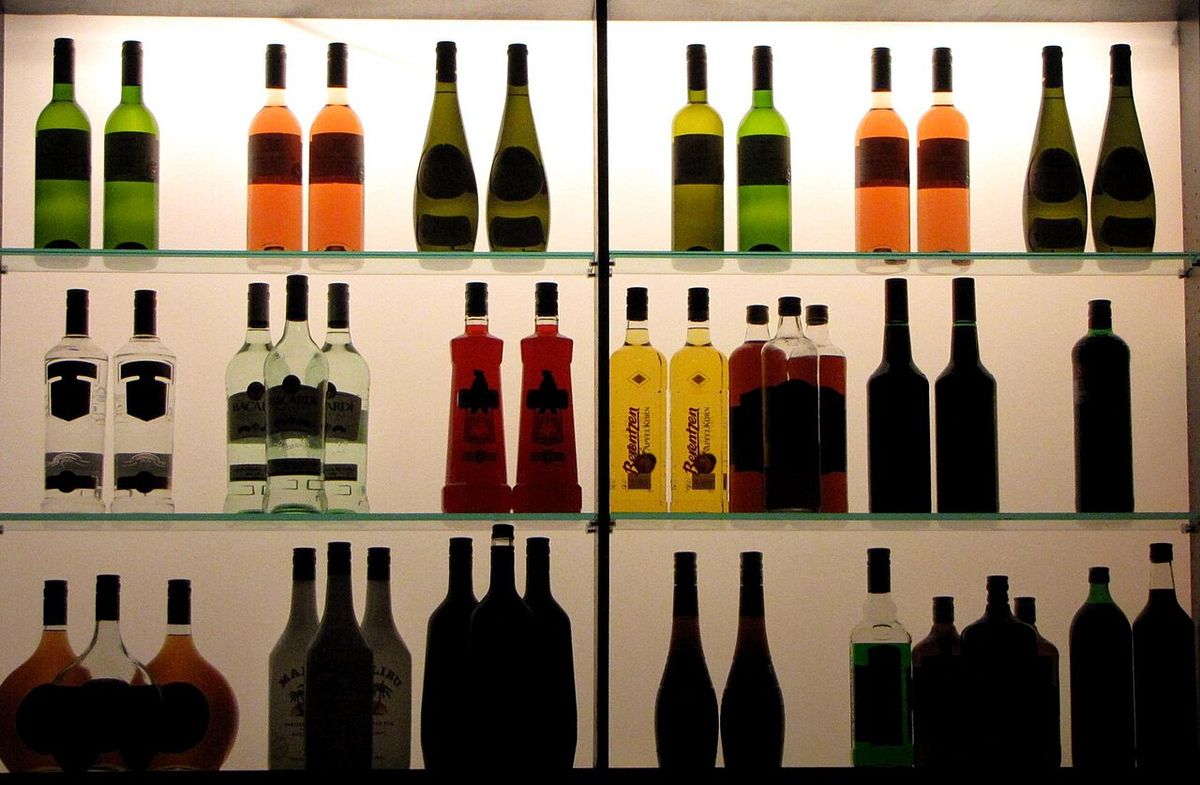
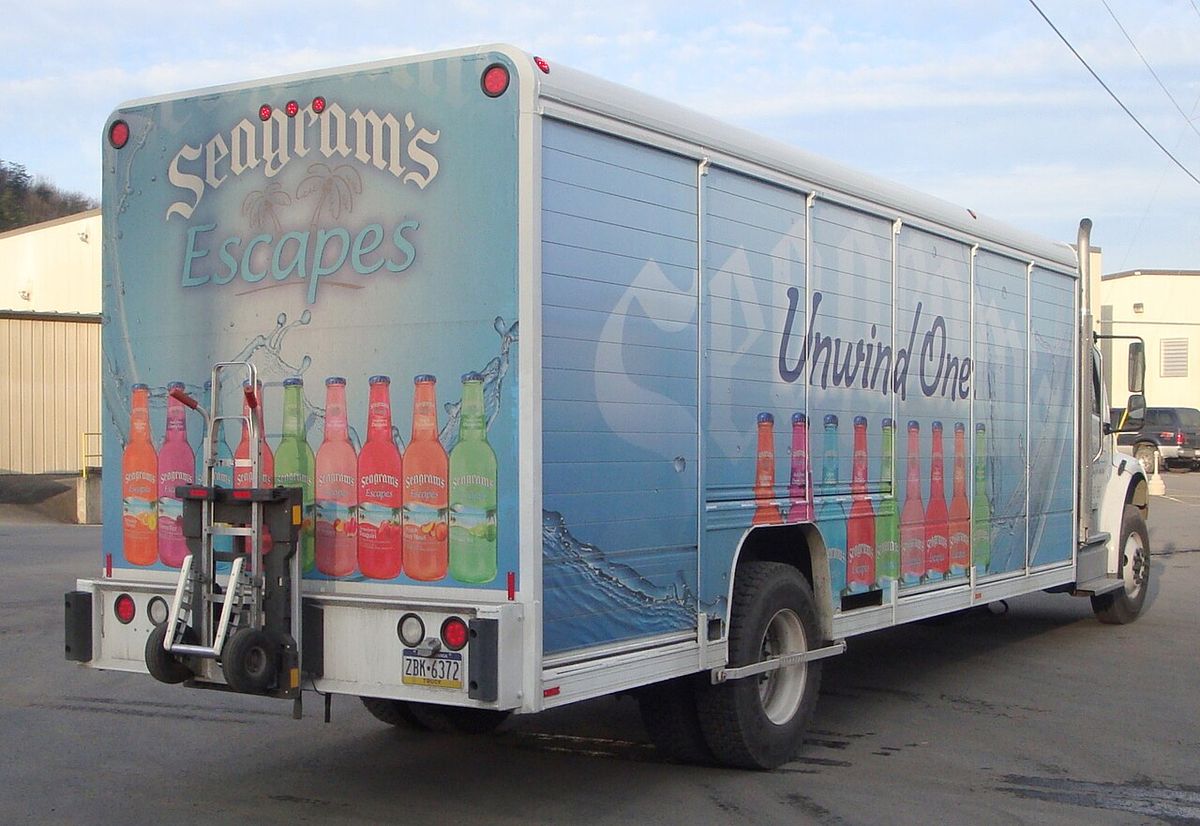
At its peak, Seagram's beverage portfolio was vast and global, with key brands spanning multiple categories of spirits and wines, many of which remain household names today. Following the 2000 breakup, these brands were distributed among the acquiring companies and other licensees in a complex series of transactions. Diageo and Pernod Ricard divided the core spirits portfolio. The Coca-Cola Company acquired Seagram's Mixers, including its ginger ale, tonic water, club soda, and seltzer water, in 2002, along with signing a long-term agreement to use the Seagram name for these products, making them widely available by 2011. North American Breweries, formerly KPS, has held a licence to produce Seagram's Cooler Escapes and Seagram's malt-beverage brands since 2009.
| Brand Category | Examples of Key Brands (Historical Ownership) |
|---|---|
| Canadian Whisky | Crown Royal (Diageo), Seagram's VO (Sazerac), Seagram's Whisky |
| American Whiskey | Seagram's Seven Crown (Diageo), Maker's Mark, Four Roses, The Benchmark |
| Scotch Whisky | Chivas Regal, Passport (Pernod Ricard), The Glenlivet, Glen Grant |
| Vodka | Absolut (Pernod Ricard), Seagram's Vodka, Nikolai |
| Rum | Captain Morgan (Diageo), Myers's, Wood's |
| Gin | Seagram's Gin |
| Cognac & Brandy | Martell (Pernod Ricard), Macieira |
| Liqueurs & Bitters | Kahlúa, Dr. McGillicuddy's, Suze |
| Wine & Champagne | Sterling Vineyards, Chateau St. Jean, G.H. Mumm, Mumm Cuvée Napa |
| Indian Whisky | Royal Stag, Blenders Pride, Imperial Blue |
Physical assets were also sold or repurposed. The former Seagram distillery in Lawrenceburg, Indiana, was closed by Pernod Ricard in 2006, sold to CL Financial of Trinidad and Tobago in 2007, and then purchased by MGP Ingredients in December 2011. It is now known as MGP of Indiana and continues to produce components for Seagram's Seven Crown for Diageo. The original Waterloo distillery site, which operated as the Seagram Museum, was forced to close in 1997 due to lack of funds. The building now houses the Centre for International Governance Innovation and the technology company Shopify, while the two original barrel houses have been converted into the Seagram Lofts condominiums. Nearly five acres of open land on the site were used for the construction of the Balsillie School of International Affairs, built between 2009 and 2010.
Architectural and Institutional Legacy
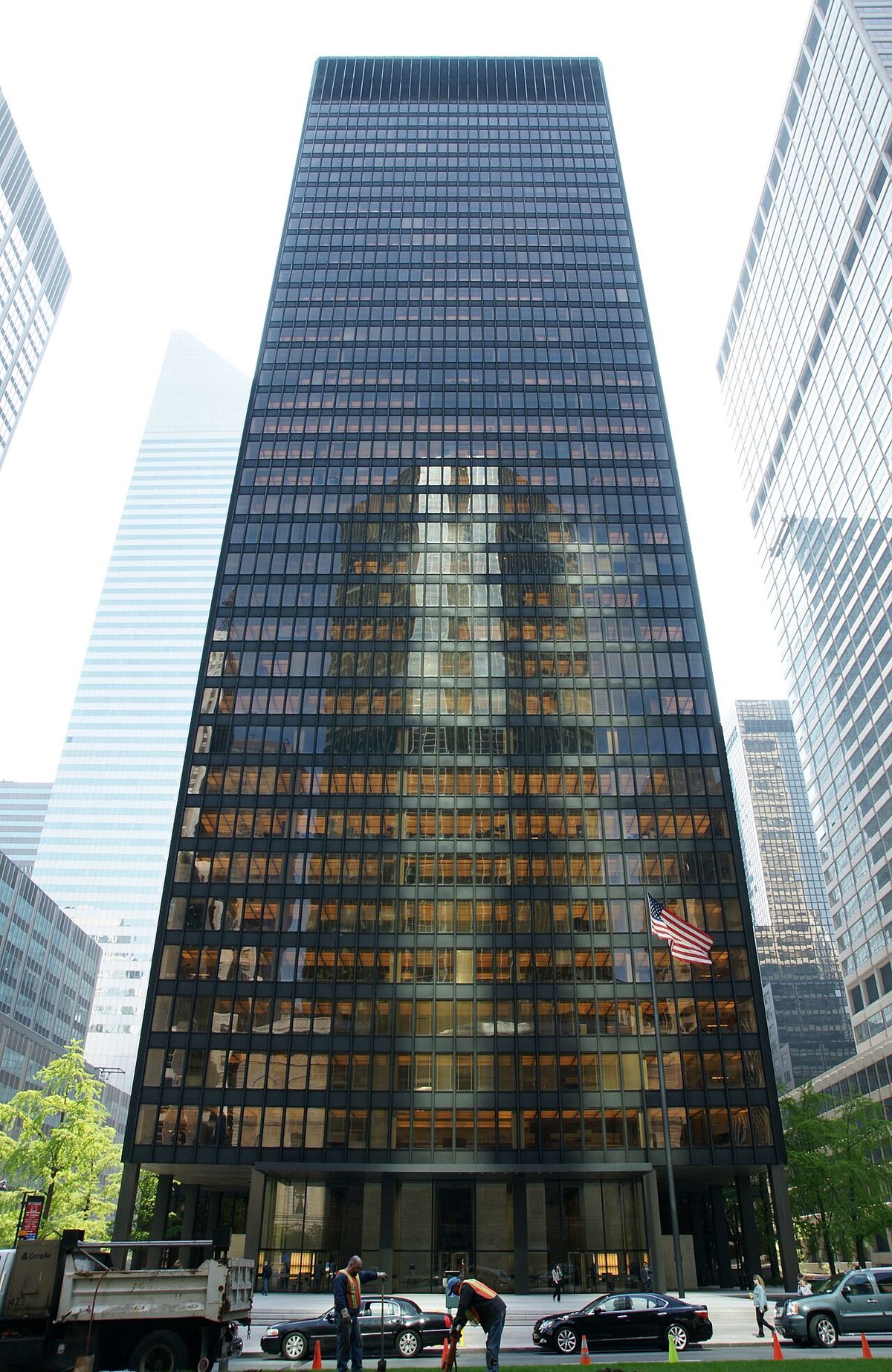
Seagram's physical legacy is anchored by two significant buildings that reflect its corporate stature. Upon completion, its costs made it the world's most expensive skyscraper, and it is regarded as a notable example of the functionalist aesthetic and a prominent instance of corporate modern architecture that set trends for city skylines for decades. The Bronfman family sold the building to TIAA for $70.5 million in 1979, and it has been featured in several Hollywood films. In Montreal, the former company headquarters, known as Seagram's House, was donated to McGill University by Vivendi Universal in 2002 and renamed Martlet House.
The company's extensive historical records and the Bronfman family papers are held at institutions like the Hagley Museum and Library, offering documentation on corporate strategy, advertising, and market research from the 1930s onward. These archives trace the company's transformation from a small business to a multinational corporation and include extensive internal correspondence, credit department records documenting relationships with over 1,000 distributors, and materials from the Seagram Overseas Sales Company detailing international strategies in Europe, Asia, Latin America, and Africa. The collection contains thousands of market surveys from the 1950s through the 1980s assessing consumer attitudes, brand preferences, and advertising impact across different demographics. The Seagram Museum Collection is preserved at Brock University's Library Digital Repository. These resources provide scholars with insight into Seagram's operations in a highly regulated environment, its innovative advertising campaigns that linked its brands with craftsmanship and prestige, and its sophisticated use of market research to understand consumer lifestyles. The Hagley Center for the History of Business, Technology and Society awards travel grants for visiting scholars to conduct research in these collections, which confirms the ongoing academic interest in Seagram's business history and its role in 20th-century consumer culture.
Questions about Seagram
What happened to the Seagram company?
The Seagram Company was dismantled and sold in 2000 after a failed diversification into the entertainment industry. Its beverage assets, comprising about 180 brands, were sold to Diageo and Pernod Ricard. Its entertainment division, which included Universal Pictures and Universal Music Group, was sold to the French conglomerate Vivendi, forming Vivendi Universal. The company ceased to exist as an independent entity following these sales.
Who owns Seagram's whiskey brands like Crown Royal today?
Following the 2000 breakup, Seagram's brand portfolio was divided. Diageo now owns and produces Crown Royal, Captain Morgan, and Seagram's Seven Crown. Pernod Ricard owns brands including Chivas Regal, The Glenlivet, and Martell. Seagram's VO Canadian whisky is produced by the Sazerac company. The distribution of these brands ensures they remain widely available in markets worldwide.
What was Seagram's connection to Prohibition?
During the American Prohibition era, Seagram, under the Bronfman family's Distillers Corporation, legally exported alcohol from Canada. The Bronfmans shipped liquor to the French controlled overseas collectivity of Saint Pierre and Miquelon, from where bootleggers smuggled it into the United States. Seagram's growth was significantly fueled by this period. In the 1930s, Seagram paid a fine of $1.5 million to the US government to settle delinquent excise taxes on liquor illegally exported during Prohibition.
Why did Seagram fail?
Seagram's failure is attributed to strategic missteps in the 1990s under CEO Edgar Bronfman Jr. The company sold its 24.3 percent stake in DuPont, which accounted for 70 percent of its earnings. It used the proceeds and increased debt to purchase controlling interests in entertainment businesses like MCA and PolyGram. This overextension led to financial instability. The company was forced to sell all its assets by 2000, with its beverage division sold to Diageo and Pernod Ricard and its entertainment division sold to Vivendi.
Where was Seagram founded?
Seagram was founded in 1857 in Waterloo, Ontario, then known as Canada West. The original business was the Granite Mills and Waterloo Distillery, started by William Hespeler and George Randall. Joseph E. Seagram joined the company in the 1860s and later became its sole owner. The company's headquarters were later established in Montreal, Quebec, under the Bronfman family's control.
What is the Seagram Building?
The Seagram Building is a skyscraper that was once the company's American headquarters in New York City. It was commissioned by Phyllis Lambert, the daughter of Seagram CEO Samuel Bronfman. The building was designed by architect Ludwig Mies van der Rohe with Philip Johnson. It is regarded as one of the most notable examples of the functionalist aesthetic and a prominent instance of corporate modern architecture.
Sources and further reading
- Seagram (Wikipedia)
- Seagram (thecanadianencyclopedia.ca)
- A closer look at Seagram (cbc.ca)
- The Seagram Company Ltd.: Funding, Team & Investors (startupintros.com)
- Seagram Company | Hagley (hagley.org)
Checked by the Yadude Books desk. Last updated 2026-10-24.