Edgar Bronfman Sr.
Edgar Miles Bronfman Sr. (June 20, 1929 to December 21, 2013) was a Canadian-American businessman, philanthropist and prominent Jewish leader. Born in Montreal into the famed Bronfman family, he led the Seagram Company Ltd. to become a global distilled beverage giant, serving as its president and CEO from 1971. Bronfman is equally remembered for his nearly three-decade presidency of the World Jewish Congress, where his high-level diplomacy with the Soviet Union helped secure rights for Soviet Jews and his advocacy led to a landmark settlement with Swiss banks over Holocaust-era assets. His extensive philanthropy, focused on Jewish education and youth, left a lasting imprint on Jewish communal life in Canada and internationally.
Early Life and Education
Edgar Miles Bronfman was born in Montreal, Quebec, the third of four children to Samuel Bronfman and Saidye Rosner Bronfman. His father, a Russian immigrant, co-founded the family's distillery business which would evolve into the Seagram empire. Bronfman was raised in a Jewish household that kept kosher and provided religious schooling, though he and his younger brother Charles also attended elite private Anglophone schools. He studied at Selwyn House School in Montreal and later at Trinity College School in Port Hope, Ontario. Initially attending Williams College in the United States, Bronfman transferred to McGill University in Montreal, graduating in 1951 with a Bachelor of Commerce degree. This period included a reconciliation with his father and his Jewish heritage, paving the way for his entry into the family business. His siblings were architect Phyllis Lambert, Minda de Gunzburg, and his younger brother and future business partner Charles Bronfman.
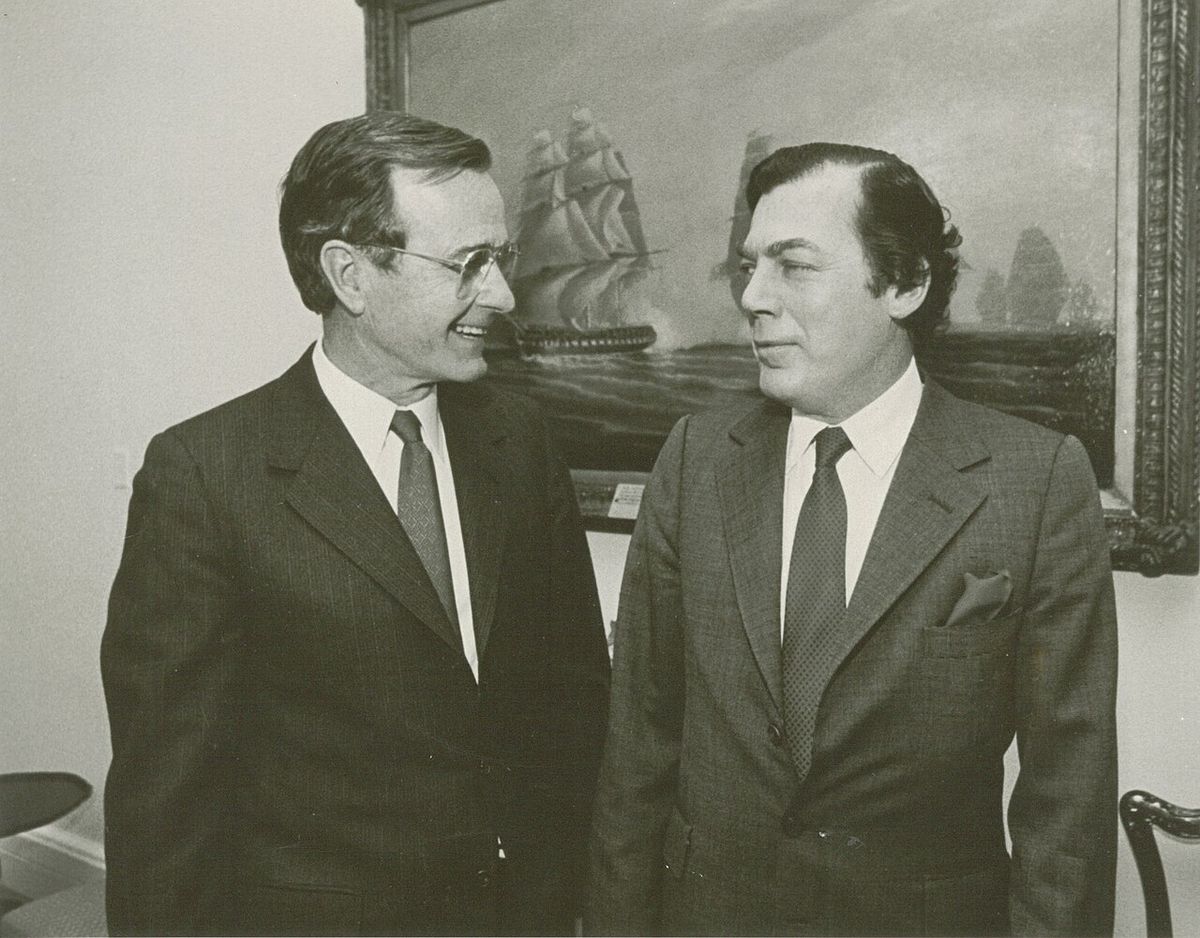
Business Career at Seagram
Bronfman joined the family enterprise in 1951, starting as an accounting clerk and apprentice taster. In 1957, he was appointed president of the company's crucial American subsidiary, Joseph E. Seagram & Sons, which at the time accounted for 81 percent of Seagram's total business. He revitalized the brand portfolio, resurrecting the Calvert Reserve whiskey as Calvert Extra and personally promoting it through a national tour and advertisements. Under his leadership, Seagram expanded its product line to include vodka, gin and wine, and dramatically increased its international footprint to 119 countries. By the end of 1965, the company's sales exceeded one billion dollars. Following his father's death in 1971, Bronfman assumed the roles of president, treasurer and CEO of Distillers Corporation-Seagram Ltd., later renamed Seagram Company Ltd. in 1975. His tenure saw the company maintain and grow its market share even as global whiskey consumption declined by 40 percent between 1961 and 1971, with Seagram's own market actually increasing by 9 percent. Bronfman's foray outside the liquor industry included a brief and costly stint as chairman of MGM in 1969 after the family's Cemp Investments bought 820,000 shares. The studio lost 25 million dollars under his oversight, costing Seagram 10 million dollars. He stepped down as CEO of Seagram in 1994, succeeded by his son Edgar Bronfman Jr., and the company was eventually sold to Vivendi Universal in 2000.
Leadership of the World Jewish Congress
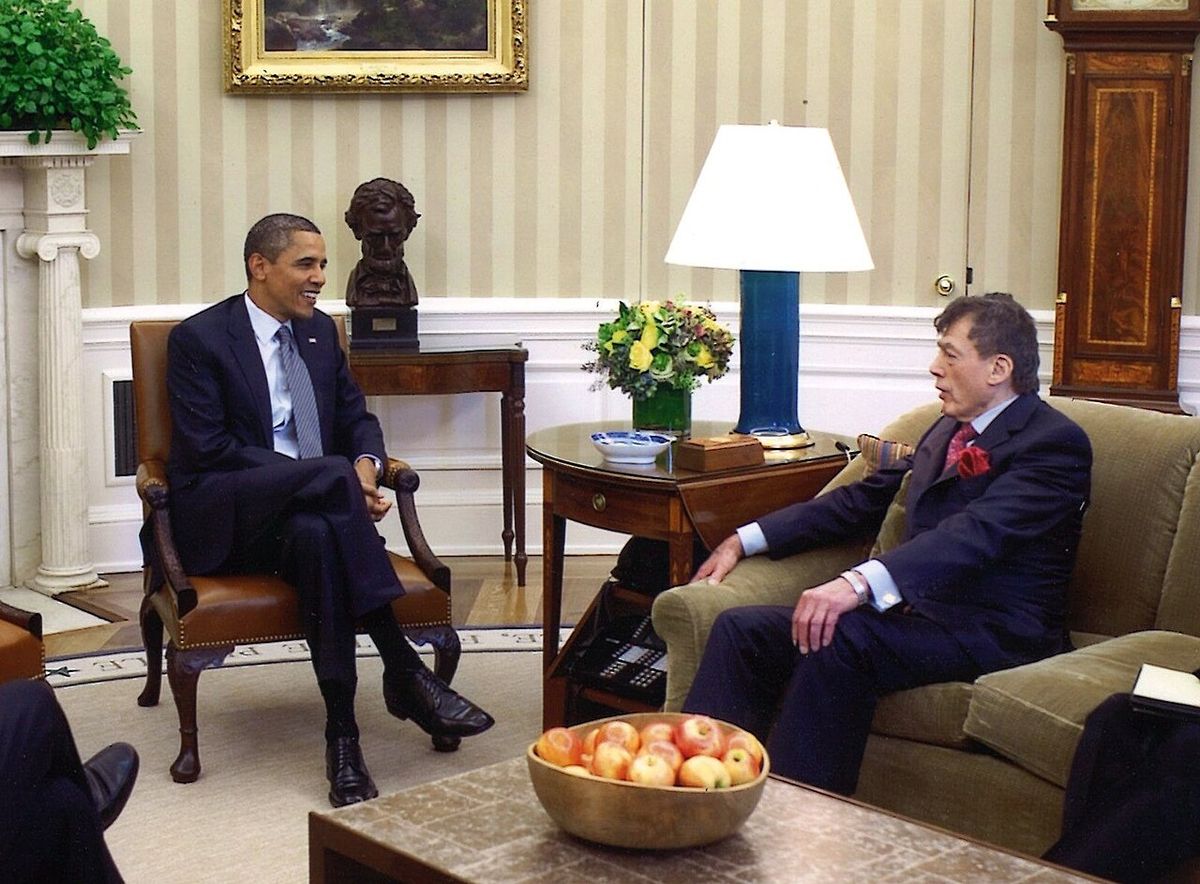
Edgar Bronfman's most significant public impact came through his leadership of the World Jewish Congress (WJC), an umbrella organization representing Jewish communities in approximately 80 countries. He became acting president in 1979 after Philip Klutznick stepped down and was formally elected by the Seventh Plenary Assembly in January 1981, serving until his retirement in May 2007. Together with his deputy, Israel Singer, Bronfman transformed the WJC into a powerful advocacy group. His work combined his business acumen with a deep commitment to Jewish rights, leveraging his wealth and status to gain access to world leaders. His presidency was defined by several major diplomatic and legal initiatives that raised the international profile of Jewish concerns during the final decades of the Cold War and its aftermath. These initiatives addressed the plight of Soviet Jews, the wartime record of public figures, and financial restitution for Holocaust victims.
Bronfman's initiatives as WJC president were conducted at the highest levels of international diplomacy and involved direct negotiation with governments. In 1983, he suggested American Jews should abandon the Jackson-Vanik amendment as a goodwill gesture to the Soviets. In early 1985, he secured an invitation to the Kremlin and on September 8-11 visited Moscow, carrying a note from Shimon Peres and meeting with Mikhail Gorbachev to initiate talks on a Soviet Jewish airlift. In his book The Making of a Jew, he outlined his three goals for Soviet Jewry: the release of Prisoners of Zion, freedom of religious practice, and the freedom to learn Hebrew. A year later, in 1988, he returned to meet Foreign Minister Eduard Shevardnadze, securing a promise to legalize Hebrew teaching and establish a Jewish cultural centre in Moscow, which he saw as actions to get Jewish rights off the bargaining table.
- Soviet Jewry (1980s): Bronfman initiated groundbreaking diplomacy with the Soviet Union, becoming the first WJC president to be formally received in Moscow in September 1985. He carried a note from Israeli Prime Minister Shimon Peres and met with Soviet leader Mikhail Gorbachev, advocating for the right of Jews to emigrate, practice their religion, and study Hebrew. In 1988, he returned to meet Foreign Minister Eduard Shevardnadze, securing a promise to legalize Hebrew teaching and establish a Jewish cultural centre in Moscow.
- Exposure of Kurt Waldheim (1986): The WJC, under Bronfman's leadership, uncovered and publicized the hidden Nazi-era past of Austrian president Kurt Waldheim, revealing his service as an intelligence officer in a German army unit involved in deporting Greek Jews. In May 1987, Bronfman called Waldheim "part and parcel of the Nazi killing machine," leading to a lawsuit that Waldheim later dropped.
- Swiss Bank Restitution (late 1990s): Bronfman championed the cause for Holocaust survivors and heirs, leading negotiations that began in 1995 and resulted in a landmark 1.25 billion dollar settlement with Swiss banks in August 1998, formally signed in January 1999 and approved by U.S. Judge Edward R. Korman in November 2000.
- Address to the United Nations (1982): On June 25, 1982, he became the first representative of a Jewish organization to address the UN General Assembly, forcefully rejecting the equation of Zionism with racism during a Special Session on Disarmament.
Bronfman's tenure as president of the World Jewish Congress included internal scandals related to his deputy, Israel Singer. He also faced criticism from another WJC official in 2003 for writing a letter to President George W. Bush. This letter, co-signed by former U.S. Secretary of State Lawrence Eagleburger, urged Bush to pressure Israel to curb construction of its West Bank separation barrier. Bronfman stepped down from his post as president on May 7, 2007. At his memorial in January 2014, former U.S. Secretary of State Hillary Clinton said of Bronfman that he was never shy of pressing an issue in the face of injustice.
Philanthropy and Jewish Community Building
Edgar Bronfman's philanthropy was extensive and strategically focused on fostering an inclusive and educated Jewish future. He established and served as president of The Samuel Bronfman Foundation, guided by principles that Jewish renaissance requires learning, that youth shape the future, that communities must be open, and that all Jews are a single family. A central belief was that Jewish organizations should inspire through heritage rather than fear, and he viewed trends like intermarriage as an opportunity for engagement rather than a crisis. Notably, Bronfman was a proud secular Jew who publicly stated his disbelief in God but deeply valued Jewish text, tradition and peoplehood, continuously educating himself throughout his life. He argued that Jewish knowledge should be accessible to Jews of all backgrounds, and his foundation's work reflected this through major grants to specific organizations dedicated to learning and engagement.
His major philanthropic creations and supported institutions include a significant network of initiatives aimed at engaging Jews, particularly youth. The Bronfman Youth Fellowships in Israel, founded in 1987, is a selective leadership program for North American and Israeli high school students, focusing on Jewish text study, pluralism and social responsibility. It has created a network of over 1,000 alumni and has been directed by figures including Rabbi Michael Paley and Becky Voorwinde, with past faculty like Rabbi Sharon Cohen Anisfeld. Hillel International, the largest Jewish campus organization in the world, was revived in the 1990s with Bronfman's crucial support alongside president Richard Joel. The Hillel centre at New York University is named The Edgar M. Bronfman Center for Jewish Student Life in his honour. He provided funding to launch MyJewishLearning.com, the leading transdenominational website for Jewish information which also hosts the popular Jewish parenting site Kveller. In April 2012, Bronfman joined the Bill & Melinda Gates Foundation's Giving Pledge, committing the majority of his wealth to philanthropy alongside 12 other new signatories.
- The Bronfman Youth Fellowships in Israel (founded 1987): A selective leadership program for North American and Israeli high school students, focusing on Jewish text study, pluralism and social responsibility. It has created a network of over 1,000 alumni and has been directed by figures including Rabbi Michael Paley and Becky Voorwinde.
- Hillel International: Bronfman was credited with helping revive Hillel: The Foundation for Jewish Campus Life in the 1990s alongside Hillel president Richard Joel. The Hillel centre at New York University is named The Edgar M. Bronfman Center for Jewish Student Life in his honour.
- MyJewishLearning.com and Kveller: He provided funding to launch this leading transdenominational digital Jewish education platform, which also hosts the popular Jewish parenting site Kveller.
- The Giving Pledge: In April 2012, Bronfman joined the Bill & Melinda Gates Foundation's Giving Pledge, committing the majority of his wealth to philanthropy alongside 12 other new signatories.
Bronfman was a philanthropist who gave large amounts of money to Jewish causes. He established The Samuel Bronfman Foundation, which works on principles including making Jewish knowledge accessible to Jews of all backgrounds. The foundation is known for its work with grantees like MyJewishLearning.com, a leading website of Jewish information. In Montreal, a concert hall named the Saidye Bronfman Centre commemorates his mother. A building at McGill University is named after his father, Samuel Bronfman.
Personal Life and Family
Edgar Bronfman was married five times. His first marriage, in 1953, was to American banking heiress Ann Margaret Loeb, daughter of John Langeloth Loeb Sr., with whom he had five children before divorcing in 1973. His children from this marriage are Samuel Bronfman II, Edgar Bronfman Jr., Matthew Bronfman, Holly (who converted to Hinduism and took the name Bhavani Lev, co-founding Organic India), and Adam Bronfman, managing director of The Samuel Bronfman Foundation. His brief marriage to Lady Carolyn Townshend, daughter of the 7th Marquess Townshend, in 1973 was annulled after ten days. In 1975, he married Rita Eileen Webb, a 25-year-old who converted to Judaism and was later known as Georgiana Bronfman. They had two daughters, Sara and Clare Bronfman, divorced in 1983, remarried, and divorced again. His final marriage was to artist Jan Aronson in 1994, who survived him. Bronfman's personal life was marked by both privilege and tragedy. In August 1975, his 21-year-old son Samuel was kidnapped in New York. The family paid a 2.3 million dollar ransom which was later recovered, and the kidnappers were convicted of extortion but acquitted of kidnapping. In later years, Bronfman expressed deep concern over his daughters Clare and Sara's involvement with the NXIVM organization, stating in 2003 he believed it was "a cult" and noting Clare had loaned the group 2 million dollars. Clare Bronfman was later convicted in 2020 for her role in the NXIVM case, and Sara was named in a related civil lawsuit in 2018. At the time of his death, Bronfman was survived by his wife, seven children, 24 grandchildren and two great-grandchildren.

Awards, Recognition and Published Works
Edgar Bronfman received numerous international honours for his business leadership, diplomacy and humanitarian work. In 1986, the French government awarded him the Chevalier de la Légion d'honneur. East German leader Erich Honecker presented him with the Star of People's Friendship in 1988. His highest American honour was the Presidential Medal of Freedom, awarded by President Bill Clinton in 1999 with a citation noting his work to ensure basic rights for Jews around the world. He also received the Leo Baeck Medal from the Leo Baeck Institute in 2000 for promoting tolerance and social justice, and the Hillel Renaissance Award in 2005. Bronfman was also an author, writing on business, Jewish life and retirement, often in collaboration with co-writers. His business memoir, Good Spirits: The Making of a Businessman, documented his corporate career and philosophy. The following table lists his major published works with their publication details.
| Title | Co-author/Editor | Year | Publisher |
|---|---|---|---|
| The Third Act: Reinventing Yourself After Retirement | Catherine Whitney | 2002 | G. P. Putnam's Sons |
| Hope, Not Fear: A Path to Jewish Renaissance | Beth Zasloff | 2008 | St. Martin's Press |
| The Bronfman Haggadah | Jan Aronson | 2012 | Rizzoli International Publications |
These works reflect the dual pillars of his life. One pillar was his pragmatic business insight from his career at Seagram. The other was his passionate, learning-oriented approach to Jewish identity and community. The Bronfman Haggadah is a modern interpretation of the traditional Passover text. It was created with his wife, the artist Jan Aronson, whom he married in 1994, and blends art and commentary.
Death and Legacy
Edgar Miles Bronfman Sr. died at his home in Manhattan on December 21, 2013, at the age of 84, surrounded by family. His passing was noted by Jewish communities and business leaders worldwide. His legacy is defined by his dual roles as a captain of industry and a global Jewish advocate. As a businessman, he stewarded Seagram's global expansion and sustained its profitability during a period of industry decline. As a Jewish leader, he used his unique position to advocate powerfully for Soviet Jewry, confront historical injustices like the Nazi past of public figures, and secure billions in restitution for Holocaust victims and heirs. His philanthropic vision, centred on empowering Jewish youth and making Jewish learning accessible, continues through the institutions he founded and funded. While his family life experienced public strains and controversies, his enduring impact lies in his demonstration that business success could be harnessed for significant humanitarian and communal purpose, earning him the description from some Jewish media as a "prince of his people." The Samuel Bronfman Foundation continues its work based on his four principles, ensuring his approach to Jewish life and community endures.
Questions about Edgar Bronfman Sr.
What was Edgar Bronfman Sr.'s role with the World Jewish Congress?
Edgar Bronfman Sr. served as president of the World Jewish Congress (WJC) from 1981 until 2007, having been acting president since 1979. He transformed the WJC into a powerful international advocacy organization. His most notable achievements included high-level diplomacy with the Soviet Union to secure emigration rights and religious freedom for Soviet Jews, exposing the Nazi past of Austrian president Kurt Waldheim, and spearheading negotiations that led to a 1.25 billion dollar settlement with Swiss banks over Holocaust-era assets in 1998. He also addressed the United Nations in 1982, the first Jewish organizational leader to do so.
Was Edgar Bronfman Sr. involved in the NXIVM cult case?
Edgar Bronfman Sr. was not personally involved in the NXIVM case, but he was deeply concerned about his daughters' involvement. In 2003, he publicly stated he believed NXIVM was "a cult" and was troubled by the emotional and financial investments his daughters Clare and Sara Bronfman were making in the group led by Keith Raniere. His daughter Clare was later convicted in 2020 for her role in the NXIVM criminal enterprise, and Sara was named in a related civil lawsuit in 2018. Bronfman himself had taken a course from NXIVM but grew critical of it.
What philanthropic causes did Edgar Bronfman Sr. support?
Bronfman's philanthropy was overwhelmingly focused on Jewish causes, particularly education and youth engagement. He founded The Samuel Bronfman Foundation and established The Bronfman Youth Fellowships in Israel, a leadership program for Jewish high school students. He was instrumental in reviving Hillel International and funded the creation of MyJewishLearning.com, a major online Jewish educational resource. His approach emphasized inclusive community building, Jewish learning, and empowering the next generation rather than using fear-based appeals. He also joined the Giving Pledge in 2012.
What major awards did Edgar Bronfman Sr. receive?
Edgar Bronfman Sr. received several prestigious awards for his humanitarian and diplomatic work. These include the Chevalier de la Légion d'honneur from France (1986), the Star of People's Friendship from East Germany (1988), and the Presidential Medal of Freedom from U.S. President Bill Clinton (1999), the nation's highest civilian honour. He also received the Leo Baeck Medal for promoting tolerance (2000) and the Hillel Renaissance Award (2005). These honours recognized his efforts on behalf of Soviet Jewry, Holocaust restitution, and global Jewish rights.
Where was Edgar Bronfman Sr. born and where did he die?
Edgar Bronfman Sr. was born in Montreal, Quebec, Canada, on June 20, 1929. He died at his home in Manhattan, New York City, United States, on December 21, 2013, at the age of 84. He was a dual Canadian-American citizen, and his life and work bridged both countries, from leading the Canadian-founded Seagram empire to his advocacy on the world stage from his base in New York. His body was interred following a service attended by family and notable figures from the worlds of business, politics and Jewish leadership.
How did Edgar Bronfman Sr. make his money?
Edgar Bronfman Sr. made his fortune through the Seagram Company Ltd., the global distilled beverage business founded by his family. He joined the family business in 1951 after graduating from McGill University, starting as an accounting clerk and apprentice taster. In 1953, he took charge of the American subsidiary, Joseph E. Seagram and Sons, where he expanded the product range and improved distribution. Following his father Samuel's death in 1971, Bronfman became president, treasurer, and CEO of Distillers Corporation Seagram Ltd, overseeing the company's continued international growth. His wealth was built on the foundation of this family owned liquor empire, which began when his father and uncle built their first distillery near Montreal in 1925 and later purchased and incorporated the Seagram name.
Sources and further reading
- Edgar Bronfman Sr. (Wikipedia)
- Edgar Bronfman, Sr. | Biography | Research Starters (ebsco.com)
- Edgar Bronfman, Canadian-American businessman, dies ... (cbc.ca)
- Edgar Bronfman Jr. - Stanford Technology Ventures Program (stvp.stanford.edu)
Checked by the Yadude Books desk. Last updated 2026-10-26.